Artwork
Gilet décor Flore et le faune, projets de broderies de gilet, XVIIIème siècle
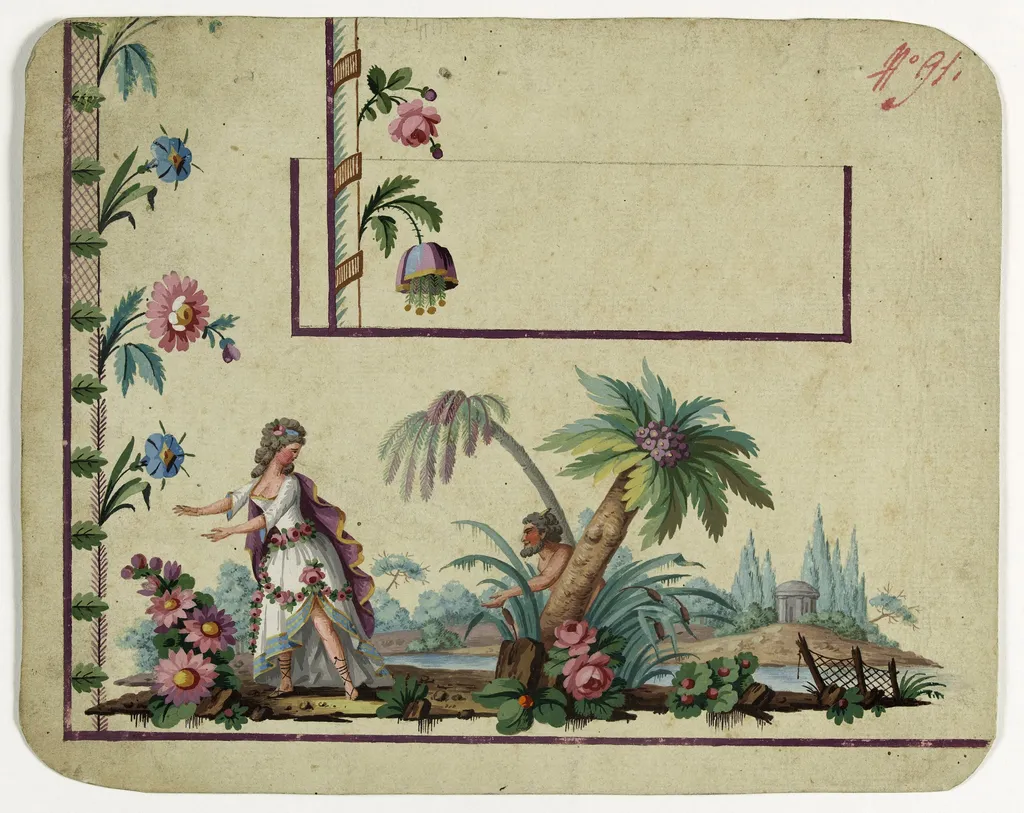
Gilet décor Flore et le faune, projets de broderies de gilet, XVIIIème siècle is a drawing by the Romanticist artist Anonyme. It dates from 1785 and is held in the collection of the Palais Galliera - Musée de la Mode de la Ville de Paris.
About this work
Overview
The work, titled *Gilet décor Flore et le faune, projets de broderies de gilet*, originates from 1785 and is attributed to an anonymous creator. Executed as a design for embroidered vestments, the image is preserved in the collection of the Museum of Ethnography. It presents a pastoral tableau that juxtaposes a clothed female figure with a semi‑nude male counterpart within a verdant landscape.
Subject & Meaning
The composition depicts a woman, identified as the classical goddess Flora, alongside a faun, a mythological creature associated with rustic revelry. Their interaction, set amid abundant foliage and blooming flowers, evokes themes of nature’s fertility and the harmonious coexistence of the cultivated and the wild, reflecting eighteenth‑century allegorical conventions.
Technique & Style
Rendered as a detailed drawing intended for textile application, the piece exhibits fine line work and careful shading to guide embroidery. The palette suggested by the sketch includes greens, blues, and pinks, while the precise rendering of foliage, water, and architectural elements demonstrates the high level of craftsmanship expected of decorative arts in the late Rococo period.
History & Provenance
Created in 1785, the design entered the Museum of Ethnography’s holdings through a 20th‑century acquisition of decorative arts objects. Its anonymous attribution aligns with the common practice of workshop‑produced pattern books, where individual designers were rarely recorded, yet the piece remains a valuable example of French sartorial illustration from the pre‑revolutionary era.
Context
During the late eighteenth century, fashionable garments often featured embroidered motifs drawn from classical mythology, reflecting the Enlightenment’s fascination with antiquity. Designs such as this one would have been used by tailors and embroiderers to adorn vests worn by aristocratic men, integrating artistic taste with everyday attire.
Artist & collection
Artist
A French designer from the 1700s made delicate flower drawings meant to decorate vests.
Museum
Palais Galliera - Musée de la Mode de la Ville de Paris
Continue through works from the same source collection.
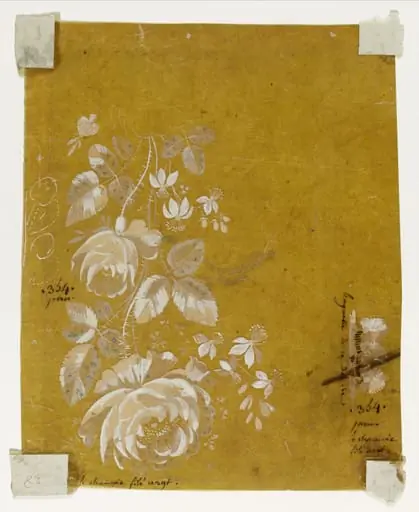 Bouquet de roses blanches pour étoffe, projets de broderies de gilet, XVIIIème siècle
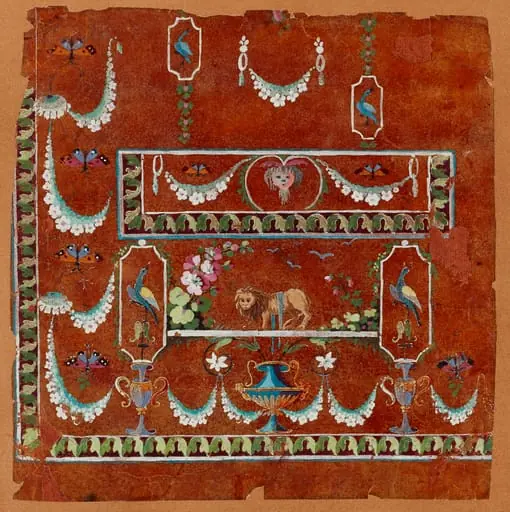 Gilet décor à grotesques, projets de broderies de gilet, XVIIIeme siècle
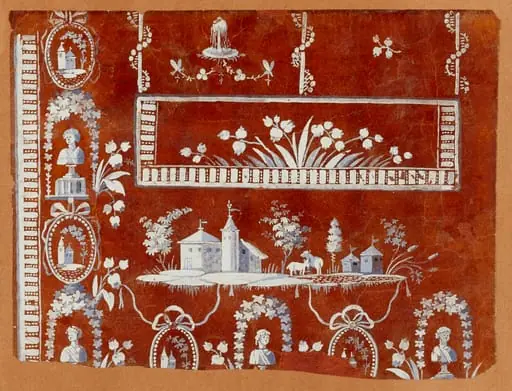 Gilet décor architectures rurales, projets de broderies de gilet, XVIIIème siècle
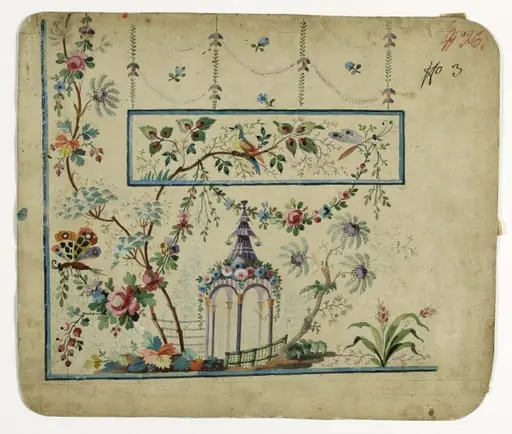 Gilet décor pagode, projets de broderies de gilet, XVIIIème siècle
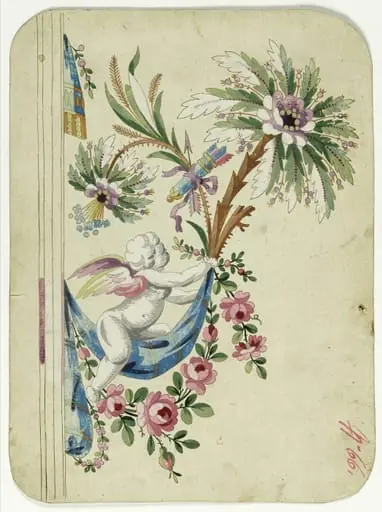 Décor de putti sur palmier, projets de broderies de gilet, XVIIIème siècle
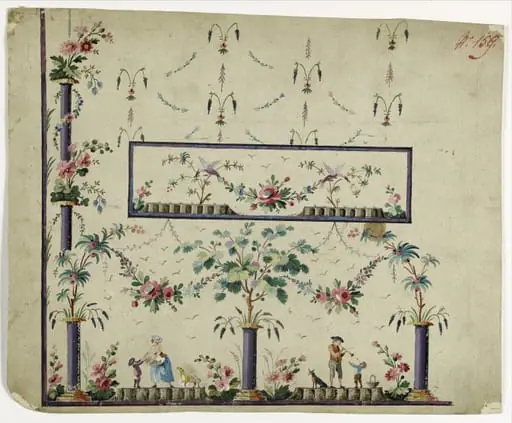 Gilet décor couple avec enfants, projets de broderies de gilet, XVIIIème siècle
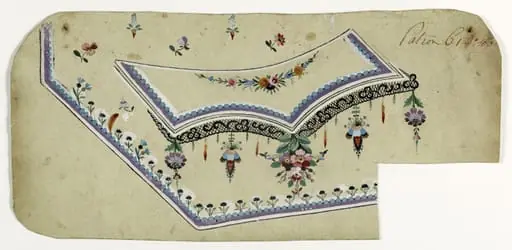 Gilet à la dentelle noire, projets de broderies de gilet, XVIIIème siècle
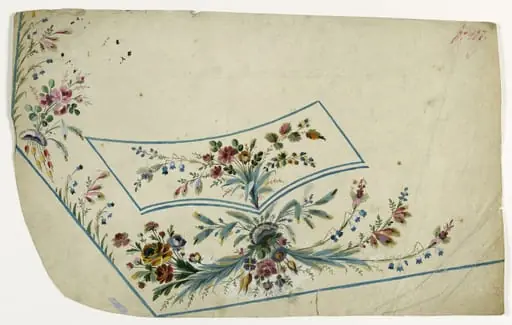 Gilet aux feuilles bleu-gris, projets de broderies de gilet, XVIIIème siècle
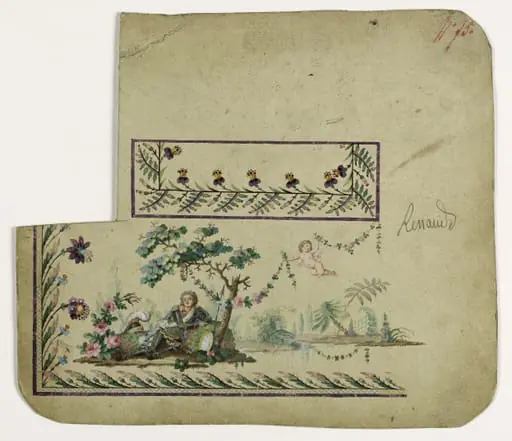 Gilet décor Renaud enchanté par Armide, projets de broderies de gilet, XVIIIème siècle
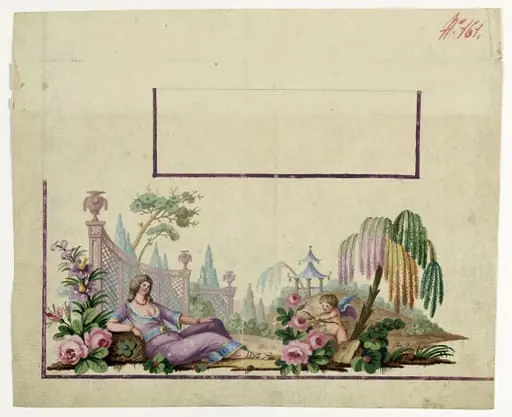 Gilet décor la déesse Flore dans un paysage de treillage, projets de broderies de gilet, XVIIIème siècle
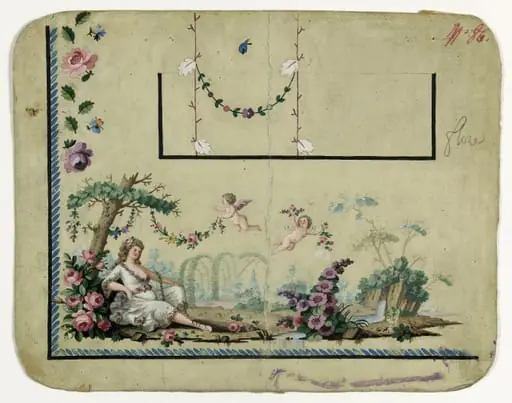 Gilet décor la déesse Flore dans un paysage, projets de broderies de gilet, XVIIIème siècle
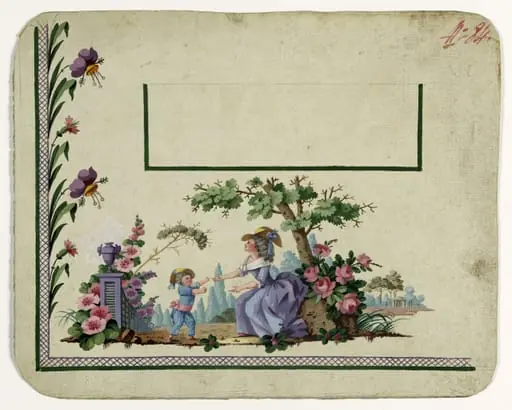 Gilet décor amour filial, projets de broderies de gilet, XVIIIème siècle
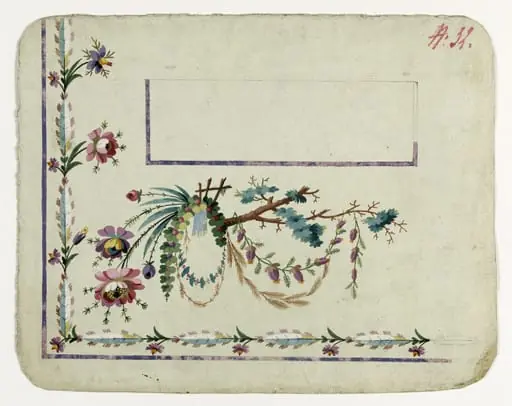 Gilet décor guirlande de branchage et de fleurs, projets de broderies de gilet, XVIIIème siècle
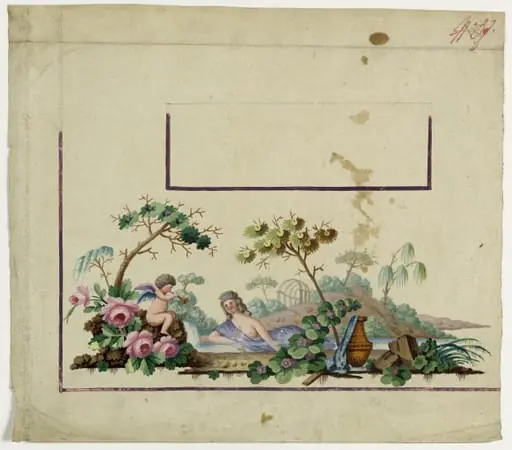 Gilet décor la déesse Flore au bain, projets de broderies de gilet, XVIIIème siècle
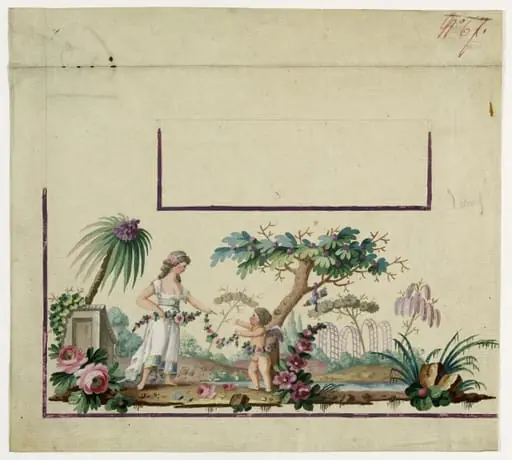 Gilet décor la déesse Flore en conversation avec un amour, projets de broderies de gilet, XVIIIème siècle
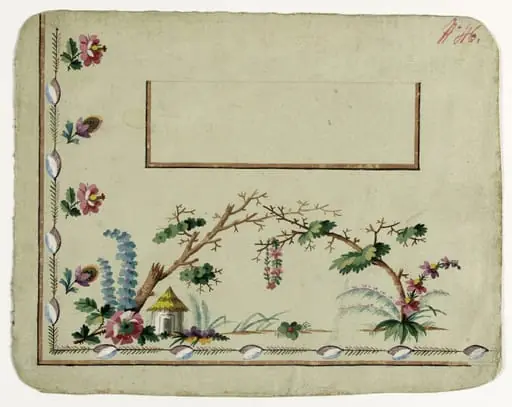 Gilet décor petite chaumière, projets de broderies de gilet, XVIIIème siècle