Artwork
Gilet décor Renaud enchanté par Armide, projets de broderies de gilet, XVIIIème siècle
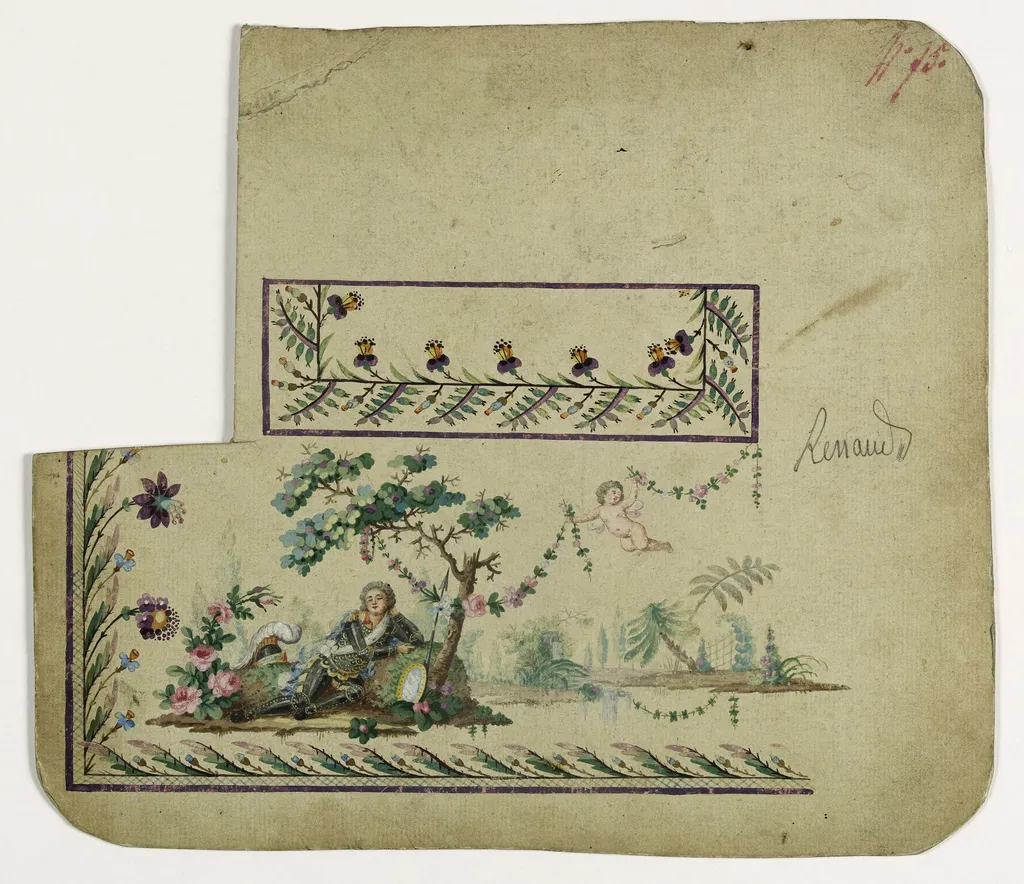
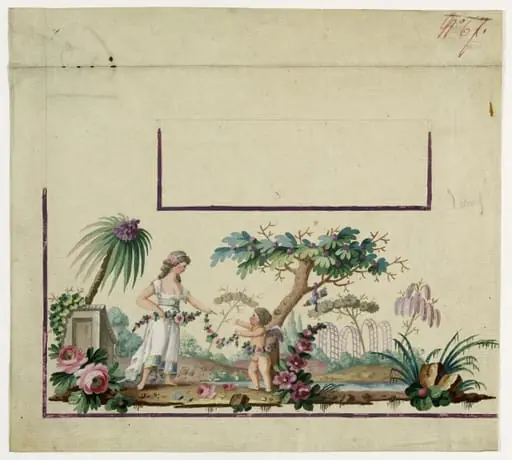
Gilet décor Renaud enchanté par Armide, projets de broderies de gilet, XVIIIème siècle is a drawing by the Romanticist artist Anonyme. It dates from 1785 and is held in the collection of the Palais Galliera - Musée de la Mode de la Ville de Paris. This 18th-century drawing, attributed to an anonymous artist, presents a decorative design intended for embroidery on a waistcoat.
About this work
Overview
Created around 1785, it features a pastoral scene with figures and ornamental borders, likely serving as a pattern guide for textile artisans.
This 18th-century drawing, attributed to an anonymous artist, presents a decorative design intended for embroidery on a waistcoat. Created around 1785, it features a pastoral scene with figures and ornamental borders, likely serving as a pattern guide for textile artisans. The work is held in the collection of the Museum of Ethnography, where it is preserved as an example of applied design rather than fine art.
Subject & Meaning
The central scene depicts a woman seated beneath a tree beside a pond, holding a book and a fan, while a cherub hovers above, offering a floral garland. The imagery evokes themes of literary enchantment and idyllic leisure, possibly referencing the romantic tale of Renaud and Armide from Tasso’s Jerusalem Delivered. The setting suggests a dreamlike retreat, aligning with 18th-century tastes for mythic and literary pastoralism.
Technique & Style
Rendered in soft, muted tones, the drawing combines delicate line work with subtle washes to suggest texture and depth. The figures are rendered with graceful, flowing contours, while the surrounding flora and fauna are arranged in rhythmic, repeating patterns. The upper border functions as a standalone embroidery template, indicating the artist’s intent to translate the design into stitched fabric.
History & Provenance
The drawing was likely produced in France during the late 1780s, a period when embroidered waistcoats were fashionable among the elite. Its survival in the Museum of Ethnography suggests it was collected as a specimen of domestic craftsmanship rather than as a standalone artwork. No record of its original commission or maker has been documented.
Context
In the 18th century, embroidered garments were status symbols, often made by skilled artisans using pattern books like this one. Designs drawn from literature, mythology, or nature were common, reflecting broader cultural interests in romanticized storytelling. This piece exemplifies the intersection of fine art, fashion, and artisanal practice in pre-revolutionary France.
Legacy
As a surviving pattern draft, the drawing offers insight into the collaborative process behind luxury textiles. It reveals how illustrators, embroiderers, and wearers participated in a shared visual language. Though never confirmed as executed, its preservation underscores the value placed on design documentation in the decorative arts of the period.
Artist & collection
Artist
A French designer from the 1700s made delicate flower drawings meant to decorate vests.
Museum
Palais Galliera - Musée de la Mode de la Ville de Paris
Continue through works from the same source collection.
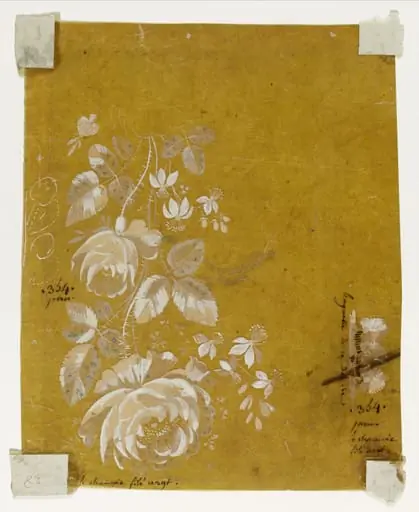 Bouquet de roses blanches pour étoffe, projets de broderies de gilet, XVIIIème siècle
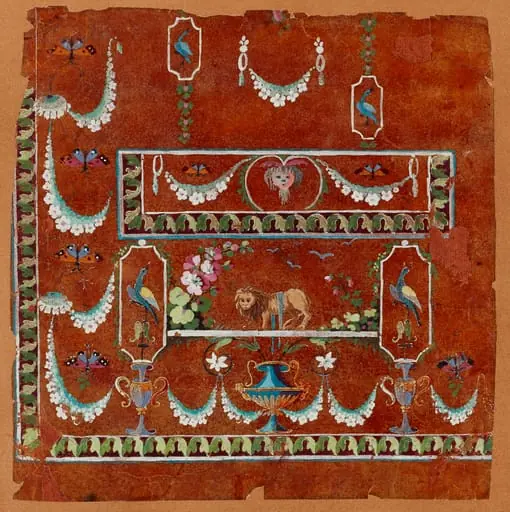 Gilet décor à grotesques, projets de broderies de gilet, XVIIIeme siècle
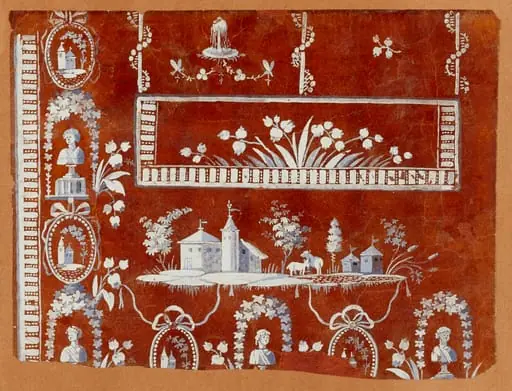 Gilet décor architectures rurales, projets de broderies de gilet, XVIIIème siècle
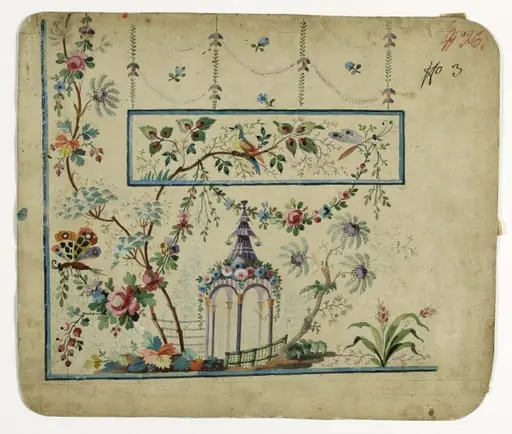 Gilet décor pagode, projets de broderies de gilet, XVIIIème siècle
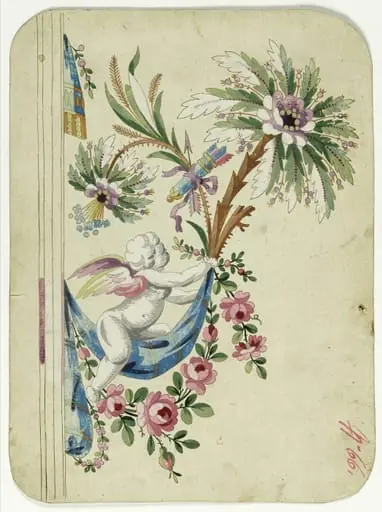 Décor de putti sur palmier, projets de broderies de gilet, XVIIIème siècle
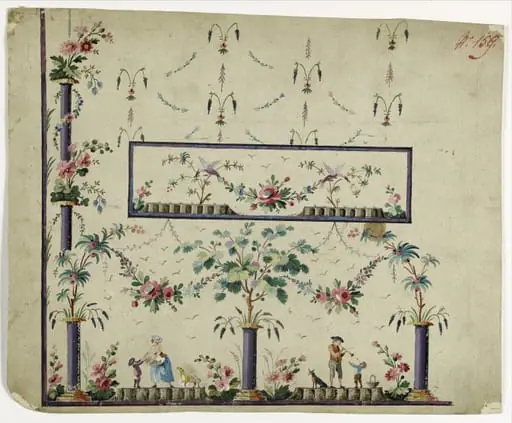 Gilet décor couple avec enfants, projets de broderies de gilet, XVIIIème siècle
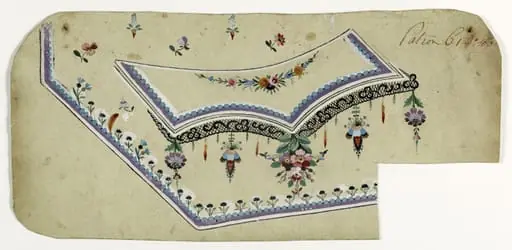 Gilet à la dentelle noire, projets de broderies de gilet, XVIIIème siècle
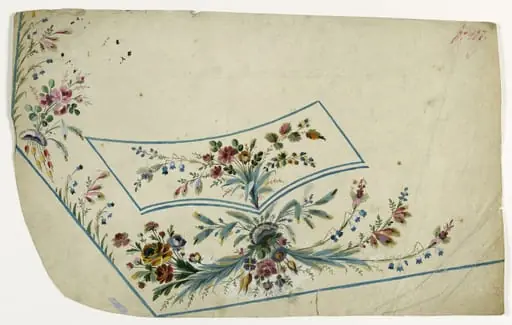 Gilet aux feuilles bleu-gris, projets de broderies de gilet, XVIIIème siècle
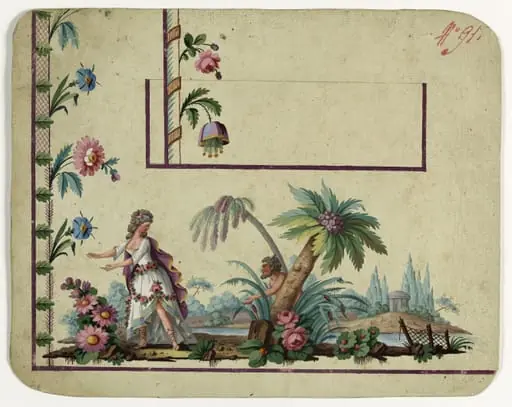 Gilet décor Flore et le faune, projets de broderies de gilet, XVIIIème siècle
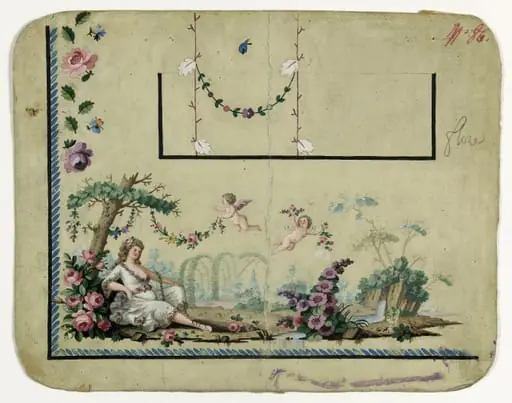 Gilet décor la déesse Flore dans un paysage, projets de broderies de gilet, XVIIIème siècle
![Gilet décor Enée aborde en Afrique ou en Italie [ ? ], projets de broderies de gilet, XVIIIème siècle, by Anonyme](https://artifactworldgallery.com/img/anonyme--gilet-decor-enee-aborde-en-afrique-ou-en-italie-projets-de-b--71103e9e9849fdb0-w320.webp) Gilet décor Enée aborde en Afrique ou en Italie [ ? ], projets de broderies de gilet, XVIIIème siècle
Gilet décor Enée aborde en Afrique ou en Italie [ ? ], projets de broderies de gilet, XVIIIème siècle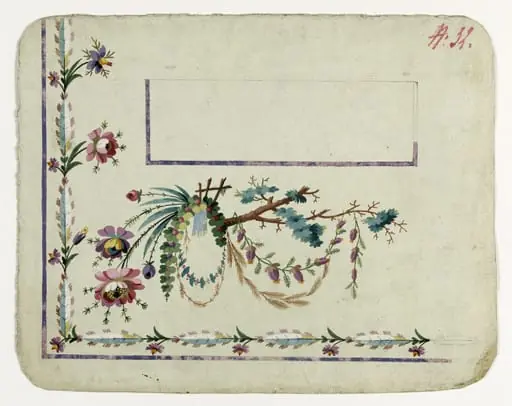 Gilet décor guirlande de branchage et de fleurs, projets de broderies de gilet, XVIIIème siècle
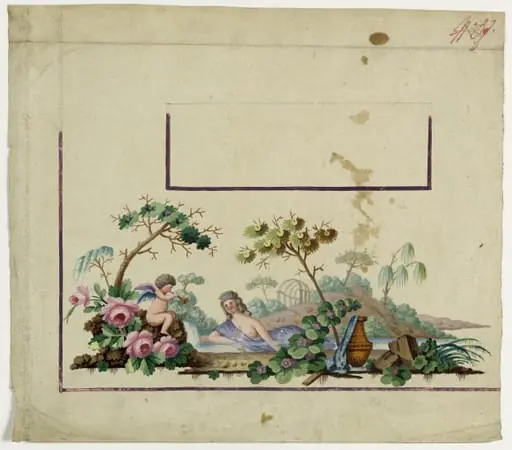 Gilet décor la déesse Flore au bain, projets de broderies de gilet, XVIIIème siècle
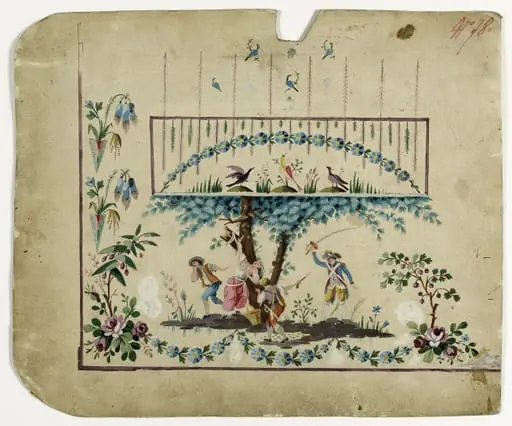 Gilet décor Louis Gillet délivrant une paysanne, projets de broderies de gilet, XVIIIème siècle
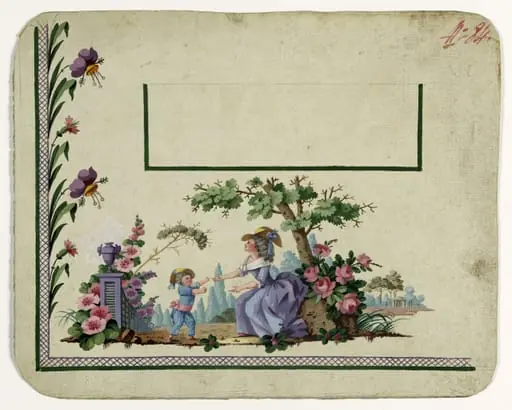 Gilet décor amour filial, projets de broderies de gilet, XVIIIème siècle
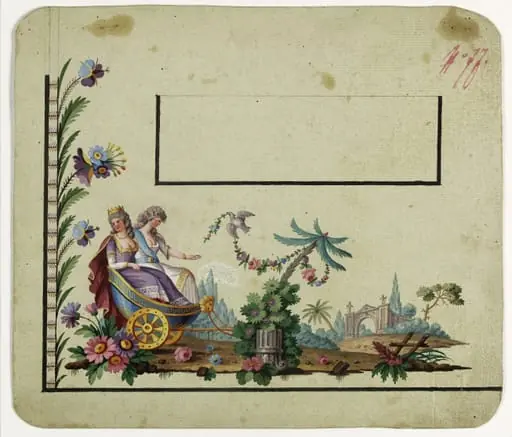 Gilet décor Didon en promenade sur un char, projets de broderies de gilet, XVIIIème siècle
 Gilet décor la déesse Flore en conversation avec un amour, projets de broderies de gilet, XVIIIème siècle