Artwork
Gilet décor la déesse Flore en conversation avec un amour, projets de broderies de gilet, XVIIIème siècle
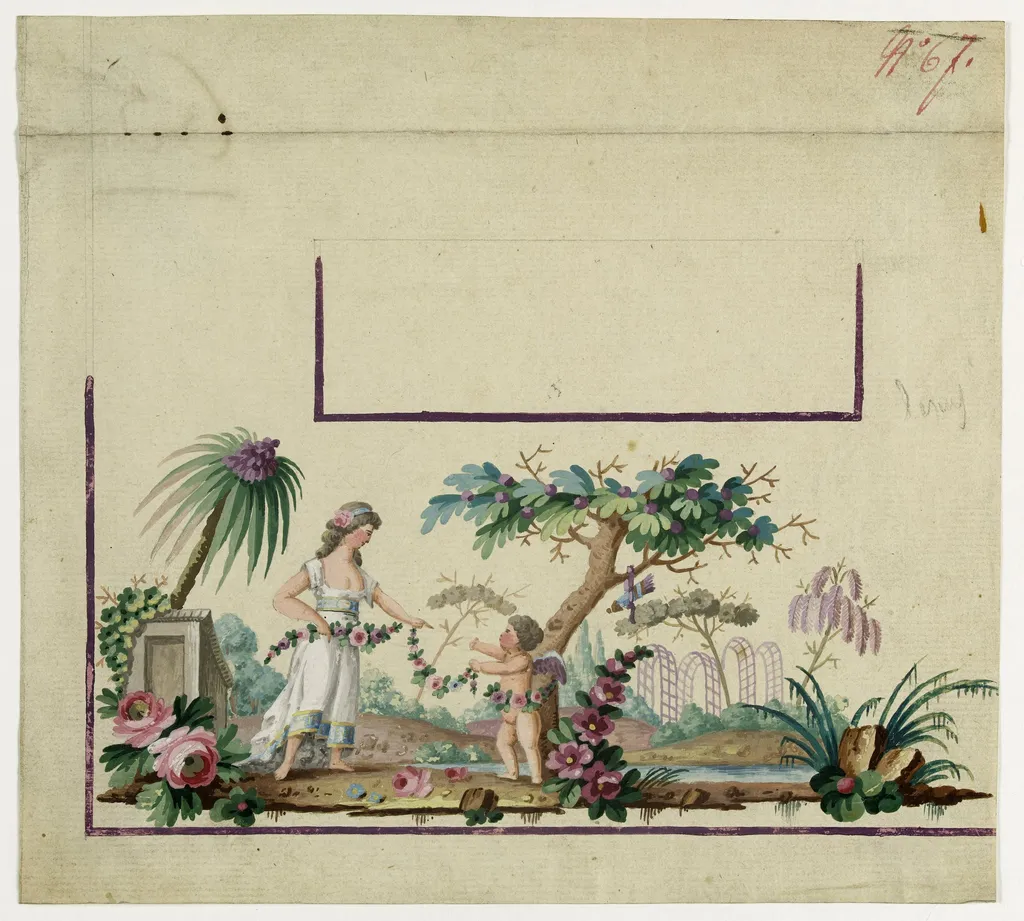
Gilet décor la déesse Flore en conversation avec un amour, projets de broderies de gilet, XVIIIème siècle is a drawing by the Romanticist artist Anonyme. It dates from 1785 and is held in the collection of the Palais Galliera - Musée de la Mode de la Ville de Paris. This 18th-century design, dated to around 1785, was created as a preparatory sketch for an embroidered waistcoat.
About this work
Overview
This 18th-century design, dated to around 1785, was created as a preparatory sketch for an embroidered waistcoat.
This 18th-century design, dated to around 1785, was created as a preparatory sketch for an embroidered waistcoat. Executed in soft pastel tones, it depicts a mythological scene meant to guide needlework artisans. The composition is framed by a clean white border, typical of textile patterns intended for transfer onto fabric. Though unsigned, it reflects the refined decorative practices of French courtly fashion at the time.
Subject & Meaning
The scene portrays Flora, the Roman goddess of flowers and spring, offering a branch to a winged putto, symbolizing love or desire. Their interaction evokes themes of fertility and renewal, common in Enlightenment-era decorative arts. The garden setting, with its blooming flora and exotic palm, reinforces an idealized natural world, aligning with contemporary tastes for pastoral elegance and mythological allegory in personal adornment.
Technique & Style
Rendered in delicate washes of pink, green, and lavender, the drawing employs subtle gradations to suggest volume and light without heavy outlines. The figures are rendered with graceful, flowing lines, characteristic of Rococo-inspired design. The white border frames the scene like a textile motif, indicating its function as a template for embroidery, where each hue would be translated into silk or metallic thread.
History & Provenance
The drawing resides in the collection of the Museum of Ethnography, likely acquired as part of a broader archive of textile design materials. Its survival suggests it was valued not merely as a sketch but as a document of artisanal practice. Though its original commission is unknown, similar designs were used by workshops supplying elite garments in pre-Revolutionary France.
Context
In late 18th-century France, embroidered waistcoats were markers of refined taste among the aristocracy. Floral motifs drawn from mythology were popular, blending classical allusion with naturalistic detail. This design reflects the intersection of fine art and craft, where painters and draftsmen created patterns for skilled needleworkers, often women, whose labor was essential to fashion but rarely credited.
Legacy
As a surviving example of textile design, it offers insight into the collaborative nature of fashion production before industrialization. While the garment it may have inspired is lost, the drawing preserves the aesthetic priorities of its time: harmony between myth, nature, and ornament. It stands as a quiet testament to the artistry embedded in everyday luxury.
Artist & collection
Artist
A French designer from the 1700s made delicate flower drawings meant to decorate vests.
Museum
Palais Galliera - Musée de la Mode de la Ville de Paris
Continue through works from the same source collection.
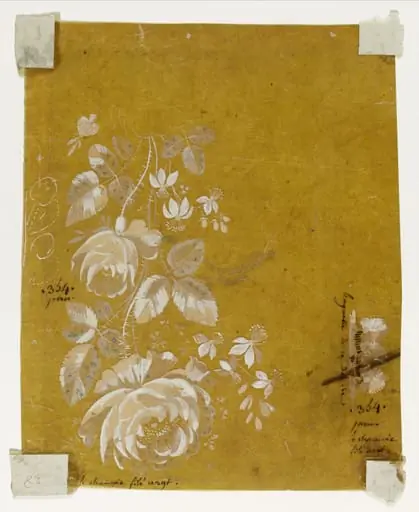 Bouquet de roses blanches pour étoffe, projets de broderies de gilet, XVIIIème siècle
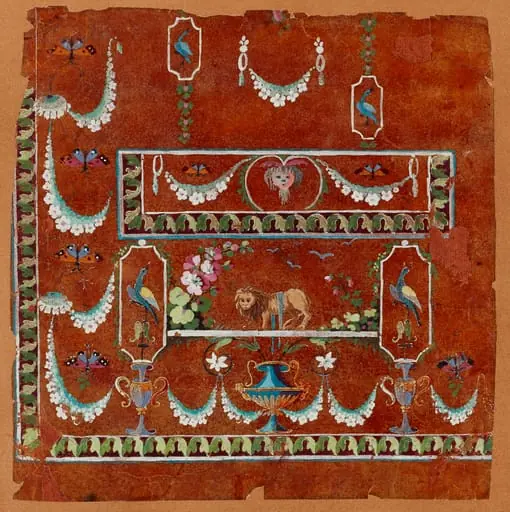 Gilet décor à grotesques, projets de broderies de gilet, XVIIIeme siècle
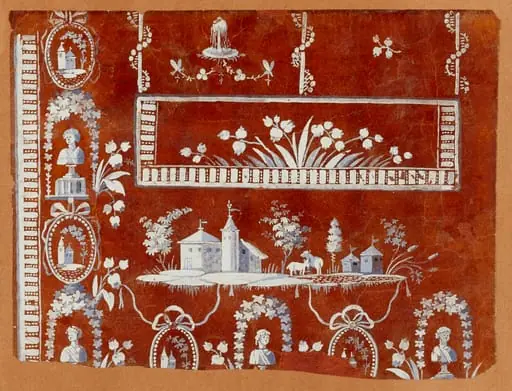 Gilet décor architectures rurales, projets de broderies de gilet, XVIIIème siècle
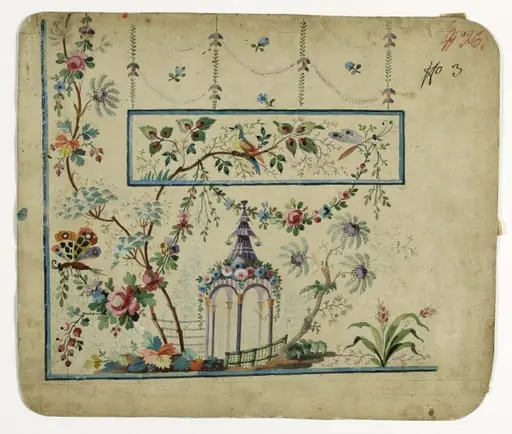 Gilet décor pagode, projets de broderies de gilet, XVIIIème siècle
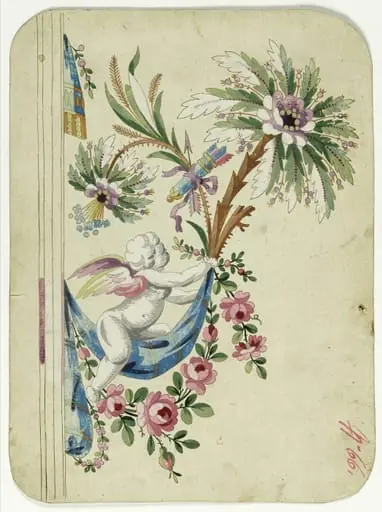 Décor de putti sur palmier, projets de broderies de gilet, XVIIIème siècle
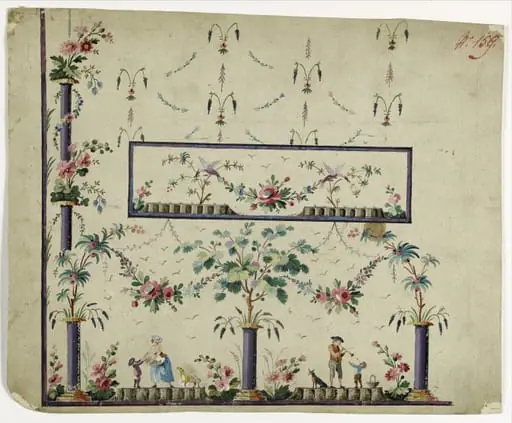 Gilet décor couple avec enfants, projets de broderies de gilet, XVIIIème siècle
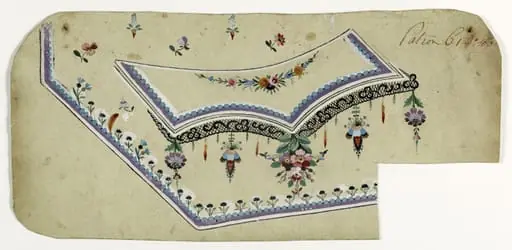 Gilet à la dentelle noire, projets de broderies de gilet, XVIIIème siècle
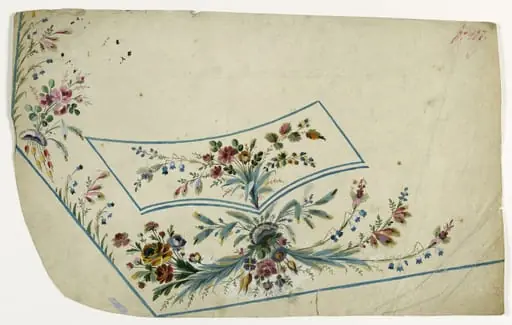 Gilet aux feuilles bleu-gris, projets de broderies de gilet, XVIIIème siècle
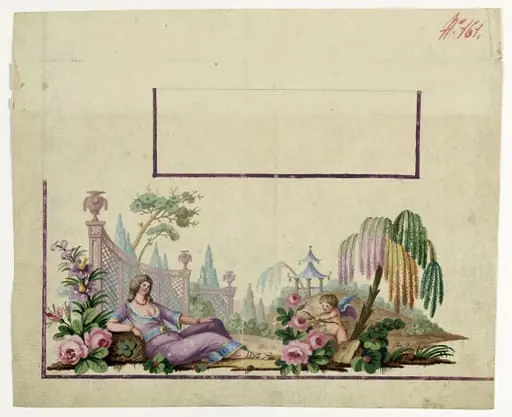 Gilet décor la déesse Flore dans un paysage de treillage, projets de broderies de gilet, XVIIIème siècle
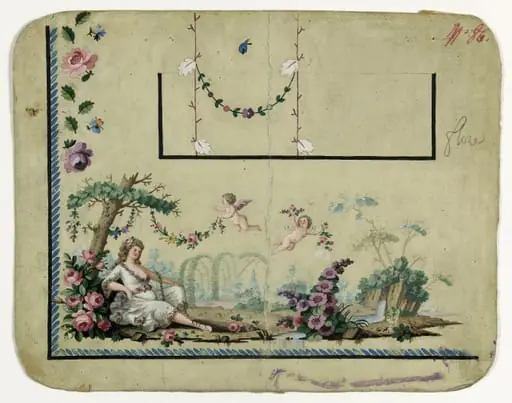 Gilet décor la déesse Flore dans un paysage, projets de broderies de gilet, XVIIIème siècle
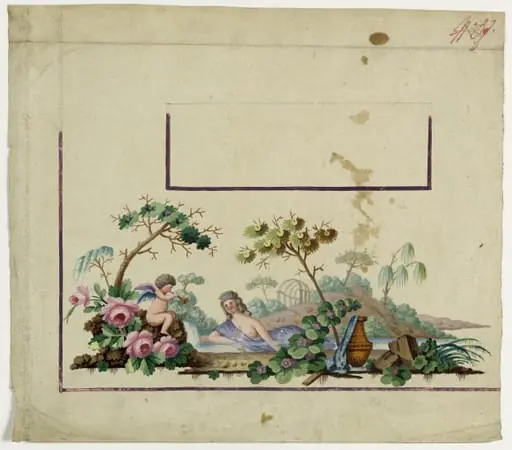 Gilet décor la déesse Flore au bain, projets de broderies de gilet, XVIIIème siècle
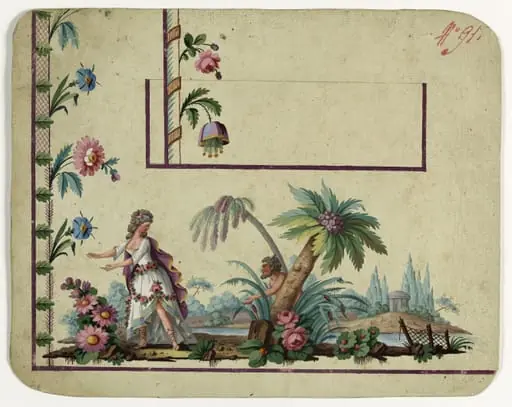 Gilet décor Flore et le faune, projets de broderies de gilet, XVIIIème siècle
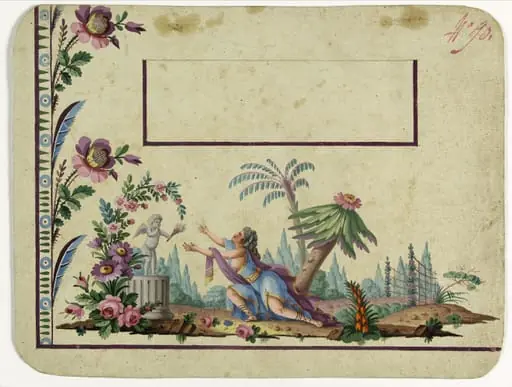 Gilet décor la déesse Flore avec un putti en pierre, projets de broderies de gilet, XVIIIème siècle
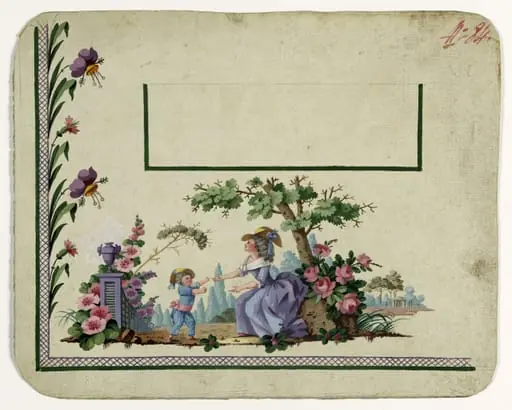 Gilet décor amour filial, projets de broderies de gilet, XVIIIème siècle
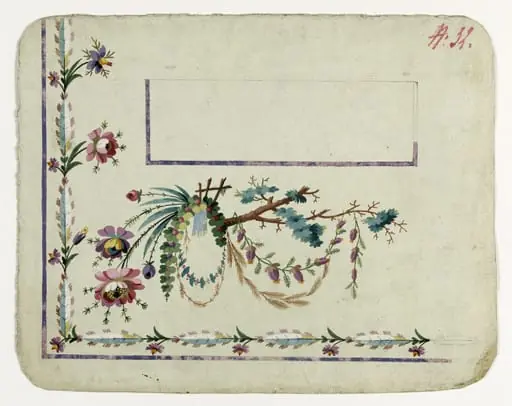 Gilet décor guirlande de branchage et de fleurs, projets de broderies de gilet, XVIIIème siècle
![Gilet décor Enée aborde en Afrique ou en Italie [ ? ], projets de broderies de gilet, XVIIIème siècle, by Anonyme](https://artifactworldgallery.com/img/anonyme--gilet-decor-enee-aborde-en-afrique-ou-en-italie-projets-de-b--71103e9e9849fdb0-w320.webp) Gilet décor Enée aborde en Afrique ou en Italie [ ? ], projets de broderies de gilet, XVIIIème siècle
Gilet décor Enée aborde en Afrique ou en Italie [ ? ], projets de broderies de gilet, XVIIIème siècle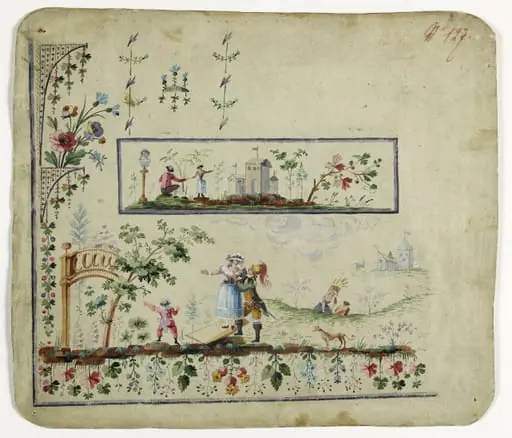 Gilet décor séduction entre un officier et une paysanne, projets de broderies de gilet, XVIIIème siècle
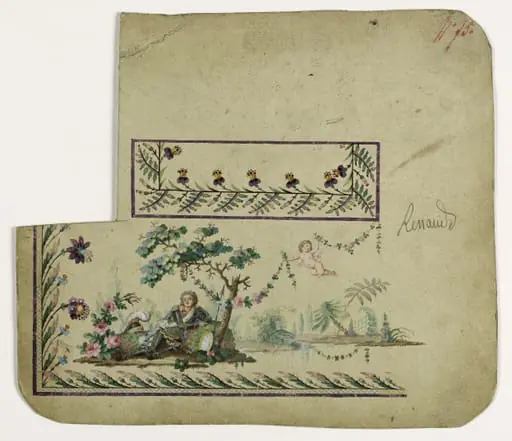 Gilet décor Renaud enchanté par Armide, projets de broderies de gilet, XVIIIème siècle