Artwork
Gilet décor la déesse Flore dans un paysage, projets de broderies de gilet, XVIIIème siècle
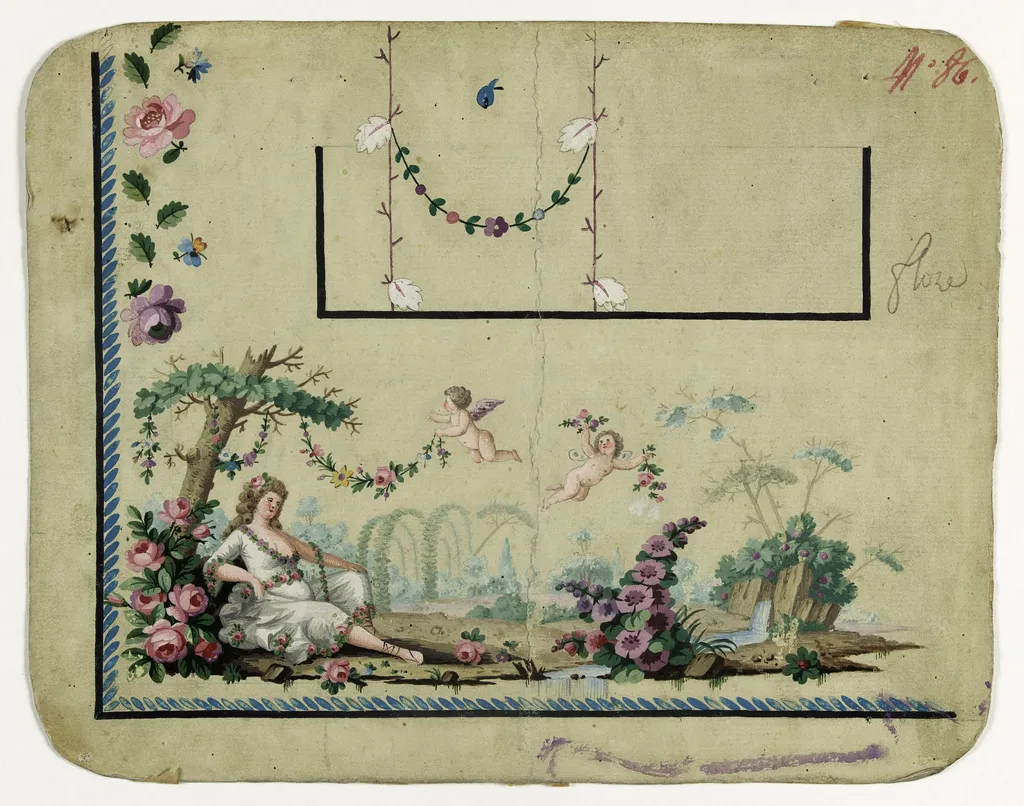
Gilet décor la déesse Flore dans un paysage, projets de broderies de gilet, XVIIIème siècle is a drawing by the Romanticist artist Anonyme. It dates from 1785 and is held in the collection of the Palais Galliera - Musée de la Mode de la Ville de Paris. The 1785 drawing, attributed to an unknown artist, functions as a design proposal for an embroidered gilet.
About this work
This drawing shows a woman sitting under a tree, dressed in a flowing white gown with pink flowers in her hair.
This drawing shows a woman sitting under a tree, dressed in a flowing white gown with pink flowers in her hair. Above her, two cherubs float near garlands of flowers and leaves. The background has a distant landscape with a bridge and buildings, all outlined in soft blue and green. The edges of the paper have decorative borders with more flowers and leaves.
The empty black rectangle at the top looks like a space for a design—maybe a pattern for embroidery. This drawing was made in 1785 as a guide for stitching onto a pocket.
Next, look up embroidery to see how these kinds of designs were turned into fabric.
Overview
The 1785 drawing, attributed to an unknown artist, functions as a design proposal for an embroidered gilet. Executed on paper, the composition presents a pastoral scene framed by ornamental borders, intended to guide needlework applied to a garment pocket. The work is part of the collection of the Museum of Ethnography, where it is catalogued as a reference for eighteenth‑century textile decoration.
Subject & Meaning
At the centre of the image sits a woman identified as the Roman goddess Flora, her white robe and flower‑adorned hair emphasizing themes of fertility and nature. Above her, two putti hover beside garlands of blossoms and foliage, reinforcing the celebratory atmosphere of spring. The distant landscape, with a bridge and modest architecture, situates the mythological figure within an idealized countryside.
Technique & Style
Rendered in fine pen and wash, the drawing combines delicate line work with soft washes of blue and green to suggest depth. Decorative borders echo the central motif, featuring stylised leaves and blossoms that echo contemporary Rococo ornamentation. The composition’s clear zones of outline and shading would have served as a practical template for embroiderers translating the design onto silk or linen.
History & Provenance
Created in 1785 as a pattern for a pocket on a men’s gilet, the drawing remained in private hands before entering the Museum of Ethnography’s holdings. Its anonymity reflects the common practice of workshop‑produced design sheets, which were rarely signed. The museum acquired the piece as part of a broader collection documenting European textile arts.
Context
During the late eighteenth century, fashionable male attire often incorporated embroidered elements drawn from classical mythology, aligning personal adornment with Enlightenment tastes for antiquity. Designs such as this one illustrate how artisans merged artistic illustration with practical garment decoration, providing a visual bridge between fine art and everyday dress.
Artist & collection
Artist
A French designer from the 1700s made delicate flower drawings meant to decorate vests.
Museum
Palais Galliera - Musée de la Mode de la Ville de Paris
Continue through works from the same source collection.
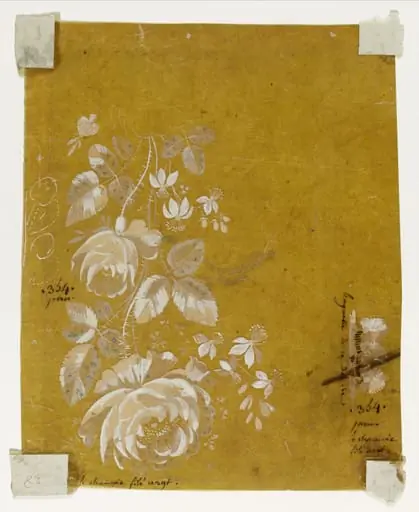 Bouquet de roses blanches pour étoffe, projets de broderies de gilet, XVIIIème siècle
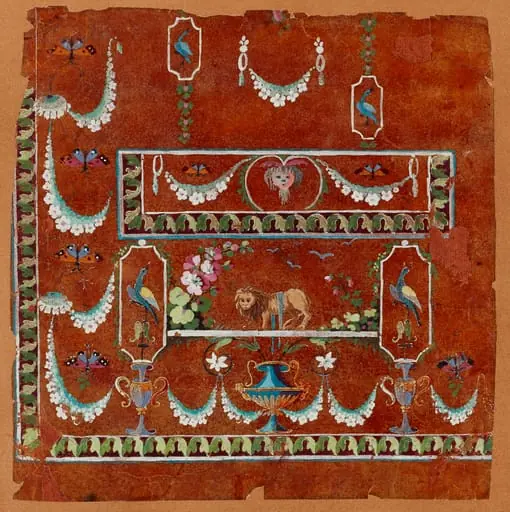 Gilet décor à grotesques, projets de broderies de gilet, XVIIIeme siècle
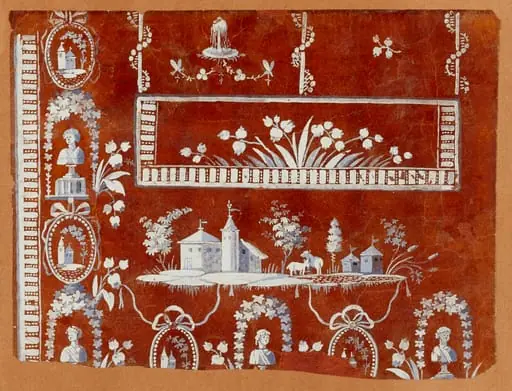 Gilet décor architectures rurales, projets de broderies de gilet, XVIIIème siècle
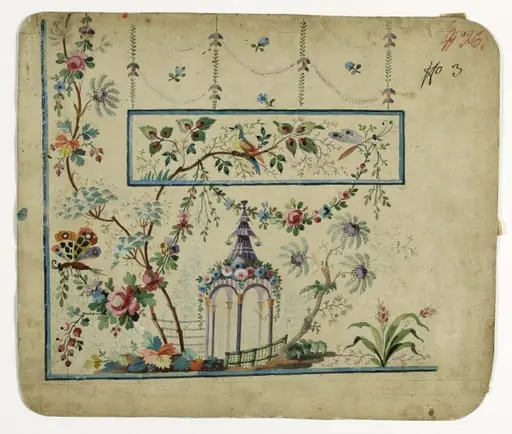 Gilet décor pagode, projets de broderies de gilet, XVIIIème siècle
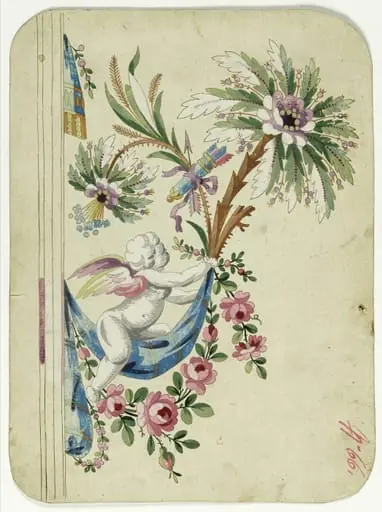 Décor de putti sur palmier, projets de broderies de gilet, XVIIIème siècle
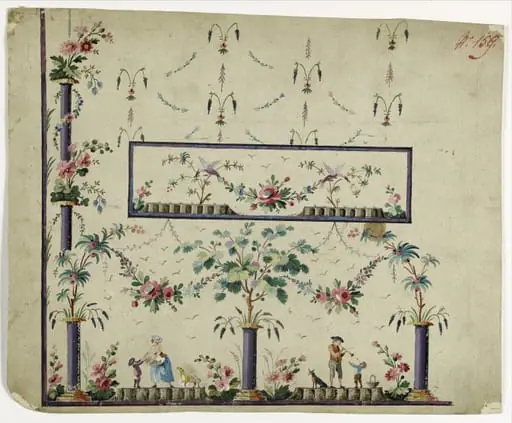 Gilet décor couple avec enfants, projets de broderies de gilet, XVIIIème siècle
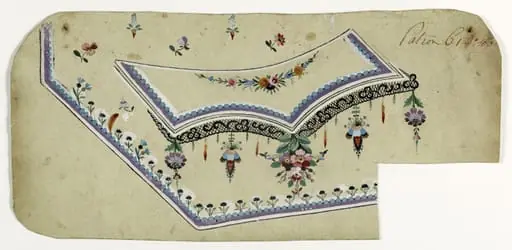 Gilet à la dentelle noire, projets de broderies de gilet, XVIIIème siècle
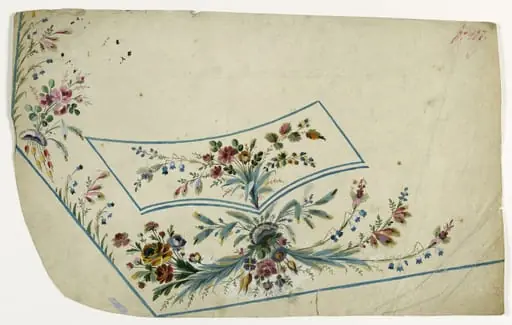 Gilet aux feuilles bleu-gris, projets de broderies de gilet, XVIIIème siècle
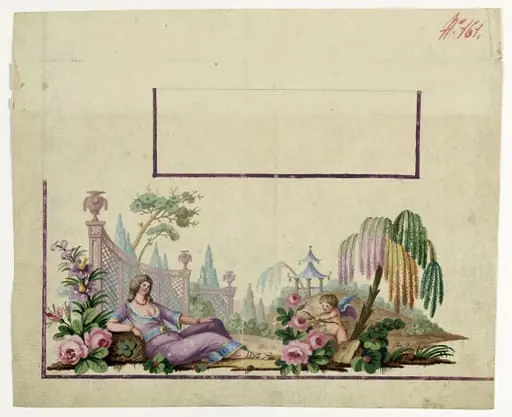 Gilet décor la déesse Flore dans un paysage de treillage, projets de broderies de gilet, XVIIIème siècle
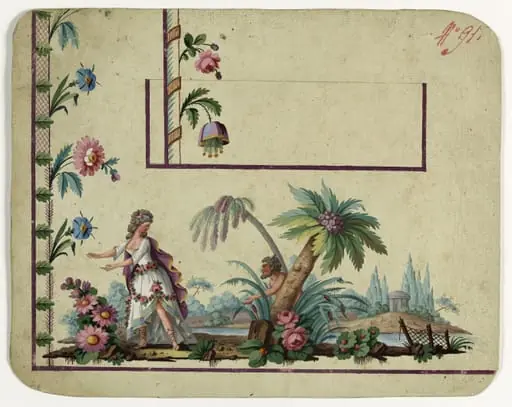 Gilet décor Flore et le faune, projets de broderies de gilet, XVIIIème siècle
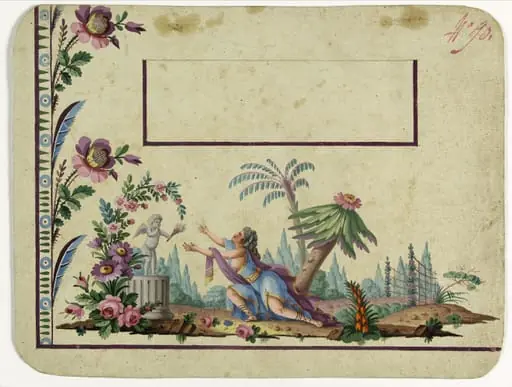 Gilet décor la déesse Flore avec un putti en pierre, projets de broderies de gilet, XVIIIème siècle
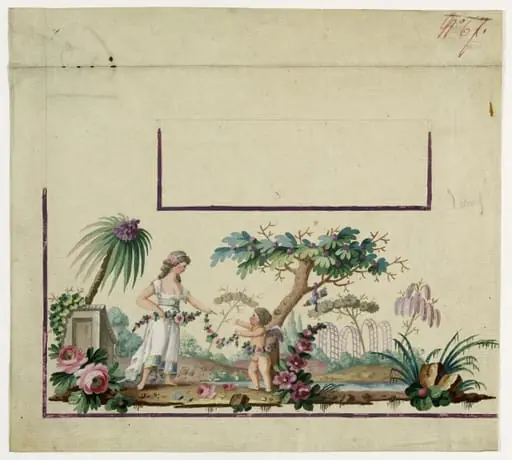 Gilet décor la déesse Flore en conversation avec un amour, projets de broderies de gilet, XVIIIème siècle
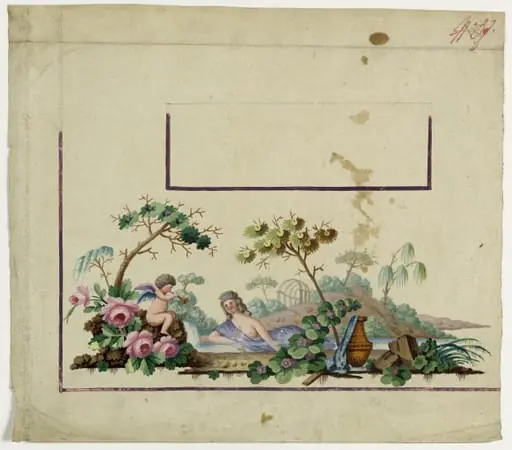 Gilet décor la déesse Flore au bain, projets de broderies de gilet, XVIIIème siècle
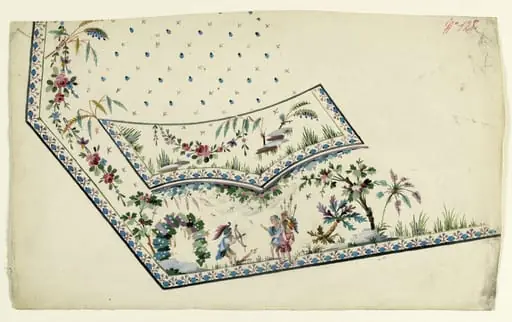 Gilet décor de paysage avec guerriers, projets de broderies de gilet, XVIIIème siècle
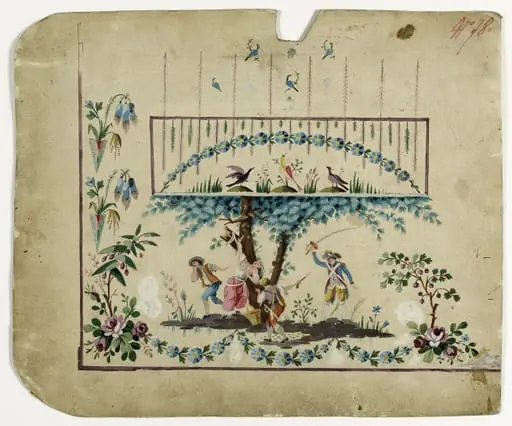 Gilet décor Louis Gillet délivrant une paysanne, projets de broderies de gilet, XVIIIème siècle
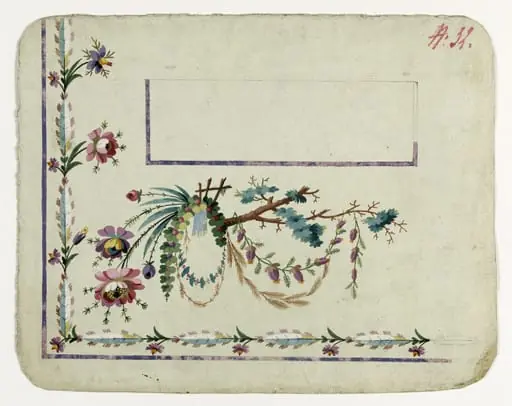 Gilet décor guirlande de branchage et de fleurs, projets de broderies de gilet, XVIIIème siècle
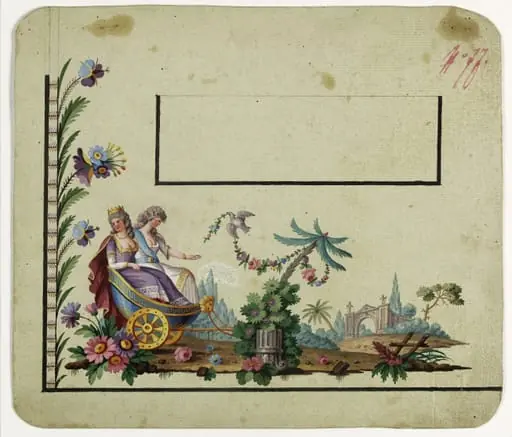 Gilet décor Didon en promenade sur un char, projets de broderies de gilet, XVIIIème siècle