Artwork
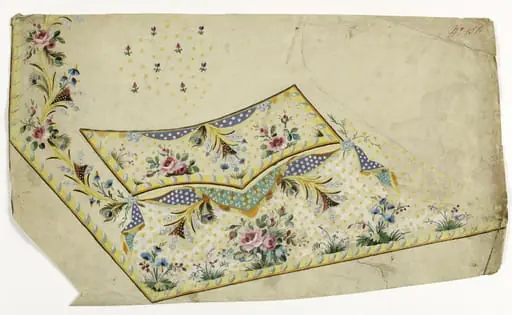
Gilet perles et fleurs, projets de broderies de gilet, XVIIIème siècle
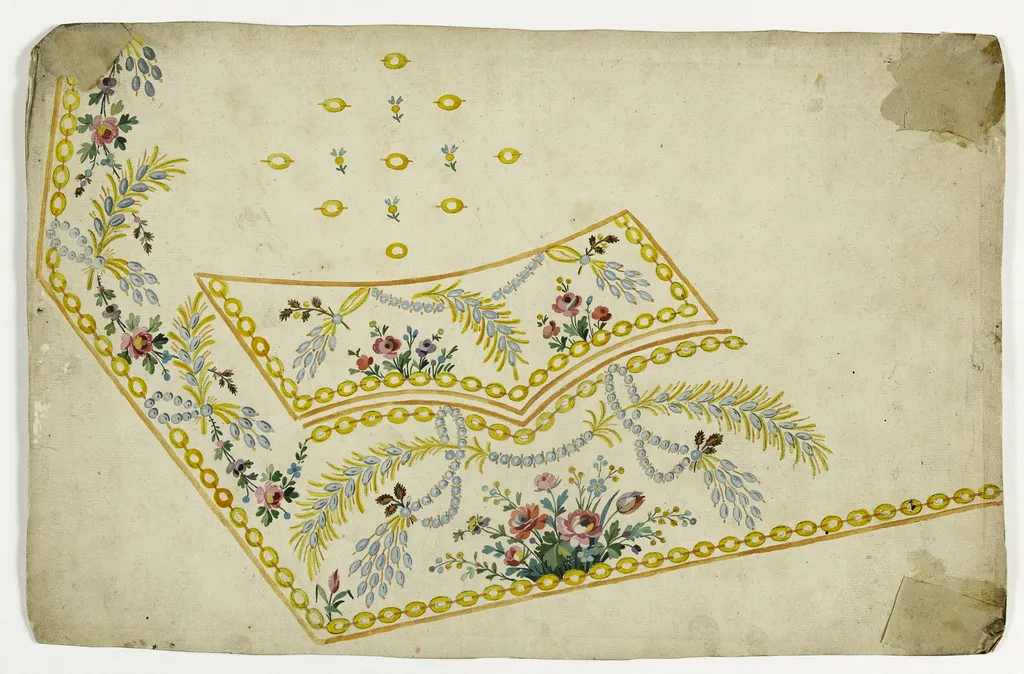
Gilet perles et fleurs, projets de broderies de gilet, XVIIIème siècle is a drawing by Anonyme. It dates from 1750 and is held in the collection of the Palais Galliera - Musée de la Mode de la Ville de Paris.
About this work
Overview
This 18th-century draft, attributed to an unknown artist, presents a design for a beaded vest, likely intended as a pattern guide for needlework. Executed in delicate ink and watercolor on paper, it features a border of floral motifs and an interior field of repeating berry-and-vine elements. The work survives as a fragment of textile design practice, preserved at the Museum of Ethnography.
Subject & Meaning
The pattern depicts stylized flora—flowers, leaves, berries, and vines—arranged in orderly, symmetrical rows. These motifs were common in European decorative arts of the period, symbolizing natural abundance and refinement. The design served a utilitarian purpose: to instruct artisans in the placement of embroidery and beadwork, translating aesthetic ideals into repeatable craft instructions.
Technique & Style
Rendered in soft washes of pink, blue, and green, the drawing employs subtle tonal shifts to suggest depth and texture. The lines are precise but faint, indicating careful planning rather than final execution. Wear along the edges and fading in pigment reflect its use as a working template, not a finished artwork, revealing the material life of textile design in pre-industrial workshops.
History & Provenance
Created around 1750, the drawing entered the collection of the Museum of Ethnography as part of a broader archive of textile patterns. Its origin remains undocumented, though its style aligns with French or Flemish design traditions of the mid-18th century. It was likely produced in a workshop that supplied embroidery patterns to elite dressmakers or domestic artisans.
Context
During the 18th century, embroidered garments were status symbols, requiring detailed templates for complex beadwork. Pattern books and hand-drawn sketches like this one circulated among artisans, often passed down or copied. This drawing reflects a system of craft knowledge transmitted visually, before printed pattern catalogs became widespread.
Legacy
As a surviving example of pre-industrial textile design, the drawing illustrates the quiet labor behind ornamental fashion. It preserves the visual language of a craft now largely forgotten, offering insight into how beauty was systematically reproduced in everyday objects. Its fragility underscores the ephemeral nature of artisanal records from this era.
Artist & collection
Artist
A French designer from the 1700s made delicate flower drawings meant to decorate vests.
Museum
Palais Galliera - Musée de la Mode de la Ville de Paris
Continue through works from the same source collection.
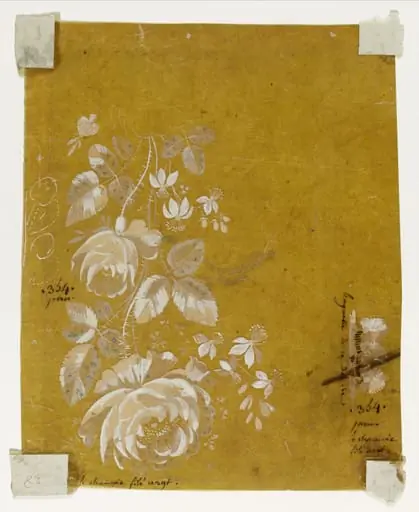 Bouquet de roses blanches pour étoffe, projets de broderies de gilet, XVIIIème siècle
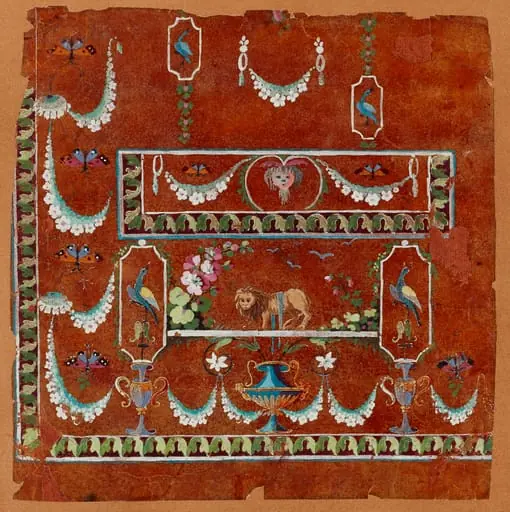 Gilet décor à grotesques, projets de broderies de gilet, XVIIIeme siècle
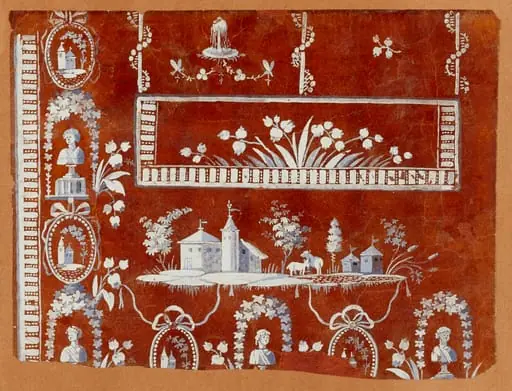 Gilet décor architectures rurales, projets de broderies de gilet, XVIIIème siècle
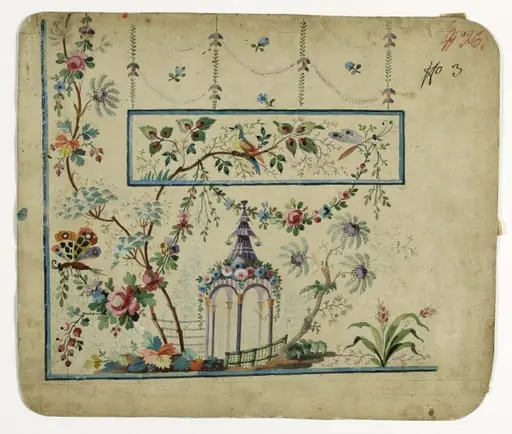 Gilet décor pagode, projets de broderies de gilet, XVIIIème siècle
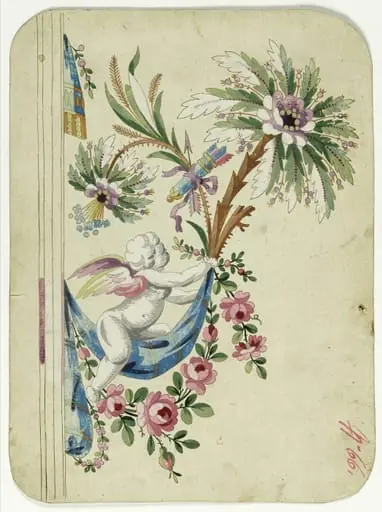 Décor de putti sur palmier, projets de broderies de gilet, XVIIIème siècle
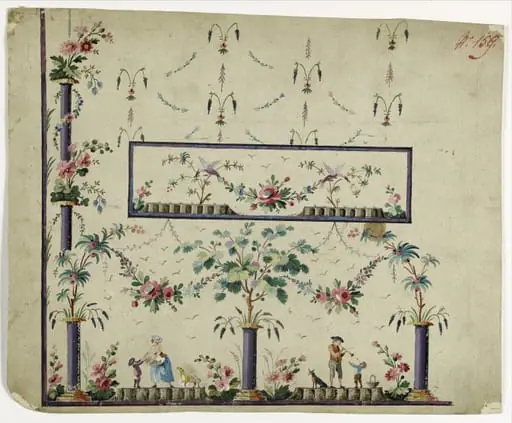 Gilet décor couple avec enfants, projets de broderies de gilet, XVIIIème siècle
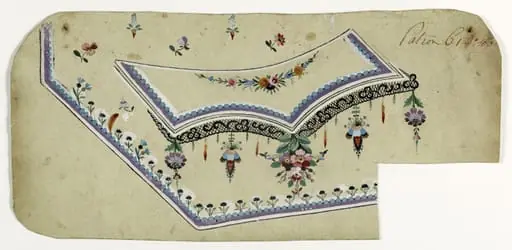 Gilet à la dentelle noire, projets de broderies de gilet, XVIIIème siècle
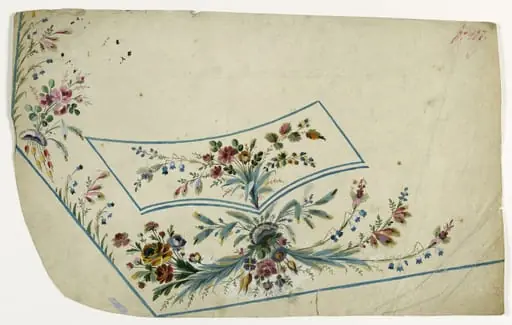 Gilet aux feuilles bleu-gris, projets de broderies de gilet, XVIIIème siècle
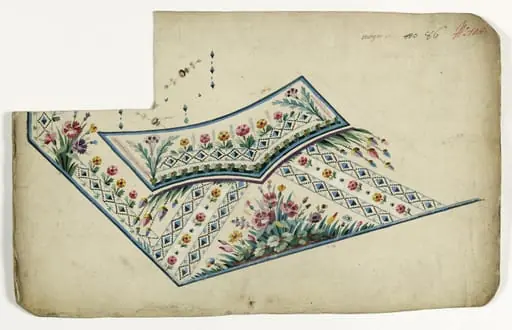 Gilet fleurs et losanges, projets de broderies de gilet, XVIIIème siècle
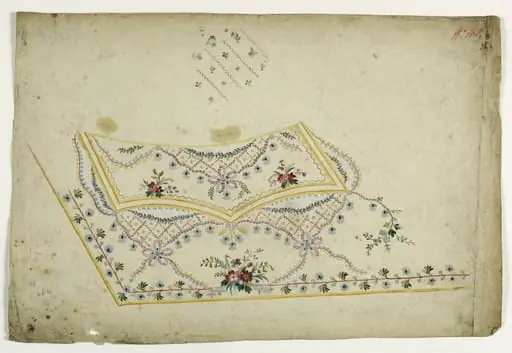 Gilet bouquets et noeuds, projets de broderies de gilet, XVIIIème siècle
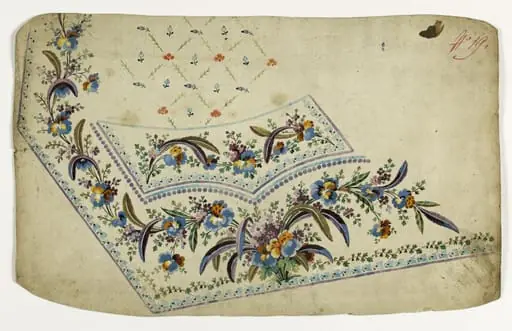 Gilet fleurs bleues et orange, projets de broderies de gilet, XVIIIème siècle
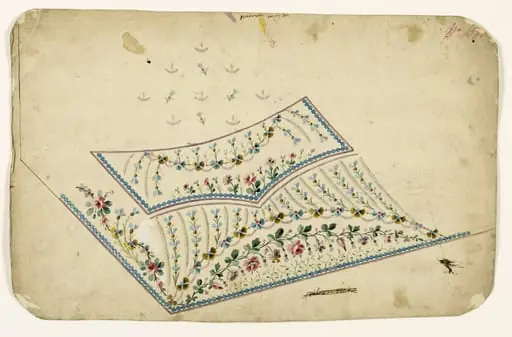 Composition de guirlandes de fleurs et de feuilles et frises de perles bleues, projets de broderies de gilet, XVIIIème siècle
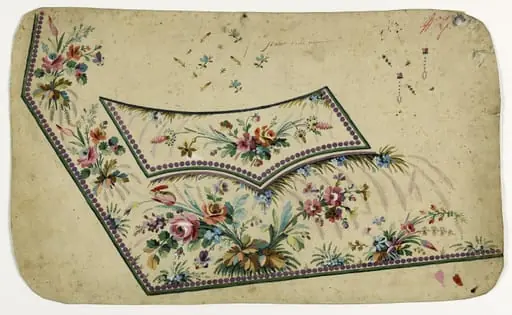 Gilet fleurs et perles mauves, projets de broderies de gilet, XVIIIème siècle
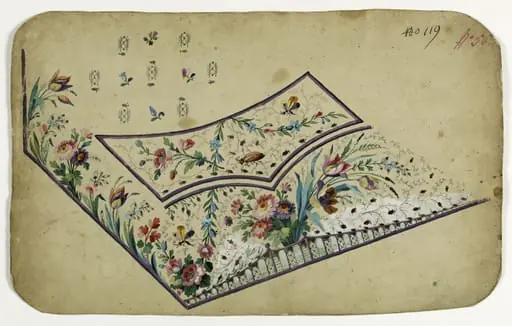 Gilet fleurs, papillons et scarabée, projets de broderies de gilet, XVIIIème siècle
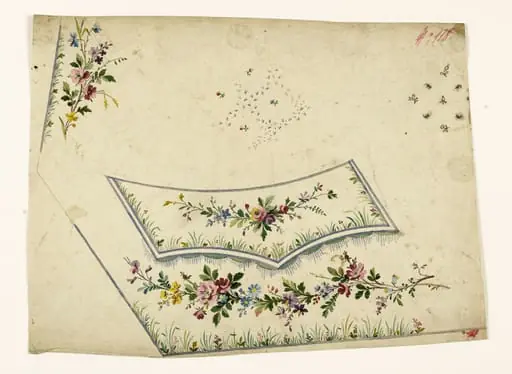 Guirlandes de fleurs et frise de franges perlées mauves, projets de broderies de gilet, XVIIIème siècle
 Gilet aux plumes de paon, projets de broderies de gilet, XVIIIème siècle