Artwork
Gilet guerrier dans un paysage, projets de broderies de gilet, XVIIIème siècle
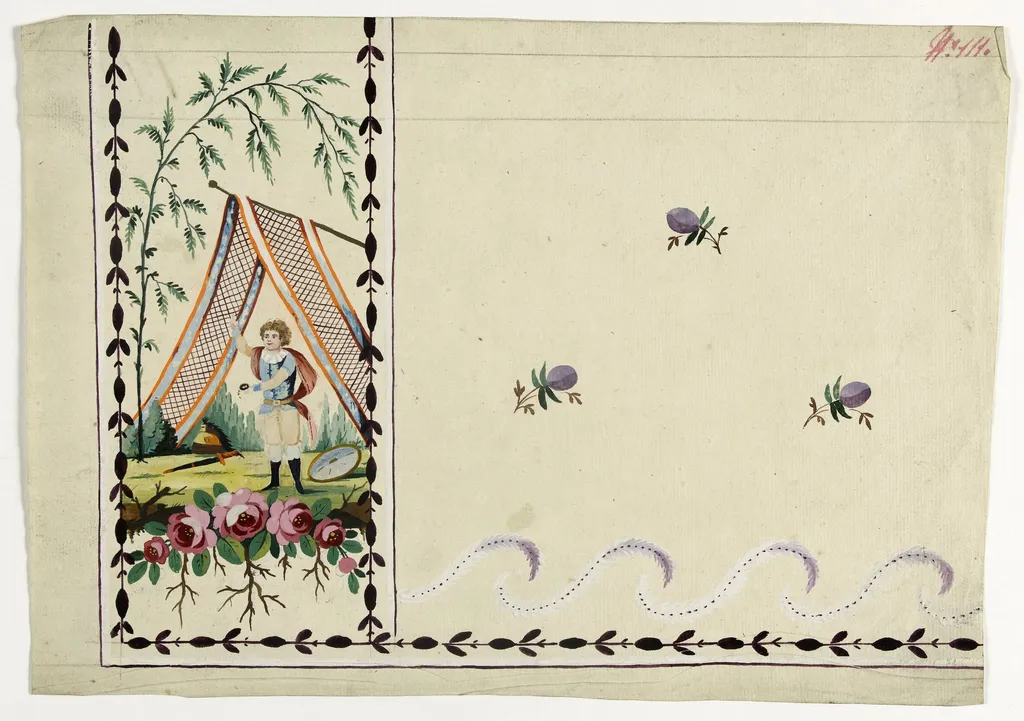
Gilet guerrier dans un paysage, projets de broderies de gilet, XVIIIème siècle is a drawing by the Romanticist artist Anonyme. It dates from 1785 and is held in the collection of the Palais Galliera - Musée de la Mode de la Ville de Paris. This 18th-century drawing, dated to around 1785, presents a set of design proposals for embroidered waistcoats.
About this work
Overview
This 18th-century drawing, dated to around 1785, presents a set of design proposals for embroidered waistcoats. Created by an unknown artist, it features a domestic interior scene framed by ornamental borders. The work resides in the collection of the Museum of Ethnography, where it is studied as a visual record of textile design practices rather than a finished garment.
Subject & Meaning
The central figure, seated inside a modest wooden structure, appears engaged in a quiet, focused activity—possibly sewing or sketching.
The central figure, seated inside a modest wooden structure, appears engaged in a quiet, focused activity—possibly sewing or sketching. The surrounding flora, including pink roses and floating purple blooms, suggests an idealized natural setting. The scene may symbolize the quiet labor of embroidery, linking domestic life with decorative art, though no explicit narrative or cultural symbolism is documented.
Technique & Style
Rendered in fine linear detail, the drawing employs delicate ink lines to define architecture, foliage, and the figure’s form. The border is adorned with rhythmic black swirls and dots, evoking feather-like or wave-like motifs common in decorative arts of the period. The composition balances intimacy and ornamentation, with minimal background detail emphasizing the central motif and its surrounding frame.
History & Provenance
The drawing’s origin is undocumented beyond its 18th-century date and association with embroidery design. It entered the Museum of Ethnography’s holdings as part of a broader collection of textile-related materials, likely acquired during the 19th or early 20th century. Its survival as a preparatory sketch rather than a finished piece offers rare insight into the design process of period garment decoration.
Context
In late 18th-century Europe, embroidered waistcoats were worn by both men and women as markers of refinement. Design sketches like this one were used by artisans to plan patterns before execution. The inclusion of a domestic scene may reflect the gendered association of needlework with private, feminine labor, even as such designs circulated in broader decorative arts markets.
Legacy
This drawing survives as a quiet testament to the craftsmanship behind textile embellishment. Though not widely exhibited, it contributes to scholarly understanding of how embroidery patterns were conceptualized and transmitted. Its preservation underscores the value placed on preparatory work in historical craft traditions, often overlooked in favor of finished objects.
Artist & collection
Artist
A French designer from the 1700s made delicate flower drawings meant to decorate vests.
Museum
Palais Galliera - Musée de la Mode de la Ville de Paris
Continue through works from the same source collection.
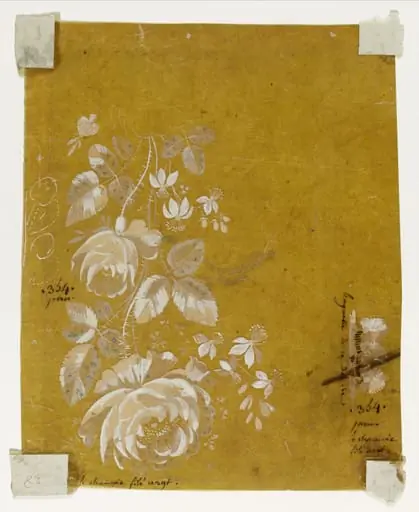 Bouquet de roses blanches pour étoffe, projets de broderies de gilet, XVIIIème siècle
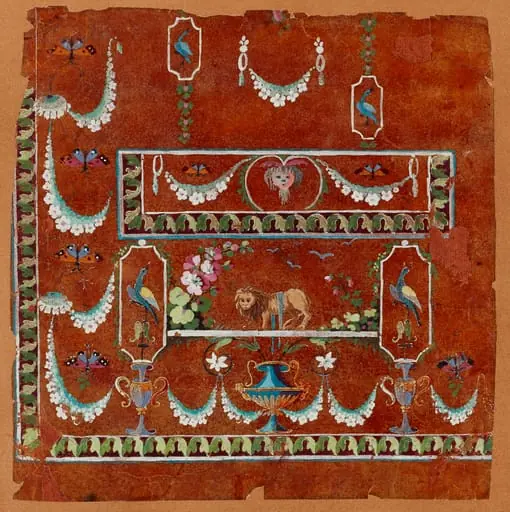 Gilet décor à grotesques, projets de broderies de gilet, XVIIIeme siècle
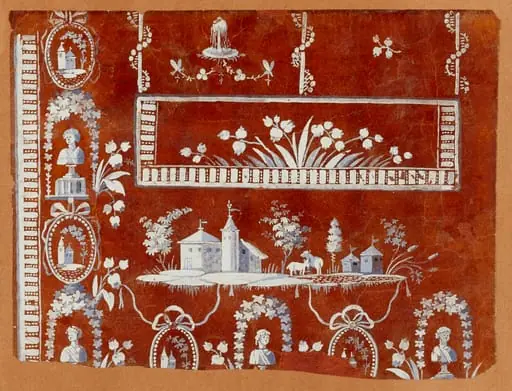 Gilet décor architectures rurales, projets de broderies de gilet, XVIIIème siècle
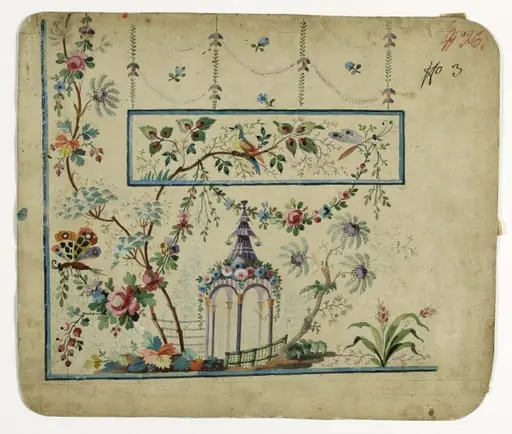 Gilet décor pagode, projets de broderies de gilet, XVIIIème siècle
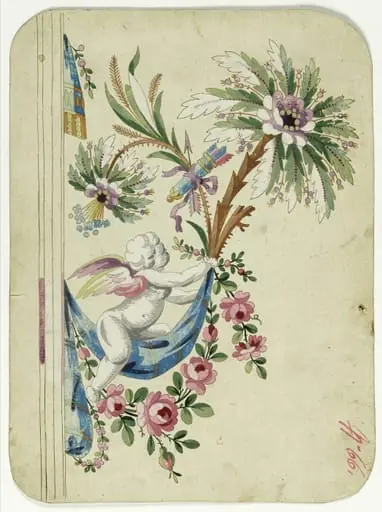 Décor de putti sur palmier, projets de broderies de gilet, XVIIIème siècle
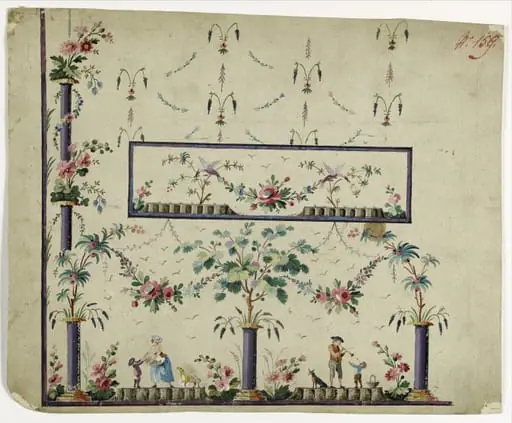 Gilet décor couple avec enfants, projets de broderies de gilet, XVIIIème siècle
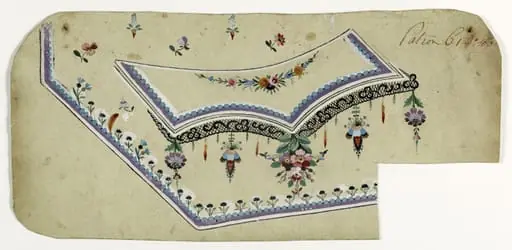 Gilet à la dentelle noire, projets de broderies de gilet, XVIIIème siècle
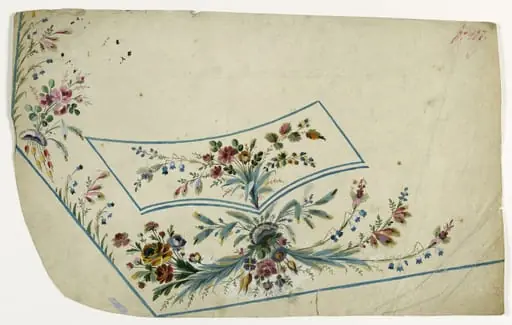 Gilet aux feuilles bleu-gris, projets de broderies de gilet, XVIIIème siècle
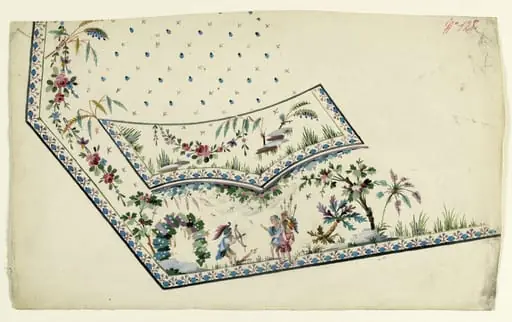 Gilet décor de paysage avec guerriers, projets de broderies de gilet, XVIIIème siècle
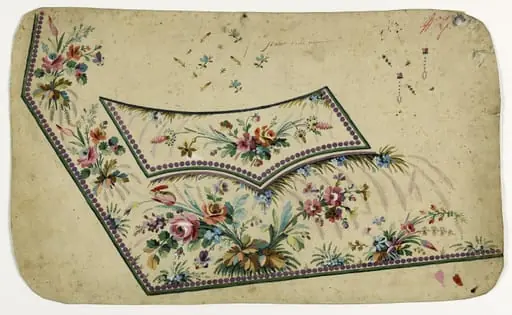 Gilet fleurs et perles mauves, projets de broderies de gilet, XVIIIème siècle
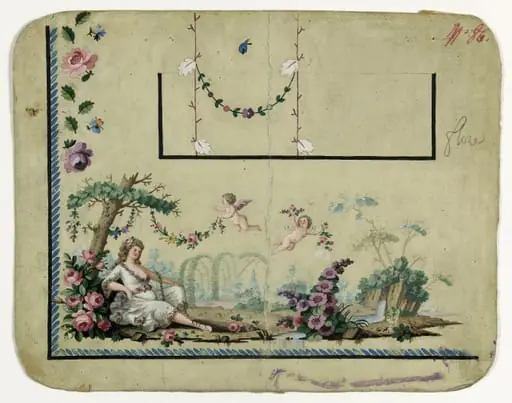 Gilet décor la déesse Flore dans un paysage, projets de broderies de gilet, XVIIIème siècle
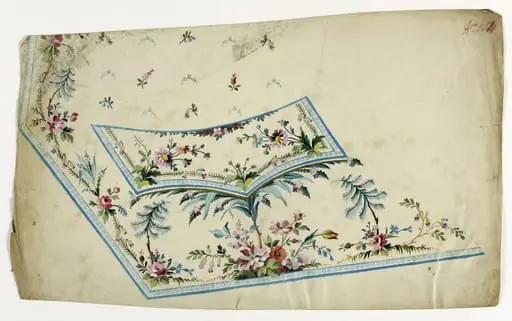 Gilet aux perles bleues, projets de broderies de gilet, XVIIIème siècle
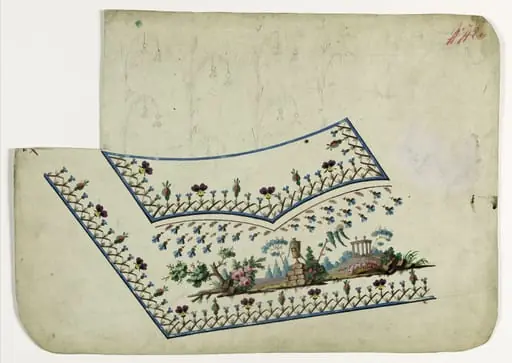 Paysage avec urne et ruine antique, projets de broderies de gilet, XVIIIème siècle
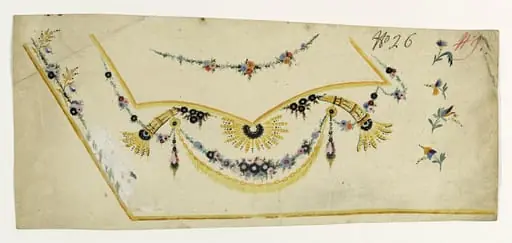 Gilet aux fleurs noires, projets de broderies de gilet, XVIIIème siècle
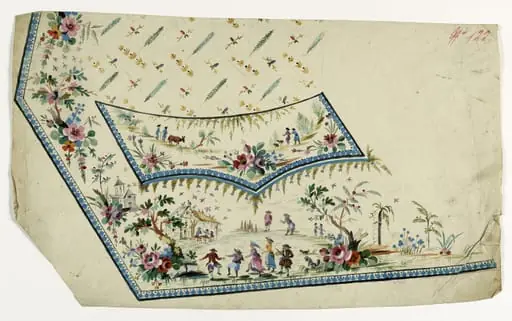 Gilet décor fête paysanne, projets de broderies de gilet, XVIIIème siècle
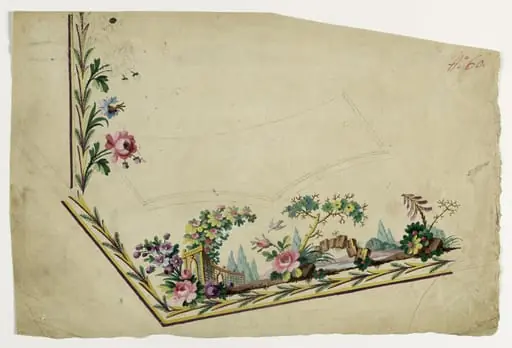 Gilet motif paysage aux rochers, projets de broderies de gilet, XVIIIème siècle
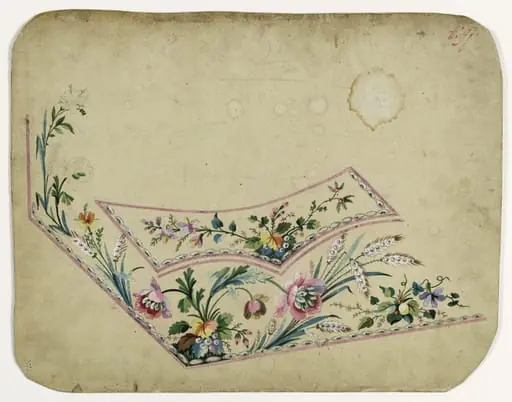 Gilet à la bordure rose, projets de broderies de gilet, XVIIIème siècle
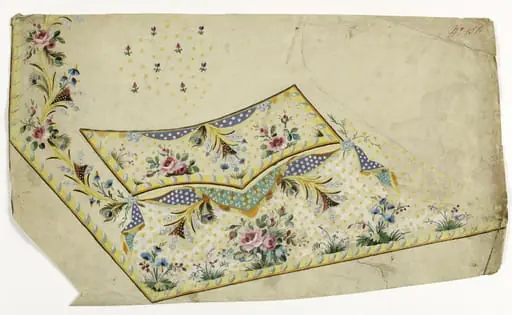 Gilet aux plumes de paon, projets de broderies de gilet, XVIIIème siècle