Artwork
Gilet aux plumes de paon, projets de broderies de gilet, XVIIIème siècle
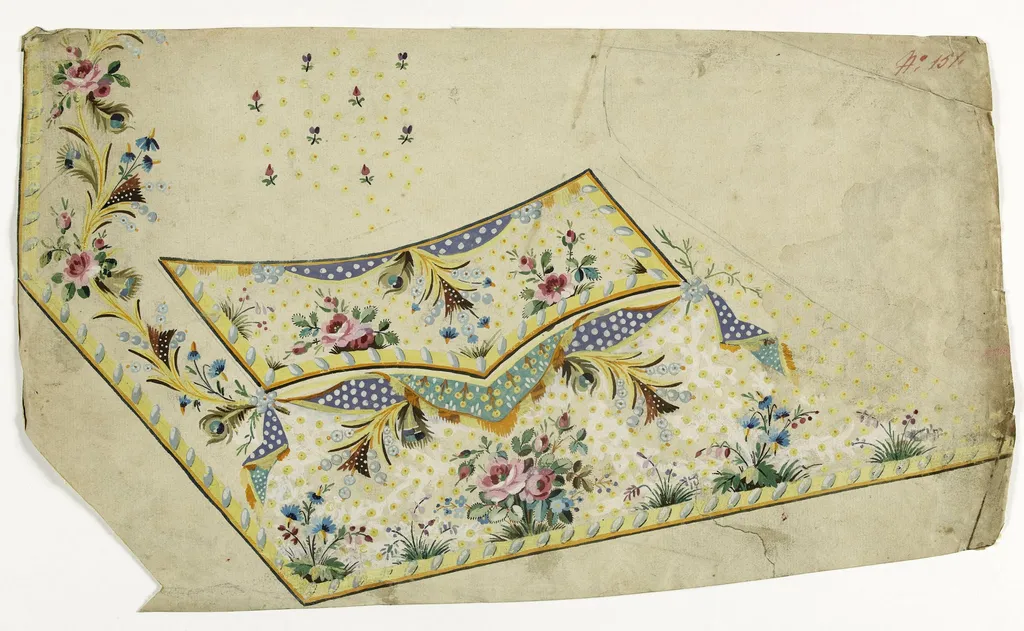
Gilet aux plumes de paon, projets de broderies de gilet, XVIIIème siècle is a drawing by Anonyme. It dates from 1750 and is held in the collection of the Palais Galliera - Musée de la Mode de la Ville de Paris.
About this work
Overview
The drawing, attributed to an anonymous hand and dated to around 1750, is a design sketch for a men’s vest richly embroidered with peacock feather motifs. Preserved in the Museum of Ethnography, the paper fragment records a proposed decorative scheme rather than a finished garment, offering insight into eighteenth‑century textile planning.
Subject & Meaning
The composition centers on stylised peacock plumage interwoven with floral elements and swirling arabesques. The arrangement of feathers in orderly rows suggests a celebration of exotic luxury, while the surrounding blossoms and curvilinear forms balance the composition, reflecting contemporary tastes for elaborate, nature‑inspired ornamentation in elite dress.
Technique & Style
Executed as a flat sketch, the design employs fine line work to delineate stitching zones, with a yellow border punctuated by tiny decorative motifs. The interior pattern is rendered in a palette of blues, pinks, and greens, indicating the intended thread colours. The orderly grid of motifs reveals a methodical approach to embroidery planning typical of the Rococo period.
History & Provenance
Created circa 1750, the fragment entered the Museum of Ethnography’s collection as part of its holdings on historical costume and textile arts. Its anonymous authorship reflects the collaborative nature of workshop production, where designers often remained unnamed while contributing to fashionable court attire.
Context
During the mid‑eighteenth century, French aristocratic fashion embraced lavishly embroidered garments, with peacock feathers symbolising status and opulence. Such design drawings served as templates for skilled embroiderers, bridging the gap between artistic conception and the labor‑intensive execution required for high‑society attire.
Artist & collection
Artist
A French designer from the 1700s made delicate flower drawings meant to decorate vests.
Museum
Palais Galliera - Musée de la Mode de la Ville de Paris
Continue through works from the same source collection.
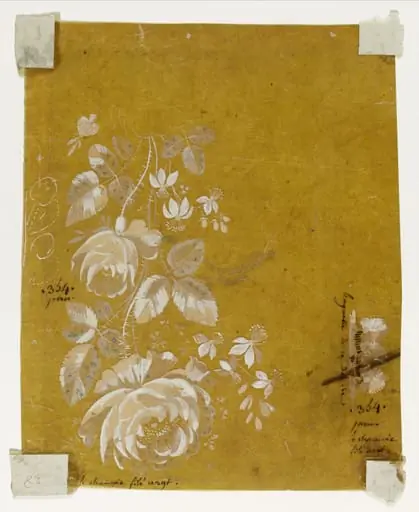 Bouquet de roses blanches pour étoffe, projets de broderies de gilet, XVIIIème siècle
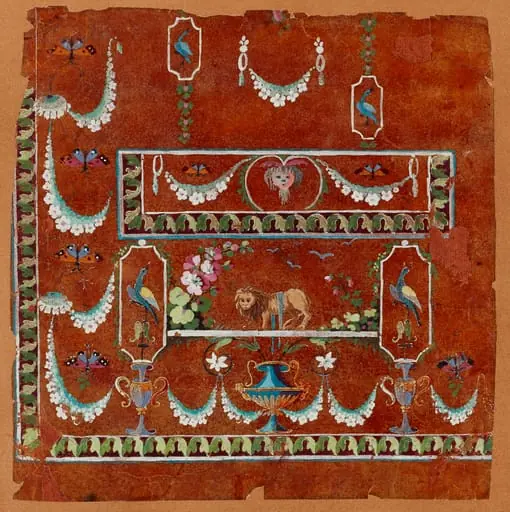 Gilet décor à grotesques, projets de broderies de gilet, XVIIIeme siècle
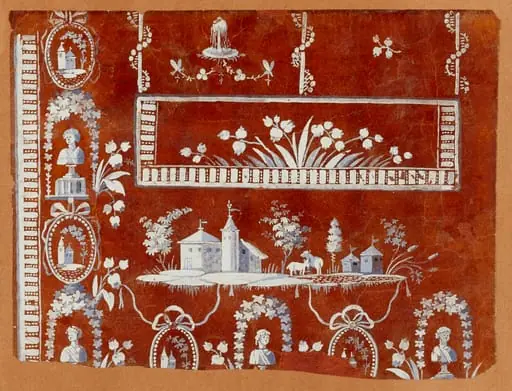 Gilet décor architectures rurales, projets de broderies de gilet, XVIIIème siècle
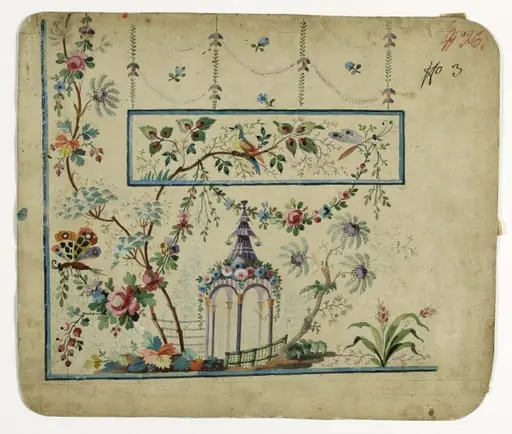 Gilet décor pagode, projets de broderies de gilet, XVIIIème siècle
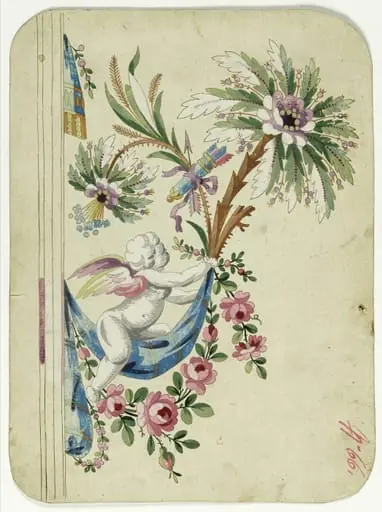 Décor de putti sur palmier, projets de broderies de gilet, XVIIIème siècle
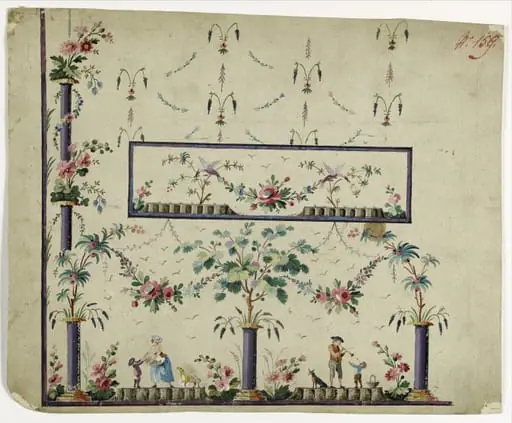 Gilet décor couple avec enfants, projets de broderies de gilet, XVIIIème siècle
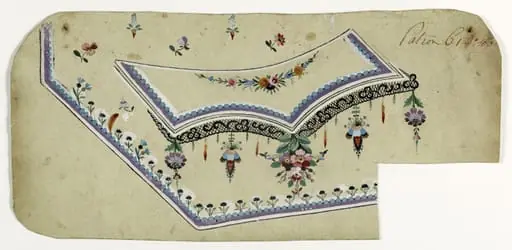 Gilet à la dentelle noire, projets de broderies de gilet, XVIIIème siècle
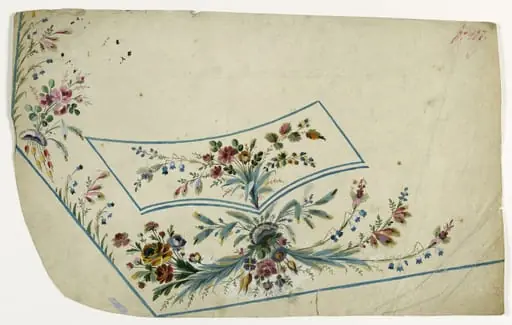 Gilet aux feuilles bleu-gris, projets de broderies de gilet, XVIIIème siècle
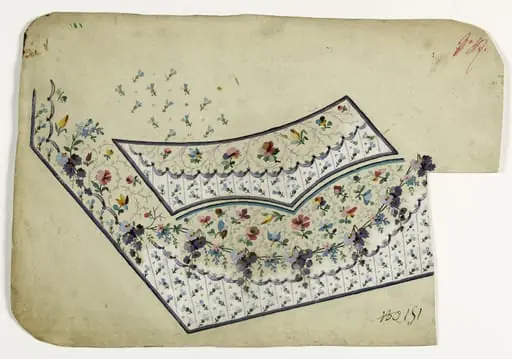 Gilet au décor tapissant, projets de broderies de gilet, XVIIIème siècle
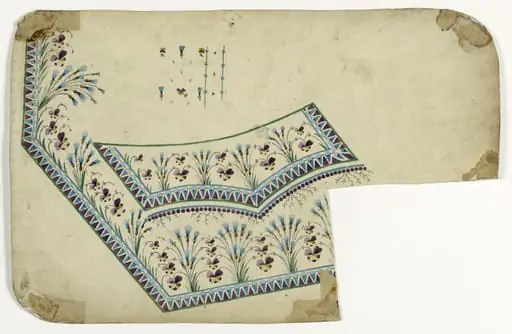 Gilet aux fleurs bleues et mauves, projets de broderies de gilet, XVIIIème siècle
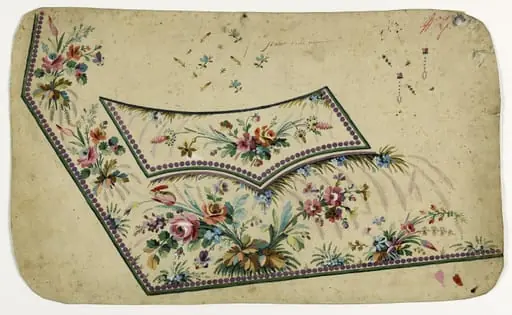 Gilet fleurs et perles mauves, projets de broderies de gilet, XVIIIème siècle
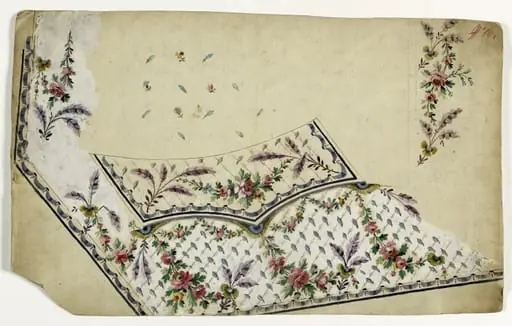 Gilet aux plumes mauves, au verso inversé gilet aux fleurs en forme de flèches, projets de broderies de gilet, XVIIIème siècle
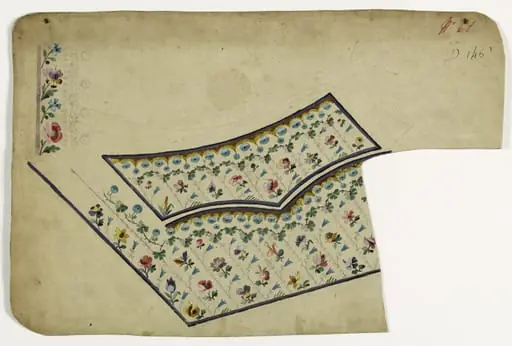 Gilet aux pâquerettes bleues, projets de broderies de gilet, XVIIIème siècle
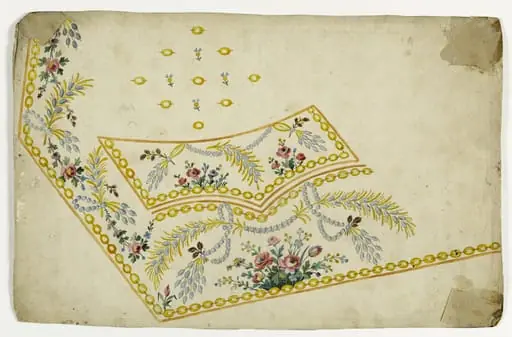 Gilet perles et fleurs, projets de broderies de gilet, XVIIIème siècle
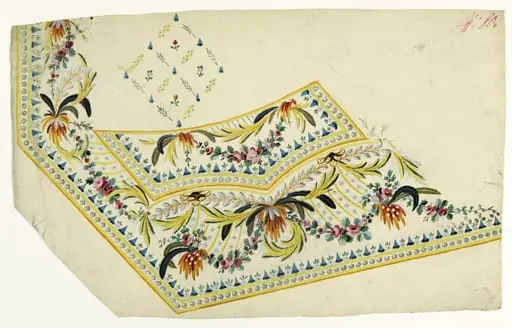 Gilet décor de perles, plumes et paillettes, projets de broderies de gilet, XVIIIème siècle
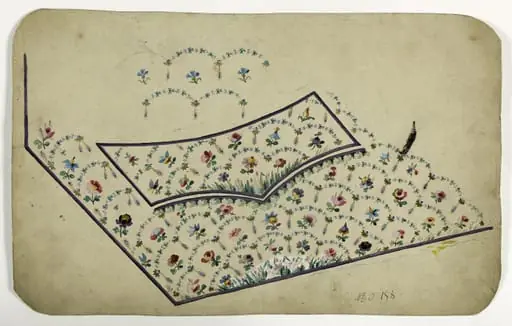 Gilet fleurs dans un réseau, projets de broderies de gilet, XVIIIème siècle
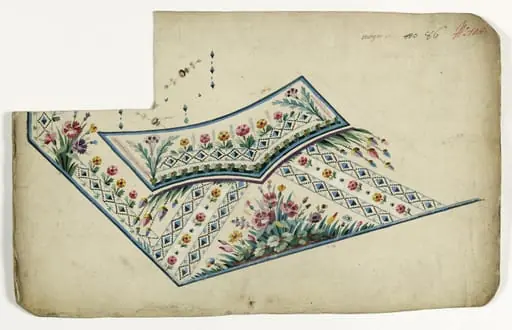 Gilet fleurs et losanges, projets de broderies de gilet, XVIIIème siècle
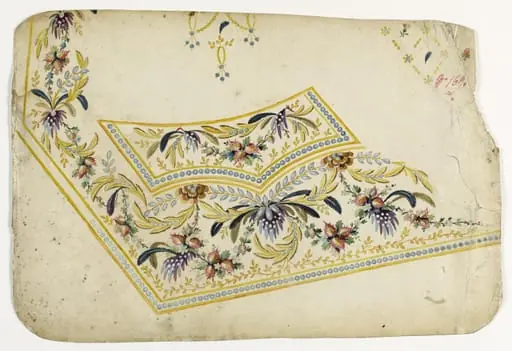 Gilet décor de plumes, fraises et perles, projets de broderies de gilet, XVIIIème siècle
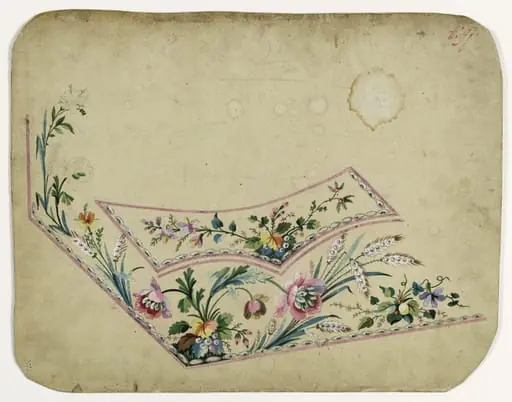 Gilet à la bordure rose, projets de broderies de gilet, XVIIIème siècle