Artwork
Allegorical Figure (recto and verso)
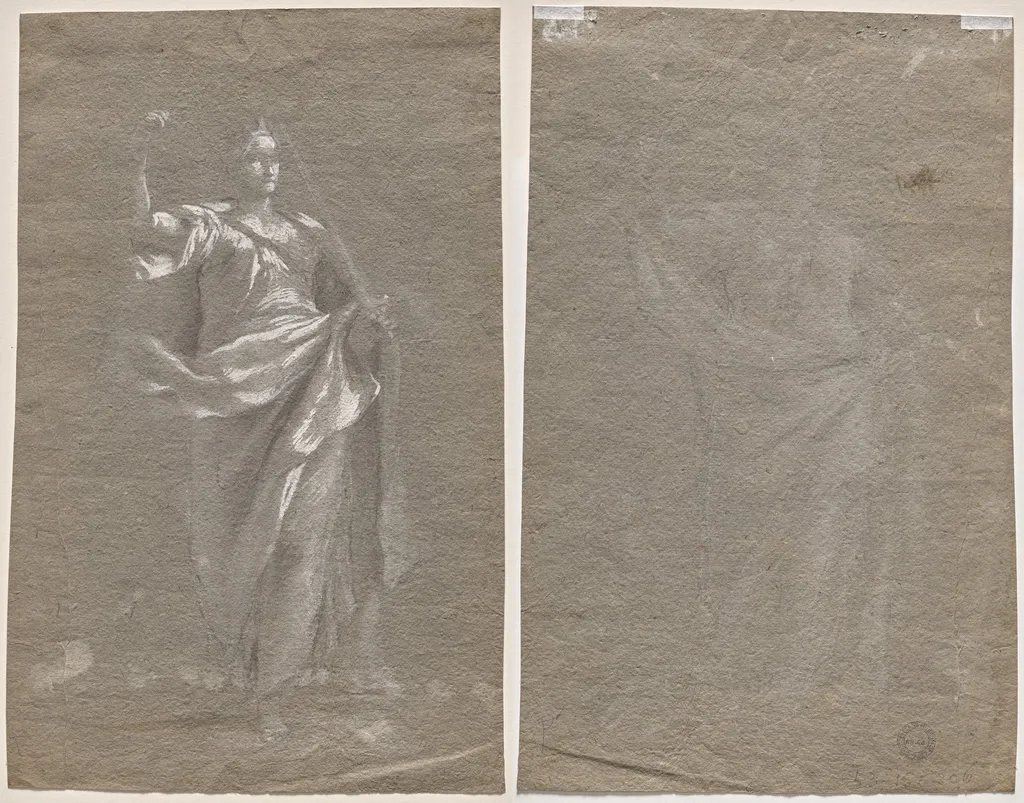
Allegorical Figure (recto and verso) is a drawing by the Romanticist artist Unknown. It dates from 1804 and is held in the collection of the Cleveland Museum of Art.
About this work
Overview
Allegorical Figure (recto and verso) is a drawing executed on a single sheet of paper that bears marks on only one side. The recto presents a faint, ethereal figure seated upon a rock, rendered with soft, indistinct lines that suggest a quick or delicate hand. The verso remains blank, its surface similarly faded and worn, indicating the work’s age and the paper’s fragility.
Subject & Meaning
The composition depicts a solitary, ghost‑like figure draped in a loosely flowing robe, positioned in a relaxed yet slightly withdrawn pose. The ambiguous posture and the figure’s spectral quality invite an allegorical reading, perhaps embodying a concept such as melancholy, contemplation, or the fleeting nature of existence, consistent with Romantic interests in emotion and the sublime.
Technique & Style
Executed with a light, almost tentative touch, the drawing relies on blurred, feathered lines that dissolve into the paper’s surface.
Executed with a light, almost tentative touch, the drawing relies on blurred, feathered lines that dissolve into the paper’s surface. This approach aligns with Romantic tendencies to prioritize mood and atmosphere over precise delineation, allowing the figure to emerge as a suggestion rather than a fully rendered form. The paper’s wear and partial loss of pigment further enhance the work’s evanescent character.
History & Provenance
The drawing is presented on a single, aged sheet whose condition shows significant wear, including areas where the image has nearly vanished. No documented provenance accompanies the piece, and the blank verso offers no clues to its origin, suggesting it may have been a private study or a preparatory sketch whose ownership history remains unrecorded.
Context
Created within the broader Romantic movement, the work reflects the period’s fascination with the inner life and the power of suggestion. Artists of the era often employed sketchy, atmospheric techniques to convey emotional states, and this drawing’s ghostly figure exemplifies that preoccupation with the intangible and the psychological.
Legacy
Although the piece is modest in scale and condition, it serves as a tangible example of Romantic drawing practices, illustrating how artists used minimal means to evoke complex affective responses. Its preservation, despite deterioration, offers insight into the pedagogical and experimental processes that underpinned larger, more finished works of the period.
Artist & collection

 Domestic Scene
 Giacomo and Cardinal Marco, investing Andrea, Abbot of San Zeno, with his Benefice
 The Nymph of Fontainebleau
 Portrait of a Woman
 Madonna and Child with Saints in the Enclosed Garden
 Venus and Minerva
 Family Group of Four on Sofa
 Wall painting from Room H of the Villa of P. Fannius Synistor at Boscoreale
 A Muse and Two Female Figures
 Two Women
 Studies of Angels (recto); Panthea before Cyrus? (verso)
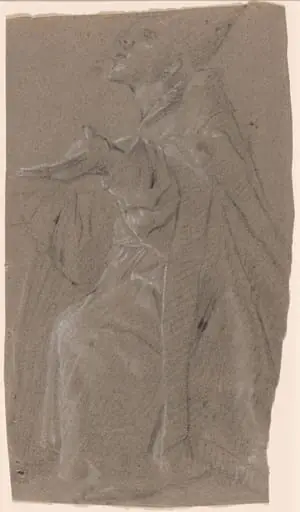 Bishop Saint in Supplication
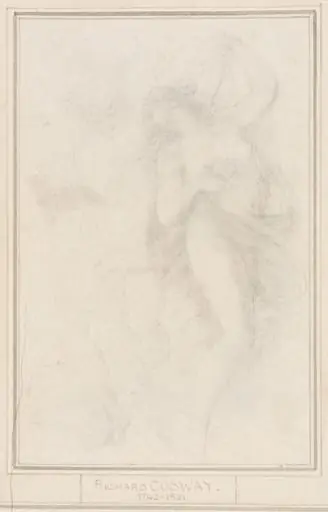 Mercury and a goddess
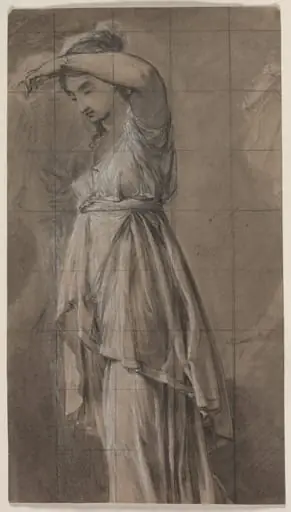 Study for Penelope
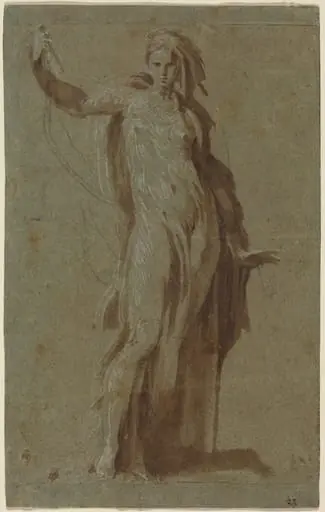 Standing Woman Holding a Scroll
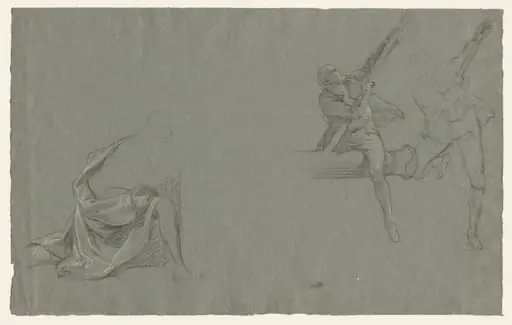 Drapery Study; Two Figures Pulling a Pole
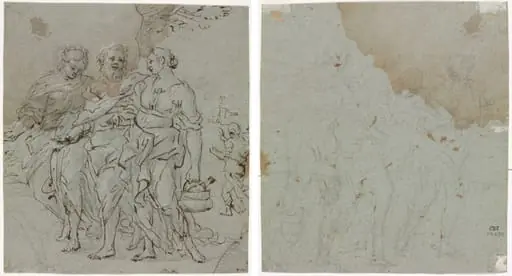 Lot and His Daughters (recto); Sketch for Lot and His Daughters (verso)