Artwork
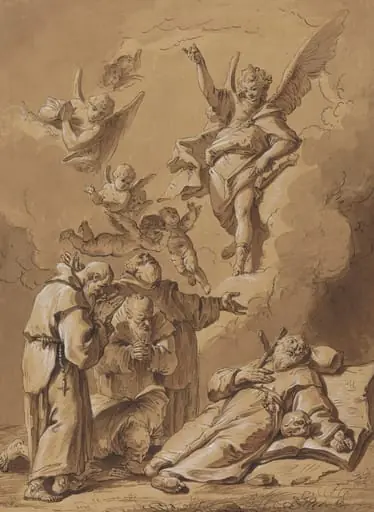
Last Communion of Saint Jerome
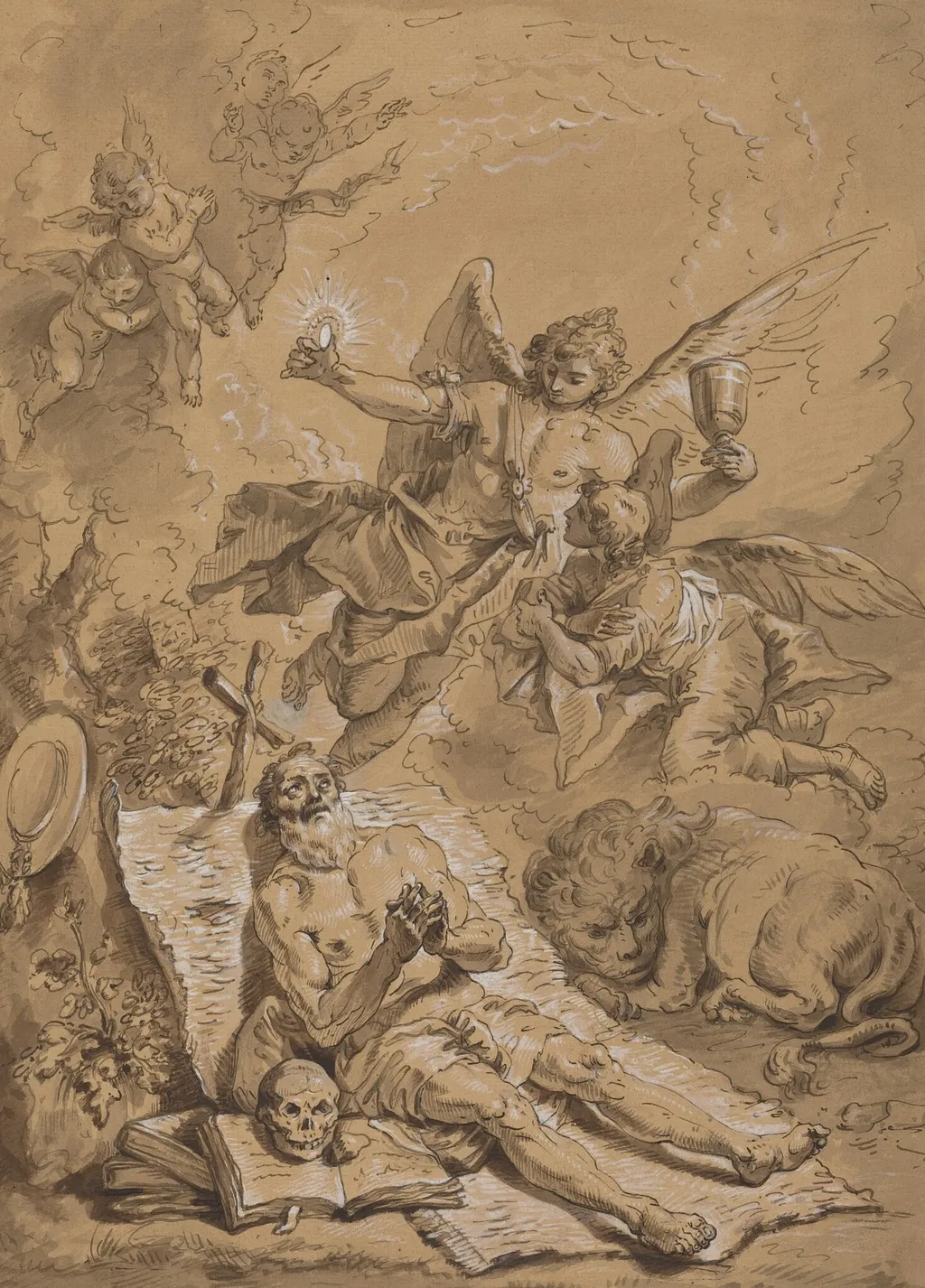
Last Communion of Saint Jerome is an ink drawing by the Baroque artist Unknown. It dates from 1701 and is held in the collection of the National Gallery of Art.
About this work
Overview
This drawing, executed in pen, brush, and brown wash with white highlights on prepared laid paper, captures a moment of spiritual transition. The composition is densely packed with figures and elements, conveying urgency and emotional intensity. The artist employed rapid, expressive lines and layered shading to evoke movement, avoiding polished finish in favor of raw, immediate energy.
Subject & Meaning
The central figure, a bearded man clutching a skull and an open book, is Saint Jerome, traditionally depicted in his final moments.
The central figure, a bearded man clutching a skull and an open book, is Saint Jerome, traditionally depicted in his final moments. Above him, two celestial beings—one with a trumpet, another with a staff—suggest divine intervention. The surrounding chaos, including a goat-like creature and scattered figures, may symbolize earthly turmoil contrasted with heavenly presence, reinforcing themes of mortality and redemption.
Technique & Style
The artist used quick, fluid strokes and varying ink densities to model form and suggest motion. Brown washes create deep shadows, while white highlights accentuate key areas like faces and wings. The sketchy quality and lack of refinement reflect a preparatory intent, yet the dynamic composition and emotional weight reveal a deliberate artistic vision rooted in expressive draftsmanship.
History & Provenance
The work is attributed to a follower of the Baroque tradition, likely created in the early 17th century. It was likely made as a study for a larger composition, though no finished painting is known. Its survival suggests it was valued for its expressive power, possibly preserved within a collector’s cabinet or artist’s studio before entering institutional hands.
Context
Created during a period when religious themes dominated visual culture, the drawing aligns with Counter-Reformation ideals emphasizing emotional engagement with sacred narratives. Its dramatic lighting and crowded composition echo contemporaneous works by Italian and Flemish artists, who sought to evoke awe and spiritual reflection through heightened realism and theatricality.
Legacy
Though not widely exhibited, the drawing remains a significant example of Baroque draftsmanship. Its unpolished vigor influenced later artists interested in emotional expression over idealized form. It stands as a testament to the role of preparatory sketches in conveying spiritual intensity, preserving the artist’s immediate response to a sacred subject.
Artist & collection

 Domestic Scene
 Giacomo and Cardinal Marco, investing Andrea, Abbot of San Zeno, with his Benefice
 The Nymph of Fontainebleau
 Portrait of a Woman
 Madonna and Child with Saints in the Enclosed Garden
 Venus and Minerva
 Family Group of Four on Sofa
 Wall painting from Room H of the Villa of P. Fannius Synistor at Boscoreale
 Saint Jerome
 Saint Jerome
 Death of Saint Jerome
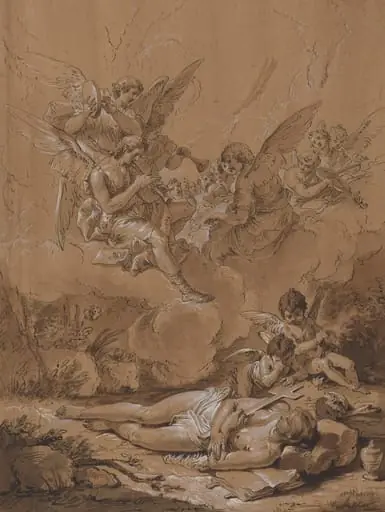 Death of the Magdalene
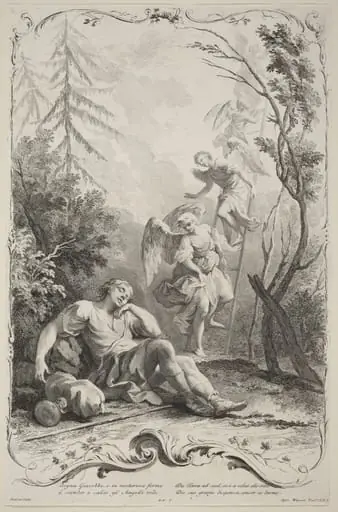 Jacob's Ladder
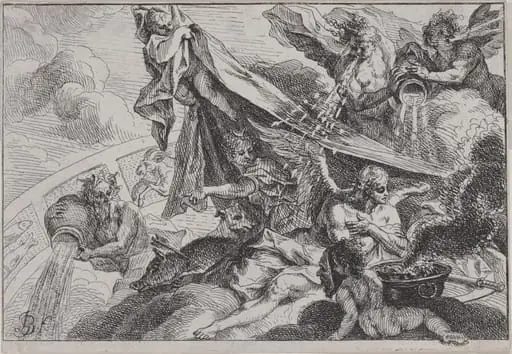 Allegory of Winter with Diana the Huntress
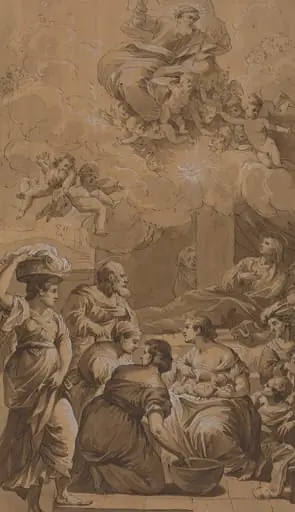 Birth of the Virgin
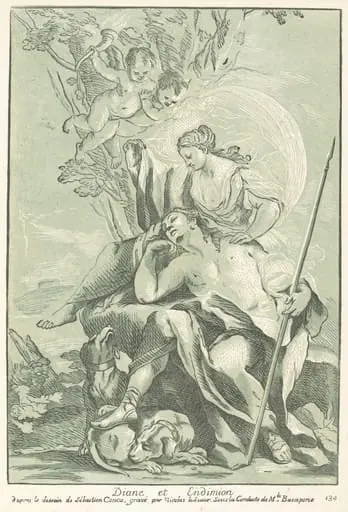 Diana and Endymion
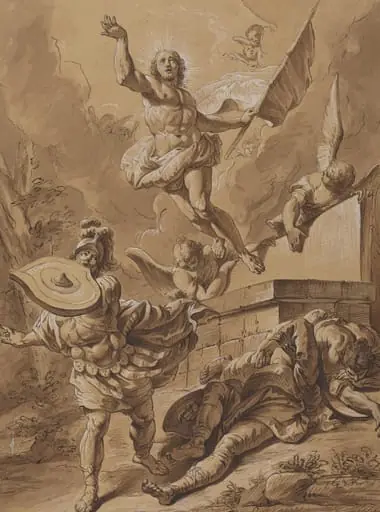 The Resurrection
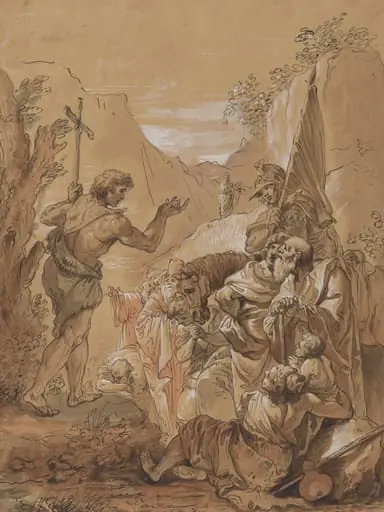 Preaching of John the Baptist in the Wilderness
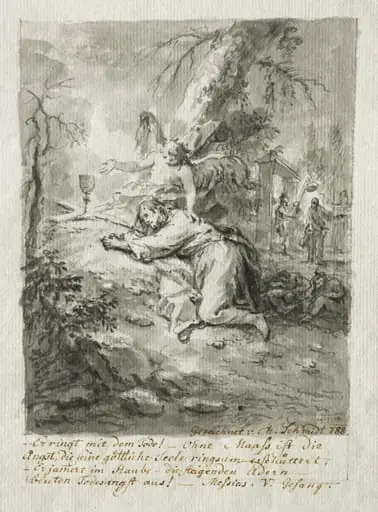 Christ on the Mount of Olives, The Flagellation, Christ Crowned with Thorns, The Crucifixion
 Death of a Holy Friar