Artwork
Birth of the Virgin
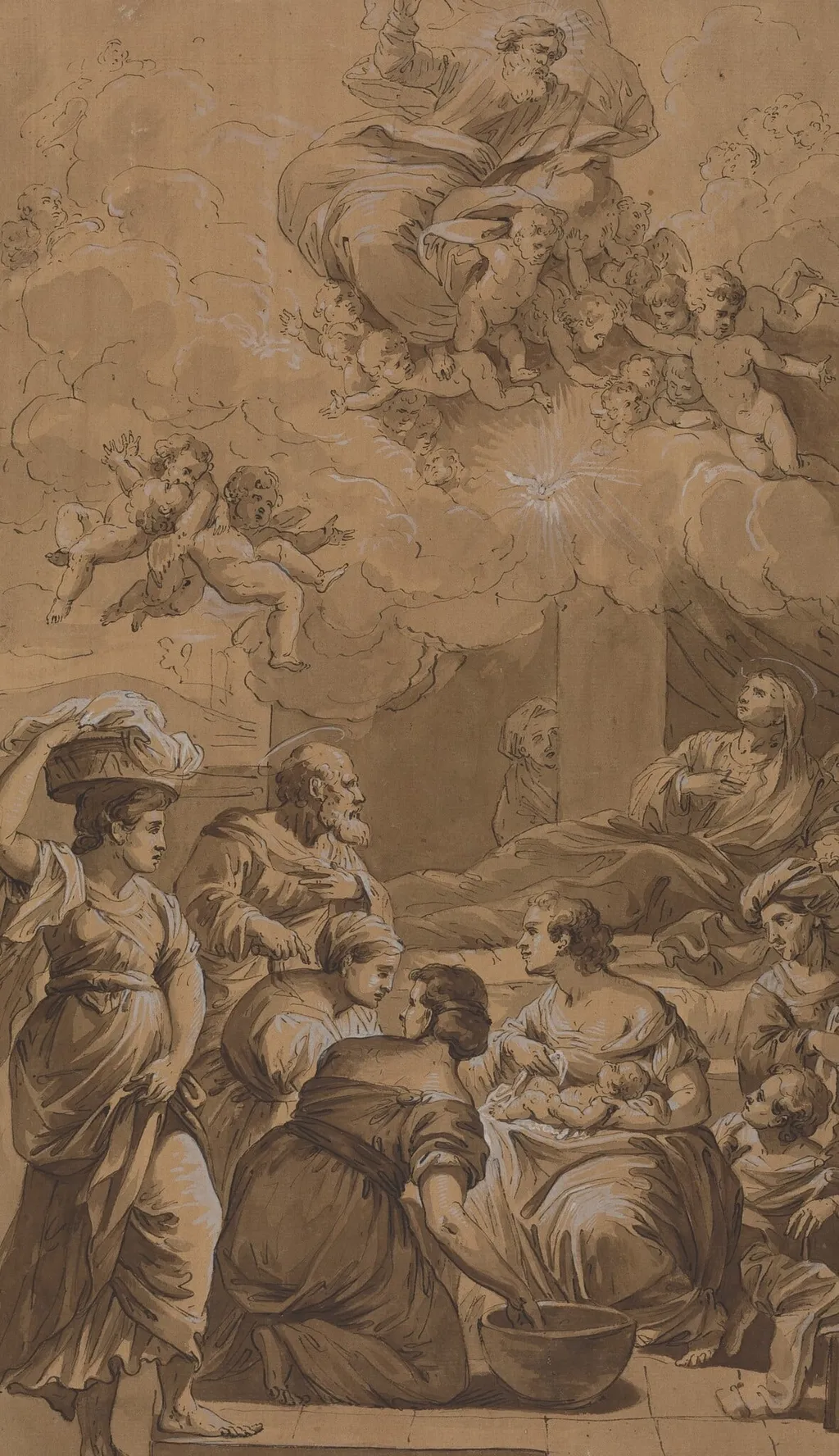
Birth of the Virgin is an ink drawing by the Baroque artist Unknown. It dates from 1701 and is held in the collection of the National Gallery of Art.
About this work
The painting is called Birth of the Virgin.
It was made in the 18th century. The artist used a mix of pen, brown ink, and brush to create it.
The painting is part of the Baroque movement, which is known for dramatic lighting and intense emotions. You can learn more about this style at the National Gallery of Art, Washington.
Overview
Birth of the Virgin is an 18th‑century drawing executed on prepared laid paper. The work combines pen work, brown ink applied with brush, and a brown wash, with selective white highlights that enhance the composition. It is identified as a drawing rather than a painted canvas, reflecting the artist’s emphasis on line and tonal modeling.
Subject & Meaning
The composition depicts the nativity of the Virgin Mary, a theme recurrent in Christian art that celebrates the moment of her birth. By focusing on this intimate episode, the drawing underscores the sanctity of Mary's origins within the broader narrative of salvation.
Technique & Style
The artist employed a mixture of pen and brown ink, using both fine pen strokes and broader brush washes to create depth. A brown wash serves as a tonal foundation, while strategic white highlights bring out details and suggest light. The handling aligns with Baroque sensibilities, emphasizing contrast and dynamic movement despite the monochrome palette.
History & Provenance
Created in the 1700s, the drawing belongs to the Baroque period, a time when dramatic chiaroscuro and emotional intensity were prevalent. Its current location and ownership history are not specified, but its medium and style place it within the broader European tradition of religious preparatory studies.
Context
During the 18th century, artists frequently produced detailed drawings as preparatory studies for larger works or as independent devotional pieces. The use of prepared laid paper and the combination of ink and wash reflect common practices among workshop artists seeking to convey narrative clarity and tonal richness.
Artist & collection

 Domestic Scene
 Giacomo and Cardinal Marco, investing Andrea, Abbot of San Zeno, with his Benefice
 The Nymph of Fontainebleau
 Portrait of a Woman
 Madonna and Child with Saints in the Enclosed Garden
 Venus and Minerva
 Family Group of Four on Sofa
 Wall painting from Room H of the Villa of P. Fannius Synistor at Boscoreale
 Saint Luke Painting the Virgin
 Funeral Procession of a Saint with Angels
 Mystic Marriage of St. Catherine
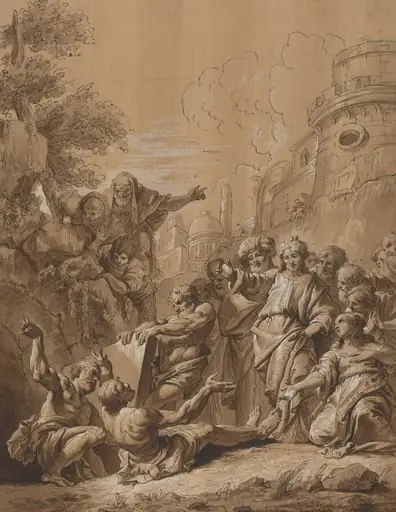 The Raising of Lazarus
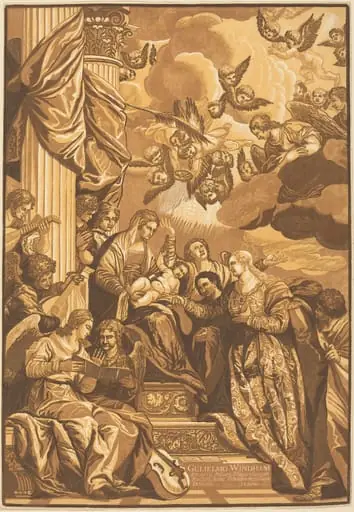 The Mystic Marriage of Saint Catherine
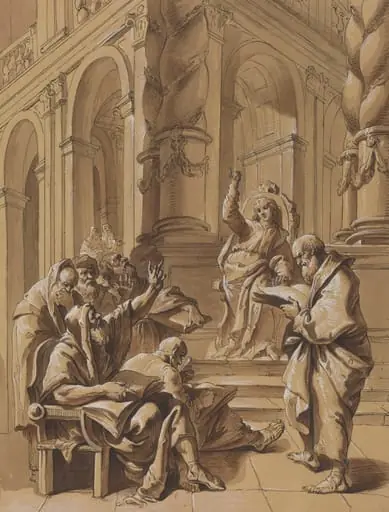 Christ among the Doctors
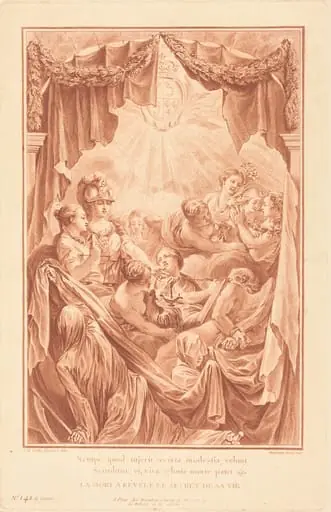 Allegory on the Death of the Dauphin
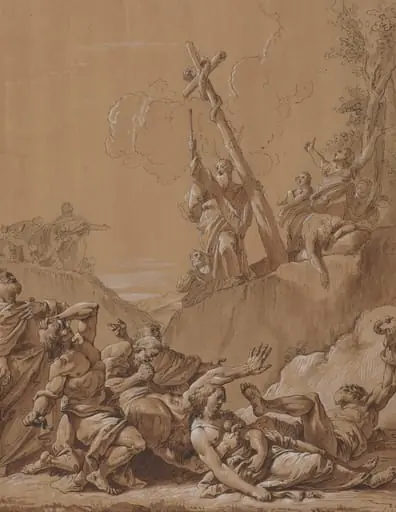 Moses and the Brazen Serpent
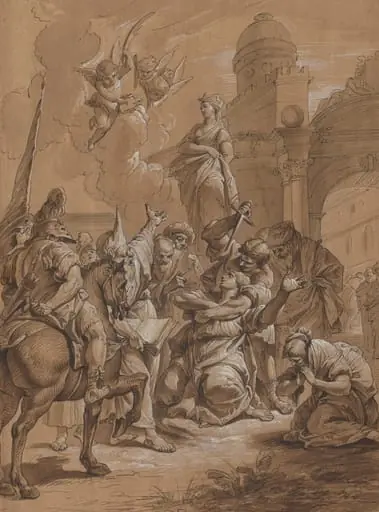 Martyrdom of a Female Saint
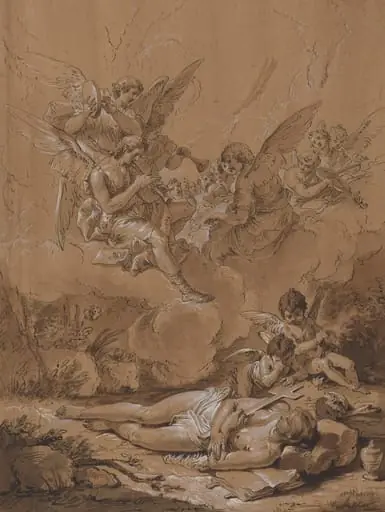 Death of the Magdalene
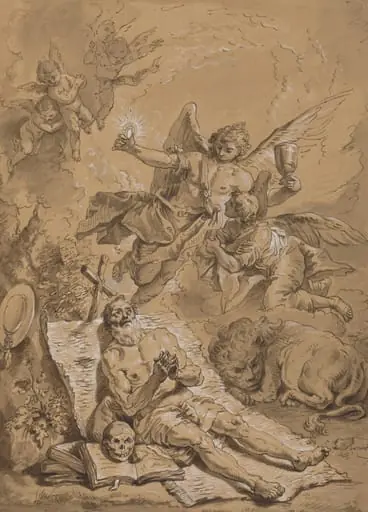 Last Communion of Saint Jerome
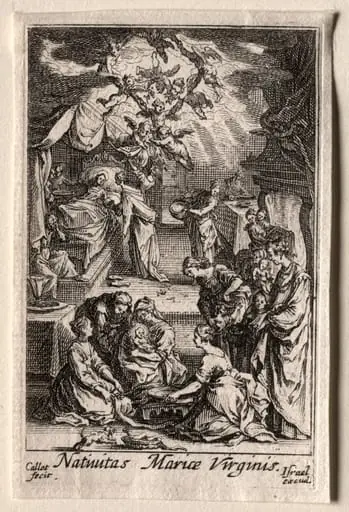 The Life of the Virgin: The Birth of the Virgin