Artwork
Saint Luke Painting the Virgin
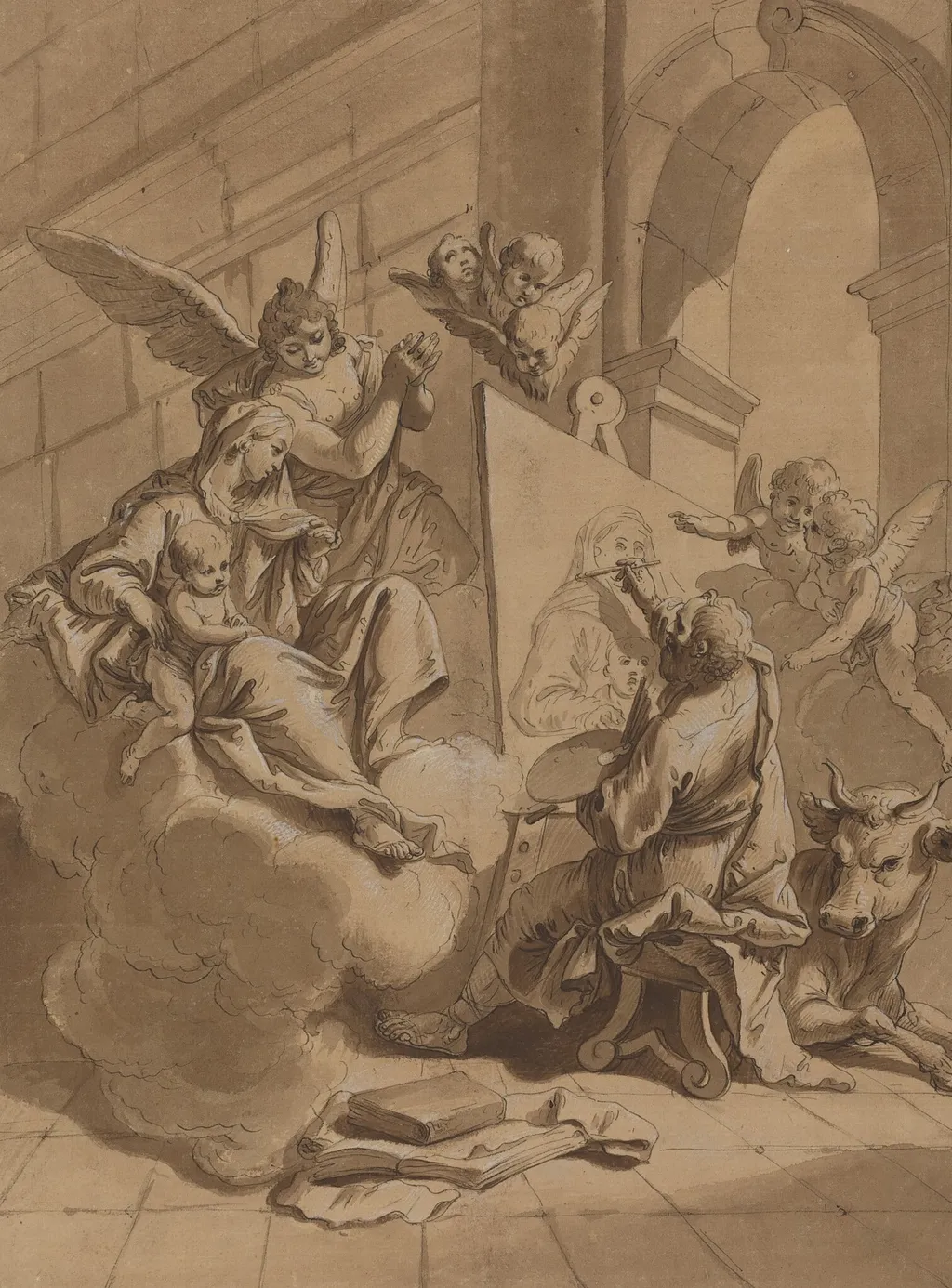
Saint Luke Painting the Virgin is an ink drawing by the Baroque artist Unknown. It dates from 1701 and is held in the collection of the National Gallery of Art.
About this work
Overview
Saint Luke Painting the Virgin is a preparatory drawing executed in pen and brown ink, with brush work and a brown wash heightened by white on laid paper. The work presents a complex composition of figures—an angel, a seated woman with an infant, a violinist, and attendant angels—set against a rocky, cloud‑filled landscape with a distant building and a solitary cow.
Subject & Meaning
The central motif depicts the apostle Luke, traditionally regarded as a painter of the Virgin, engaged in the act of creation. The surrounding angelic figures and the musical accompaniment underscore the sacred nature of the scene, while the pastoral elements, such as the cow, evoke a humble, earthly setting that balances the divine narrative.
Technique & Style
The artist employs rapid, sketchy lines to convey movement, particularly in the outstretched wings of the angel. A warm brown ink wash, softened with white highlights, creates a faded, atmospheric quality, suggesting the drawing functions as a study for a larger composition. The use of laid paper provides a textured surface that enhances the tonal depth.
History & Provenance
The drawing is catalogued as a preparatory study, likely intended for a larger painted work that has not survived. Its precise date and original ownership remain undocumented, but the medium and stylistic traits align it with early Baroque drawing practices in Central Europe, where such sketches were commonly used to plan complex religious scenes.
Artist & collection

 Domestic Scene
 Giacomo and Cardinal Marco, investing Andrea, Abbot of San Zeno, with his Benefice
 The Nymph of Fontainebleau
 Portrait of a Woman
 Madonna and Child with Saints in the Enclosed Garden
 Venus and Minerva
 Family Group of Four on Sofa
 Wall painting from Room H of the Villa of P. Fannius Synistor at Boscoreale
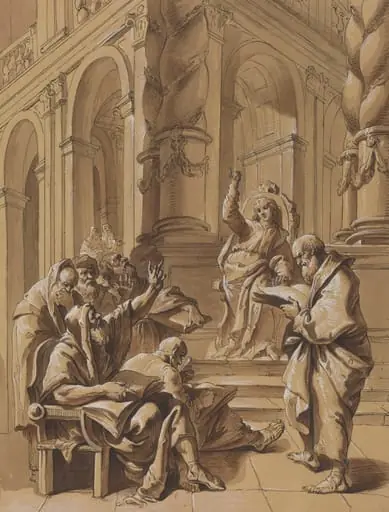 Christ among the Doctors
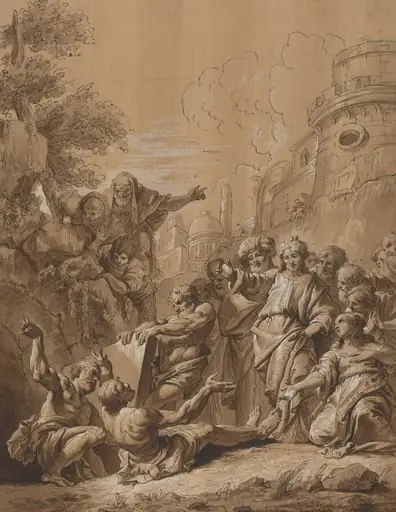 The Raising of Lazarus
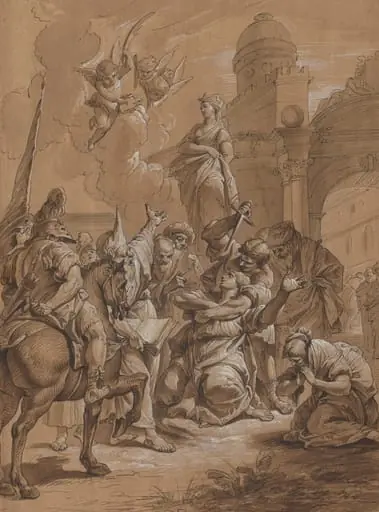 Martyrdom of a Female Saint
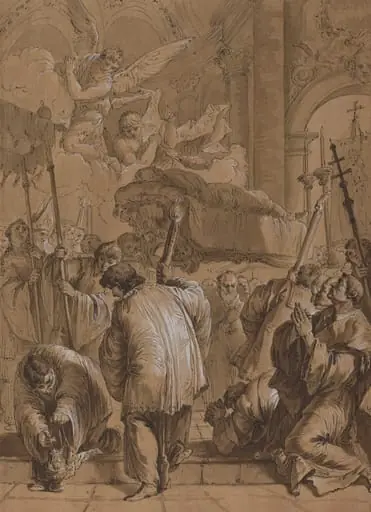 Funeral Procession of a Saint with Angels
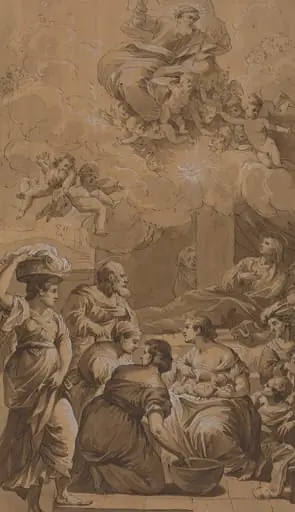 Birth of the Virgin
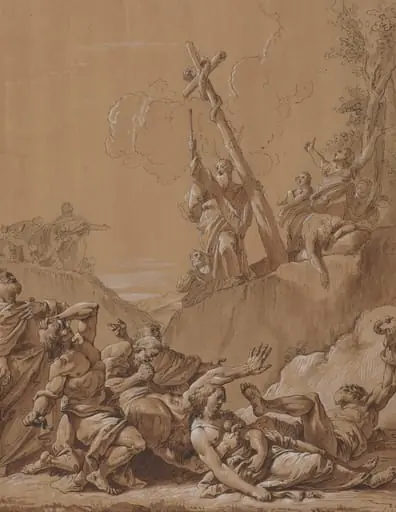 Moses and the Brazen Serpent
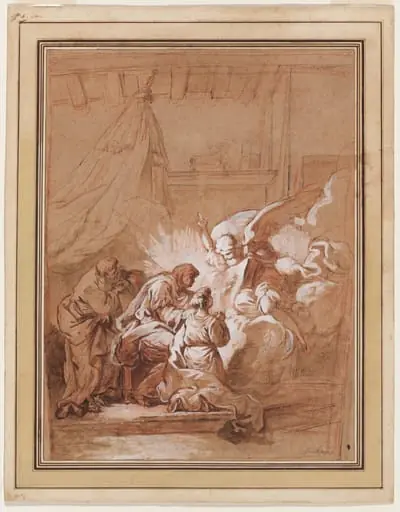 The Education of the Virgin
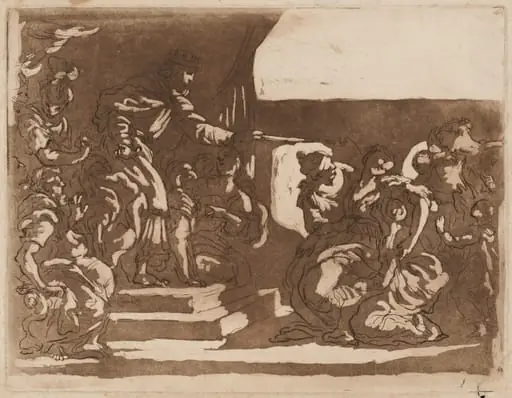 Esther before Ahasuerus
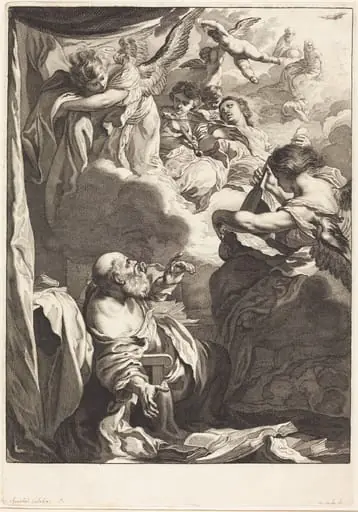 The Ecstasy of Saint Paul
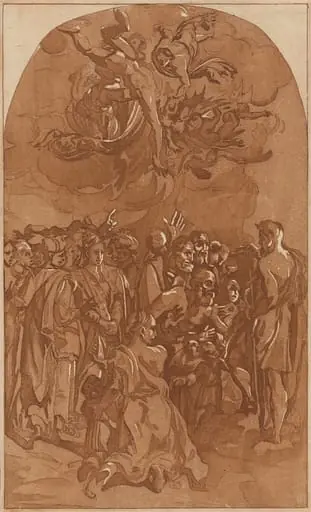 Saint John Preaching
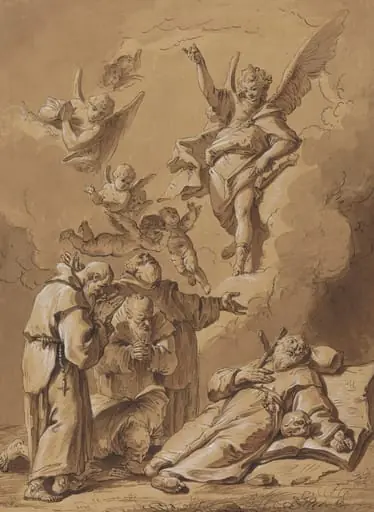 Death of a Holy Friar
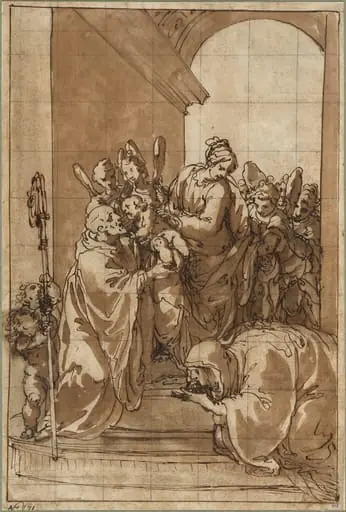 Madonna and Child with Angels, Saint Benedict, and Saint Scholastica