Artwork
George, Lord Jeffreys
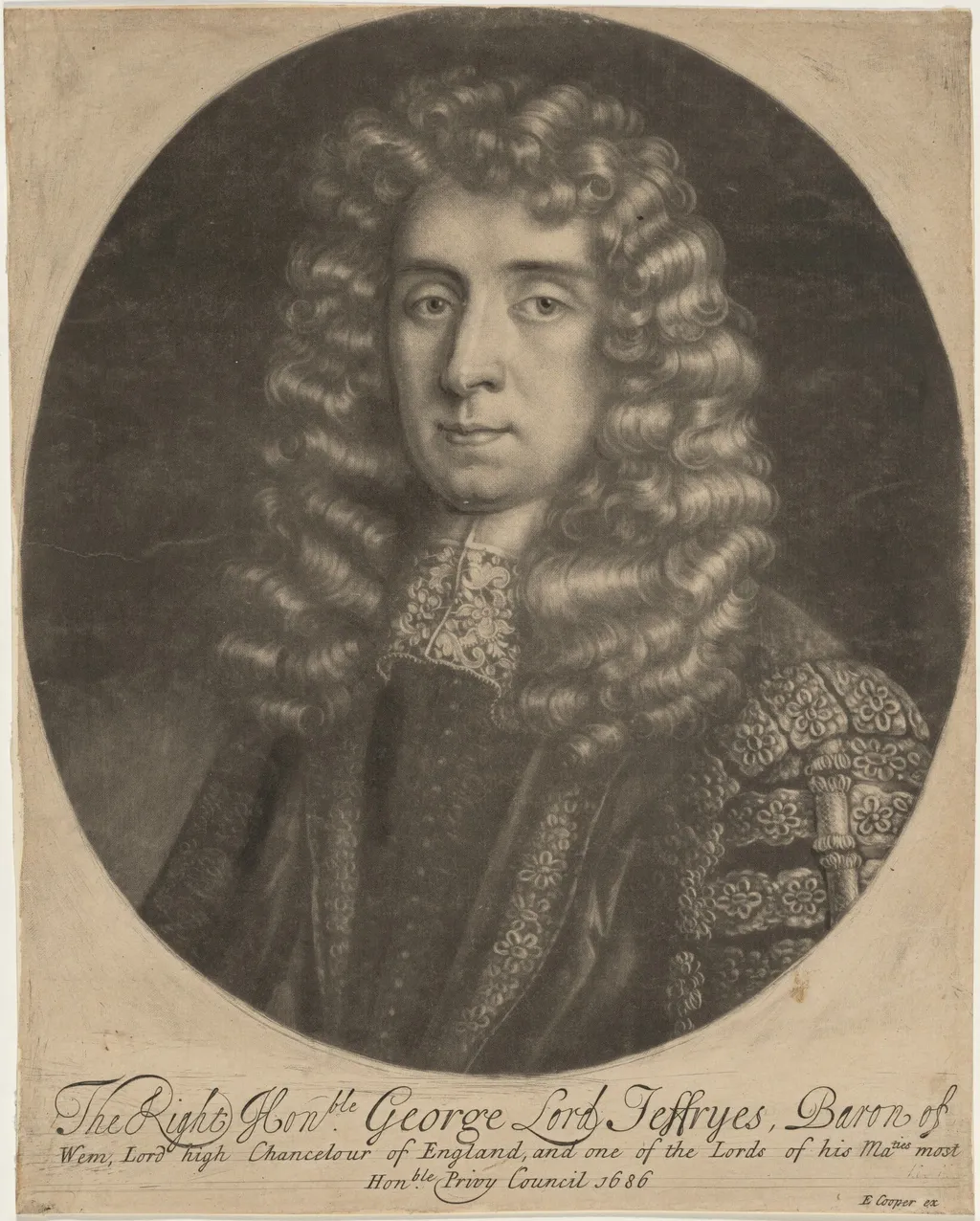
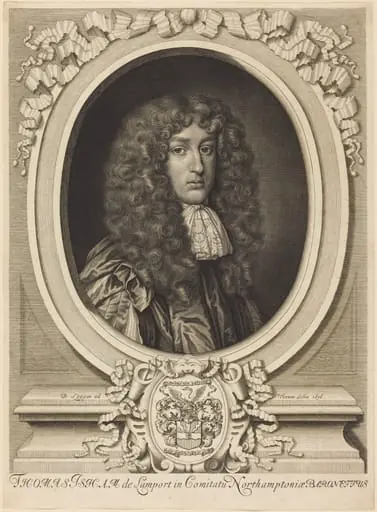
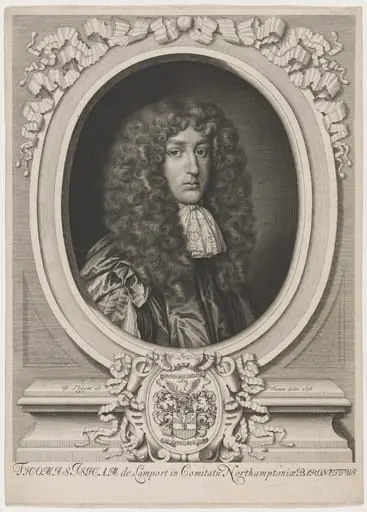
George, Lord Jeffreys is an ink print by the Baroque artist Unknown. It dates from 1684 and is held in the collection of the National Gallery of Art. The work is a mezzotint portrait depicting a gentleman with curled hair, a lace collar, and a dark, patterned robe.
About this work
Overview
The work is a mezzotint portrait depicting a gentleman with curled hair, a lace collar, and a dark, patterned robe. Rendered in black and white, the image isolates the sitter against an unadorned background, drawing the viewer’s focus to his facial features and attire. The composition is formal, emphasizing the subject’s status through clothing and pose.
Subject & Meaning
His round face, elaborate lace collar, and richly decorated sleeves convey the conventions of aristocratic portraiture, signaling authority and lineage.
The figure is identified as George, Lord Jeffreys, a 17th‑century English nobleman. His round face, elaborate lace collar, and richly decorated sleeves convey the conventions of aristocratic portraiture, signaling authority and lineage. The plain backdrop removes narrative distraction, suggesting the portrait’s purpose was to present the individual’s dignified presence rather than a specific story.
Technique & Style
Created with the mezzotint process, the artist first roughened the plate to hold ink, then smoothed areas to produce graduated tones. This method yields deep, velvety shadows and subtle gradations, giving the portrait a tactile quality despite its monochrome palette. The fine control of light and dark enhances the texture of the lace and fabric, highlighting the sitter’s attire.
Context
Mezzotint emerged in the late 17th century as a preferred medium for reproducing oil paintings and for portraiture, valued for its capacity to render rich tonal depth. Portraits of aristocrats like Lord Jeffreys served both personal commemoration and public display, reflecting the period’s emphasis on visual representation of rank and identity.
Artist & collection

 Domestic Scene
 Giacomo and Cardinal Marco, investing Andrea, Abbot of San Zeno, with his Benefice
 The Nymph of Fontainebleau
 Portrait of a Woman
 Madonna and Child with Saints in the Enclosed Garden
 Venus and Minerva
 Family Group of Four on Sofa
 Wall painting from Room H of the Villa of P. Fannius Synistor at Boscoreale