Artwork
Thomas Osborne, First Duke of Leeds
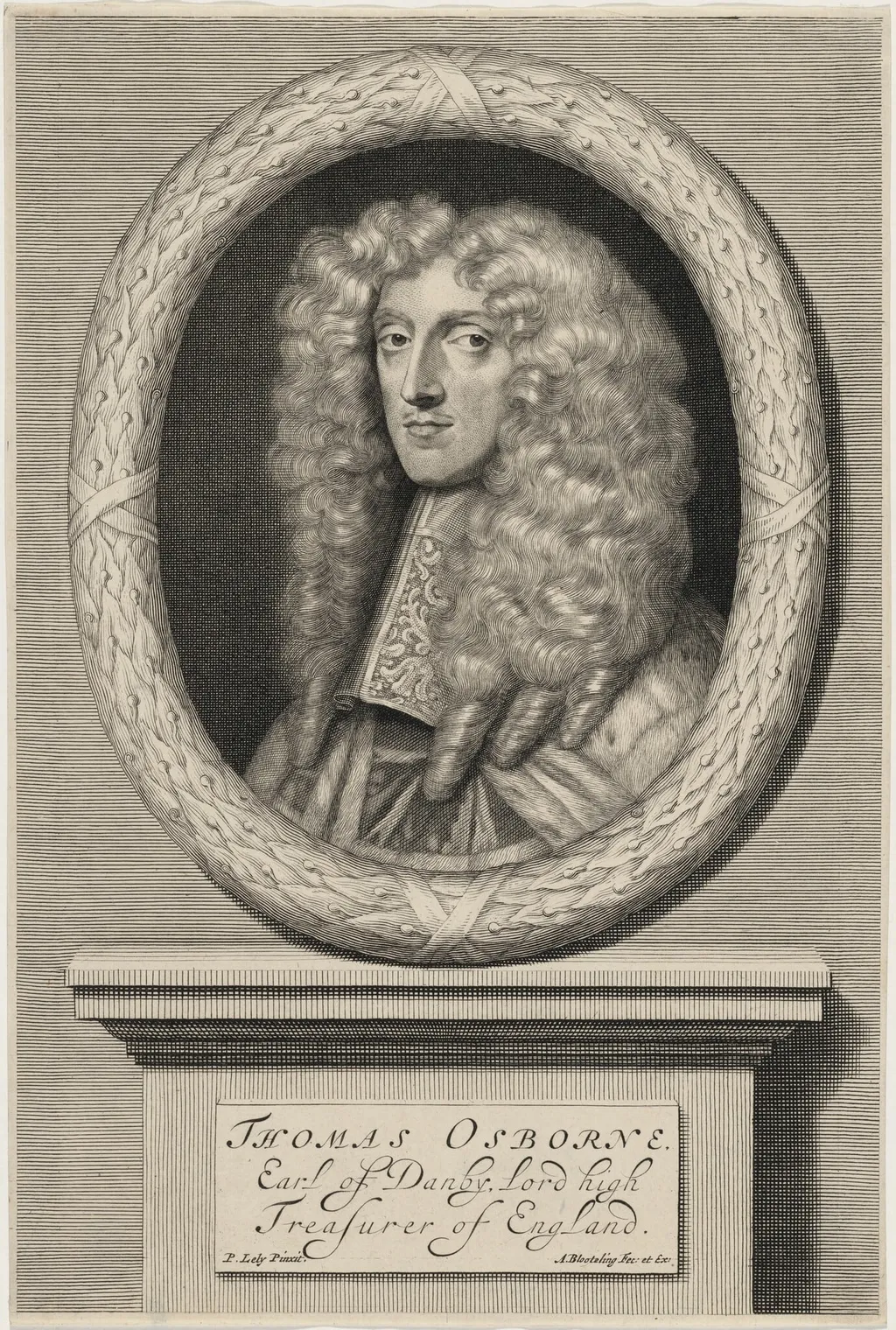
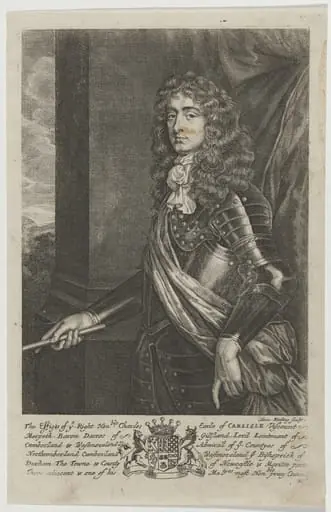
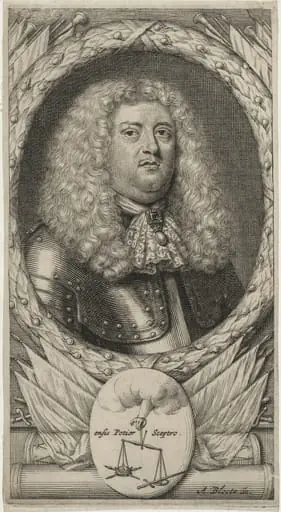
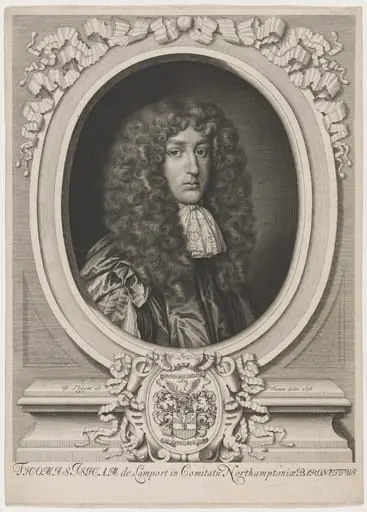
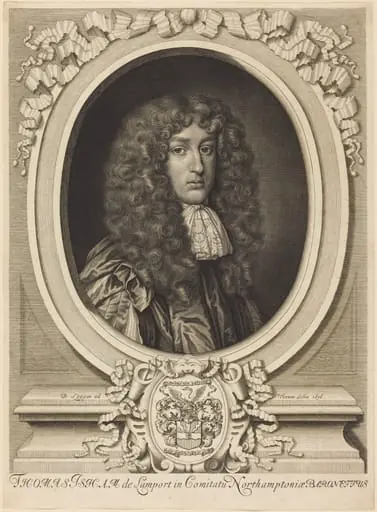
Thomas Osborne, First Duke of Leeds is an ink print by the Baroque artist Abraham Blooteling. It dates from 1665 and is held in the collection of the National Gallery of Art.
About this work
Overview
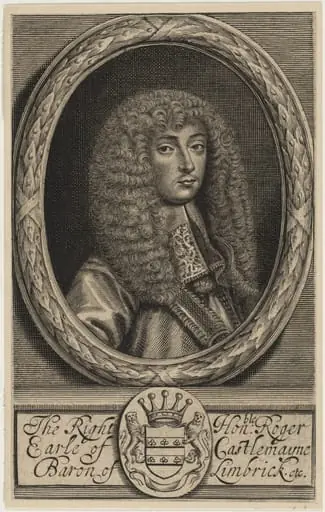
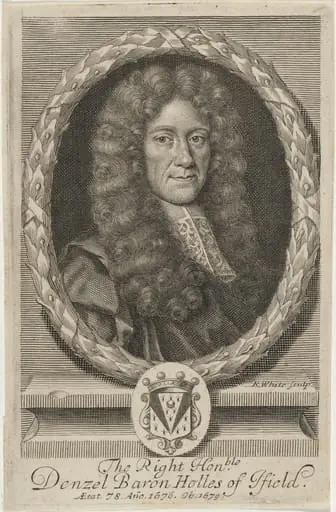
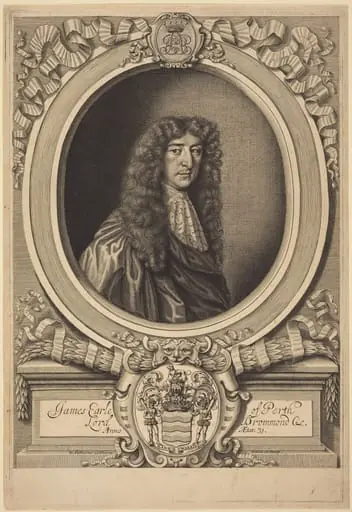
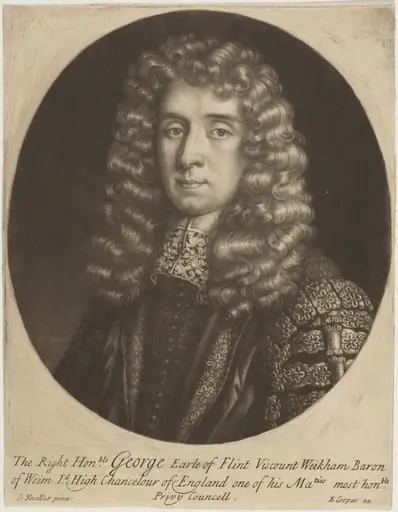
An engraving by Abraham Blooteling from 1665, this portrait depicts Thomas Osborne, the First Duke of Leeds, in formal attire.
An engraving by Abraham Blooteling from 1665, this portrait depicts Thomas Osborne, the First Duke of Leeds, in formal attire. Rendered in monochrome, the image emphasizes his status through precise line work and a restrained composition. The oval frame and ornamental border reflect conventions of aristocratic portraiture in mid-17th-century England, where engraved prints served as accessible representations of political elites.
Subject & Meaning
Thomas Osborne, a prominent statesman, is shown holding a folded document, likely symbolizing his role in governance. His serious expression and elevated collar convey authority and solemnity. The inclusion of his titles—Earl of Danby and Treasurer of England—reinforces his position within Charles II’s administration. The portrait functions not as mere likeness but as a visual assertion of his political influence and institutional role.
Technique & Style
Blooteling employed fine, controlled engraving lines to model form and texture, capturing the crispness of lace, the sheen of fabric, and the curl of hair with precision. The background is minimal, focusing attention on the figure through a soft oval vignette and delicate decorative framing. The absence of color and the reliance on tonal gradation reflect the technical discipline of reproductive printmaking, valued for its clarity and reproducibility.
History & Provenance
Created in 1665, the engraving emerged during Osborne’s rise to power as Treasurer of the Exchequer. It was likely produced for distribution among court circles or as a gift to allies, common practice for reinforcing political networks. The print’s survival suggests it was preserved in private or institutional collections, possibly linked to the Osborne family or royal archives, though its exact early ownership remains undocumented.
Context
In the 1660s, England’s restored monarchy relied on visual culture to legitimize new aristocratic elites. Engravings like this one circulated among the literate classes, replacing painted portraits for wider dissemination. Blooteling, a Dutch artist working in London, exemplified the international exchange of printmaking techniques. Such images helped define public perception of political figures during a period of institutional rebuilding after civil war.
Legacy
Blooteling’s engraving of Osborne remains a representative example of Restoration-era portraiture in print. It illustrates how political identity was visually codified through dress, gesture, and typography. While not widely known today, it contributes to the broader understanding of how early modern elites used print media to project authority, influencing later generations of portrait engravers and political illustrators.
Artist & collection