Artwork
Robert Bruce, First Earl of Arlesbury
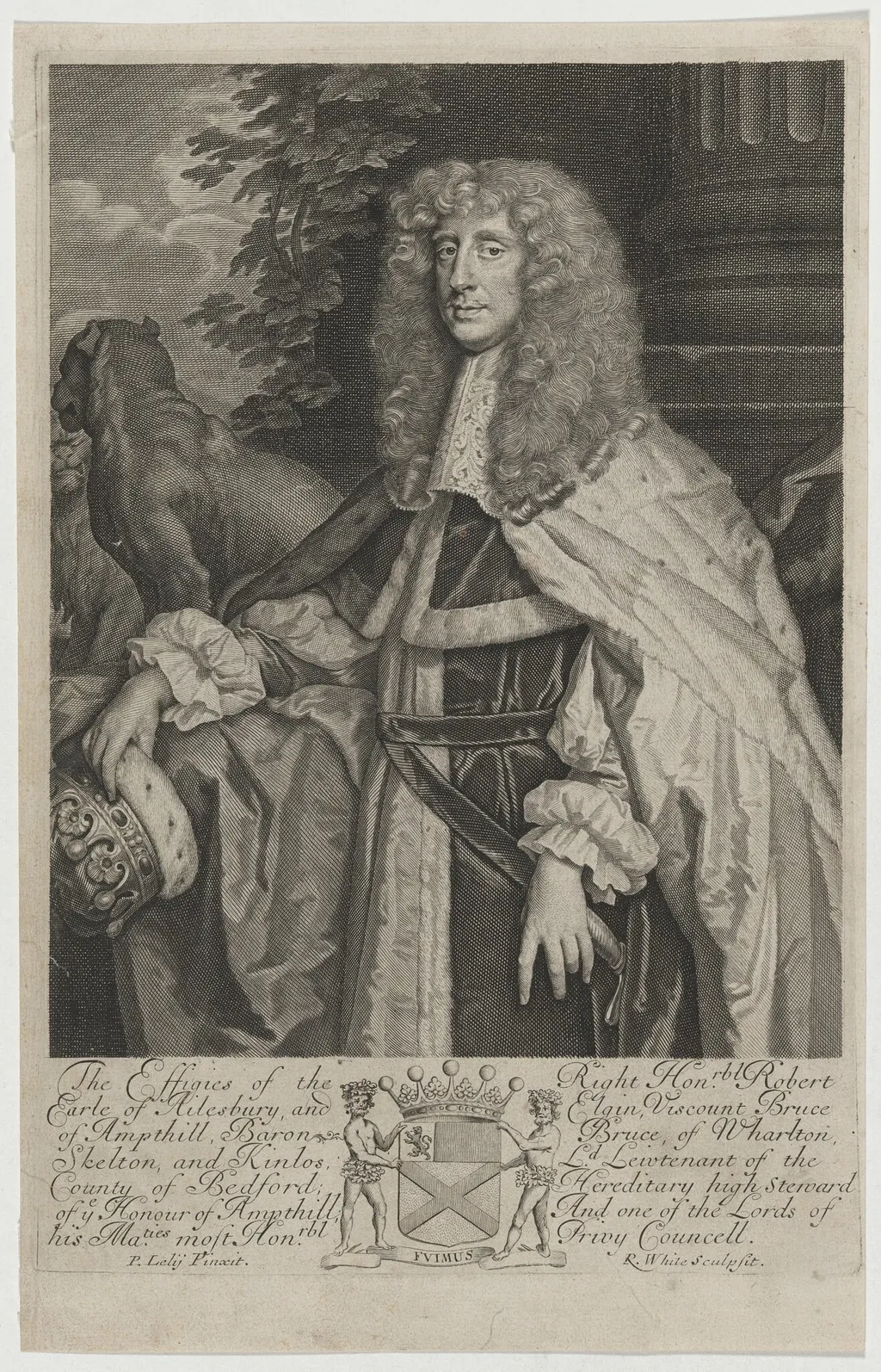
Robert Bruce, First Earl of Arlesbury is an ink print by the Baroque artist Robert White. It dates from 1674 and is held in the collection of the National Gallery of Art.
About this work
Overview
The work is one of many portraits he produced during his career as a printmaker, using fine lines and cross-hatching to convey texture and presence.
This 1674 engraving by Robert White portrays Robert Bruce, First Earl of Arlesbury, as a formal portrait in the English tradition of the late seventeenth century. White, trained under David Loggan, specialized in detailed engravings that captured the likeness and status of aristocratic subjects. The work is one of many portraits he produced during his career as a printmaker, using fine lines and cross-hatching to convey texture and presence.
Subject & Meaning
The subject, Robert Bruce, First Earl of Arlesbury, is depicted in aristocratic attire: a dark robe, white cape, and ornate hat held in hand, with a sword at his side. These elements signal his noble rank and martial bearing. His serious expression and composed posture reflect the expected dignity of his station. The portrait does not aim for individual psychological depth but rather affirms his social identity through conventional symbols of authority and lineage.
Technique & Style
White employed fine-line engraving with dense cross-hatching to model form and fabric, a technique inherited from his mentor Loggan. The texture of the cape, the weave of the robe, and the metalwork of the sword are rendered with precision. The dark, indistinct background enhances the subject’s prominence, while faint suggestions of foliage and architecture provide contextual depth without distraction. The method prioritizes clarity and detail over expressive brushwork.
History & Provenance
Created in 1674, the engraving was likely commissioned to commemorate Bruce’s elevation to the earldom. White, active in London’s print trade, produced similar portraits for the gentry. After his death in 1703 in modest circumstances in Bloomsbury Market, his works remained in circulation among collectors and libraries. The print’s survival suggests it was reproduced or preserved in private and institutional collections, though its early ownership remains undocumented.
Context
In the decades following the Restoration, portraiture in print flourished as a means of disseminating the likenesses of the nobility. Engravings like this one served both as personal mementos and as public assertions of status. White’s work aligns with a broader trend of English printmakers translating painted portraits into reproducible forms, making aristocratic imagery accessible beyond court circles.
Legacy
Robert White’s engravings, including this portrait, contributed to the development of British portrait printmaking in the late 1600s. Though less celebrated than some contemporaries, his technical precision influenced later engravers. The survival of this work in museum and library collections attests to its role as a historical record of aristocratic representation during a period of evolving visual culture in England.
Artist & collection
Artist
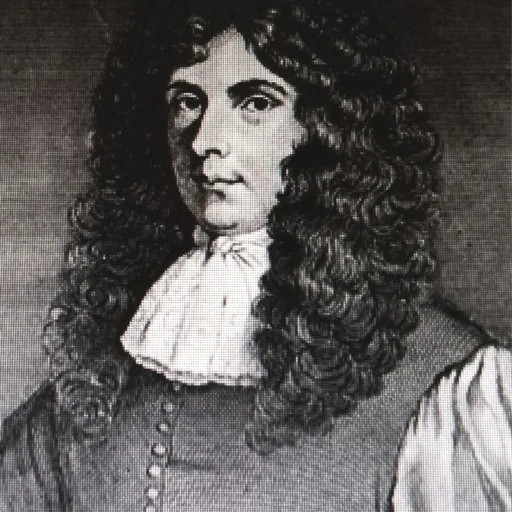
Robert White (1645 – 1703) was an English draughtsman and engraver. A Londoner, he was a pupil of David Loggan, and became a leading portrait engraver. White was celebrated for his original portraits, drawn in pencil on…

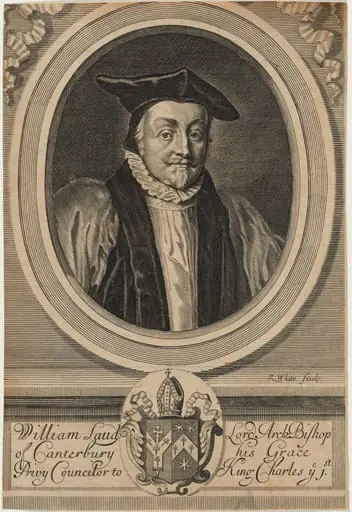
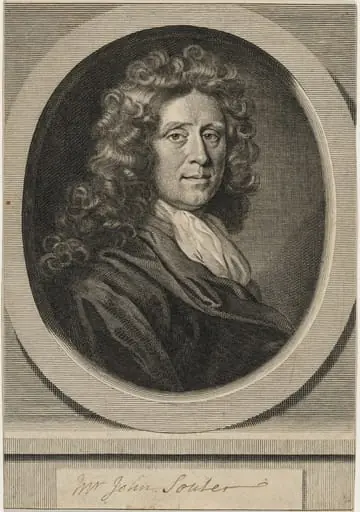
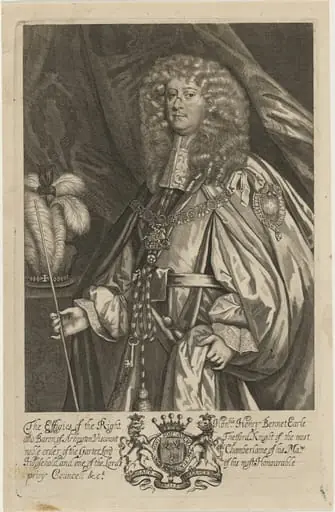 Henry Bennett, Earl of Arlington
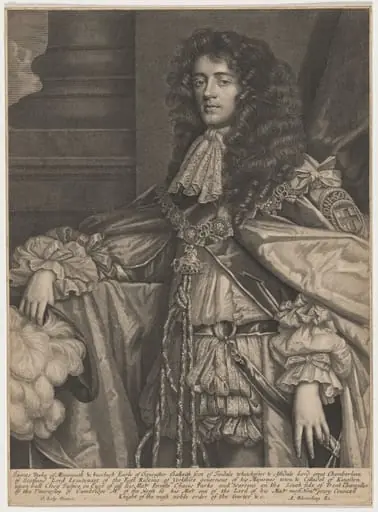 James, Duke of Monmouth and Buccleuch
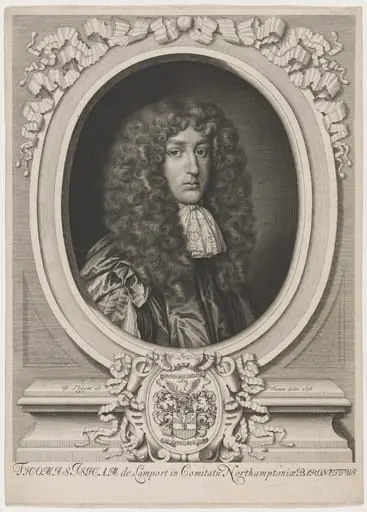 Sir Thomas Isham
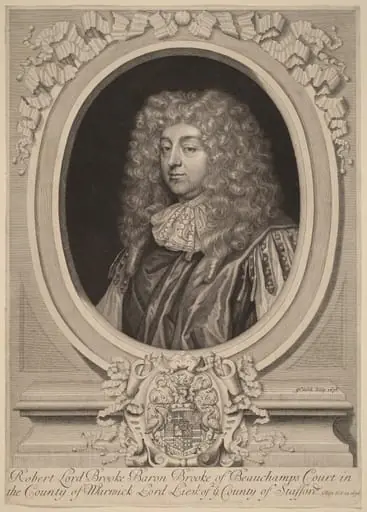 Robert Greville, Lord Brooke
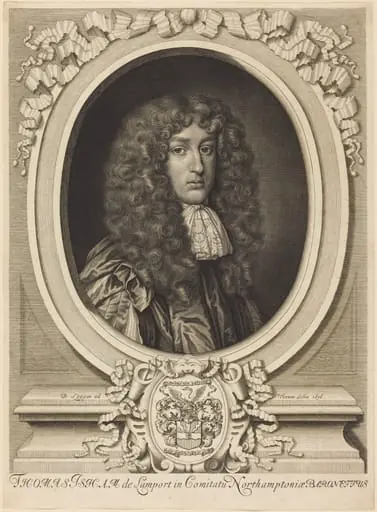 Sir Thomas Isham
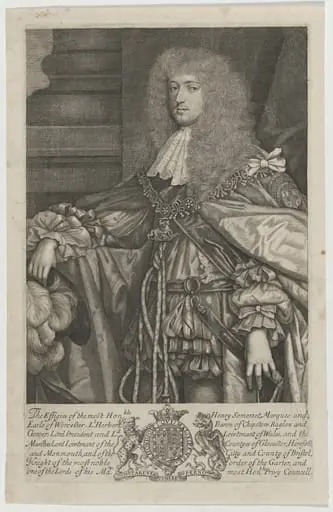 Henry Somerset, First Duke of Beaufort
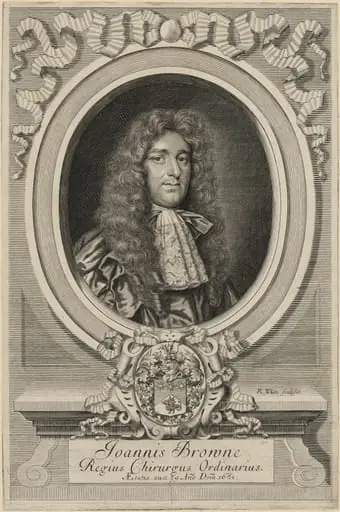 John Browne
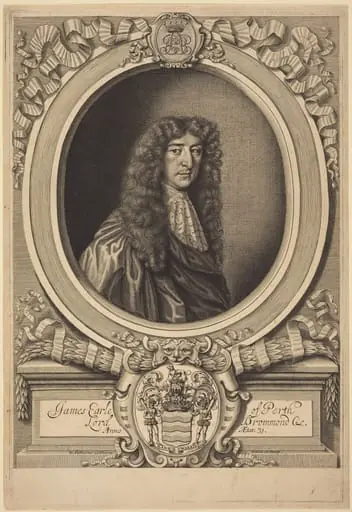 James Drummond, Earl of Perth
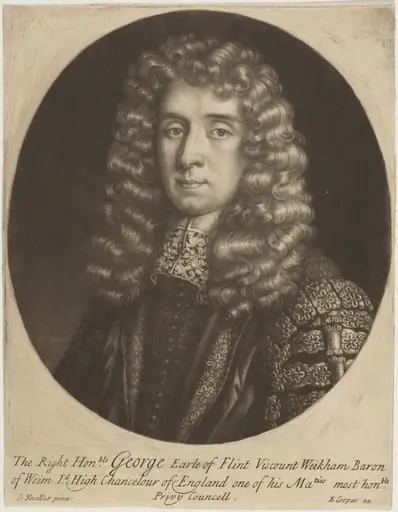 George Jeffreys, Earl of Flint, Viscount Weikham
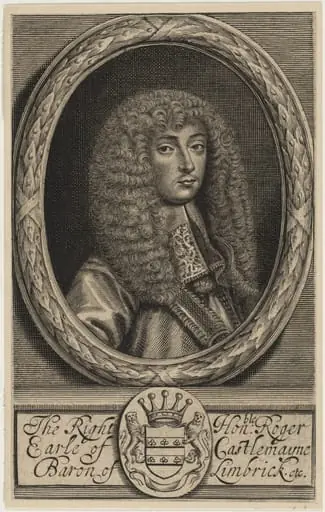 Roger Palmer, Earl of Castlemain
 Thomas Osborne, First Duke of Leeds
 John Hay, Earl of Tweeddale