Artwork
Nine Figures
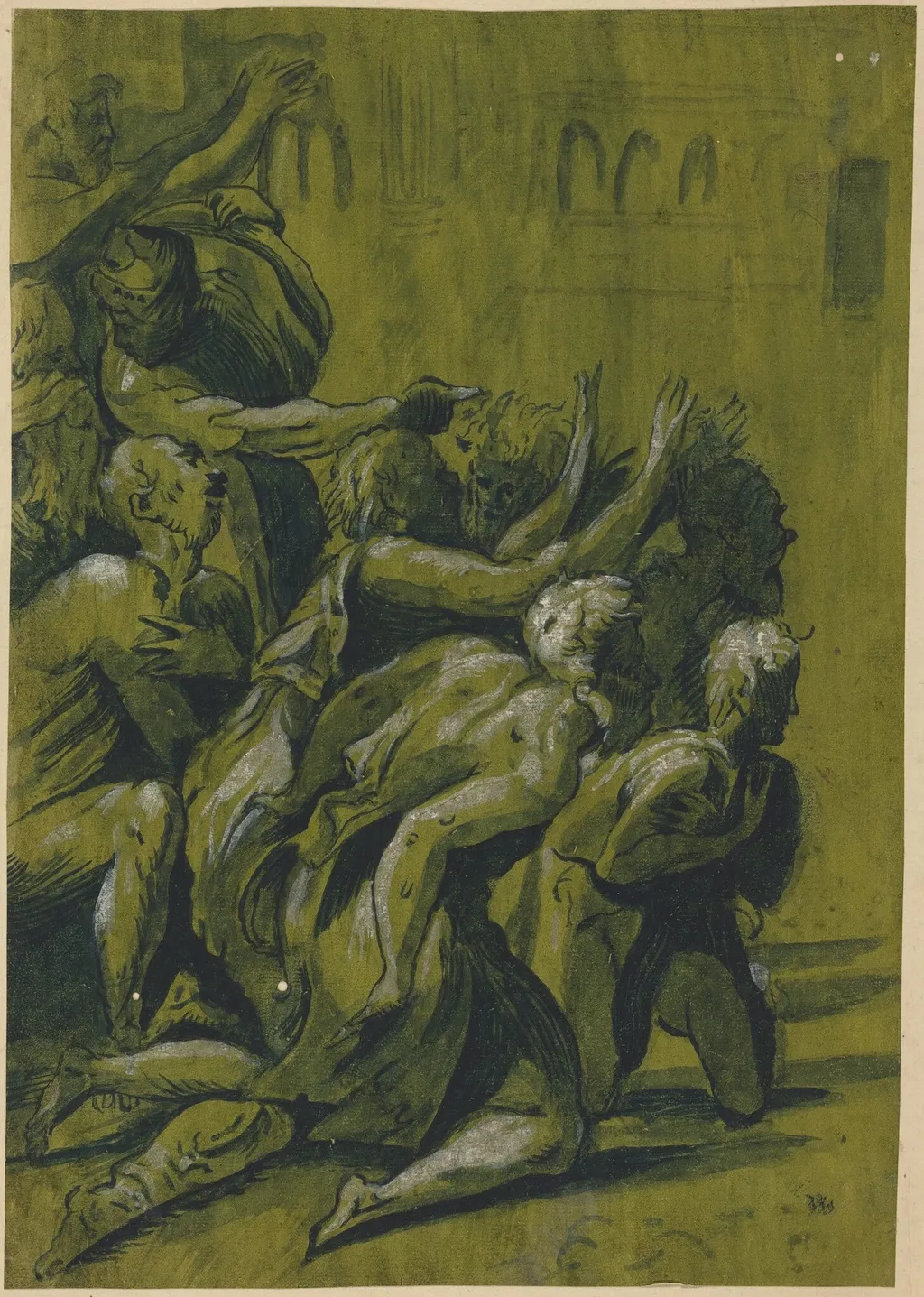
Nine Figures is an ink drawing by the Renaissance artist Unknown. It dates from 1515 and is held in the collection of the National Gallery of Art.
About this work
Overview
This drawing comprises nine interwoven human figures rendered in pen and black ink with gray wash, accented by touches of white on a green-toned prepared paper.
This drawing comprises nine interwoven human figures rendered in pen and black ink with gray wash, accented by touches of white on a green-toned prepared paper. The composition conveys a dense, chaotic grouping of limbs and torsos, suggesting motion and physical strain. The green underlayer serves as a tonal foundation, with ink lines applied rapidly over it, giving the impression of a spontaneous, observational study rather than a polished work.
Subject & Meaning
The figures are entangled in a non-narrative tangle of limbs, their faces indistinct but their gestures unmistakably strained. No clear hierarchy or narrative emerges; instead, the focus lies in the physical interdependence and tension between bodies. The absence of individual identity emphasizes universal themes of exertion, contact, and shared struggle, evoking a primal sense of human connection under duress.
Technique & Style
The artist employed swift, fluid ink lines to define form, layered over a washed green ground that modulates light and shadow. Gray wash builds volume subtly, while white highlights accentuate raised surfaces or edges. Cross-hatching and overlapping strokes create depth without detail, and the loose handling suggests immediacy—this is a study in gesture and mass, not finish. The green paper contributes to the atmospheric tone, unifying the composition.
History & Provenance
The drawing’s origin remains undocumented in public records, with no known exhibition history or collector lineage prior to its current institutional custody. Its material qualities—prepared green paper, ink, and wash—align with 16th- or 17th-century European drawing practices, though no definitive attribution has been established. It survives as an unattributed fragment of a broader tradition of figure studies.
Context
In the context of Renaissance and Mannerist drawing, such studies often served as preparatory exercises for larger compositions or as explorations of the human form in motion. The use of colored paper was common among artists seeking tonal harmony, and the rapid execution here reflects a practice of capturing dynamic poses from life or memory. This work belongs to a lineage of anatomical inquiry, prioritizing movement over idealization.
Legacy
Though unsigned and unattributed, the drawing exemplifies the enduring value of informal figure studies in artistic training. Its emphasis on gesture, tension, and layered technique influenced later generations of draftsmen who valued spontaneity over polish. It remains a quiet testament to the artist’s engagement with the physicality of the body, preserved not as a finished image but as a moment of observation.
Artist & collection

 Domestic Scene
 Giacomo and Cardinal Marco, investing Andrea, Abbot of San Zeno, with his Benefice
 The Nymph of Fontainebleau
 Portrait of a Woman
 Madonna and Child with Saints in the Enclosed Garden
 Venus and Minerva
 Family Group of Four on Sofa
 Wall painting from Room H of the Villa of P. Fannius Synistor at Boscoreale
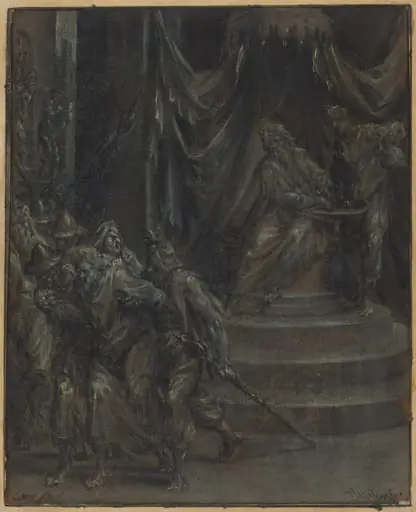 Pilate Washing His Hands as Christ Is Led Away
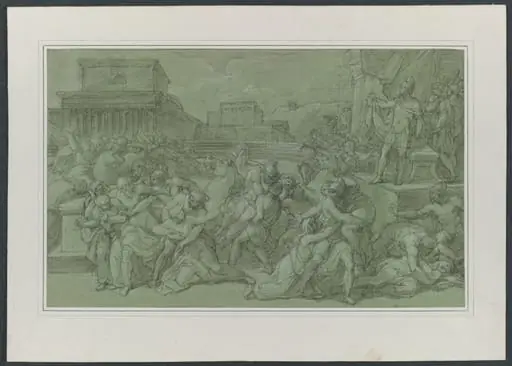 Rape of the Sabines
![Seven Figures Witnessing an Ascension [verso], by Donato Creti](https://artifactworldgallery.com/img/donato-creti--seven-figures-witnessing-an-ascension-verso--e80b3c17c151416b-w320.webp) Seven Figures Witnessing an Ascension [verso]
Seven Figures Witnessing an Ascension [verso]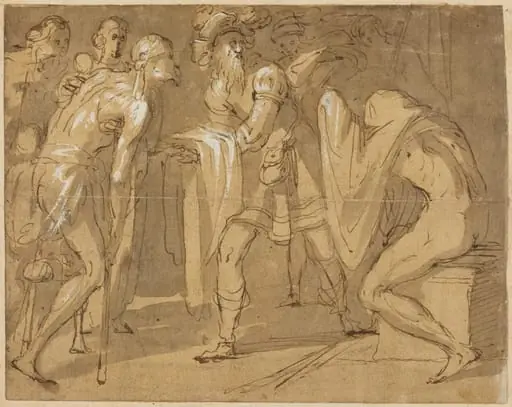 Saint Homobono
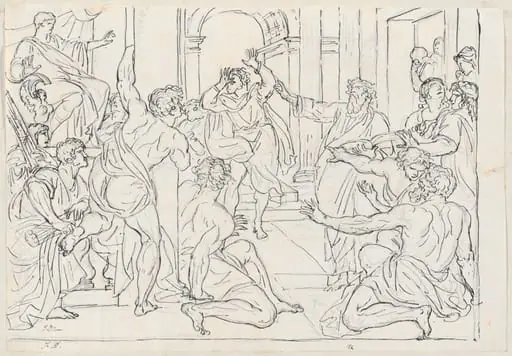 The Blinding of Elymas
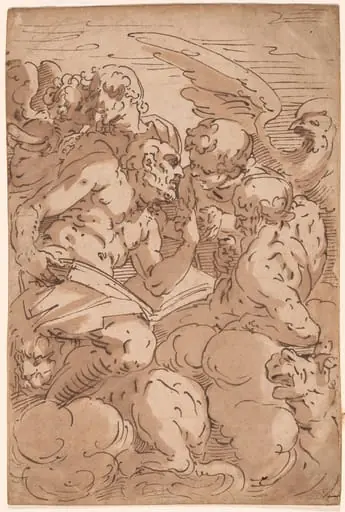 The Four Evangelists
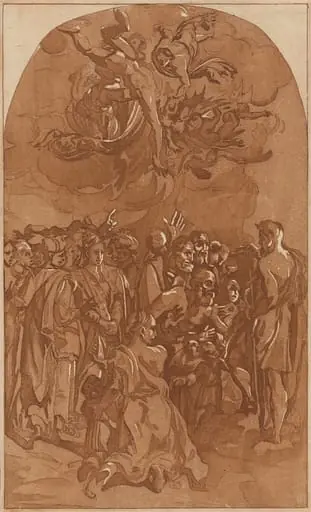 Saint John Preaching
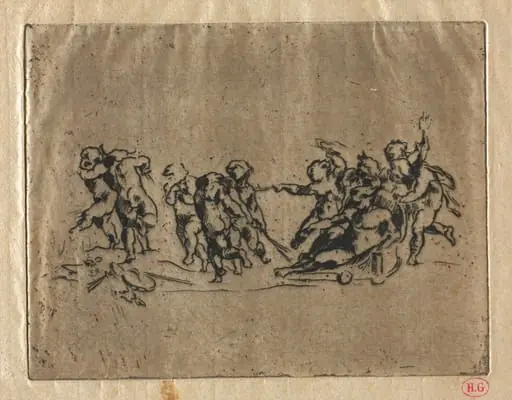 Bacchanal with Children and Chariot
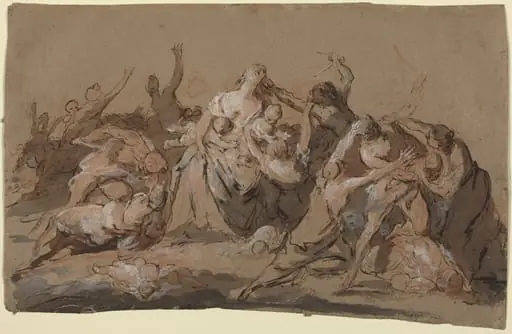 The Massacre of the Innocents
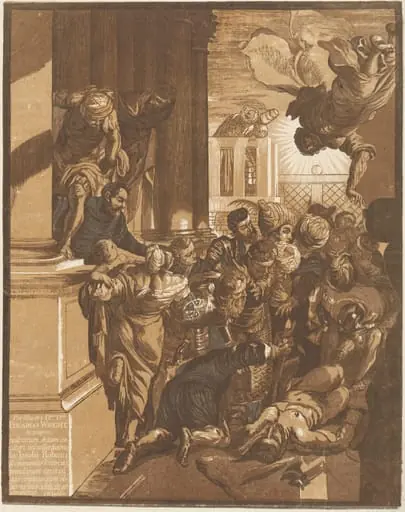 The Miracle of Saint Mark (left side)
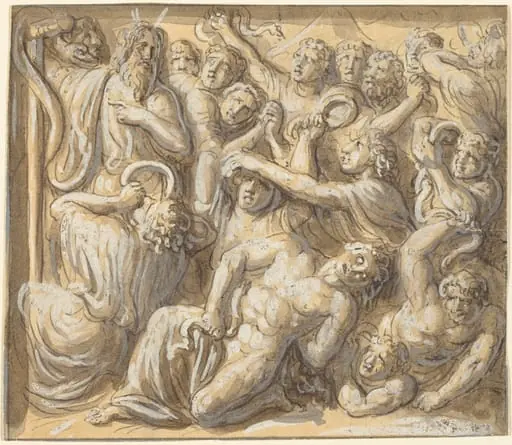 Moses and the Brazen Serpent
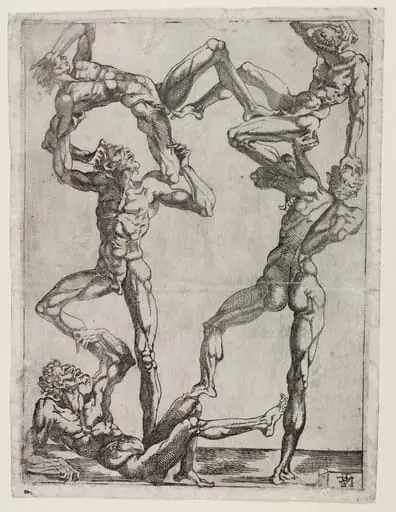 Pyramid of Five Men