Artwork
Rape of the Sabines
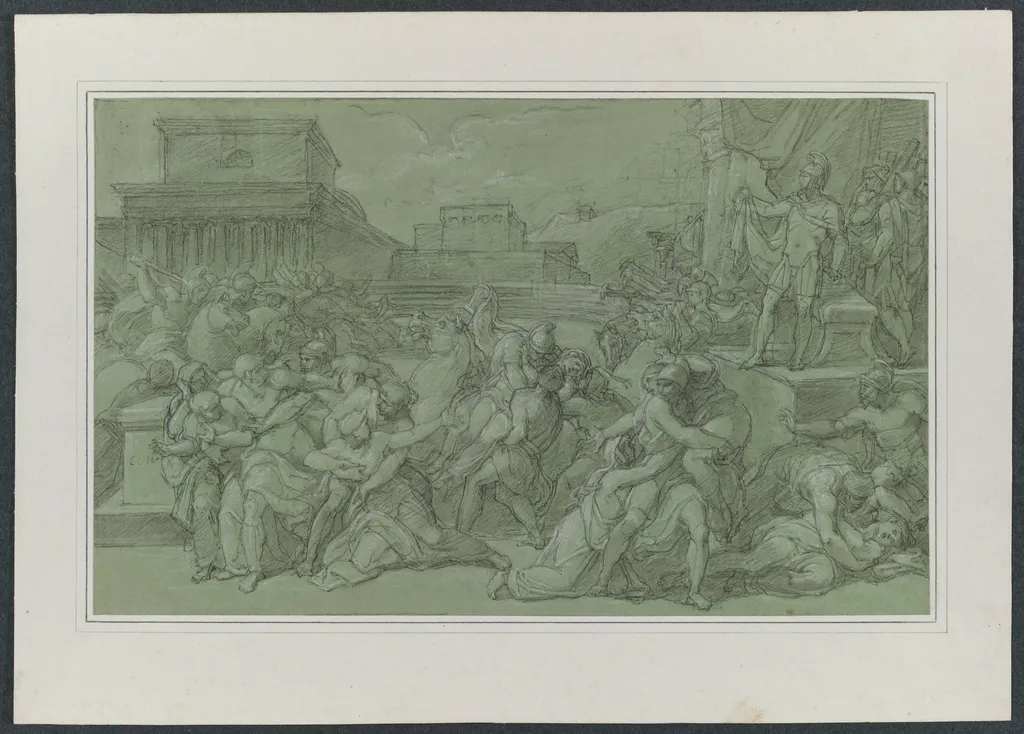
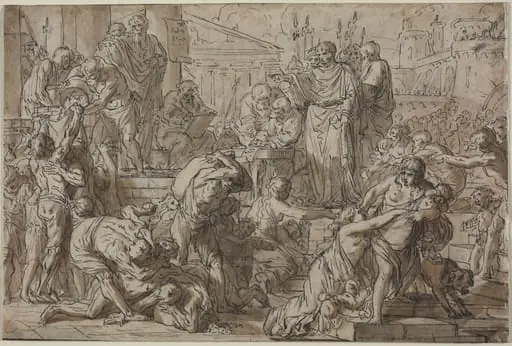
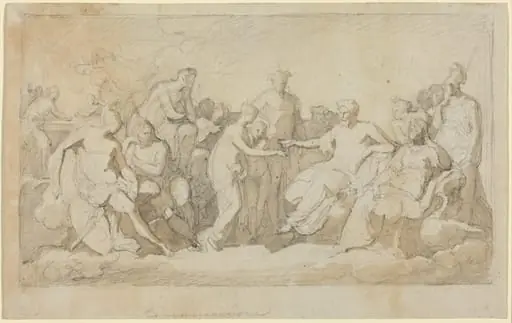
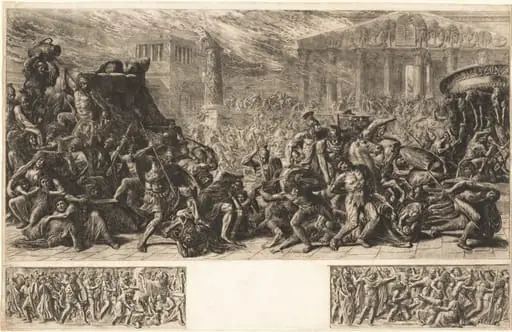
Rape of the Sabines is a drawing by the Romanticist artist Vincenzo Camuccini. It dates from 1820 and is held in the collection of the Cleveland Museum of Art.
About this work
Overview
Though best known for large-scale paintings, this work reveals his preparatory process, capturing the dynamism of a legendary Roman episode.
Vincenzo Camuccini produced this drawing around 1820 as part of his engagement with classical narratives. Though best known for large-scale paintings, this work reveals his preparatory process, capturing the dynamism of a legendary Roman episode. Executed with ink and wash, it serves as a study for a larger composition, reflecting his commitment to historical accuracy and dramatic intensity within the Neoclassical tradition.
Subject & Meaning
The scene illustrates the mythic abduction of Sabine women by early Romans, a foundational story of Rome’s expansion. Camuccini portrays the moment of violent collision between the two groups, emphasizing chaos and emotional tension. The inclusion of onlookers on a raised platform suggests civic observation, hinting at the complex moral and political dimensions of the event as understood in early 19th-century historiography.
Technique & Style
Camuccini employs rapid, fluid ink lines to convey motion and struggle, layering washes to model forms in deep chiaroscuro. The contrast between illuminated figures and shadowed backgrounds heightens the scene’s urgency. Architectural elements in the distance—ruins and a temple—anchor the action in a plausible ancient setting, demonstrating his scholarly attention to archaeological detail while maintaining expressive energy.
History & Provenance
This drawing entered the collection of The Cleveland Museum of Art as part of a broader acquisition of Camuccini’s preparatory works. Its survival offers insight into the artist’s method, bridging his academic training and final monumental paintings. While the finished oil painting is now lost, this study remains a key document of his creative process and the Neoclassical emphasis on historical narrative in early 19th-century Italy.
Context
Created during a period when Italian artists sought to revive classical ideals amid political upheaval, Camuccini’s work responded to Enlightenment-era interest in Roman law and civic virtue. The Sabine episode, often interpreted as a metaphor for integration and conflict, resonated with contemporary debates about nationhood and social order. His approach aligned with academic institutions that prioritized historical fidelity over romantic embellishment.
Legacy
Though overshadowed by his completed canvases, this drawing exemplifies Camuccini’s role in sustaining Neoclassical discipline through detailed study. Its preservation allows scholars to trace how historical subjects were translated from sketch to final work. The drawing remains a valuable reference for understanding the technical rigor and narrative ambition of Roman academic art in the early 1800s.
Artist & collection
Artist
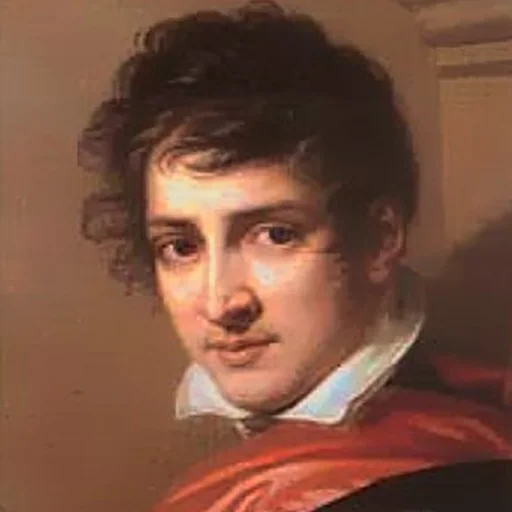
Vincenzo Camuccini (22 February 1771 – 2 September 1844) was an Italian Neoclassical painter. He was considered the premier academic painter of his time in Rome. Camuccini was known for his sober grandeur and archeological accuracy.

![The Martyrdom of Saints Peter and Paul [recto], by Antonio da Trento](https://artifactworldgallery.com/img/antonio-da-trento--the-martyrdom-of-saints-peter-and-paul-recto--a51e90060085a207-w320.webp)