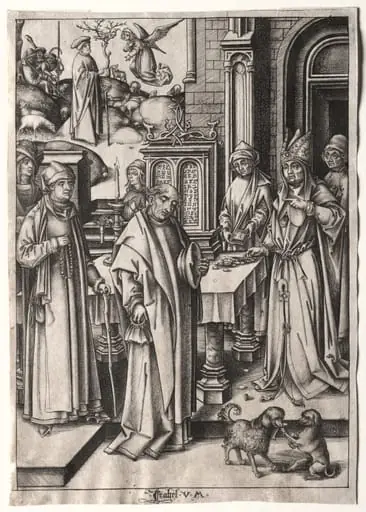
Artwork
The Mass of Saint Gregory
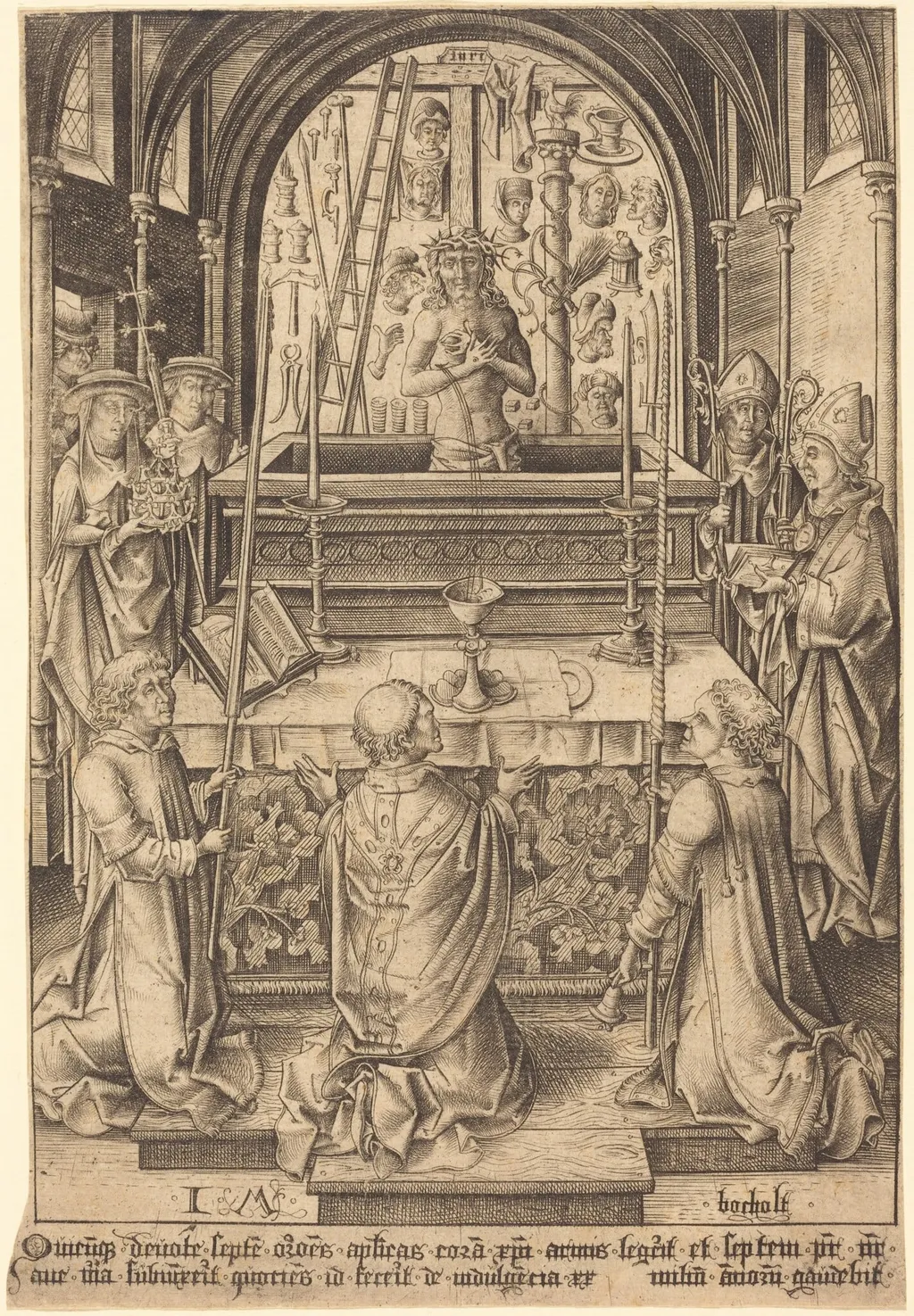
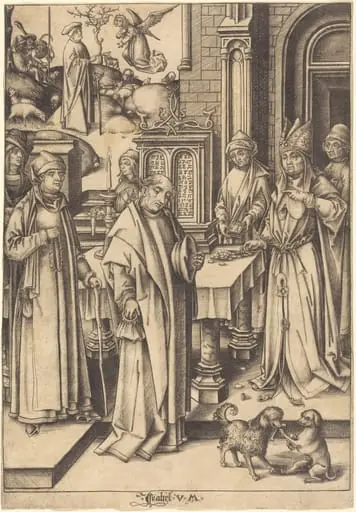
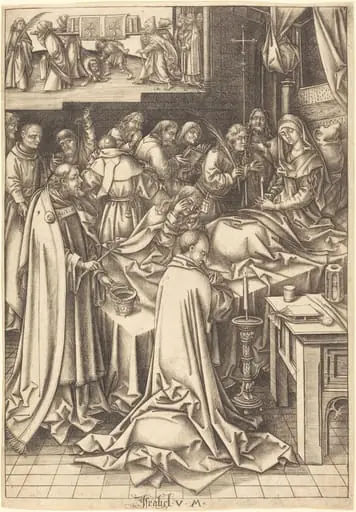
The Mass of Saint Gregory is an ink print by the Renaissance artist Israhel van Meckenem. It dates from 1482 and is held in the collection of the National Gallery of Art.
About this work
Overview
As one of the most productive printmakers of the 15th century, van Meckenem produced over 600 engravings, often reinterpreting existing compositions.
Created around 1482 by Israhel van Meckenem, a German engraver and goldsmith, this print depicts the legendary moment when Saint Gregory the Great witnesses a vision of Christ during Mass. As one of the most productive printmakers of the 15th century, van Meckenem produced over 600 engravings, often reinterpreting existing compositions. This work exemplifies the Northern Renaissance’s emphasis on intricate detail and devotional imagery, rendered through fine, controlled lines on a small copper plate.
Subject & Meaning
The scene illustrates the miracle of Saint Gregory, who, while celebrating Mass, was granted a vision of Christ as the Man of Sorrows, affirming the real presence of Christ in the Eucharist. The priest at the altar, arms raised, is surrounded by clergy and laypeople, their reactions conveying awe. Figures on the balcony, including those with unusual headgear, observe the miracle, reinforcing the divine revelation’s public significance. The kneeling armored man may represent a noble patron, linking earthly power to spiritual grace.
Technique & Style
Van Meckenem employed fine, densely packed lines to model form and shadow without color, characteristic of early engraving. The composition is tightly packed, with every surface—robes, architecture, faces—rendered in meticulous detail. Arches and wall niches frame the scene, while tiny figures peek from hidden corners, enhancing depth. The sharp, intersecting strokes create texture and volume, demonstrating the artist’s mastery of the burin and his ability to convey complexity within a small format.
History & Provenance
The engraving was made in the late 15th century in the Rhineland, likely for private devotion or scholarly circulation. Van Meckenem’s workshop produced multiple impressions, and surviving examples are held in major European collections. While the original copper plate is lost, the print’s widespread distribution indicates its popularity among clergy and educated laypeople. Its survival in several institutions suggests it was valued as both a religious object and a technical achievement in printmaking.
Context
This work emerged during a period when printmaking allowed religious imagery to reach broader audiences beyond illuminated manuscripts. The Mass of Saint Gregory was a popular subject in Northern Europe, tied to Eucharistic devotion and the Church’s emphasis on sacramental truth. Van Meckenem’s adaptation of existing visual traditions reflects the era’s practice of reusing compositions, while his precision elevated the engraving as a medium for theological storytelling.
Legacy
Van Meckenem’s technical precision and prolific output helped establish engraving as a respected art form in Northern Europe. His detailed compositions influenced later printmakers, including Dürer, who studied and adapted similar motifs. Though overshadowed by more famous contemporaries, his work preserved devotional narratives through accessible, reproducible images, contributing to the spread of religious iconography in the decades before the Reformation.
Artist & collection
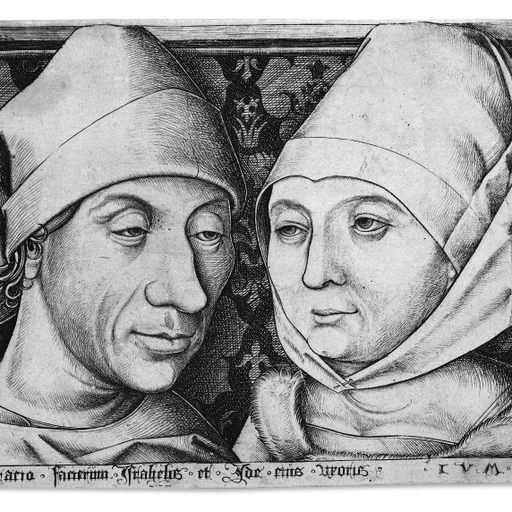
Artist
Israhel van Meckenem (c. 1445 – 10 November 1503), also known as Israhel van Meckenem the Younger, was a German printmaker and goldsmith, perhaps of a Dutch family origin. He was the most prolific engraver of the…