Artwork
Mme. XXX en Flore
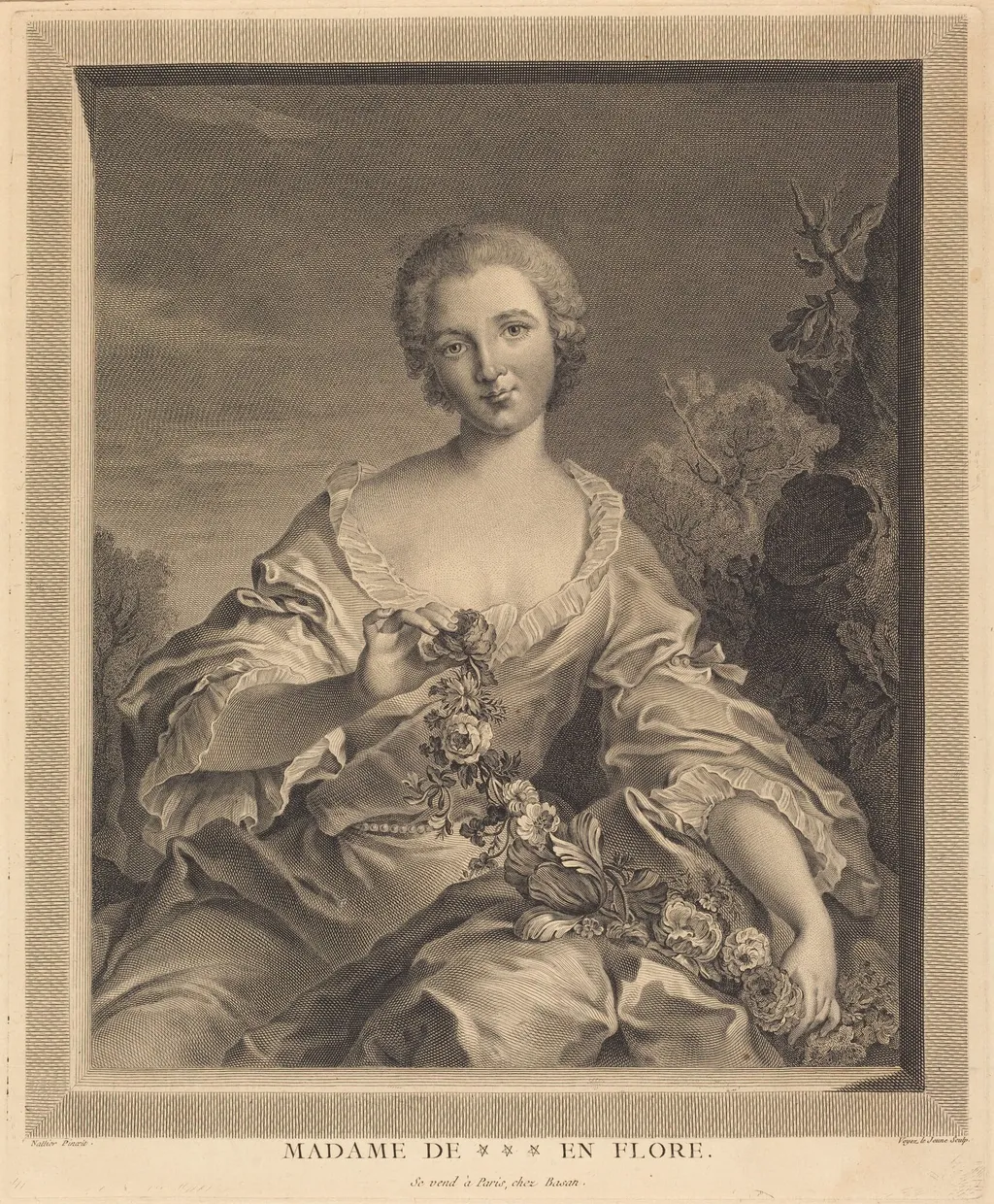
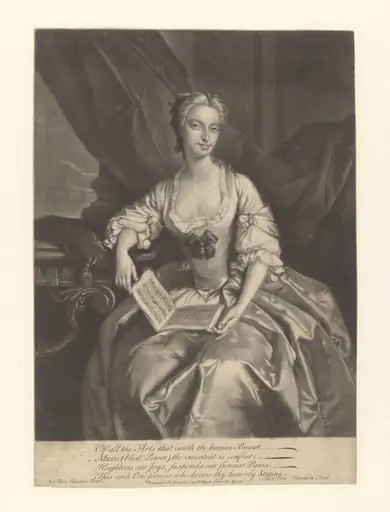
Mme. XXX en Flore is an ink print by the Baroque artist François Voyez. It dates from 1776 and is held in the collection of the National Gallery of Art. Mme.
About this work
Overview
Mme. XXX en Flore is an 1776 engraving by François Voyez, depicting a woman idealized as the Roman goddess Flora. The composition centers on her seated pose amid lush botanical elements, rendered in fine linear detail typical of engraved prints of the period. The dark, muted background contrasts with the delicate rendering of flora and fabric, drawing focus to the figure’s poised demeanor.
Subject & Meaning
The figure represents Flora, the ancient deity of spring and flowers, symbolizing renewal and natural abundance. Her serene expression and the bouquet she holds reinforce this allegorical role. The surrounding foliage and flowing drapery suggest harmony between the human form and the natural world, a common theme in 18th-century mythological portraiture.
Technique & Style
Voyez employed fine-line engraving to capture texture in the dress’s ruffles, the softness of petals, and the gradation of shadow. The contrast between the dark background and the intricate botanical details demonstrates mastery of tonal control. The style leans toward Rococo refinement, with elegance and delicacy prioritized over dramatic intensity.
History & Provenance
Created in 1776, the print was likely produced for private collectors interested in mythological themes and fashionable portraiture. Its circulation as an engraved image suggests it was part of a broader trend in France to disseminate idealized female figures through print media, though its specific early ownership remains undocumented.
Context
In late 18th-century France, allegorical depictions of Flora were popular in decorative arts and print culture, reflecting Enlightenment-era fascination with classical antiquity and natural philosophy. While often associated with Baroque drama, this work aligns more closely with Rococo sensibilities, emphasizing grace and ornament over emotional intensity.
Legacy
The engraving survives as a modest example of period printmaking, illustrating how classical mythology was adapted into intimate, decorative imagery. Though not widely exhibited today, it contributes to understanding the role of print in shaping aesthetic ideals among educated audiences before the French Revolution.
Artist & collection


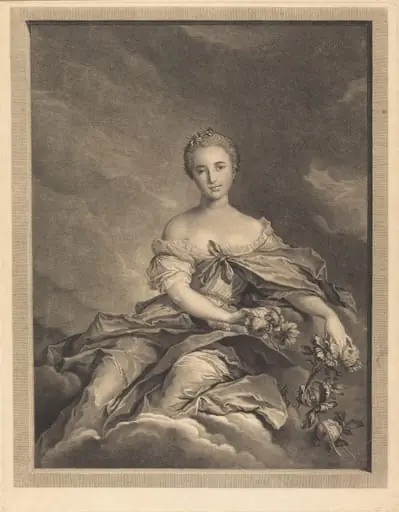 Flore a son lever
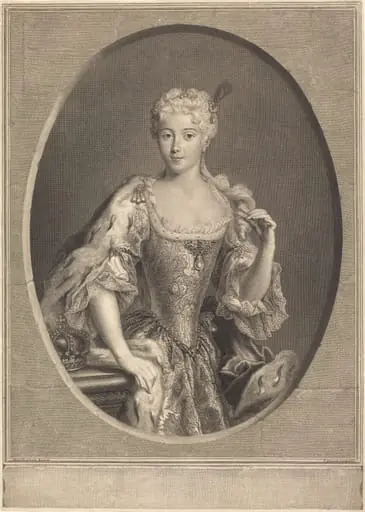 Maria Klementyna Sobieska
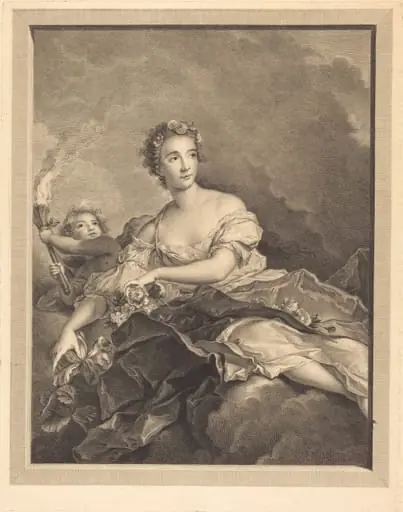 La nuit passe, l'Aurore parait
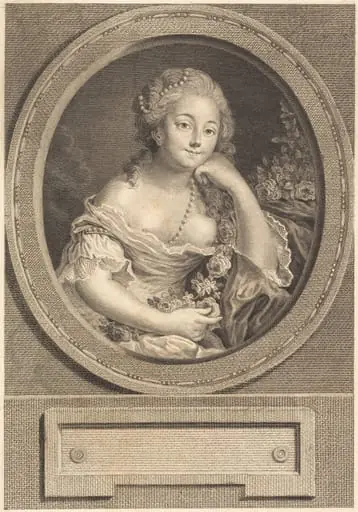 Le léger vêtement
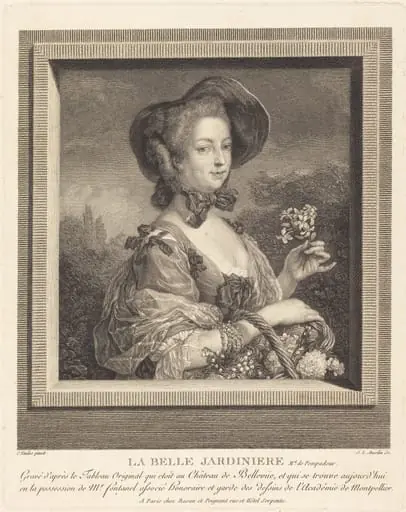 La Belle Jardinière - Madame de Pompadour
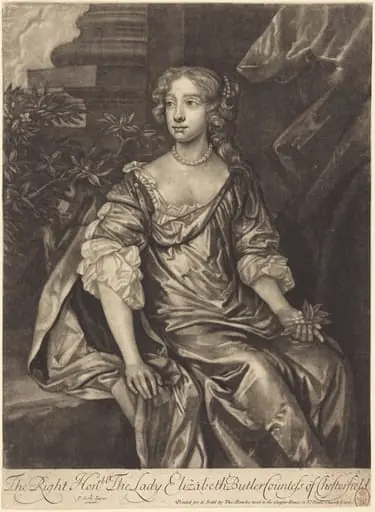 The Right Honorable Lady Elizabeth Butler, Countess of Chesterfield
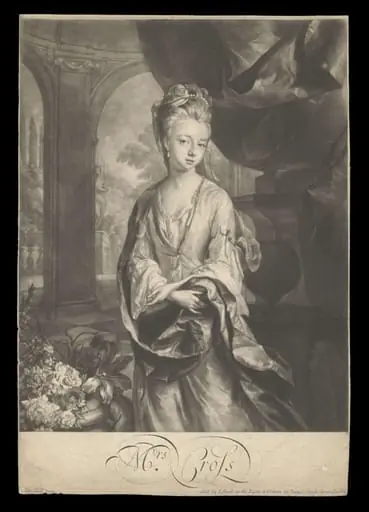 H Beard Print Collection
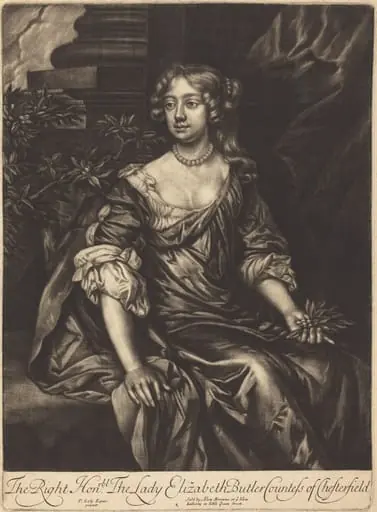 The Right Honorable Lady Elizabeth Butler, Countess of Chesterfield
 H Beard Print Collection