Artwork
La Belle Jardinière - Madame de Pompadour
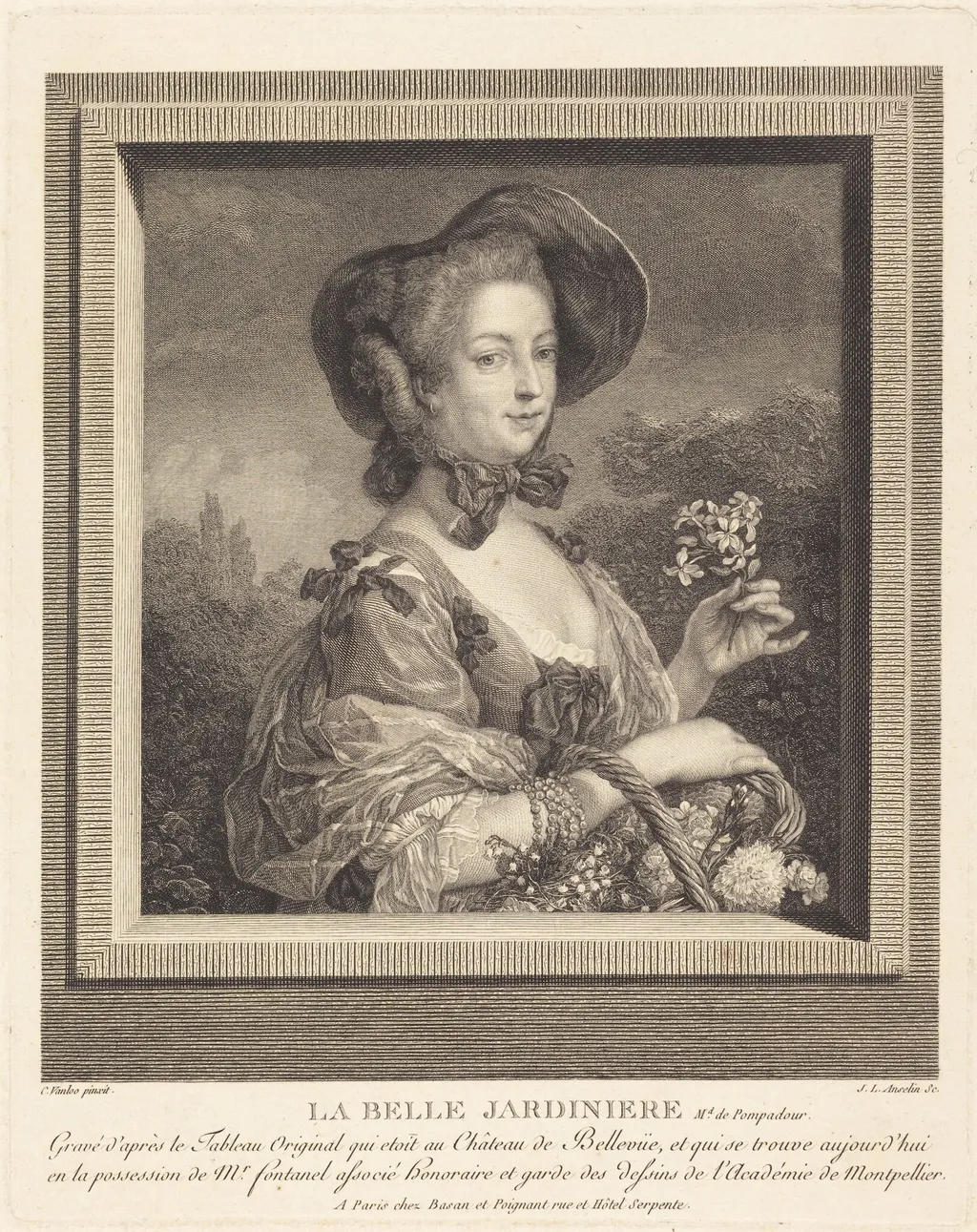
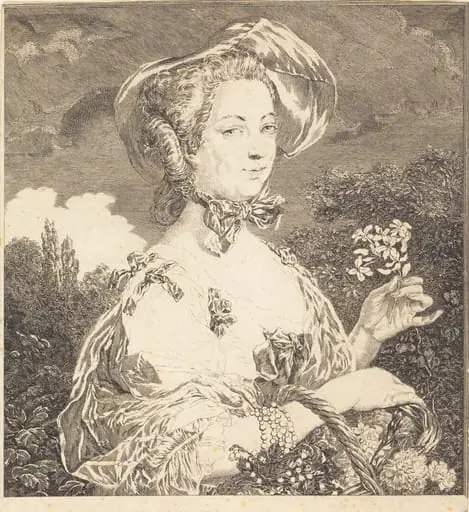
La Belle Jardinière - Madame de Pompadour is an ink print by the Romanticist artist Jean-Louis Anselin. It dates from 1785 and is held in the collection of the National Gallery of Art.
About this work
Overview
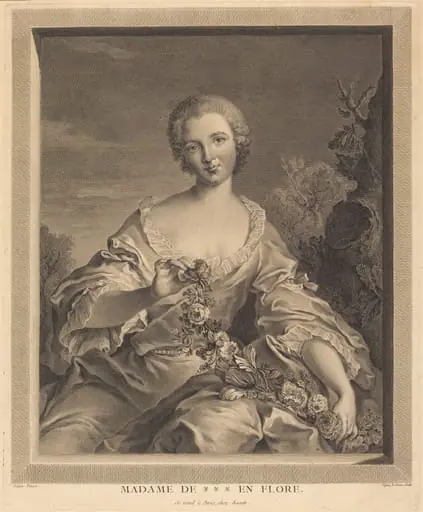
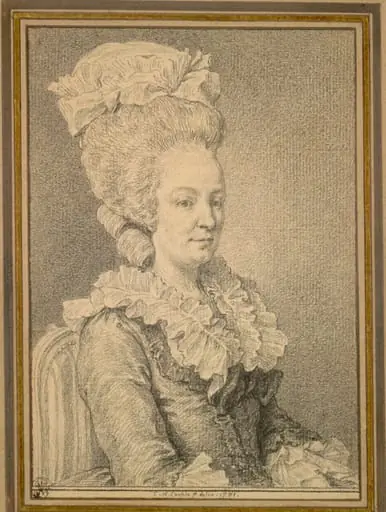
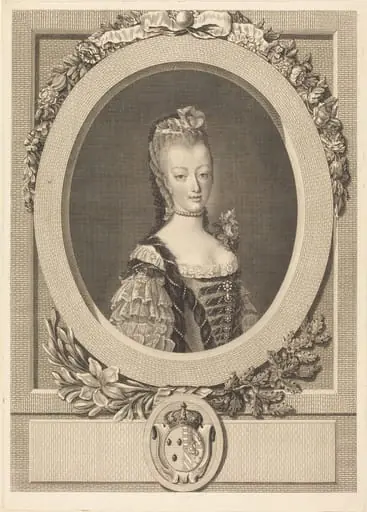
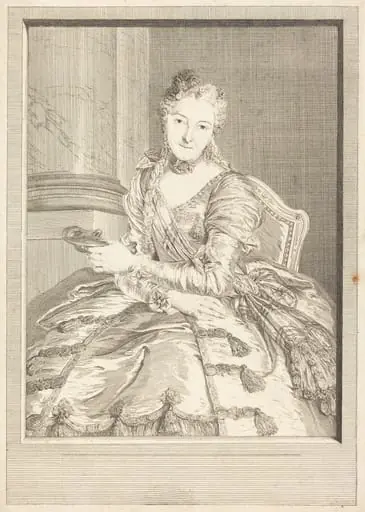
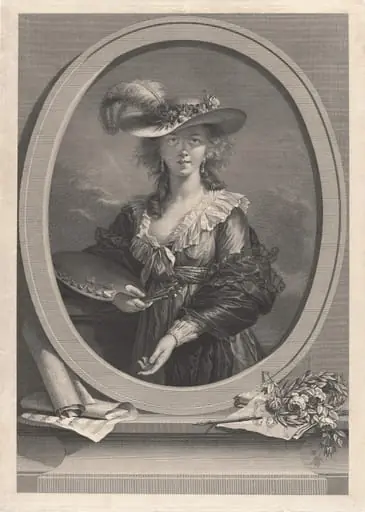
Created around 1785 by Jean-Louis Anselin, this black-and-white print depicts Madame de Pompadour in an elegant 18th-century gown. Executed through etching and engraving on laid paper, the image captures her in a refined, garden-inspired pose. The title, 'La Belle Jardinière,' translates to 'the beautiful gardener,' linking her image to cultivated nature rather than literal horticulture.
Subject & Meaning
The bouquet she holds and the foliage at her side evoke harmony with nature, aligning her with Enlightenment ideals of refined taste and cultivated elegance.
Madame de Pompadour, a prominent figure at the French court, is portrayed not as a royal patron but as an idealized figure of grace amid flora. The bouquet she holds and the foliage at her side evoke harmony with nature, aligning her with Enlightenment ideals of refined taste and cultivated elegance. The title subtly elevates her status through metaphor, associating her with beauty and order in the natural world.
Technique & Style
Anselin employed fine lines and delicate cross-hatching to render the textures of lace, fabric, and foliage. The contrast between the soft gradations of the dress and the sharp outlines of the hat and flowers demonstrates mastery of etching and engraving. The composition is balanced and intimate, focusing attention on the figure’s poised demeanor and the symbolic arrangement of plants.
History & Provenance
The print was made shortly after Pompadour’s death in 1764, during a period when her legacy was being memorialized in art. Anselin, known for reproductive prints, likely based his work on an earlier portrait. It circulated among collectors and aristocrats who admired her cultural influence, serving as a visual tribute rather than a contemporary likeness.
Context
In late 18th-century France, images of noblewomen intertwined with nature reflected broader cultural trends—romanticizing aristocratic life through pastoral symbolism. Pompadour, a key patron of the arts, was frequently depicted in such idealized forms. This print aligns with a trend of elevating court figures through allegorical imagery, distancing them from political reality.
Legacy
The print endures as an example of how portraiture was used to shape public perception of powerful women. While not a direct likeness, it crystallized Pompadour’s cultural image as a symbol of elegance and refinement. Its technical precision and symbolic framing influenced later reproductive prints of aristocratic women in the decades before the Revolution.
Artist & collection