Artwork
Two study heads of apostles
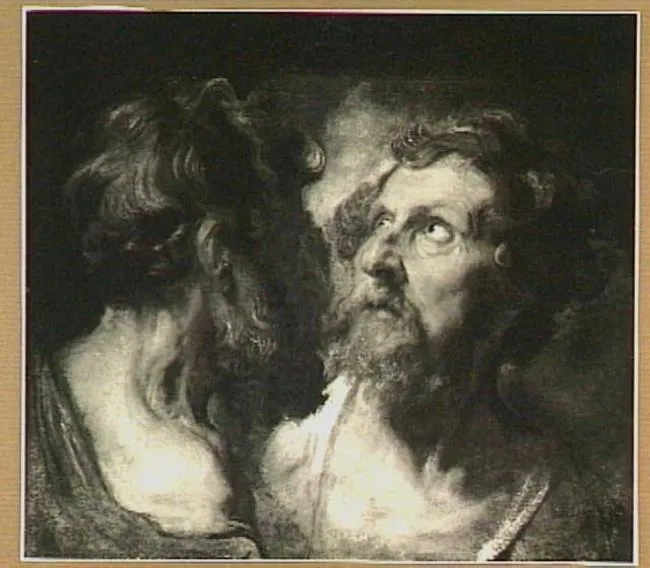
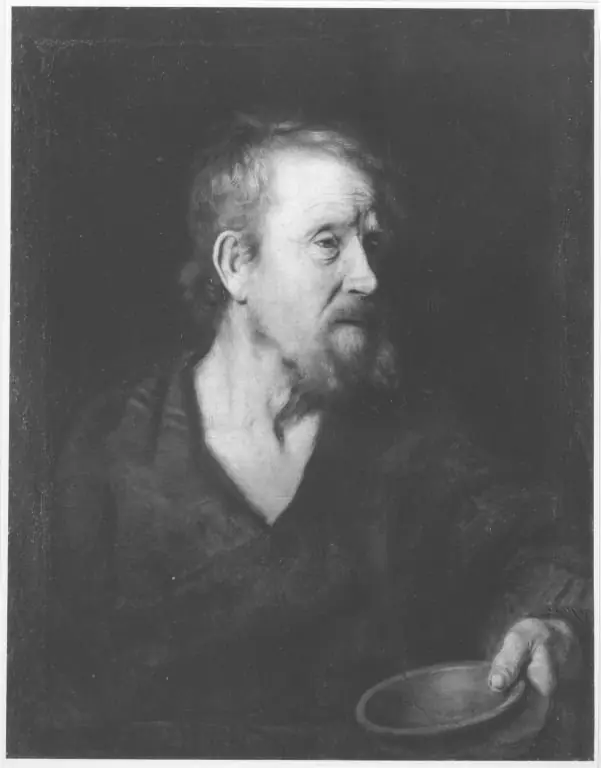
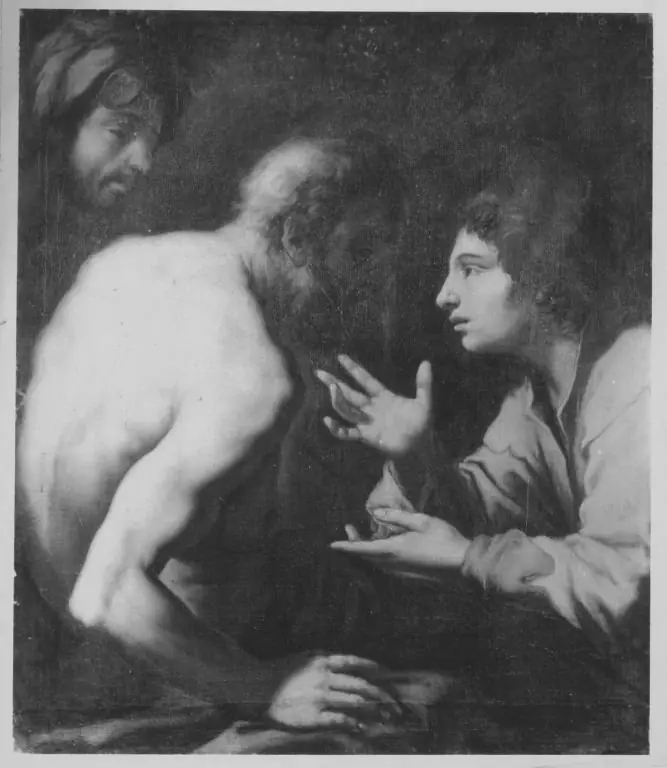
Two study heads of apostles is an oil painting by the Flemish Baroque painting artist Anthony van Dyck. It dates from 1617 and is held in the collection of the Museum of Fine Arts of Lyon.
About this work
Overview
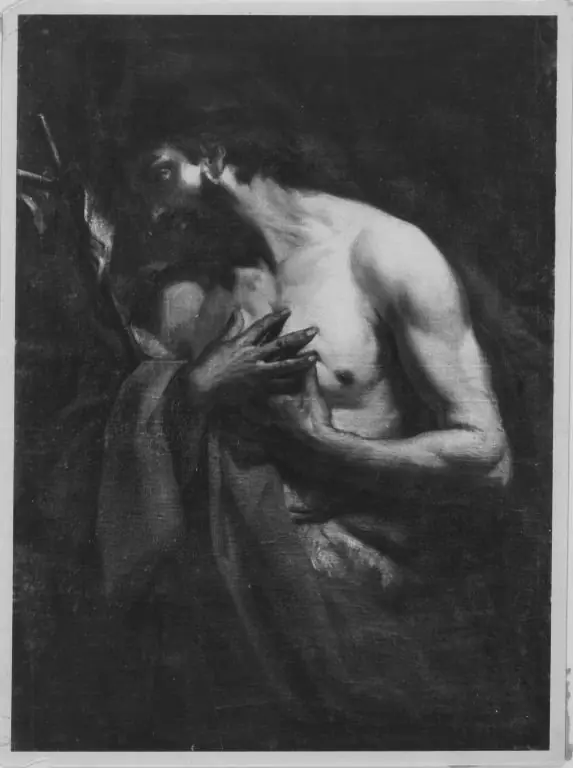
Painted in 1617 by Anthony van Dyck, this small oil work features two male heads rendered with focused intensity. Created early in his career, shortly after leaving Rubens’s studio, the piece reflects van Dyck’s transition from pupil to independent artist. Executed on a modest scale, it serves as a study rather than a finished portrait, emphasizing observation over narrative.
Subject & Meaning
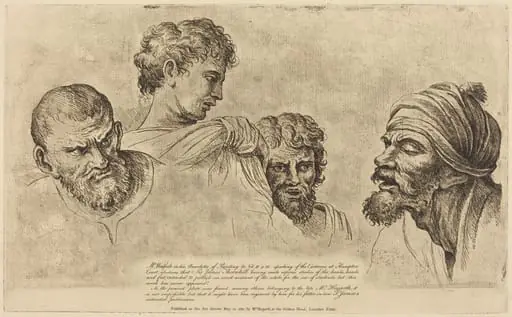
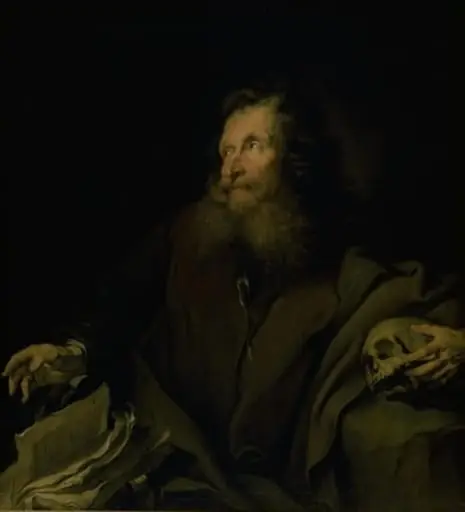
The two figures are likely apostles, identified by their beards and simple robes, common attributes in religious iconography of the period. Their contrasting gazes—one downward, the other upward—suggest inner contemplation or spiritual dialogue. The absence of context or narrative elements shifts focus to individual expression, inviting interpretation of their emotional or theological states.
Technique & Style
Van Dyck employs chiaroscuro to model the faces with dramatic light and shadow, enhancing volume and emotional depth. Brushwork is precise yet fluid, capturing the texture of hair and skin with subtle gradations. The dark, unmodeled background isolates the heads, concentrating attention on facial features and the interplay of light across their forms, a hallmark of his early Baroque training.
History & Provenance
The painting entered the collection of the Museum of Fine Arts of Lyon in the 19th century, though its earlier ownership remains undocumented. Created during van Dyck’s formative years in Antwerp, it likely served as preparatory work for larger religious compositions. Its survival as a standalone study is uncommon, offering insight into his working process before achieving wider fame.
Context
This work reflects a broader practice among Flemish painters seeking to convey spiritual presence through individualized portraiture within religious contexts.
In early 17th-century Flanders, artists frequently produced head studies to refine character depiction for altarpieces and biblical scenes. Van Dyck, influenced by Rubens’s dynamic realism, used such studies to explore psychological nuance. This work reflects a broader practice among Flemish painters seeking to convey spiritual presence through individualized portraiture within religious contexts.
Legacy
Though not widely exhibited, this study exemplifies van Dyck’s early mastery of expressive portraiture. It reveals his ability to convey depth and character in minimal form, foreshadowing his later success in aristocratic portraiture. As a rare surviving example of his preparatory work, it contributes to understanding the development of Baroque visual language in Northern Europe.
Artist & collection
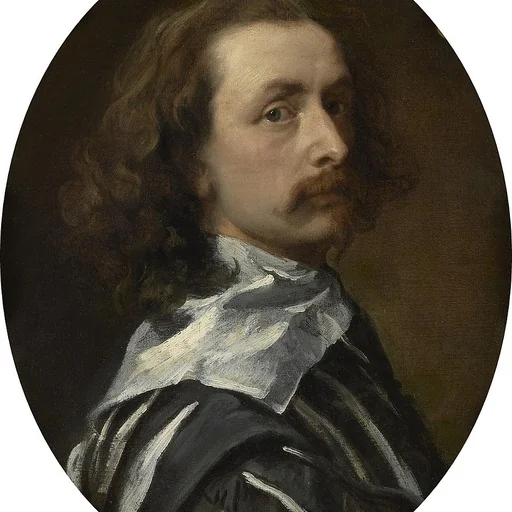
Artist
Sir Anthony van Dyck (; Dutch: Antoon van Dijck ; 22 March 1599 – 9 December 1641) was a Flemish Baroque artist, who became the leading court painter in England after success in the Spanish Netherlands and Italy.