Artwork
View of Aswan - Along the Nile
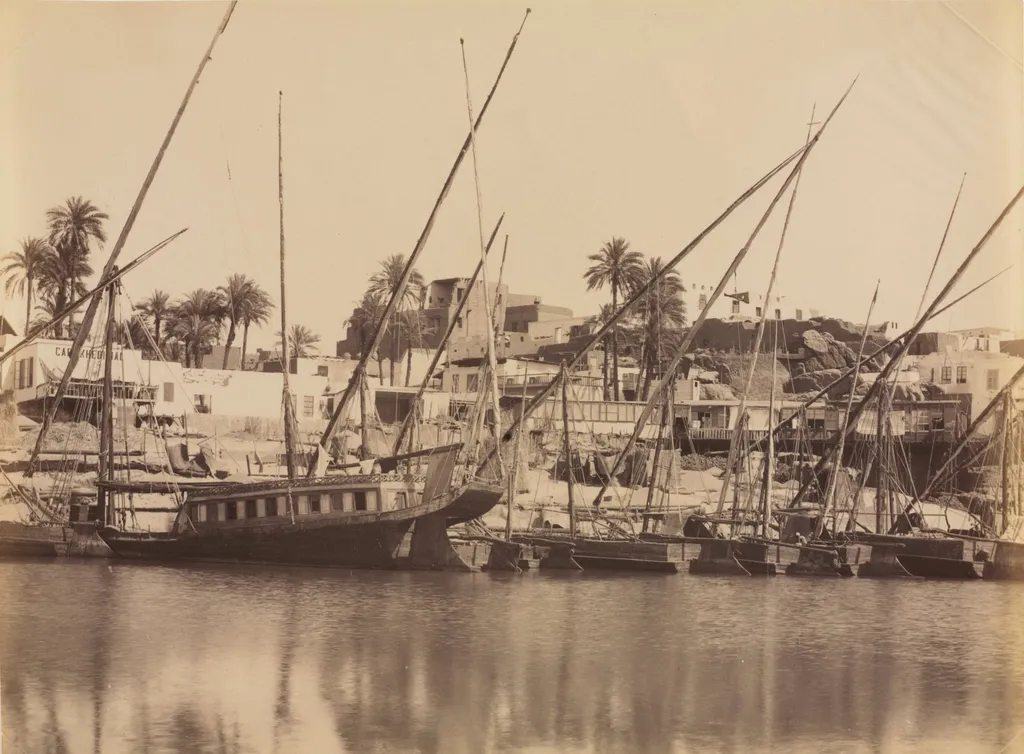
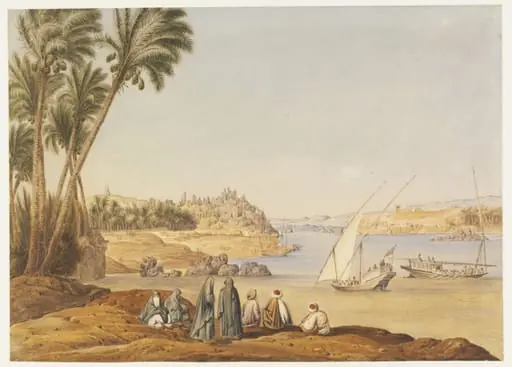
View of Aswan - Along the Nile is a photography by the Impressionist artist Antonio Beato. It dates from 1880 and is held in the collection of the Cleveland Museum of Art.
About this work
Overview
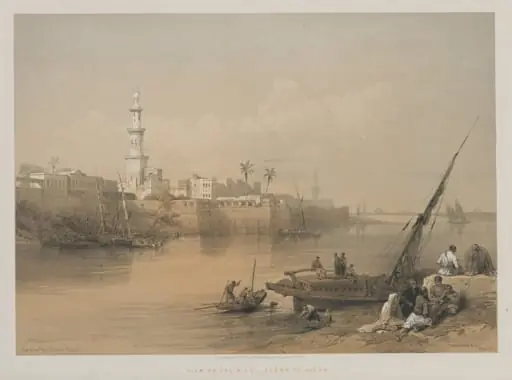
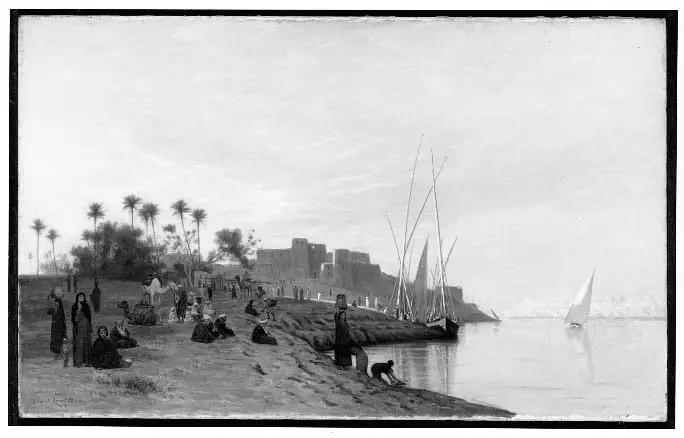
This photograph, attributed to Antonio Beato and dated around 1880, captures a riverside vista in Aswan. Part of the holdings of The Cleveland Museum of Art, it presents a composed urban landscape along the Nile, where maritime activity merges with settled surroundings. The image reflects the photographer’s interest in documenting regional life during the late nineteenth century.
Subject & Meaning
The arrangement conveys both daily routine and the river’s role as a conduit for trade and travel, evoking a sense of quiet continuity within an Egyptian town.
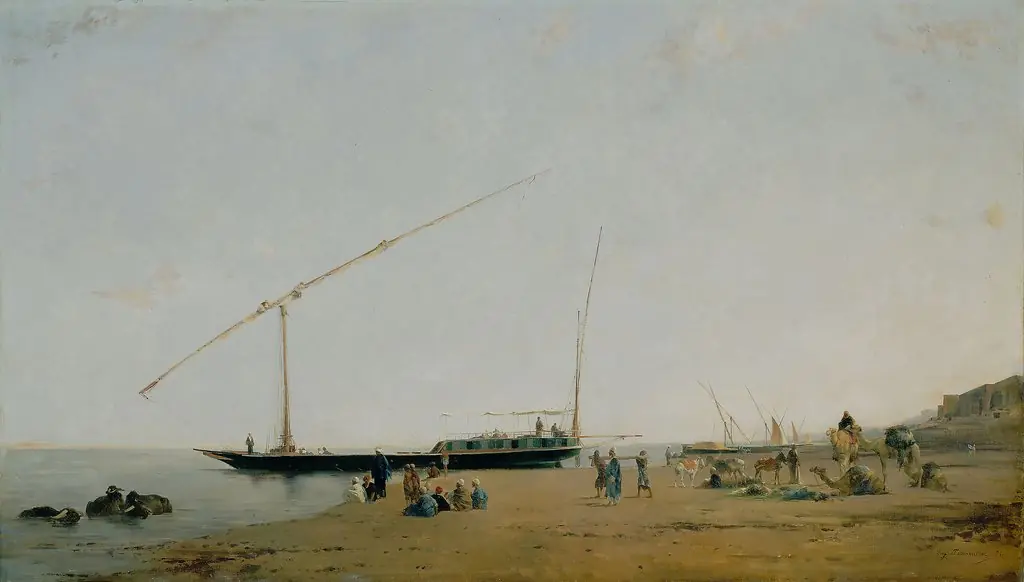
The scene centers on a sequence of moored boats lining the Nile’s edge, their vertical masts and furled sails forming a rhythmic pattern. Behind them, clusters of palm trees and low-rise structures establish the setting as a Nile-side community. The arrangement conveys both daily routine and the river’s role as a conduit for trade and travel, evoking a sense of quiet continuity within an Egyptian town.
Technique & Style
Beato employed photographic methods characteristic of his era, utilizing natural light to articulate surfaces and volumes. The play of illumination across sails, hulls, and foliage creates tonal contrasts, while the framing preserves spatial clarity. This approach aligns with the documentary tendencies of late nineteenth-century photography, emphasizing descriptive accuracy over overt artistic embellishment.
History & Provenance
Created during Beato’s extended residence in Egypt, the photograph emerged from his broader project of recording landscapes and cultural sites along the Nile. It entered The Cleveland Museum of Art’s collection in the twentieth century, where it remains part of the institution’s holdings on historical photography and Near Eastern representation.
Context
During the 1870s and 1880s, European photographers frequently traveled to Egypt, drawn by its ancient monuments and contemporary life. Beato’s work participated in this trend, catering to audiences interested in both archaeological sites and scenes of everyday activity. His images contributed to a visual archive that shaped perceptions of the region during a period of heightened Western engagement.
Artist & collection