Artwork
Temple of Ramesses II, Abu Simbel
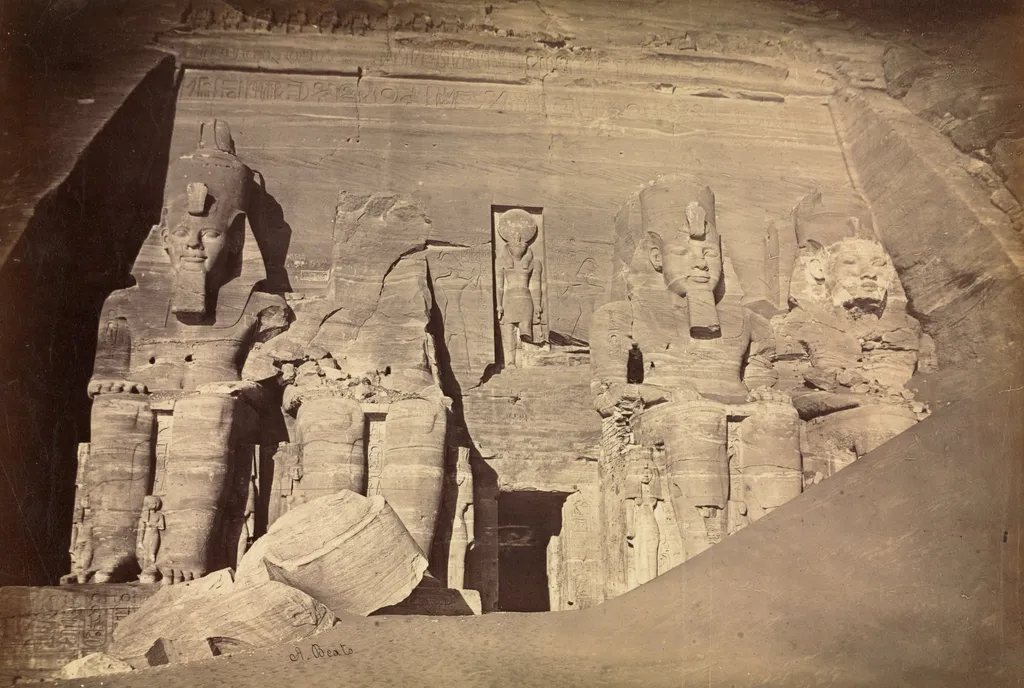
Temple of Ramesses II, Abu Simbel is a photography by the Impressionist artist Antonio Beato. It dates from 1864 and is held in the collection of the Cleveland Museum of Art. This photograph depicts the Temple of Ramesses II at Abu Simbel in Egypt, showcasing its imposing rock-cut facade bathed in golden light.
About this work
This painting shows the Temple of Ramesses II at Abu Simbel in Egypt. The huge rock-cut facade glows in golden light. Shadows carve deep lines across the columns.
Antonio Beato visited Egypt in the 1860s. His work helped spread Egyptian styles back in England. The Cleveland Museum of Art owns this piece.
Look up the artist Antonio Beato (British, c. 1825–1903) to see more of his views.
Overview
This photograph depicts the Temple of Ramesses II at Abu Simbel in Egypt, showcasing its imposing rock-cut facade bathed in golden light.
Subject & Meaning
The image captures the temple's colossal structure, with shadows accentuating the columns. The scene conveys the monument's grandeur and historical significance.
Technique & Style
The photograph is an example of 19th-century photographic documentation, likely influenced by the artistic conventions of the time. Antonio Beato's work was part of a broader trend of capturing Egyptian antiquities.
History & Provenance
Antonio Beato, a British photographer active in the 1860s, created this image during his visit to Egypt. The Cleveland Museum of Art holds this piece, which was likely part of a larger body of work that disseminated Egyptian styles and motifs to European audiences.
Context
Beato's photograph contributed to the Egyptomania movement, which saw a surge in interest in ancient Egyptian culture and aesthetics across Europe and America during the 19th century.
Artist & collection

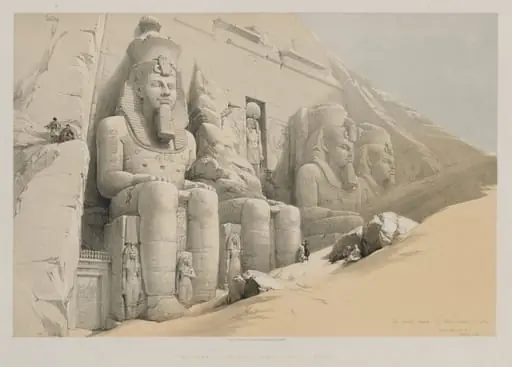 Egypt and Nubia, Volume I: The Great Temple of Aboo-Simble, Nubia
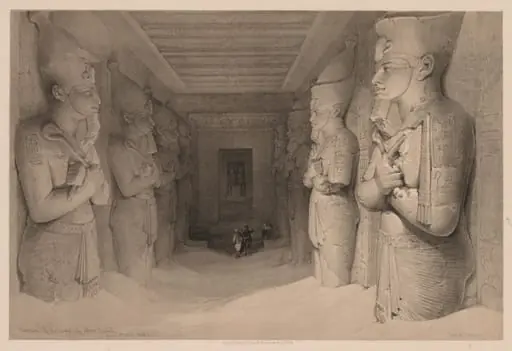 Egypt and Nubia: Volume I - No. 14, Interior of the Temple Aboo Simbel
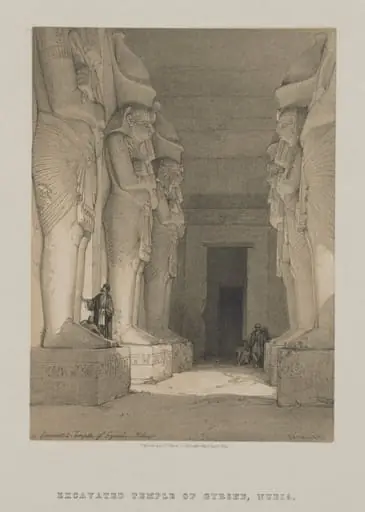 Egypt and Nubia, Volume I: Excavated Temple of Gyrshe, Nubia
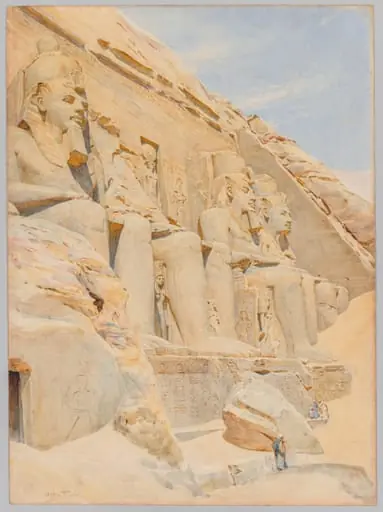 The Great Temple of Abu Simbel
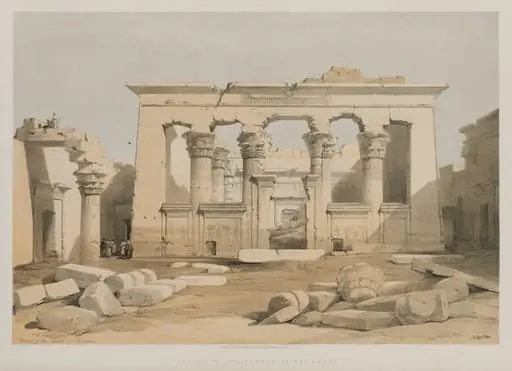 Egypt and Nubia, Volume I: Portico of the Temple of Kalabshe
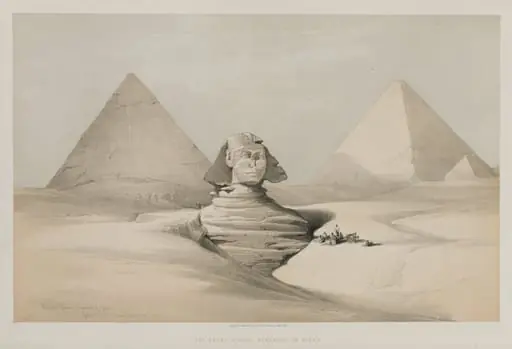 Egypt and Nubia, Volume I: The Great Sphinx, Pyramids of Gezeeh
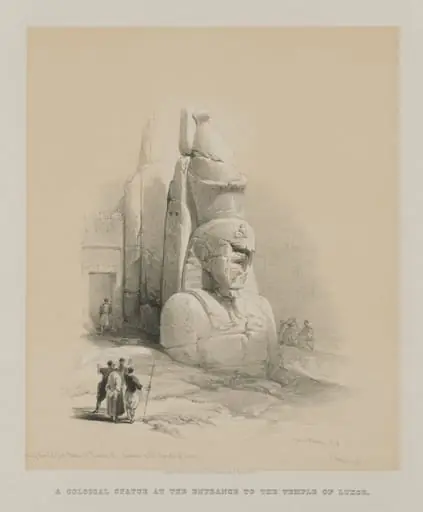 Egypt and Nubia, Volume I: One of Two Colossal Statues of Rameses II. Entrance to the Temple of Luxor
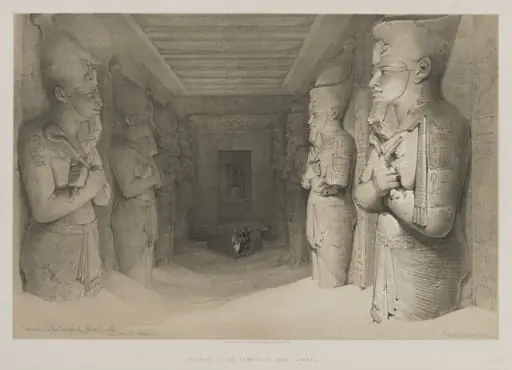 Egypt and Nubia, Volume I: Interior of the Temple of Aboo-Simbel
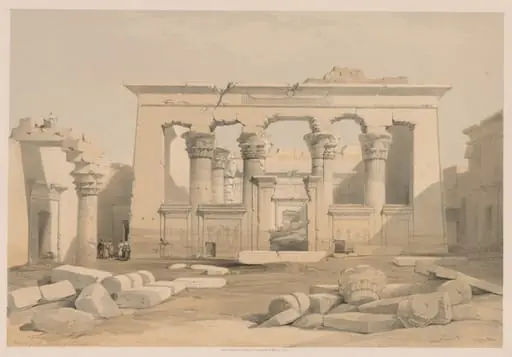 Egypt and Nubia: Volume I - No. 28, Portico of the Temple of Kalabshi
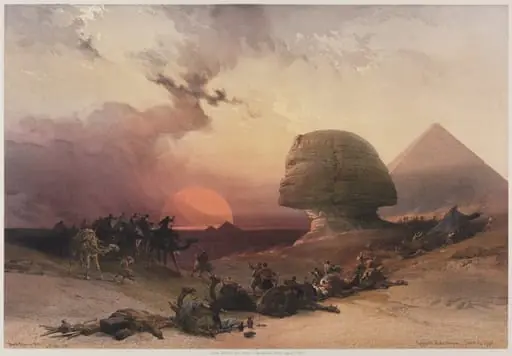 Egypt and Nubia, Volume III: Approach of the Simoon-Desert at Gizeh