Artwork
Statue of Ramesses at Saqqara
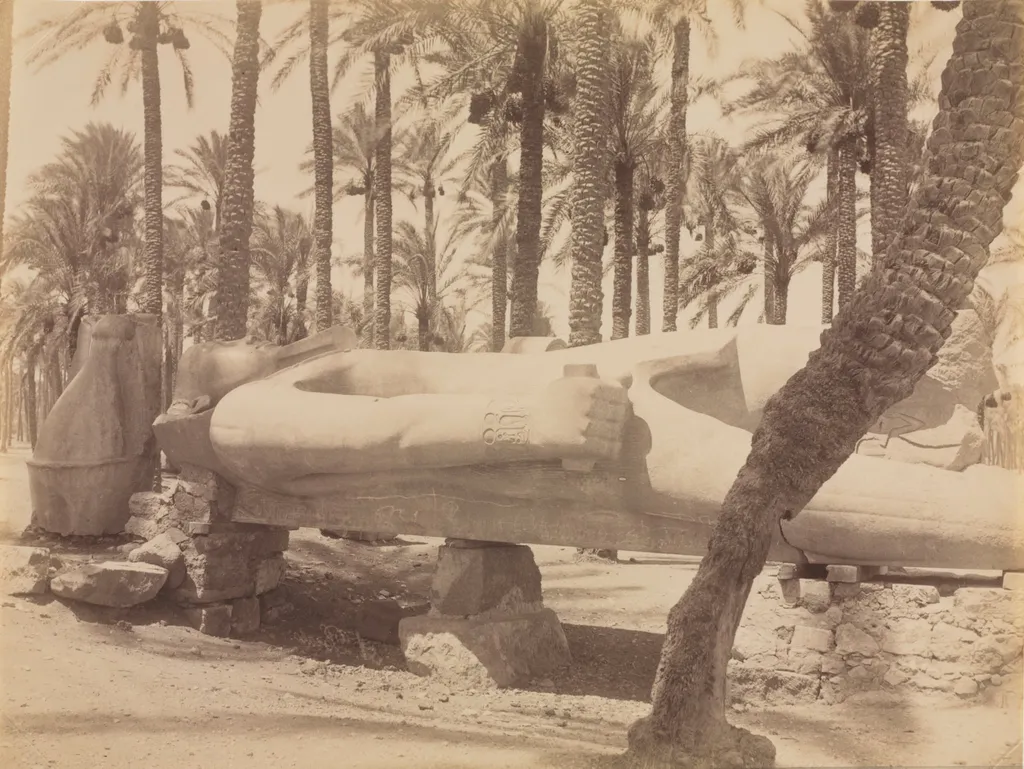
Statue of Ramesses at Saqqara is a photography by the Impressionist artist Antonio Beato. It dates from 1880 and is held in the collection of the Cleveland Museum of Art.
About this work
Overview
This photograph, attributed to Antonio Beato and dated around 1880, documents a fragmentary colossal statue of Ramesses II at Saqqara. The image captures the monument in a state of ruin, its massive torso and limbs lying horizontally, severed from its original context. Palm trees in the background provide scale, emphasizing the statue’s imposing dimensions despite its decay.
Subject & Meaning
The statue depicts Ramesses II, a pharaoh of Egypt’s Nineteenth Dynasty, though its head is absent in the photograph. Originally intended as a symbol of royal power and divine favor, the sculpture now conveys the passage of time and the fragility of human achievement. Its prone position underscores the contrast between ancient ambition and the inevitability of erosion.
Technique & Style
Beato’s photograph employs early photographic methods, likely albumen printing, to record the statue’s weathered surface and surviving hieroglyphic inscriptions. The composition juxtaposes the statue’s rough, pitted stone with the vertical lines of palm trees, creating a visual dialogue between artifact and environment. The image reflects the 19th-century interest in archaeological documentation.
History & Provenance
The photograph entered the collection of The Cleveland Museum of Art, where it remains part of the institution’s holdings on early archaeological photography. Created in the late 19th century, it preserves a moment in the history of Saqqara, an ancient necropolis south of Cairo. The statue itself predates the image by over three millennia.
Context
Saqqara served as a burial site for Egyptian elites and royalty, including the Step Pyramid of Djoser. By the 19th century, European travelers and photographers like Beato documented its ruins, contributing to the era’s fascination with Egyptology. This image captures the site before modern restoration efforts, offering insight into its condition during the colonial period.
Artist & collection

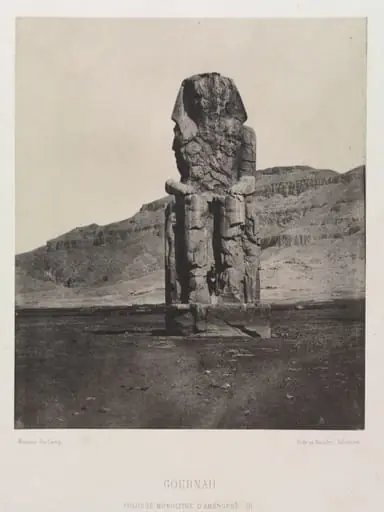 Colossol Monolith of Amenhotep III, Gournah
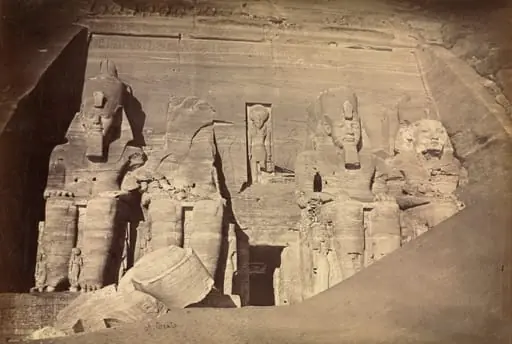
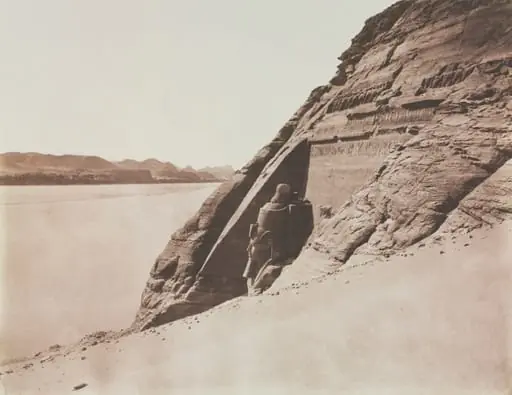 Large Speos - View taken from the Sand Slope (Temple of Ramesses II), Abu Simbel
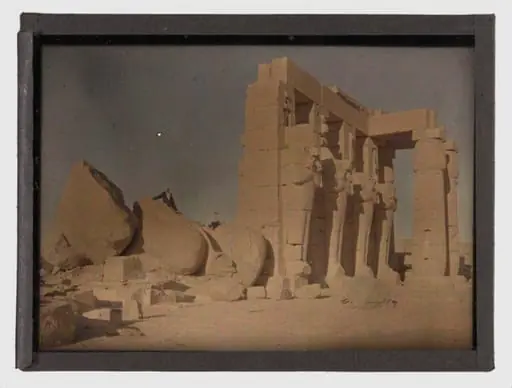 Else Paneth and guide with Egyptian monuments
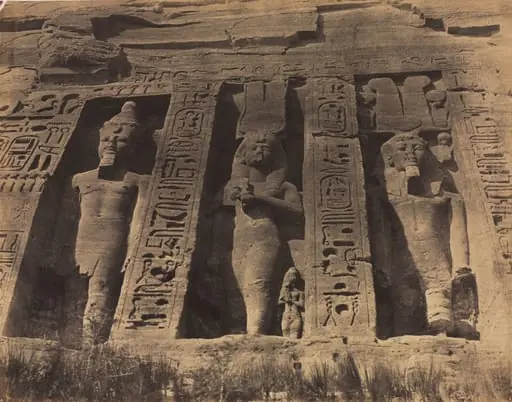 Temple of Abu Simbel
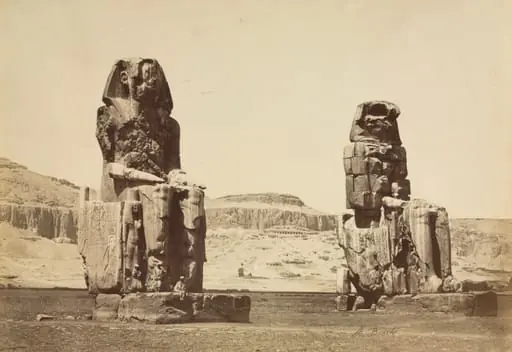
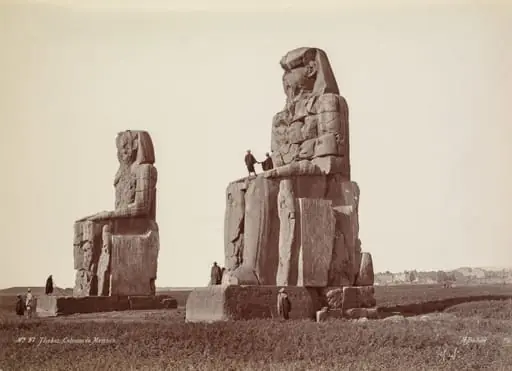 Thebes, The Colossi of Memnon
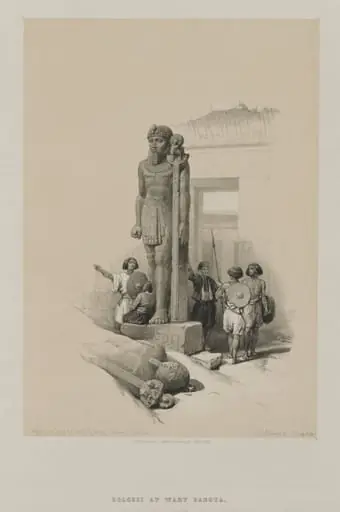 Egypt and Nubia, Volume II: Colossus in Front of the Temple at Wady Saboua, Nubia
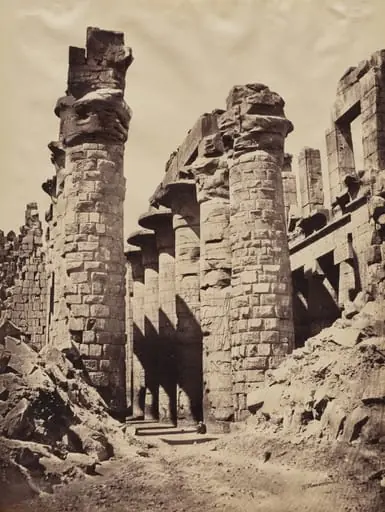 View of Karnak Temple, Hypostyle Hall