Artwork
Temple of Dendera
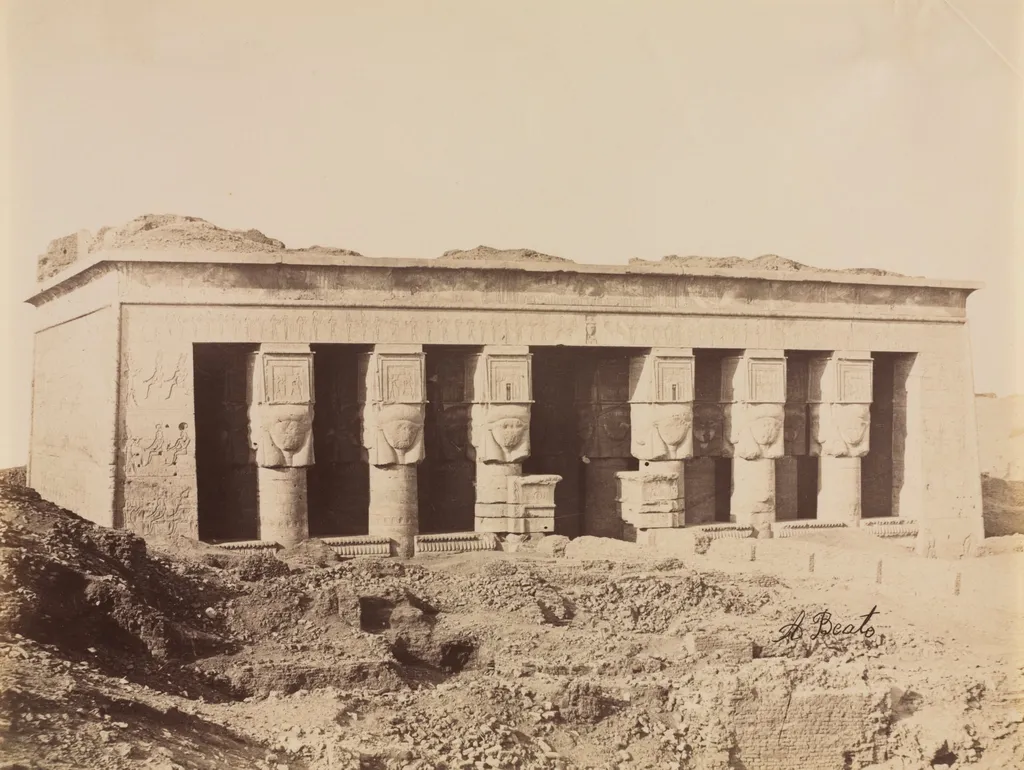
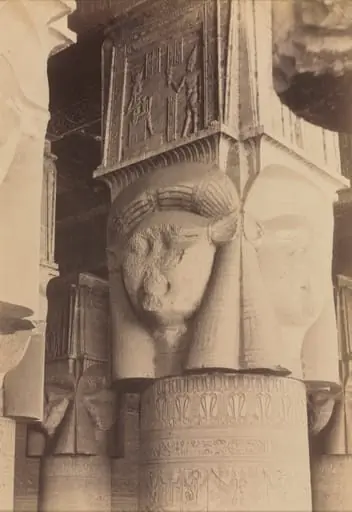
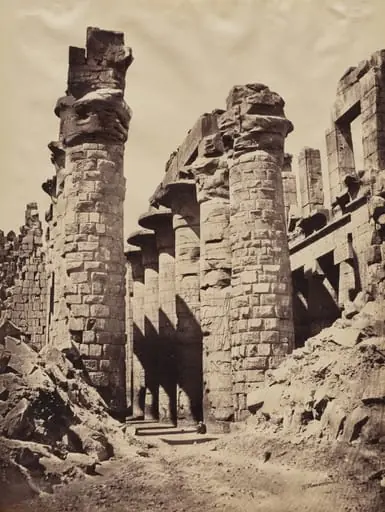
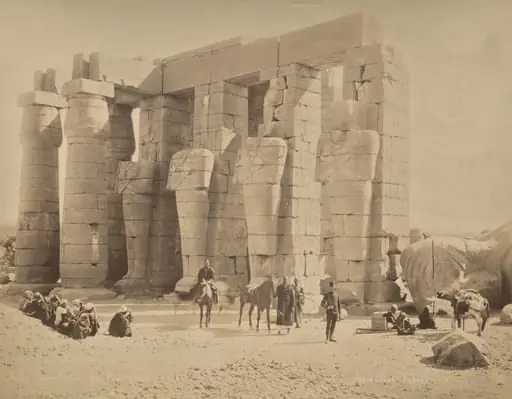
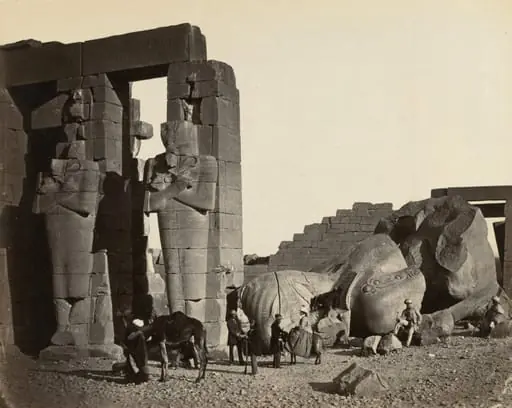
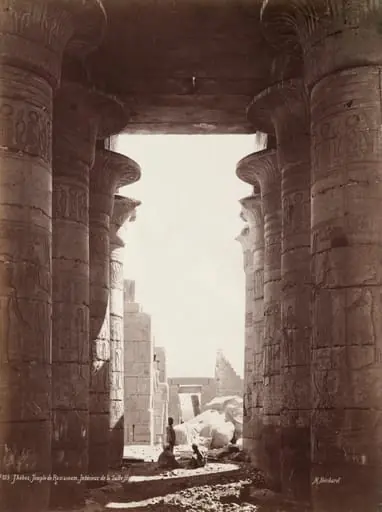
Temple of Dendera is a photography by the Impressionist artist Antonio Beato. It dates from 1880 and is held in the collection of the Cleveland Museum of Art.
About this work
Overview
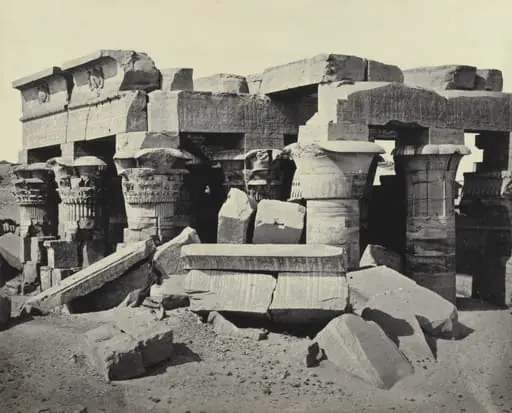
The image presents the temple’s entrance with a line of columns, each topped with a carved Hathor head, set against a barren landscape under a clear sky.
This photograph, taken around 1880 by Antonio Beato, captures the Temple of Dendera in Egypt. It is part of the collection at The Cleveland Museum of Art. The image presents the temple’s entrance with a line of columns, each topped with a carved Hathor head, set against a barren landscape under a clear sky. The work reflects the 19th-century practice of documenting ancient sites through photography, blending scientific interest with visual record.
Subject & Meaning
The subject is the entrance to the Temple of Dendera, dedicated to the goddess Hathor. The repeated Hathor heads on the columns signify her presence and protective role. The surrounding desert terrain and minimal vegetation emphasize the temple’s isolation and endurance through time. The photograph does not include human figures, reinforcing a sense of ancient stillness and archaeological reverence.
Technique & Style
Beato employed wet-plate collodion photography, a method common in the 1870s–80s that required on-site preparation of glass plates. The image exhibits sharp detail in the stone carvings and textures of the desert floor, achieved through careful exposure and lighting. The composition is balanced and frontal, prioritizing architectural clarity over dramatic effect, typical of documentary photography of the era.
History & Provenance
Antonio Beato, an Italian photographer active in Egypt during the late 19th century, produced this image as part of a broader project to record Egyptian monuments for European and American audiences. The photograph entered The Cleveland Museum of Art’s collection through a later acquisition, likely from a private or institutional archive of Orientalist photography collected in the early 20th century.
Context
During the 1880s, European and American travelers and scholars increasingly turned to photography to document ancient sites in the Middle East. Beato’s work contributed to a growing body of visual material that shaped Western perceptions of Egypt’s heritage. These images were often used in publications, lectures, and exhibitions, helping to establish archaeology as a public discipline.
Legacy
Beato’s photograph remains a valuable record of the Temple of Dendera’s condition in the late 19th century, before modern conservation efforts. It exemplifies early archaeological photography’s role in preserving visual evidence of cultural heritage. Today, it serves as both a historical artifact and a reference for scholars studying the temple’s architectural evolution.
Artist & collection