Artwork
Frieze of foliated ornament containing a goat and two human figures
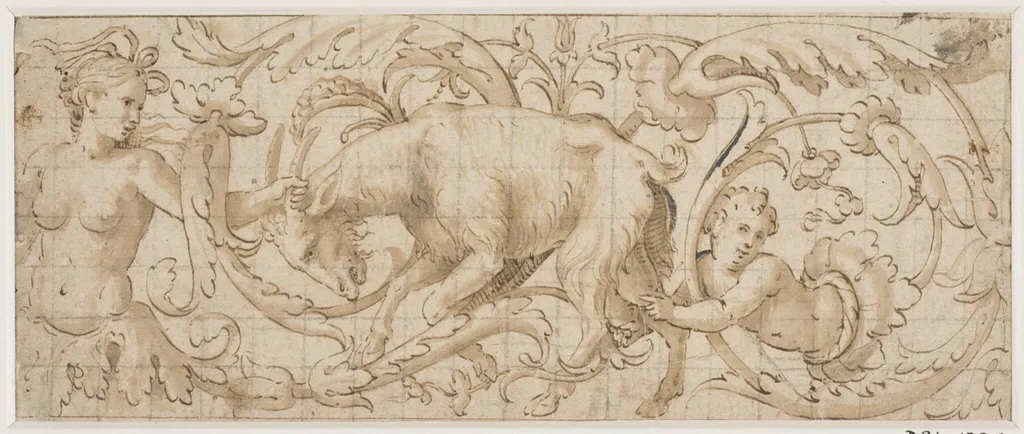
Frieze of foliated ornament containing a goat and two human figures is a drawing by Antonio Campi. It dates from 1550 and is held in the collection of the Victoria and Albert Museum.
About this work
Overview
This pen, ink, and wash drawing by Antonio Campi, dated 1550, presents a decorative frieze centered on a goat flanked by two nude human figures.
This pen, ink, and wash drawing by Antonio Campi, dated 1550, presents a decorative frieze centered on a goat flanked by two nude human figures. The composition is laid out with a grid of black chalk lines, suggesting it was intended as a preparatory study for transfer to another surface. The intricate vegetal motifs frame the central figures, indicating its function as a design model rather than a standalone image.
Subject & Meaning
A goat, facing left, occupies the central axis, observed by a nude woman on the left and a nude man on the right, each holding a leaf. Their gazes converge on the animal, implying a narrative or symbolic relationship, though no clear mythological source is identified. The figures’ stillness and the ornamental setting suggest an allegorical or decorative intent, possibly referencing classical themes of nature and fertility.
Technique & Style
Campi rendered the foliage with fine, precise pen strokes and subtle ink washes to model volume and depth. The human figures are carefully outlined with attention to anatomical detail and facial expression. The underlying black chalk grid, visible in places, reveals the artist’s methodical approach to scaling the design. The balance between naturalistic detail and stylized ornament reflects Renaissance decorative conventions.
History & Provenance
Created in 1550, the drawing likely served as a study for architectural or textile ornamentation, common in Campi’s practice. It remained in private collections until entering a public collection in the 20th century. Its survival as a standalone sheet, rather than as part of a larger commission, is unusual, offering insight into the artist’s working process during the mid-16th century.
Context
In mid-16th century Lombardy, artists like Campi frequently produced detailed ornament studies for use in frescoes, stucco work, and book illustrations. This drawing aligns with a broader trend of integrating classical motifs—such as nudes and animals—into decorative schemes. The emphasis on precise draftsmanship reflects the period’s reverence for disegno and the transmission of design through preparatory drawings.
Legacy
Though not widely exhibited, the drawing contributes to understanding how Renaissance artists translated natural forms into repeatable patterns. Its survival provides evidence of the workshop practices surrounding decorative arts. Campi’s approach here influenced later Lombard designers who adapted similar motifs in ecclesiastical and secular interiors throughout the late 1500s.
Artist & collection

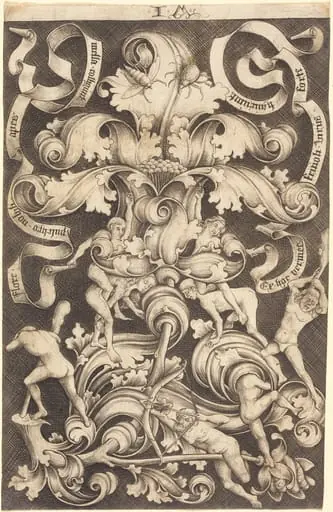 Ornament with Flower and Eight Wild Folk
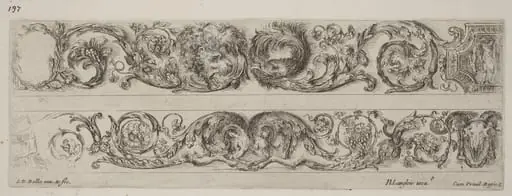 Two Ornamental Bands with Facing Heads of Lion and Eagle, and Two Rams
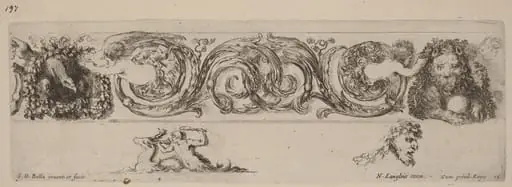 Ornamental Frieze with Eagle and Lion Engarlanded by Children
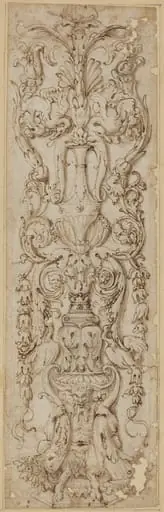 Grotesque with a Satyr
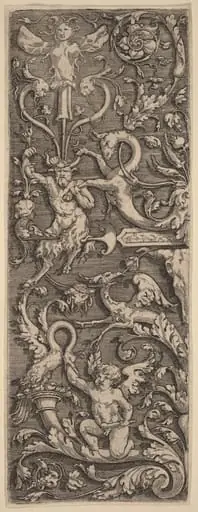 Ornament with a Cupid, a Satyr, and Grotesque Figures
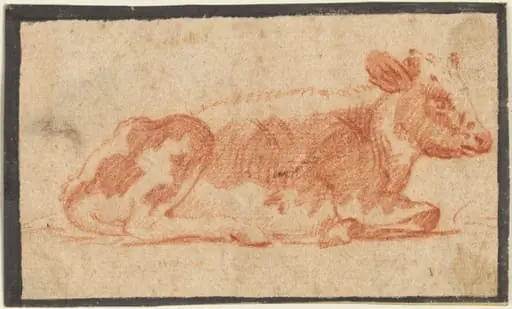 Cow
Cow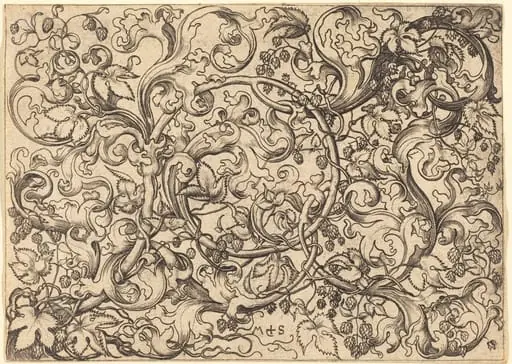 Ornament with Hop Vine
 Ornamental Frieze with Leopard
 Vase
Vase