Artwork
Views: Le Pilier isolè
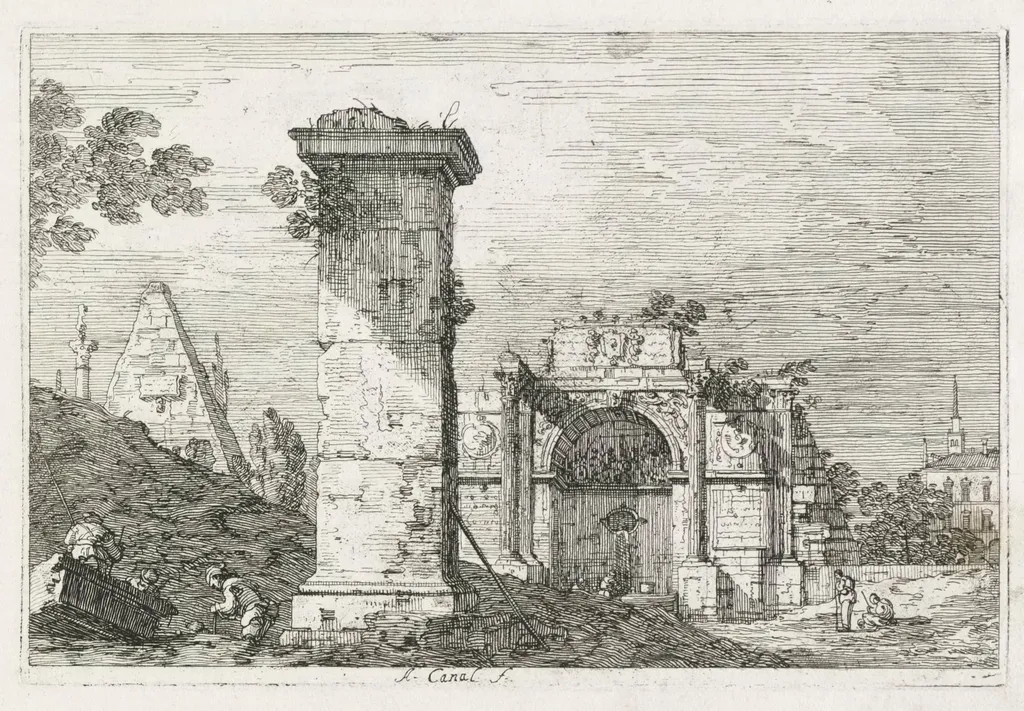
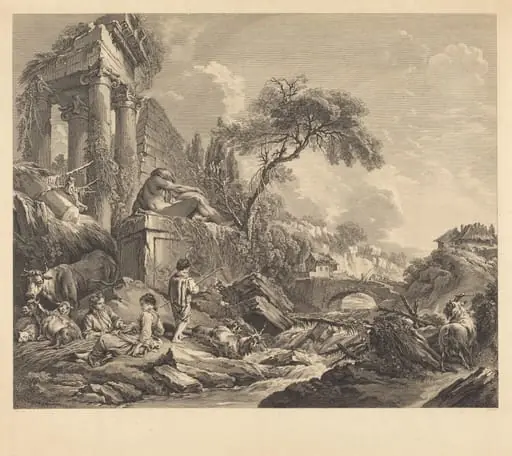
Views: Le Pilier isolè is a print by the Baroque artist Canaletto. It dates from 1740 and is held in the collection of the Cleveland Museum of Art.
About this work
Overview
Created in 1740, this black-and-white etching by Antonio Canaletto is part of a series documenting Venetian architecture. Unlike his painted vedute, this work relies on fine linear precision to convey spatial depth and architectural detail. The absence of color shifts focus to structure, light, and shadow, emphasizing the sculptural presence of the subject within its urban setting.
Subject & Meaning
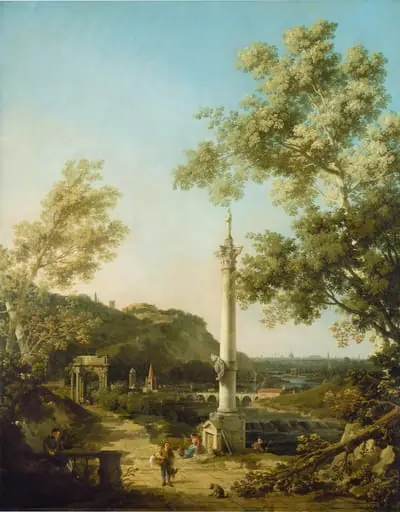
The composition centers on a solitary stone column standing in a modest square, surrounded by fragments of decayed masonry and sparse vegetation. The lone pillar, isolated yet framed by distant buildings and spires, suggests the persistence of classical forms amid urban change. It evokes a quiet meditation on time, memory, and the remnants of civic grandeur.
Technique & Style
Canaletto employed fine, controlled etching lines to render texture and volume without tone or color. Light falls diagonally across the column and adjacent structures, creating sharp contrasts that enhance three-dimensionality. This use of chiaroscuro, rooted in Baroque conventions, lends dramatic weight to an otherwise restrained scene, guiding the viewer’s eye through the composition’s depth.
History & Provenance
While the exact early ownership is unrecorded, such works circulated among European travelers and patrons drawn to Venice’s architectural heritage.
The print belongs to a documented series of Venetian views produced by Canaletto during the 1740s, likely intended for collectors interested in topographical accuracy. While the exact early ownership is unrecorded, such works circulated among European travelers and patrons drawn to Venice’s architectural heritage. The etching reflects the period’s demand for precise, portable records of the city’s landmarks.
Context
In mid-18th-century Venice, vedute prints served both as souvenirs and scholarly records. Canaletto’s work aligned with a broader interest in documenting urban landscapes, influenced by Enlightenment ideals of observation and order. This etching, though modest in scale, contributes to a visual archive that balanced topographical fidelity with aesthetic refinement.
Legacy
Canaletto’s etchings, including this one, helped define the visual language of Venetian topography for later artists and architects. Their emphasis on structural clarity and atmospheric nuance influenced 19th-century printmakers and urban documentarians. Though less celebrated than his paintings, these works remain vital for understanding how Venice was perceived and preserved in image form.
Artist & collection
Artist
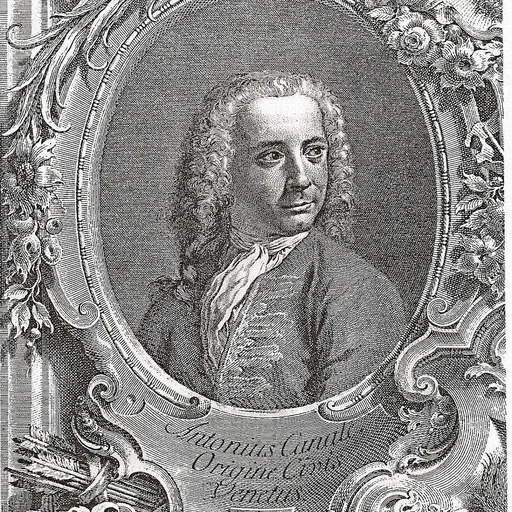
Giovanni Antonio Canal (18 October 1697 – 19 April 1768), commonly known as Canaletto (Italian: ), was an Italian painter from the Republic of Venice, considered an important member of the 18th-century Venetian school.

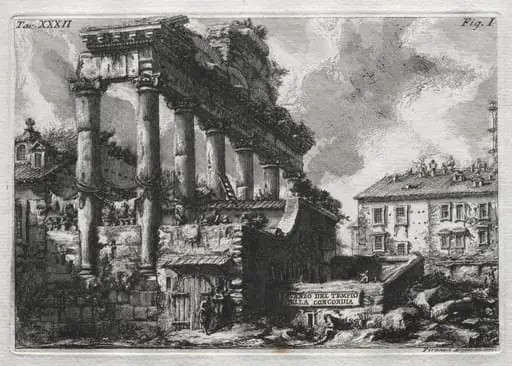 Avanco del Tempio della Concordia
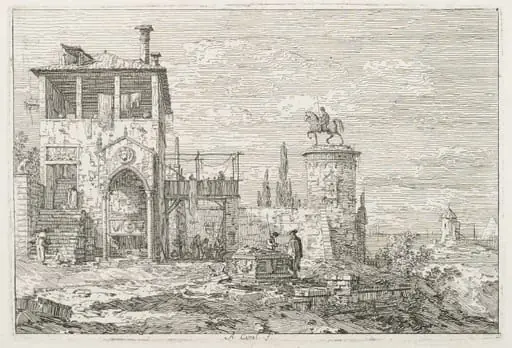 Views: The Equestrian Monument
![Landscape with Ruined Monuments [right], by Canaletto](https://artifactworldgallery.com/img/canaletto--landscape-with-ruined-monuments-right--bd2b3441fefb3583-w320.webp) Landscape with Ruined Monuments [right]
Landscape with Ruined Monuments [right]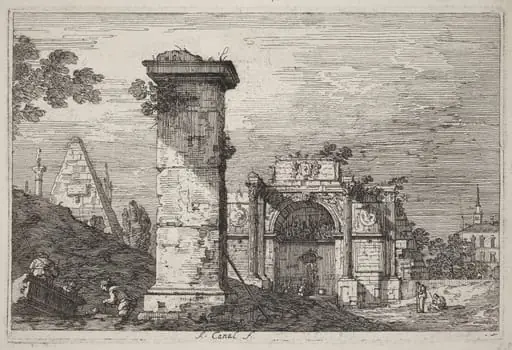 Landscape with Ruined Monuments
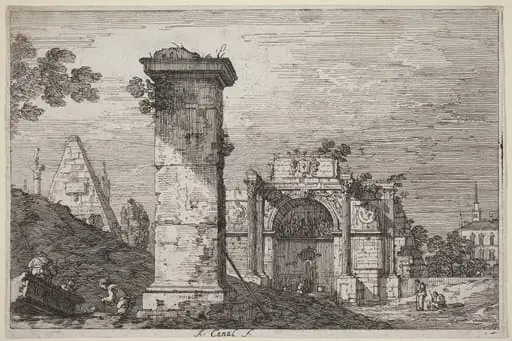 Landscape with Ruined Monuments
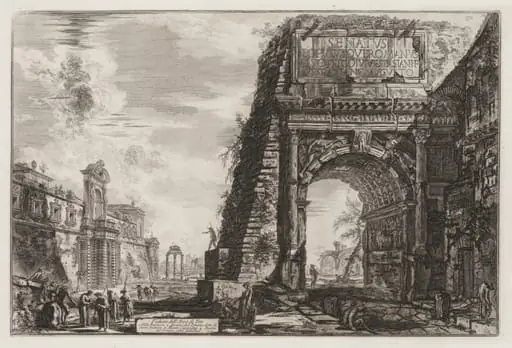 Views of Rome: The Arch or Titus
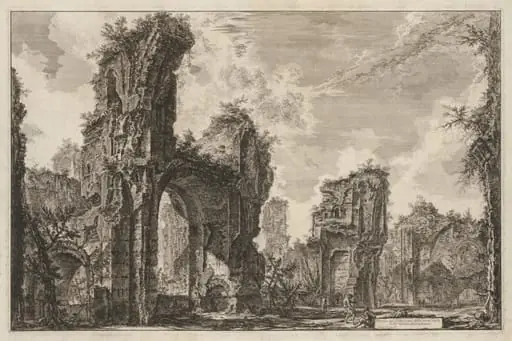 Views of Rome: Rovine del Sisto o sia della gran sala delle Terme Antoniniane
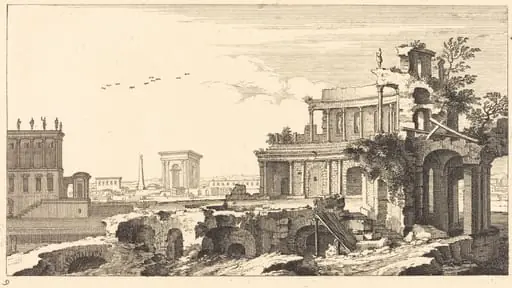 Landscape with Classical Ruins
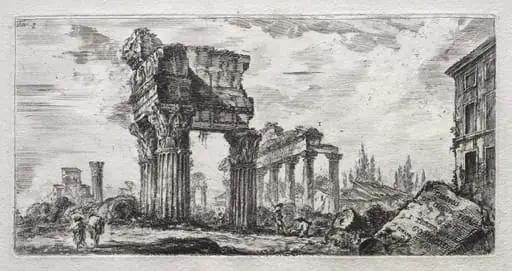 Tempio di Giove Tonante
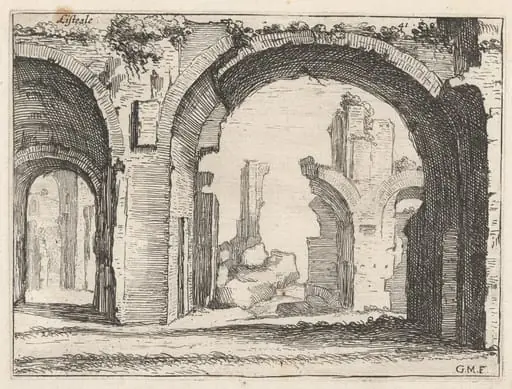 Antonine Baths, or Baths of Caracalla
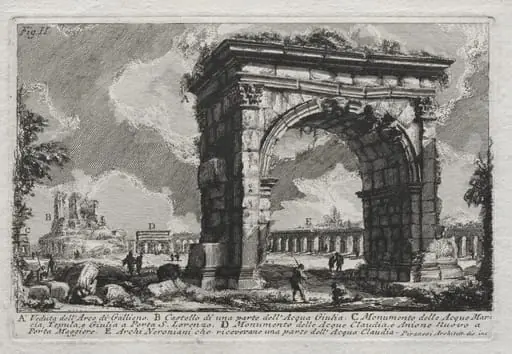 Veduta dell'Arco di Gallieno
 Le moineau de lesbie