Artwork
Lesender Amor (Nachfolger)
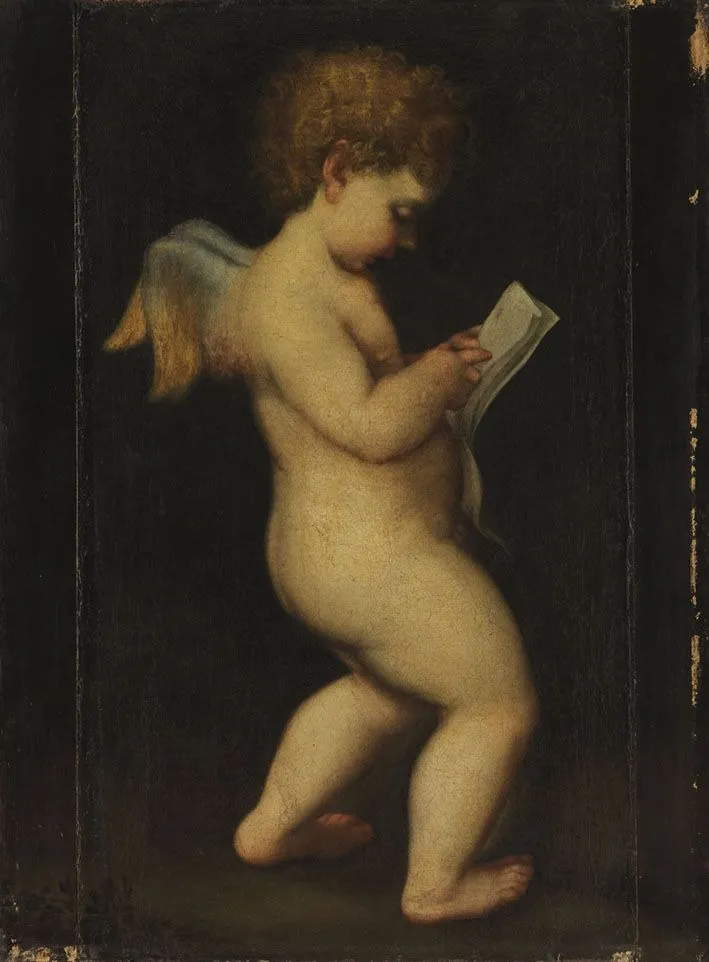
Lesender Amor (Nachfolger) is an unspecified painting by the Mannerist artist Correggio. It dates from 1520 and is held in the collection of the Bavarian State Painting Collections.
About this work
Overview
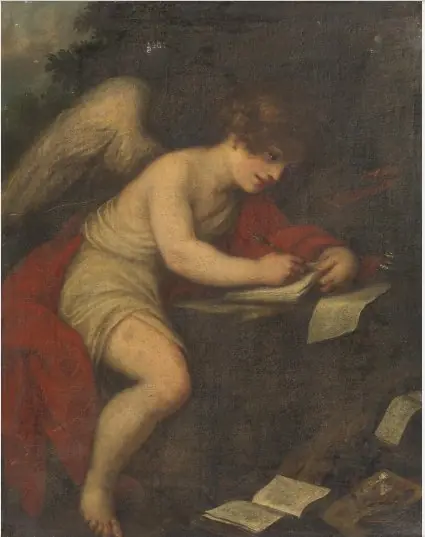
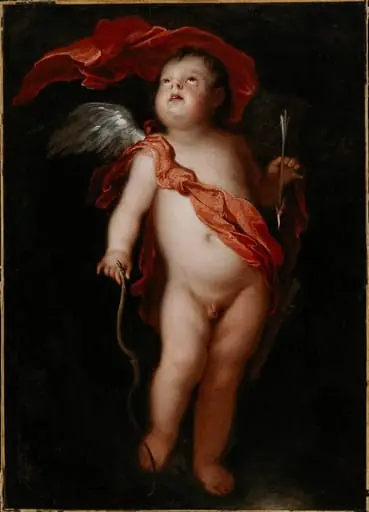
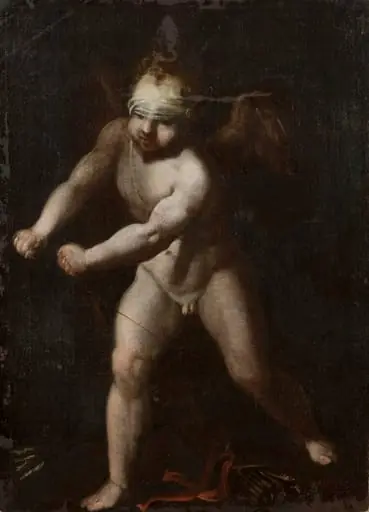
The cherub holds a sheet of paper in his left hand, his gaze fixed upon it, suggesting a moment of intellectual absorption rather than typical amorous play.
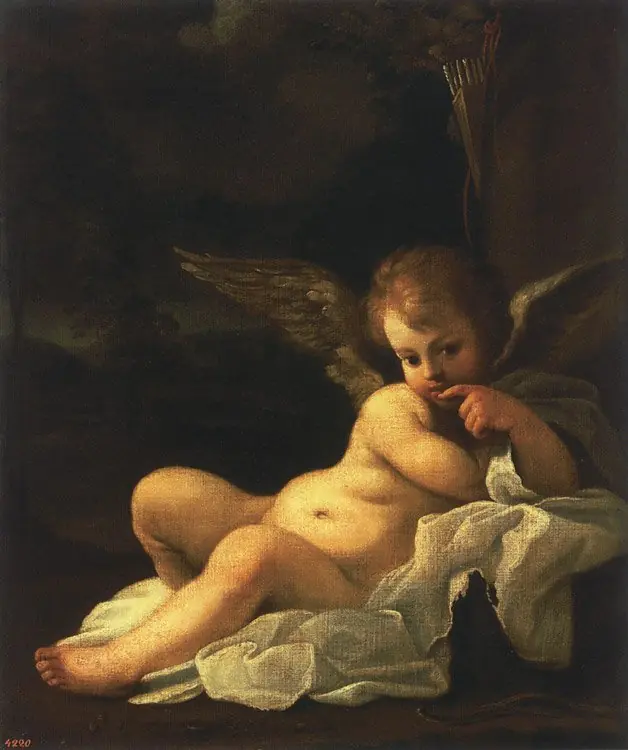
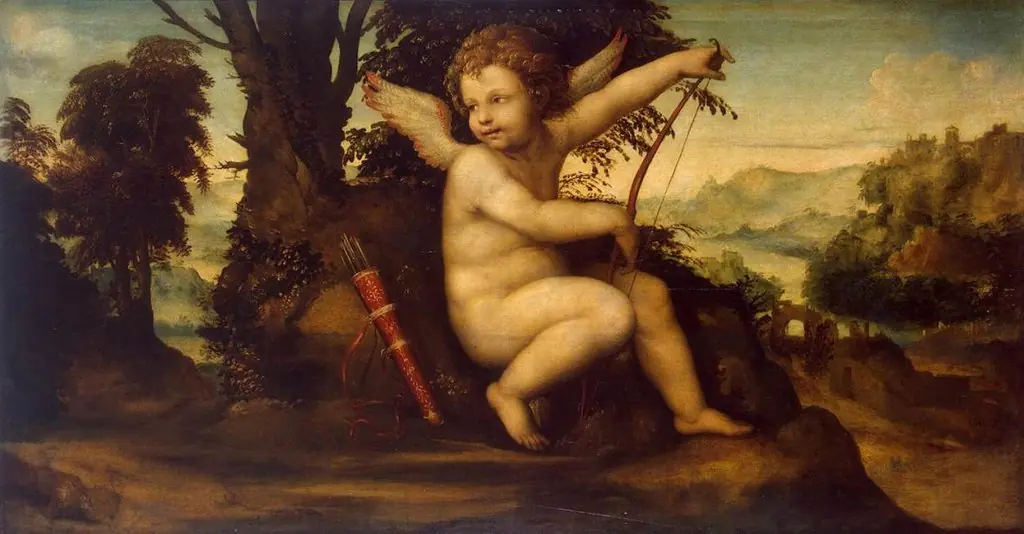
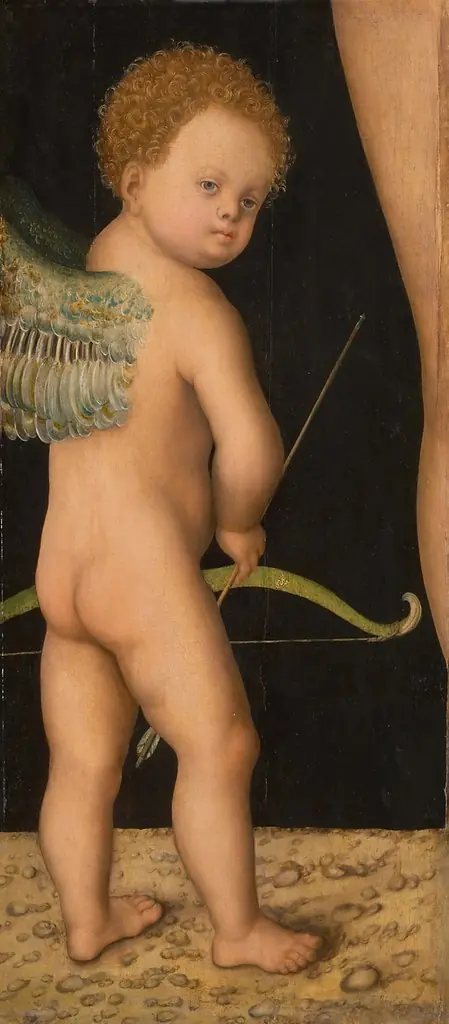
Lesender Amor (Nachfolger), attributed to Antonio da Correggio and dated to circa 1520, depicts a youthful Cupid engaged in reading. The figure stands in a dynamic contrapposto pose, balancing on one leg while the other is bent at the knee, creating a sense of relaxed movement. The cherub holds a sheet of paper in his left hand, his gaze fixed upon it, suggesting a moment of intellectual absorption rather than typical amorous play. A single small wing protrudes from his back, identifying his divine nature. The composition is set against a dark, muted background that isolates the figure and emphasizes the soft modeling of his flesh and the delicate rendering of his curly hair. This work reflects Correggio's mastery of light and his ability to infuse mythological subjects with a naturalistic, human quality characteristic of the High Italian Renaissance. While the attribution to Correggio himself is sometimes debated, with some scholars classifying it as the work of a close follower or imitator, the painting demonstrates the artist's signature sfumato technique and the playful, intimate treatment of the Cupid motif that appears in his broader oeuvre. The piece serves as an example of how Renaissance artists reinterpreted classical mythology through a lens of psychological depth and refined observation.
Subject & Meaning
The central character is a cherubic youth with tightly curled hair, a single wing sprouting from the back, and a pose that suggests movement—one leg planted, the other bent at the knee. He gazes down at the paper, conveying a moment of quiet contemplation or curiosity, a theme often linked to the fleeting nature of love in mythic allegory.
Technique & Style
Correggio employs his characteristic soft modeling and delicate chiaroscuro, allowing the figure’s pale skin to emerge from the muted backdrop. The subtle gradations of light give the flesh a three‑dimensional quality, while the crisp rendering of the paper contrasts with the atmospheric darkness, highlighting the artist’s skill in balancing detail with overall harmony.
History & Provenance
The painting, catalogued as Q29953490, entered the Alte Pinakothek’s holdings in the 19th century, though its earlier ownership remains uncertain. It has been identified as a later work in Correggio’s oeuvre, reflecting his continued interest in mythological subjects during the final phase of his career.
Artist & collection

Artist
Antonio Allegri da Correggio (August 1489 – 5 March 1534), usually known as just Correggio (, also UK: , US: , Italian: ), was an Italian Renaissance painter who was the foremost painter of the Parma school of the High…