Artwork
The Twelve Months of the Year (Los doce meses del año)
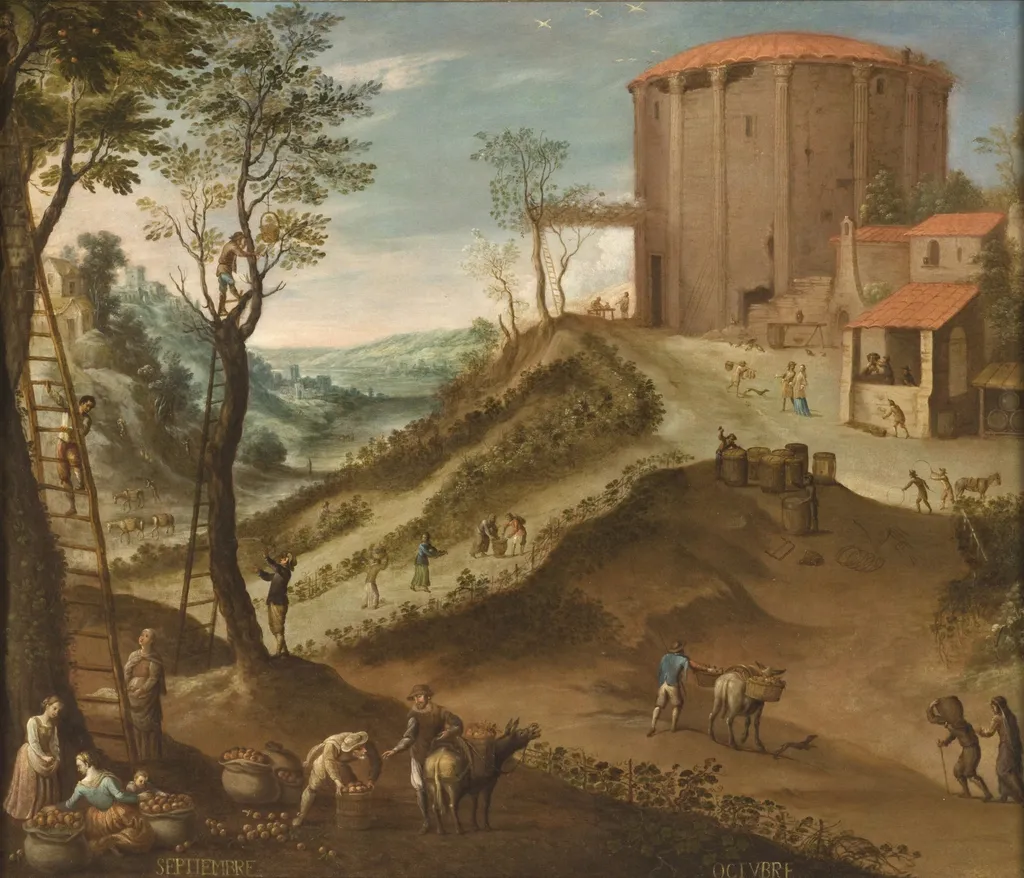
The Twelve Months of the Year (Los doce meses del año) is an unspecified painting by the Early Baroque Italian artist Antonio de Espinosa. It dates from 1650 and is held in the collection of the Los Angeles County Museum of Art.
About this work
Overview
The work is part of the collection at the Los Angeles County Museum of Art.
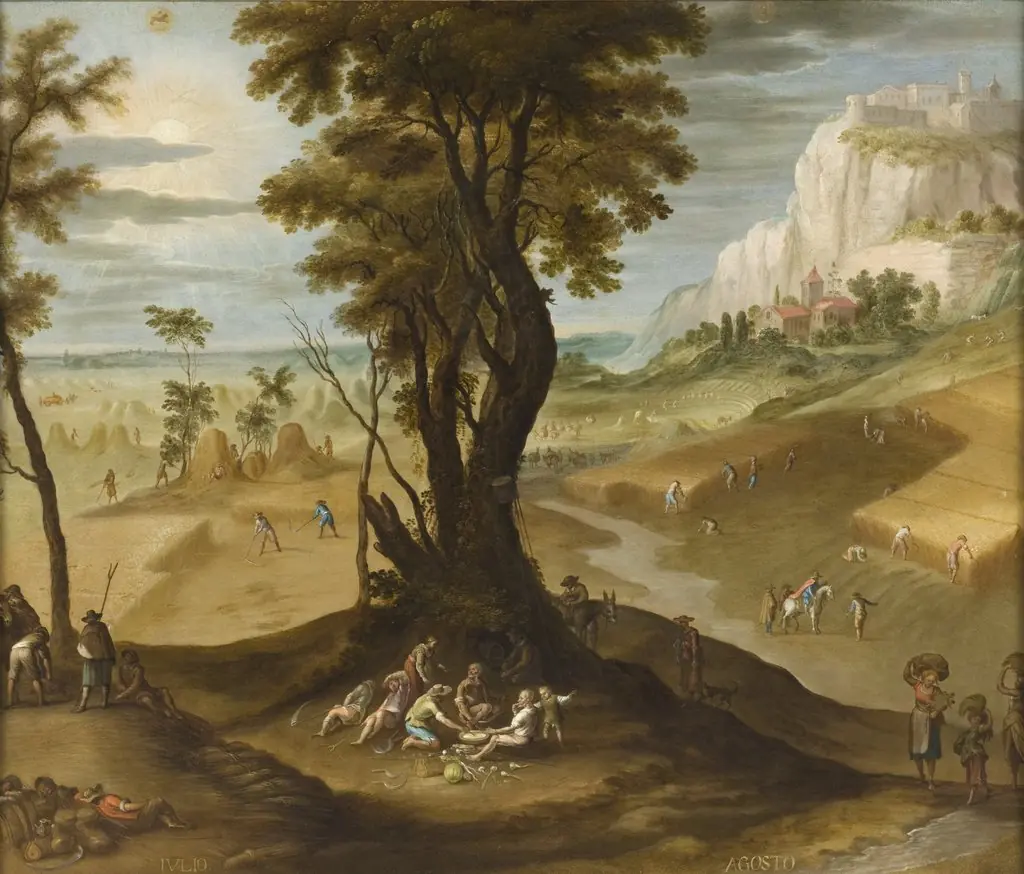
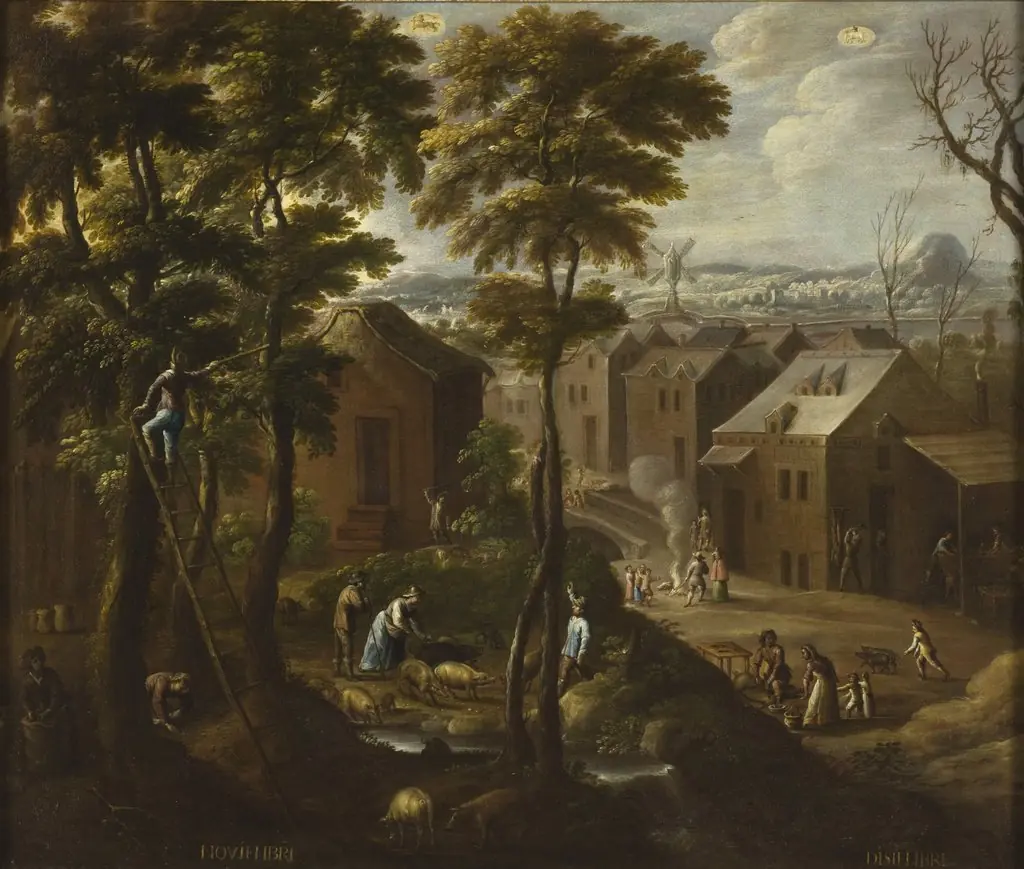
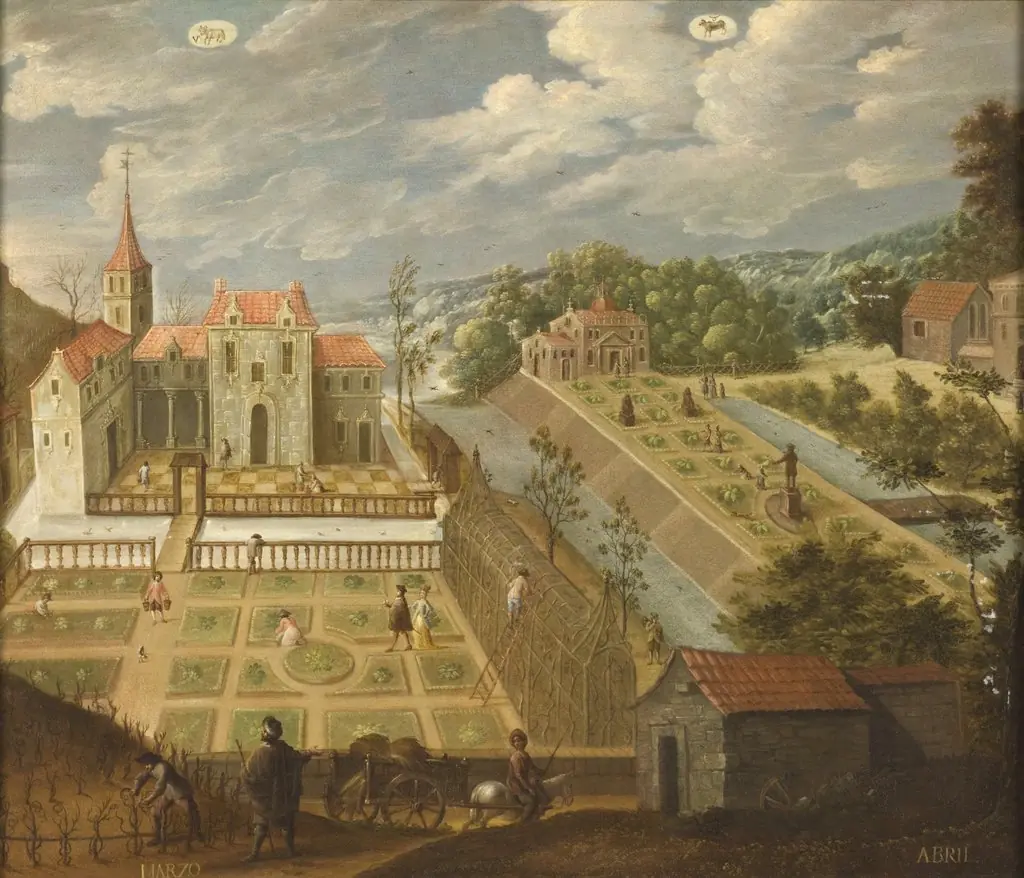
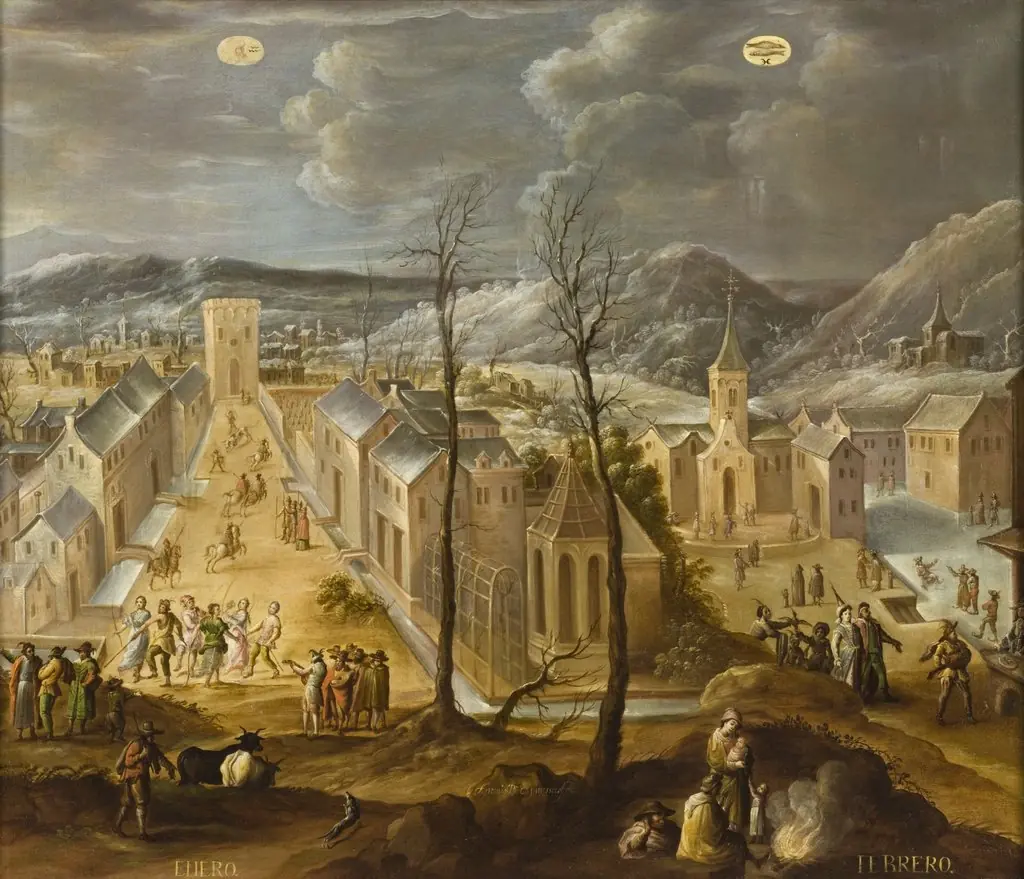
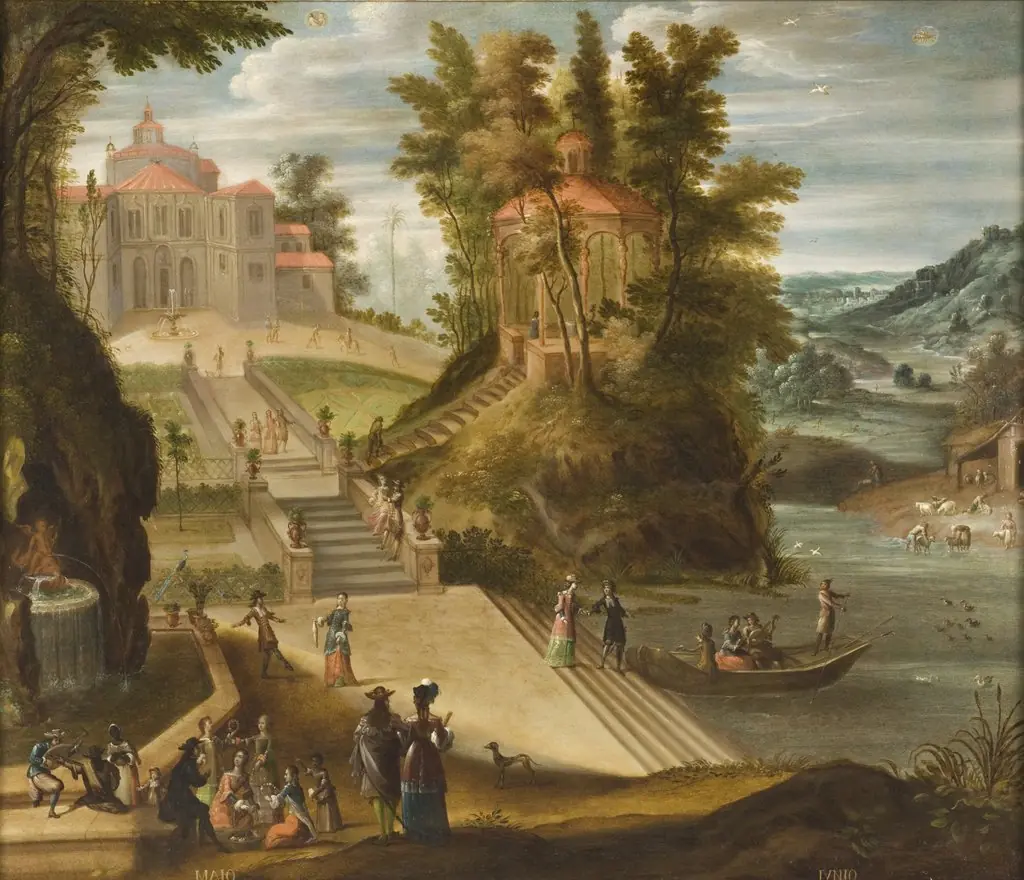
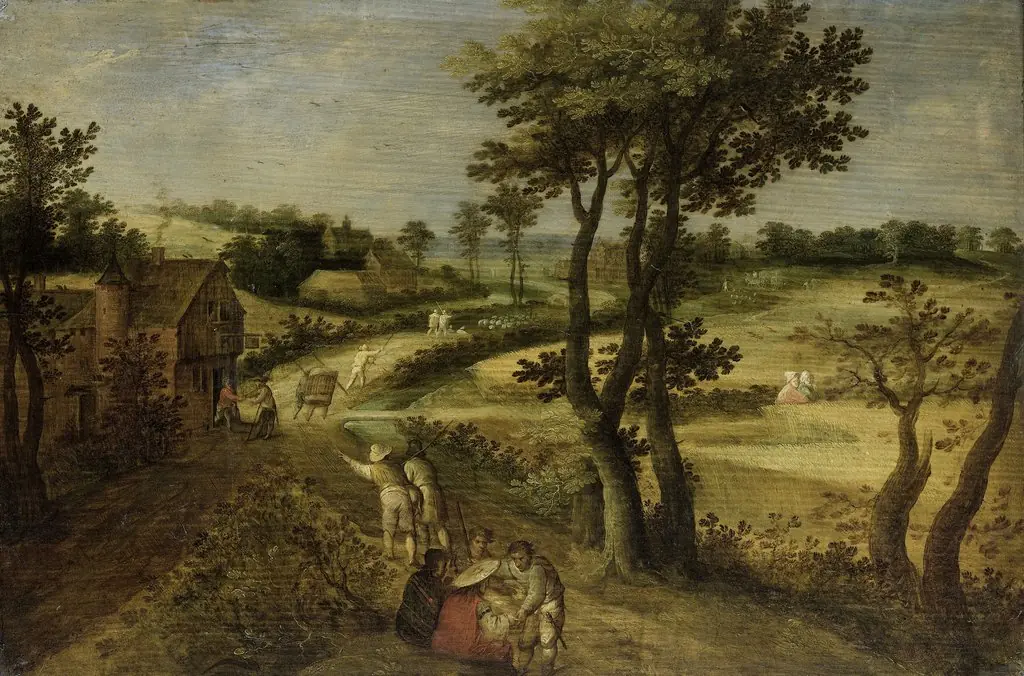
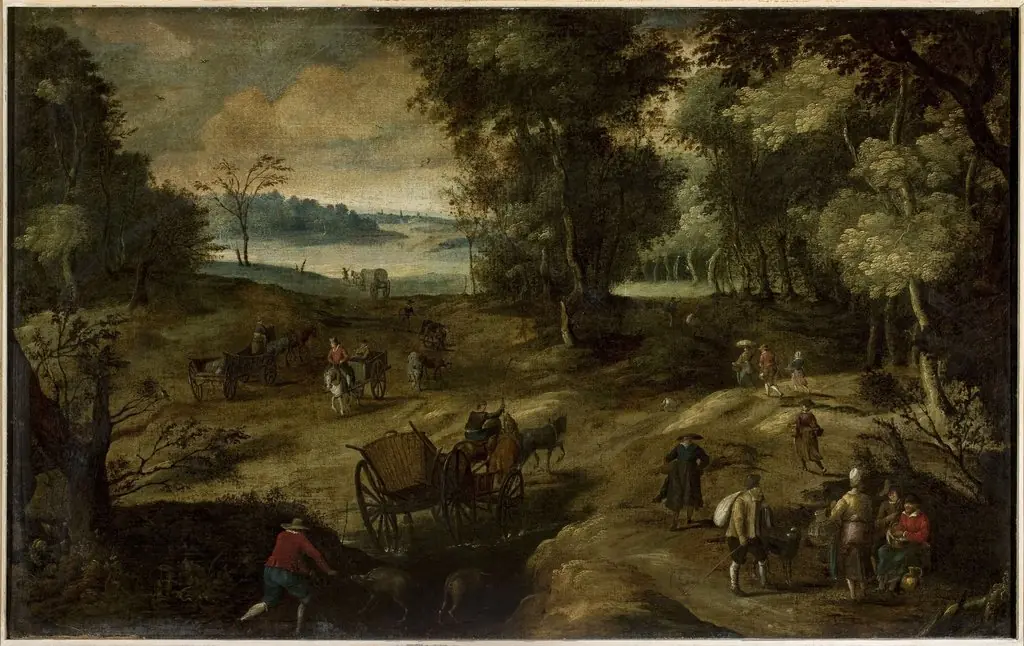
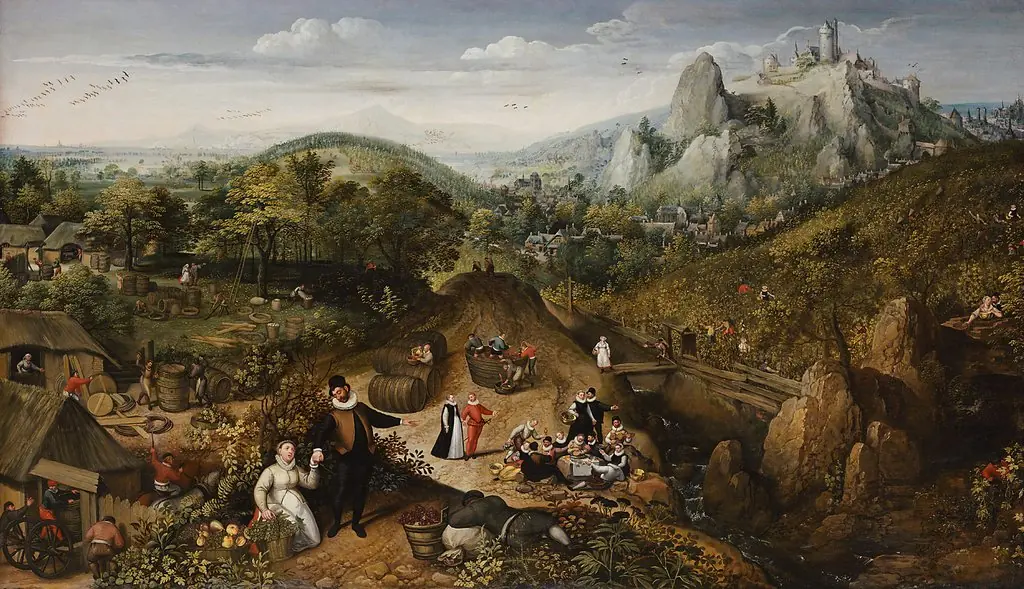
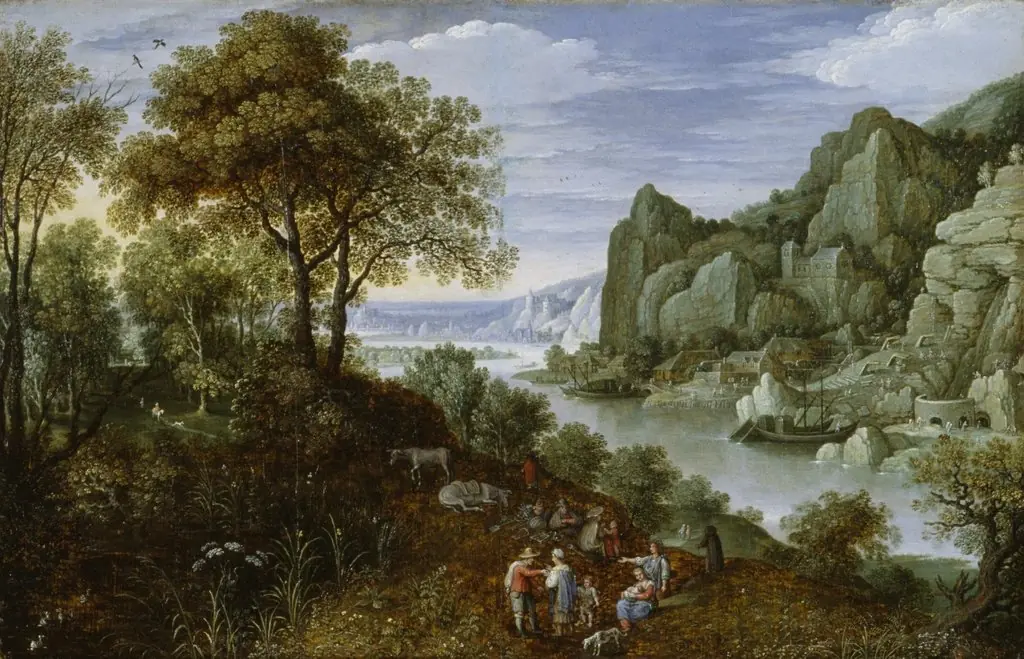
Attributed to Antonio de Espinosa around 1650, this painting presents a seasonal cycle through a single landscape, capturing twelve distinct months in one composition. Rather than dividing time into separate panels, the artist weaves activities of the year into a unified scene, blending labor and leisure across foreground and background. The work is part of the collection at the Los Angeles County Museum of Art.
Subject & Meaning
The painting illustrates rural life throughout the year, with figures engaged in seasonal tasks such as fruit harvesting, while others relax in the distance. The inclusion of games like ball play and archery suggests moments of respite amid work, reinforcing a rhythm of duty and recreation tied to the agricultural calendar. The scene reflects an idealized yet grounded vision of cyclical time in early modern Spain.
Technique & Style
Espinosa employs a detailed, observational style with careful attention to human activity and natural elements. Figures are rendered with modest precision, their postures and gestures conveying function and mood. The landscape is layered with soft transitions between foreground and background, using muted earth tones and a clear blue sky to suggest depth and seasonal clarity without dramatic contrast.
History & Provenance
The painting entered the collection of the Los Angeles County Museum of Art through documented acquisition, though its earlier ownership remains unclear. It is one of few surviving works by Espinosa, a lesser-known painter of the Spanish Baroque period. Its survival suggests it was valued in private collections before institutional preservation.
Context
Created during Spain’s Golden Age, the painting aligns with a broader tradition of genre scenes that celebrated rural life, often commissioned by elites interested in agrarian order. While not tied to a specific event, its depiction of seasonal labor reflects contemporary values around productivity, community, and harmony with nature, common in Iberian visual culture of the mid-seventeenth century.
Legacy
Though not widely exhibited or studied, the painting offers a rare visual record of how time and labor were spatially represented in Spanish art. Its integration of multiple months into one frame distinguishes it from more conventional calendar series, providing insight into regional approaches to depicting time before the rise of standardized seasonal imagery.
Own this work as a print
Artist & collection
Artist
Antonio de Espinosa painted large folding screens in 17th-century New Spain, a time when Mexico was still part of Spain’s colonial world.