Artwork
The Twelve Months of the Year (Los doce meses del año)
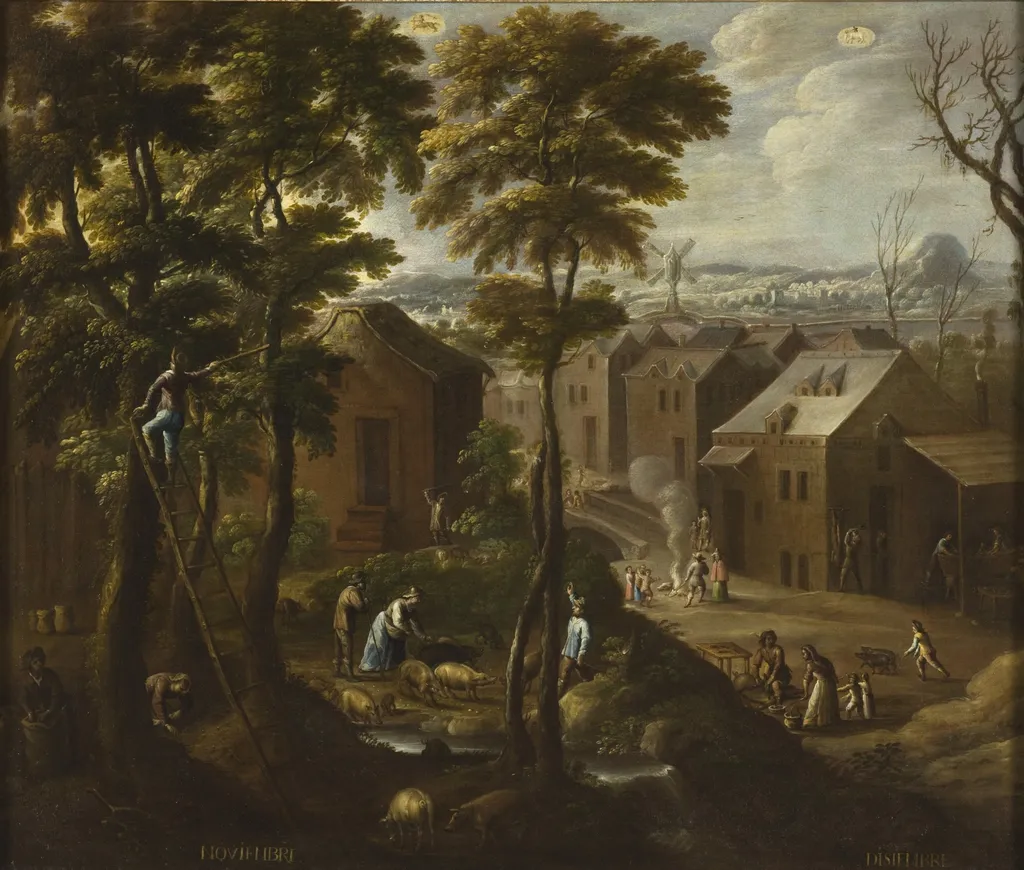
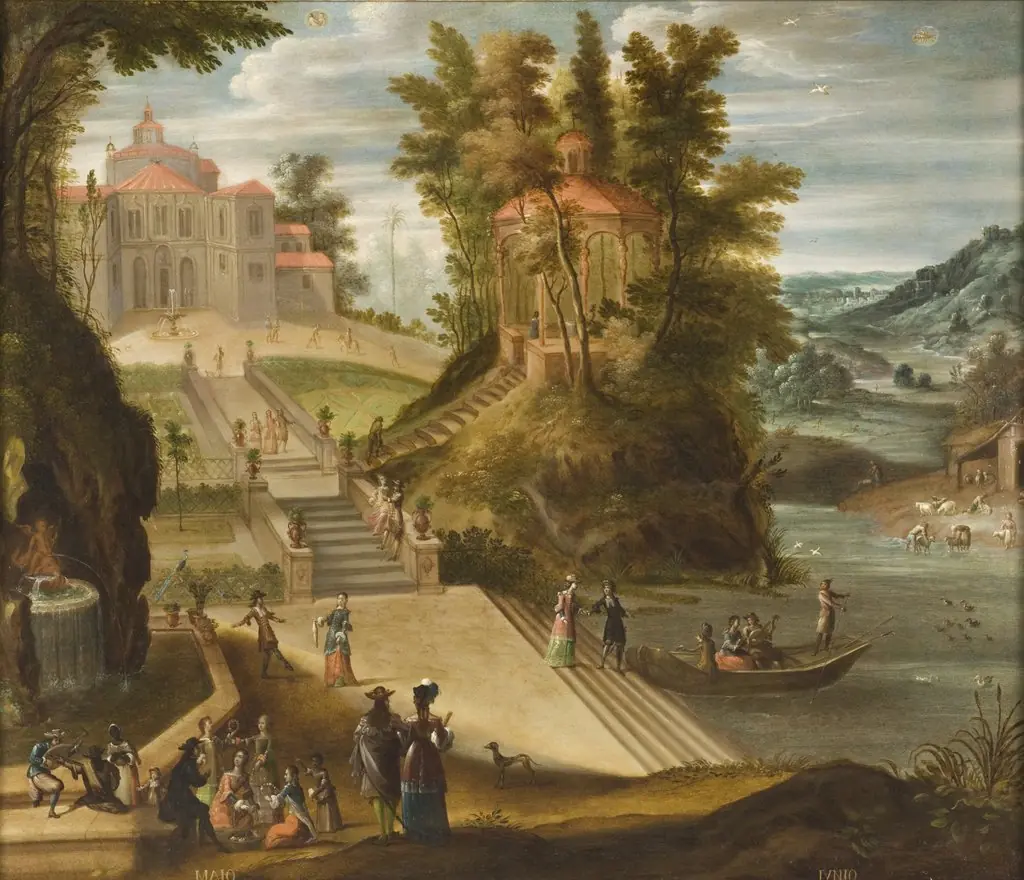
The Twelve Months of the Year (Los doce meses del año) is an unspecified painting by the Early Baroque Italian artist Antonio de Espinosa. It dates from 1650 and is held in the collection of the Los Angeles County Museum of Art.
About this work
Overview
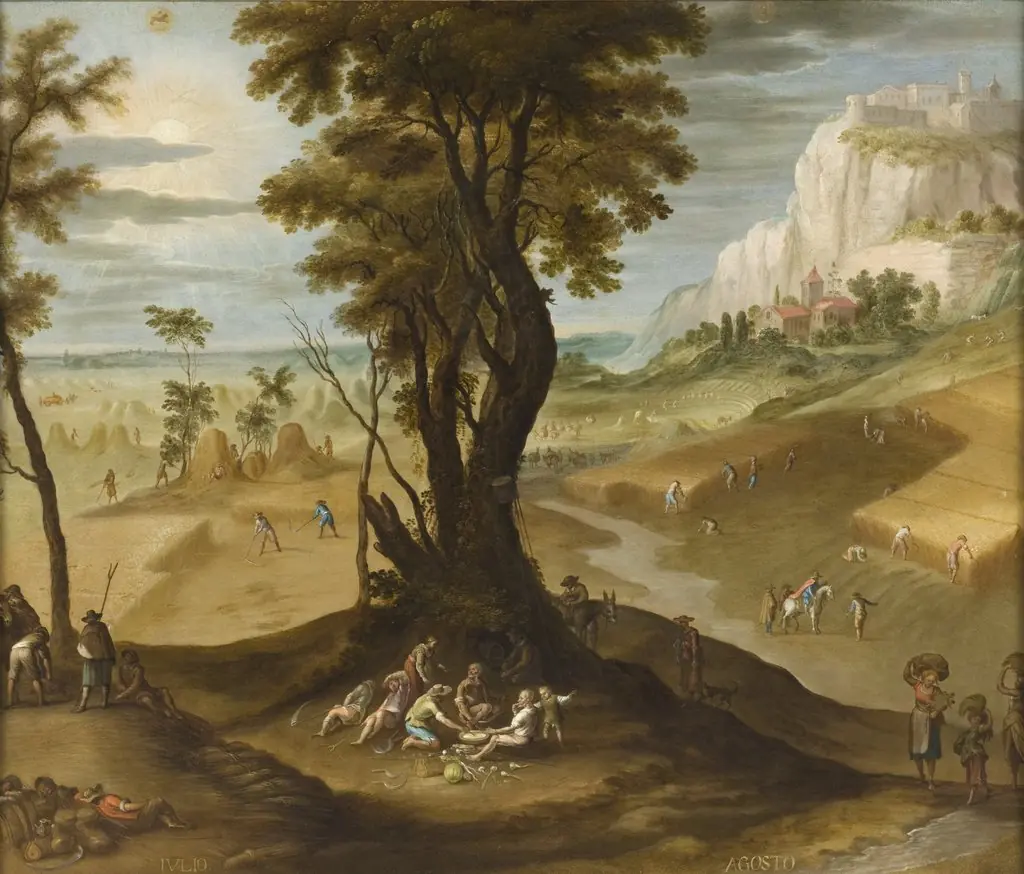
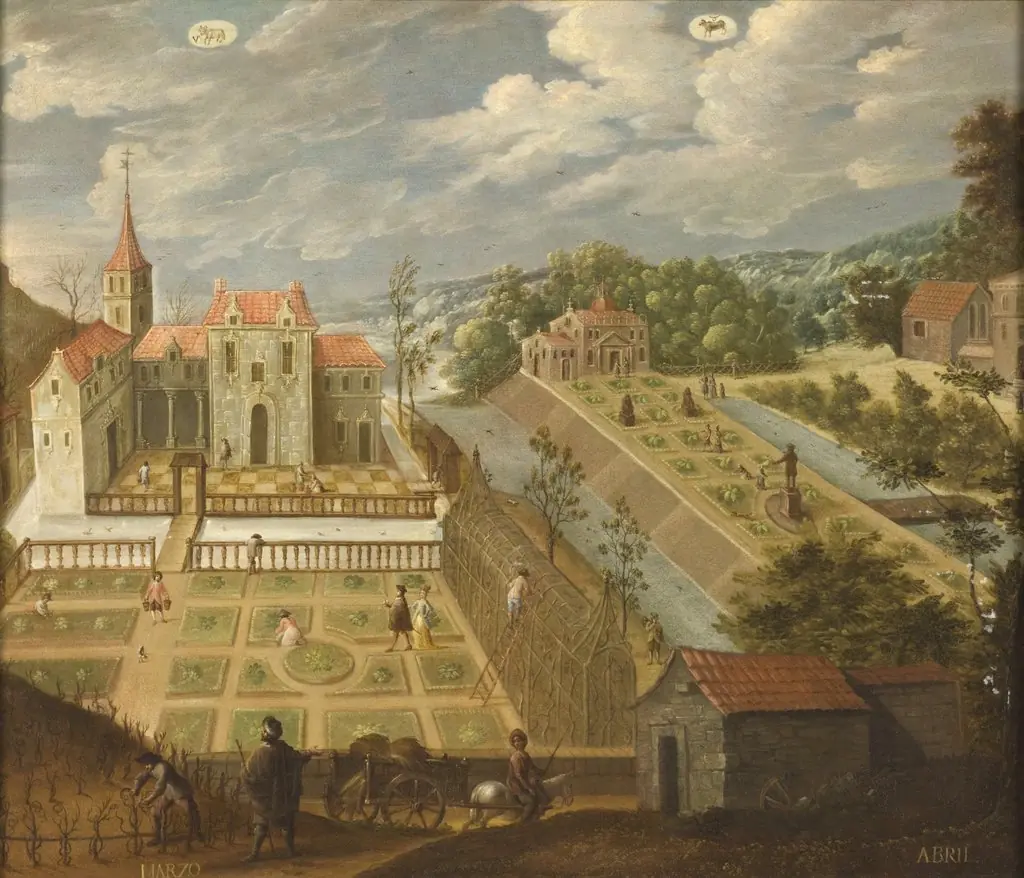
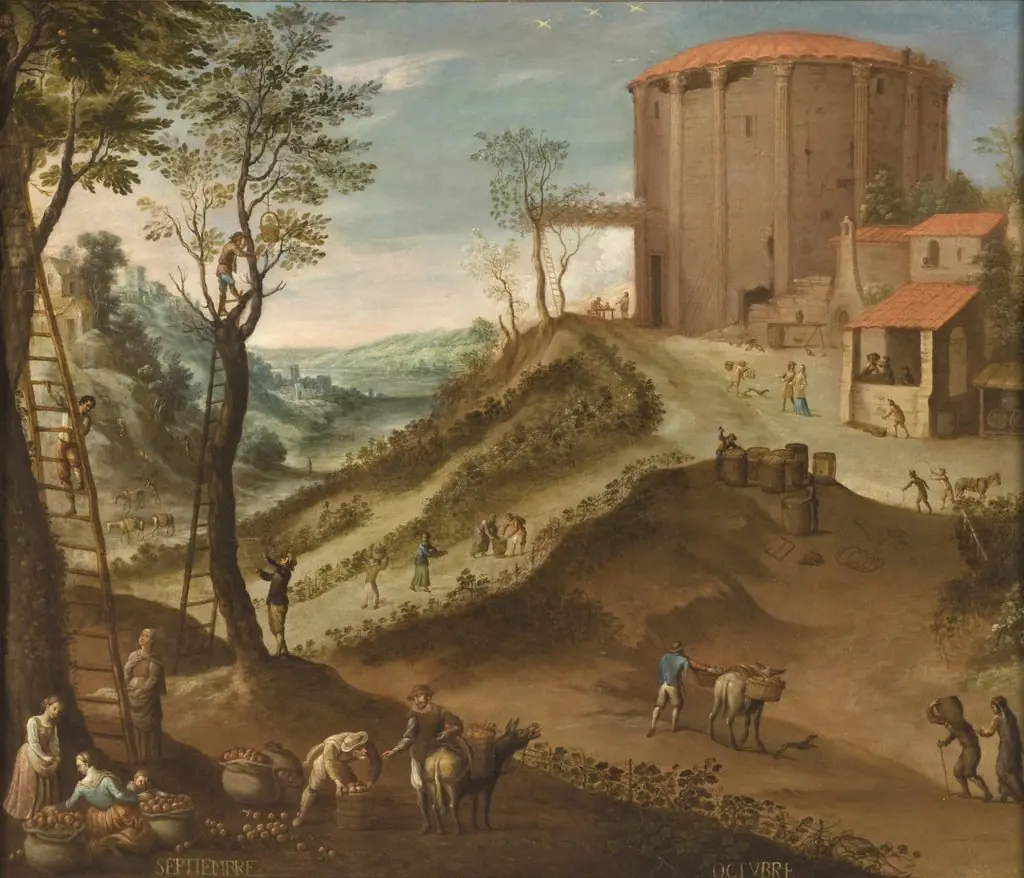
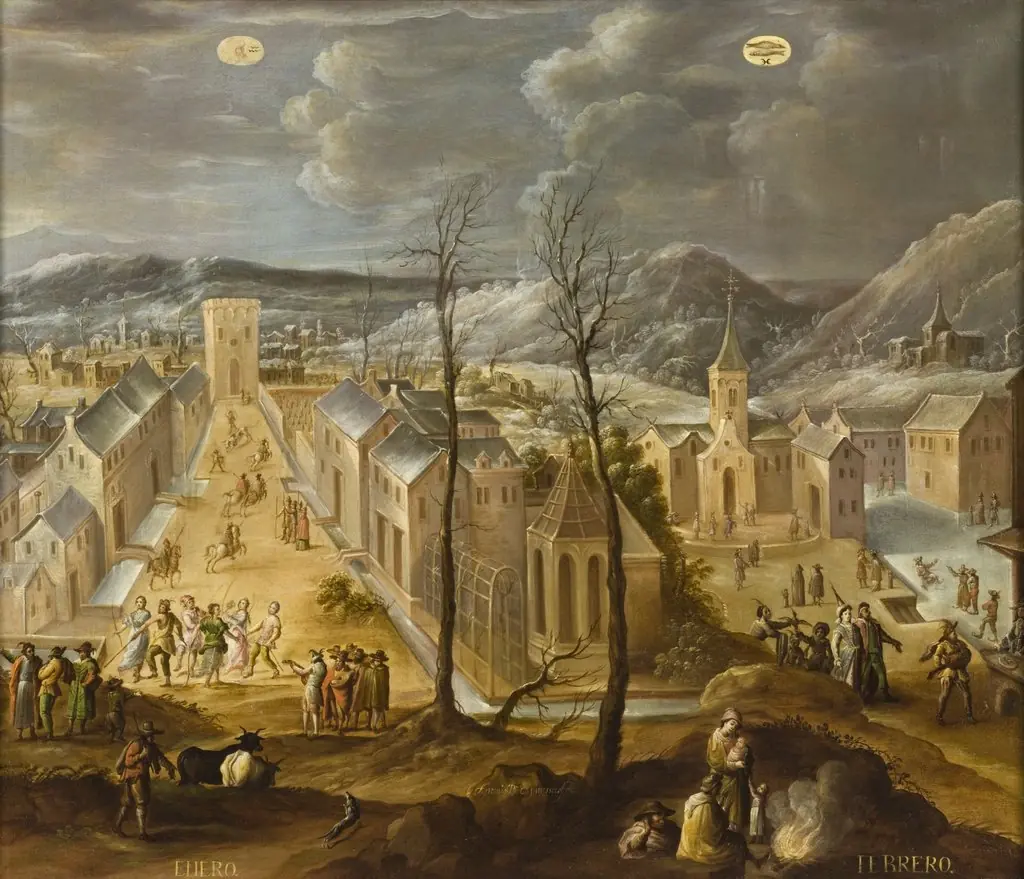
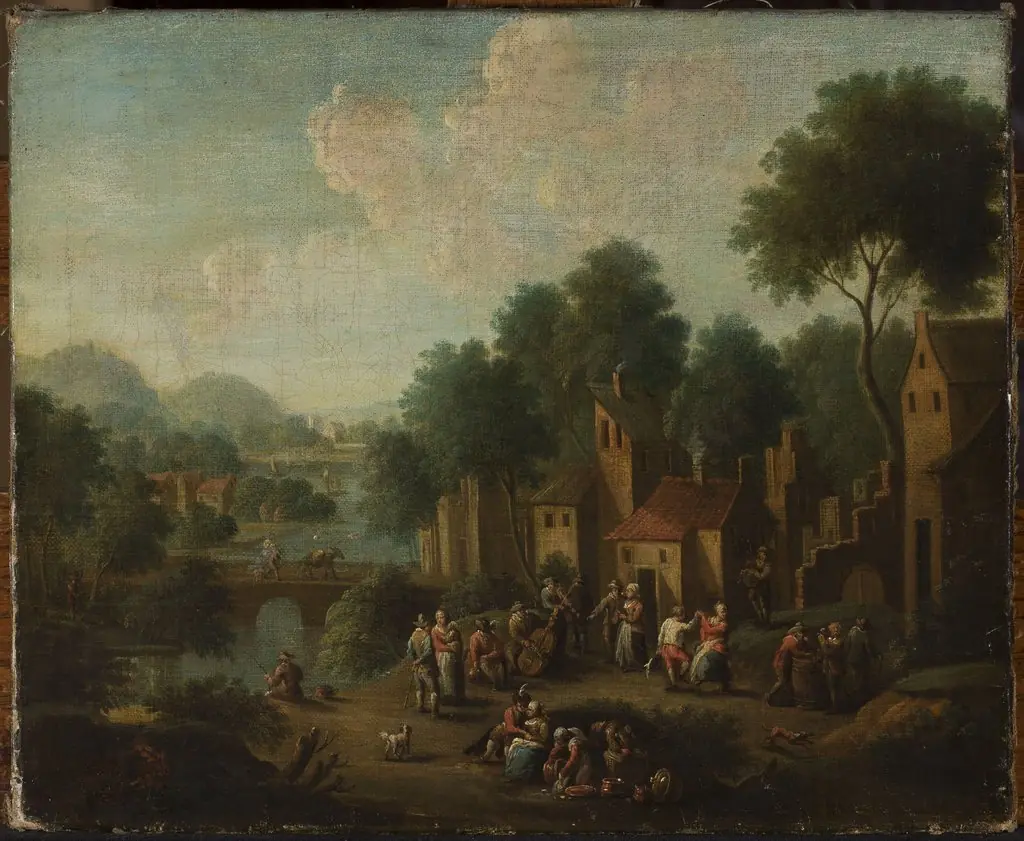
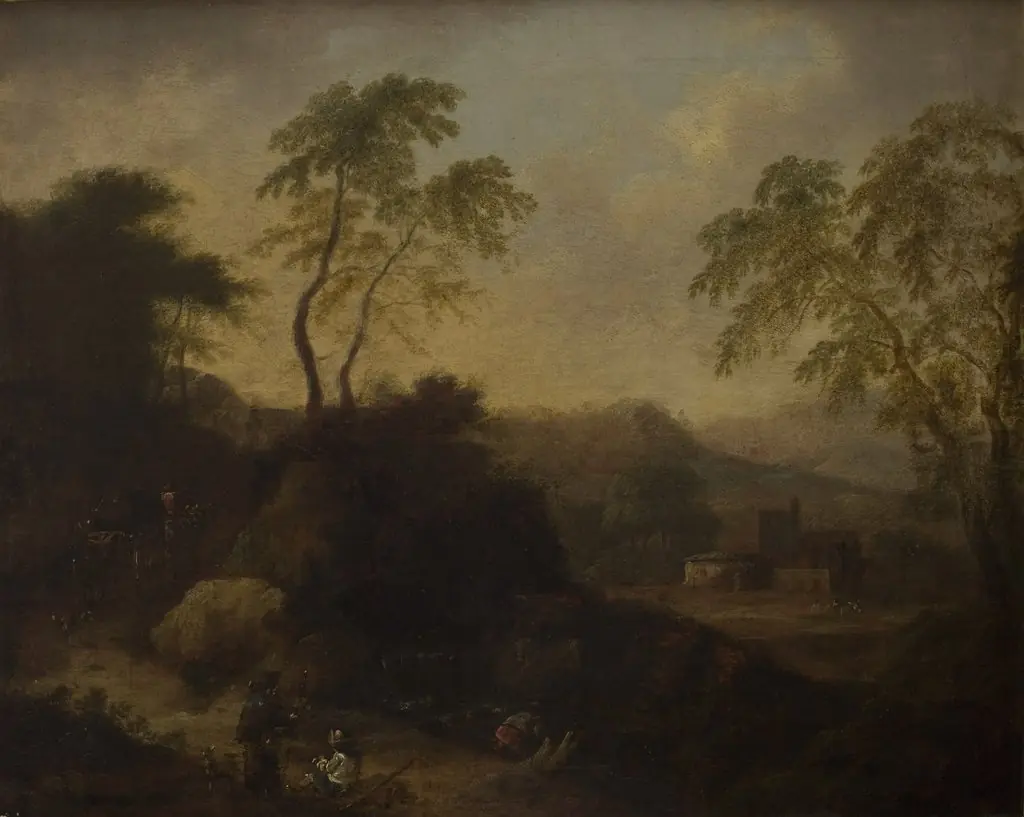
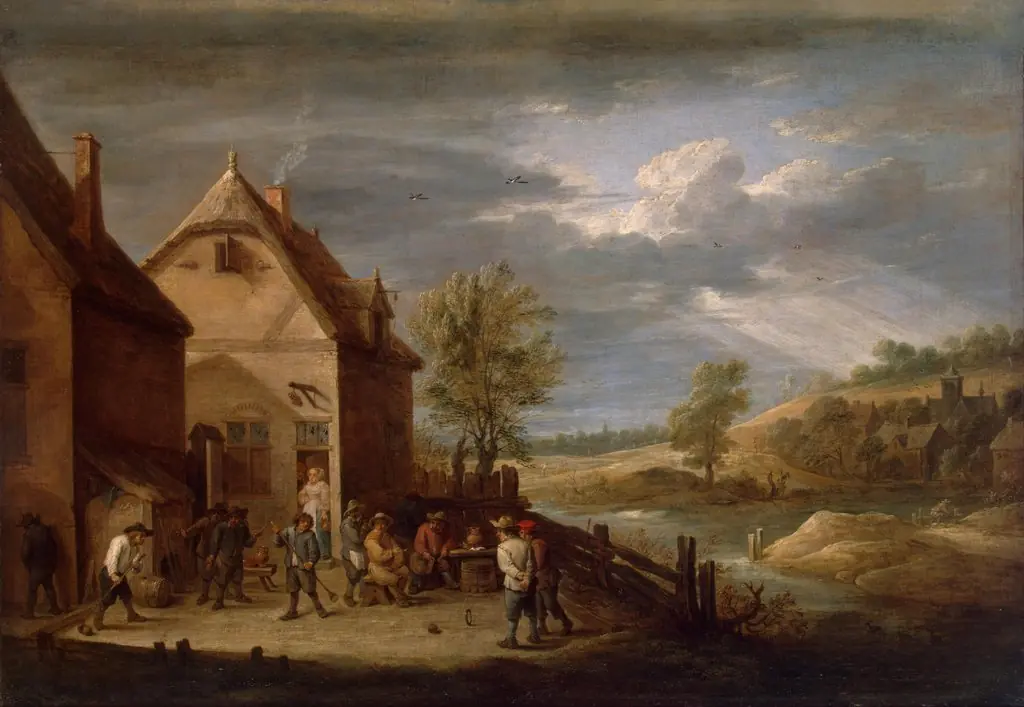
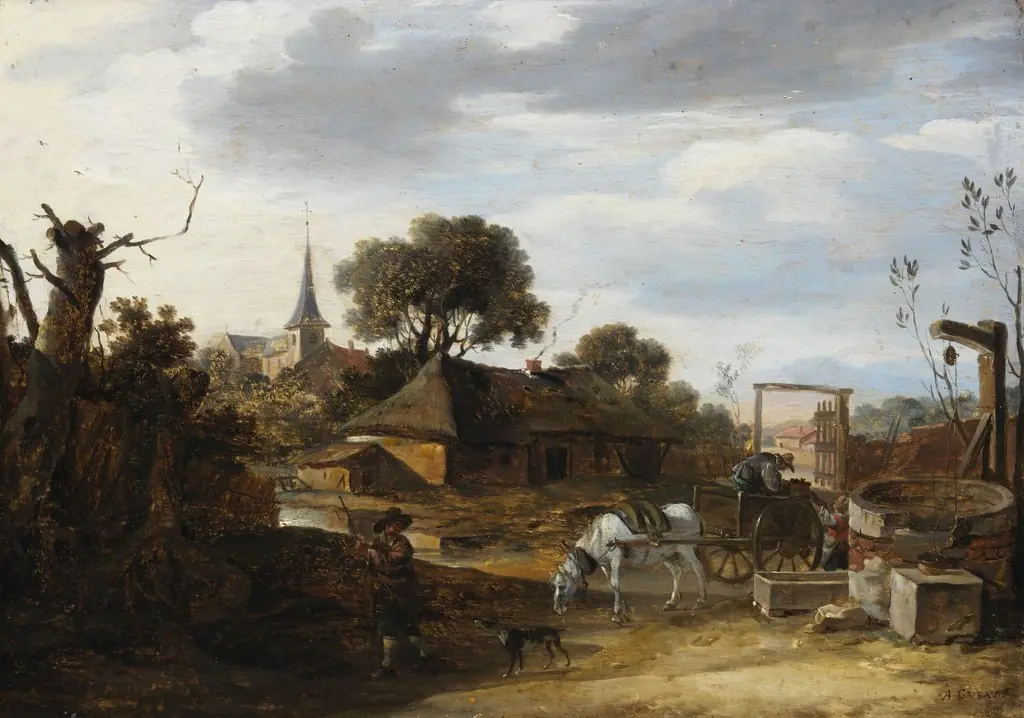
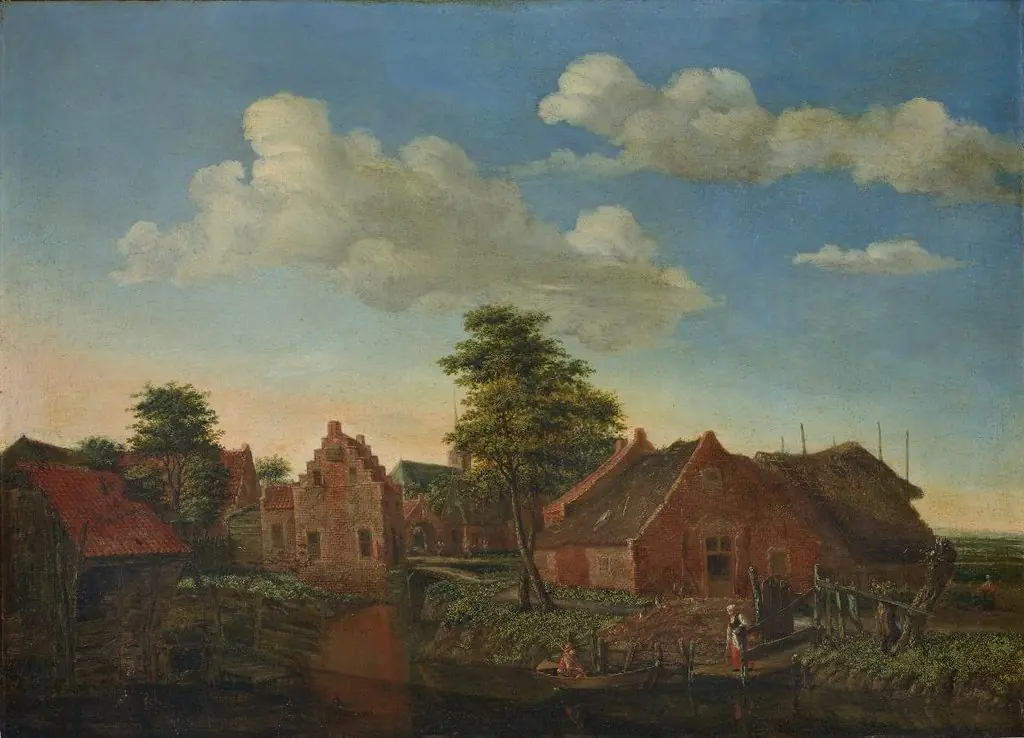
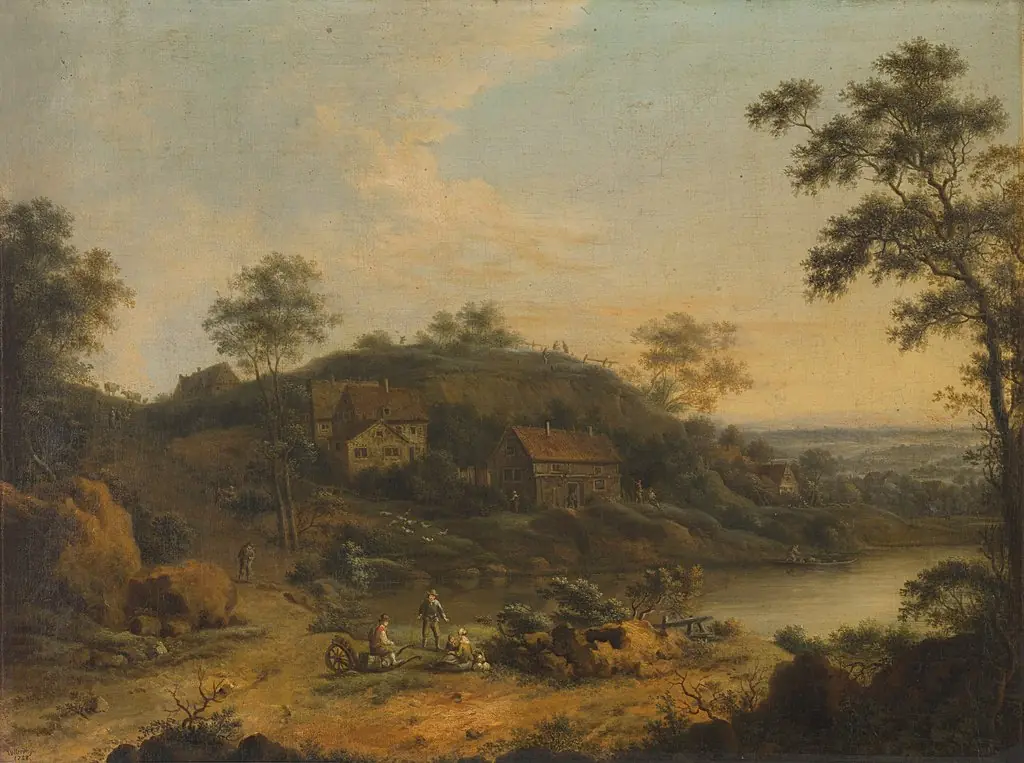
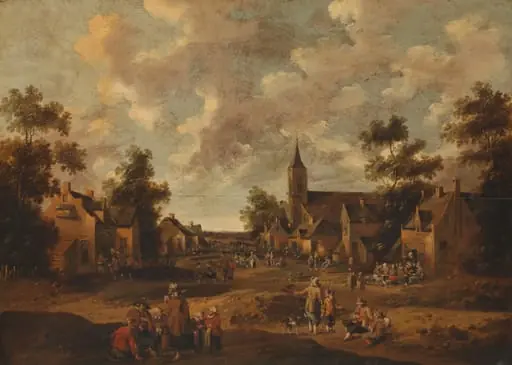
Created around 1650, this oil painting by Antonio de Espinosa portrays a bustling rural village scene. A central tree dominates the composition, beneath which a stream winds past pigs and villagers engaged in daily tasks. A ladder‑climbing figure on the left and distant structures, including a windmill, frame the lively countryside setting.
Subject & Meaning
The work illustrates ordinary agrarian life, emphasizing the rhythm of seasonal labor and community interaction. By placing figures in various stages of work—such as tending livestock and climbing a tree—the painting reflects the cyclical nature of rural existence, hinting at the passage of time suggested by its title.
Technique & Style
Espinosa employs a warm palette of browns and greens, rendering the landscape with soft, diffused lighting under a cloudy sky. The brushwork balances detailed figuration—visible in the pigs and ladder—with broader atmospheric washes, creating depth while maintaining a cohesive, naturalistic tone.
History & Provenance
The painting, titled "Los doce meses del año," entered the collection of the Los Angeles County Museum of Art, where it remains on view. Its attribution to Espinosa, a Spanish painter active in the mid‑17th century, is supported by stylistic analysis and historical records linking the work to his oeuvre.
Context
Produced during Spain’s Baroque period, the piece aligns with contemporary genre scenes that celebrated everyday life. Espinosa’s focus on rural labor and communal activity reflects broader cultural interests in documenting the social fabric of the countryside during a time of economic and agricultural change.
Own this work as a print
Artist & collection
Artist
Antonio de Espinosa painted large folding screens in 17th-century New Spain, a time when Mexico was still part of Spain’s colonial world.