Artwork
Covered Cup with Grape Festoon
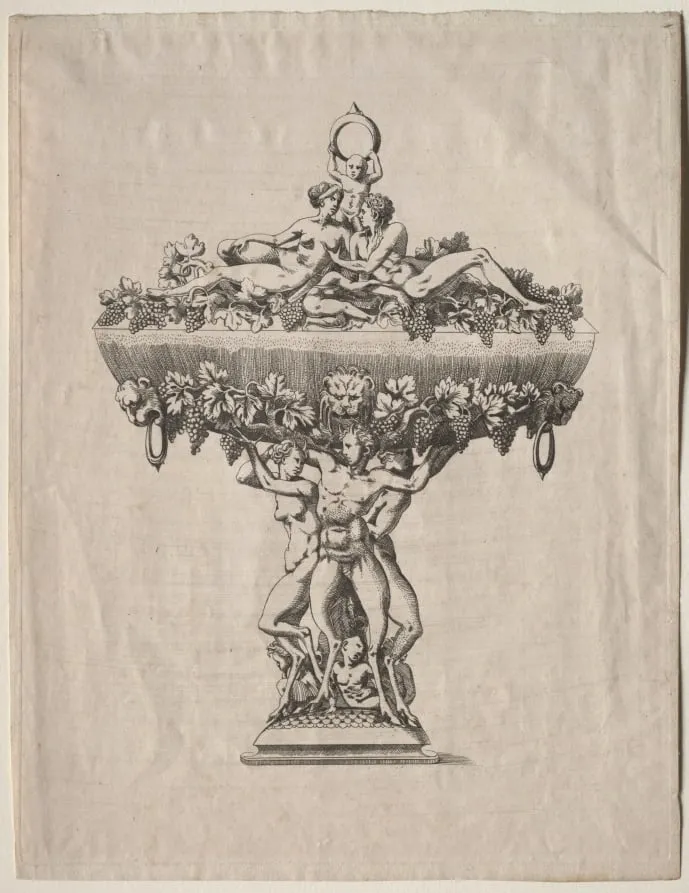
Covered Cup with Grape Festoon is a print by the Renaissance artist Antonio Fantuzzi. It dates from 1504 and is held in the collection of the Cleveland Museum of Art.
About this work
Overview
This 16th-century print, *Covered Cup with Grape Festoon*, depicts an ornate silver cup adorned with a lush grape, leaf, and vine garland. Likely inspired by decorations at Fontainebleau, a French royal hunting lodge, it reflects the opulent taste of the French monarchy during this period.
Subject & Meaning
The subject, a richly decorated cup, symbolizes the luxury and refinement of the French royal court under King Francis I. The image may serve as a record of a lost decorative element from Fontainebleau, offering insight into the king’s aesthetic preferences.
Technique & Style
The print exhibits characteristics of the School of Fontainebleau, a style influenced by Italian Mannerism. Softened edges, possibly achieved through techniques akin to *sfumato*, contribute to the piece’s detailed yet subtly blended appearance.
History & Provenance
Created in the context of King Francis I’s renovation of Fontainebleau in the early 1530s, this work was likely influenced by the innovative decorative schemes developed by Rosso Fiorentino and Francesco Primaticcio. The exact artist and date are not specified, but it aligns with the stylistic developments of this period.
Context
This print is part of a broader group of engravings and etchings from the School of Fontainebleau, many of which document now-lost elements of the chateau’s decoration. It represents the cross-cultural artistic exchange between Italy and France during the Renaissance.
Legacy
As a representative of the School of Fontainebleau, *Covered Cup with Grape Festoon* contributes to the understanding of Mannerist influences in 16th-century French art. Its detailed, ornate style reflects the enduring impact of Italian artists on French royal aesthetics.
Artist & collection

Artist
Antonio Fantuzzi (active in the 1540s) was an Italian painter and printmaker active in the French Renaissance in a Mannerist style.

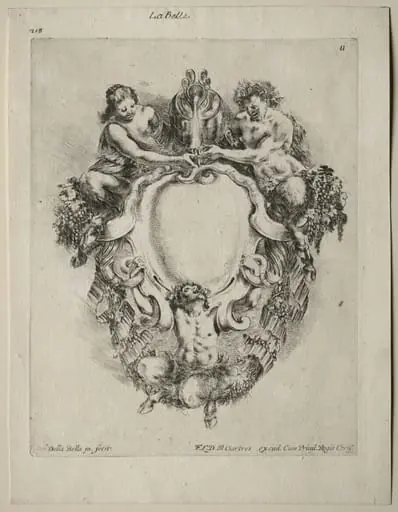 Collection of Various Caprices and New Designs of Cartouches and Ornaments: No 11
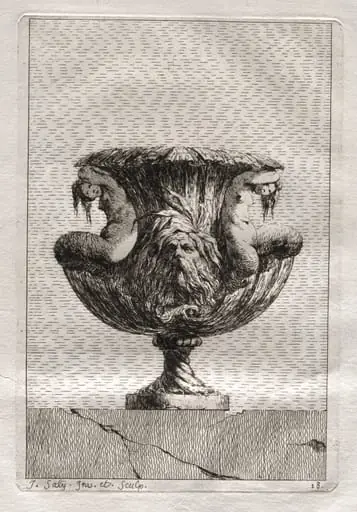 Suite of Vases: Plate 18
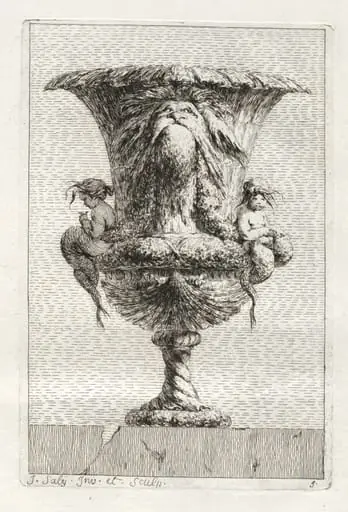 Suite of Vases: Plate 9
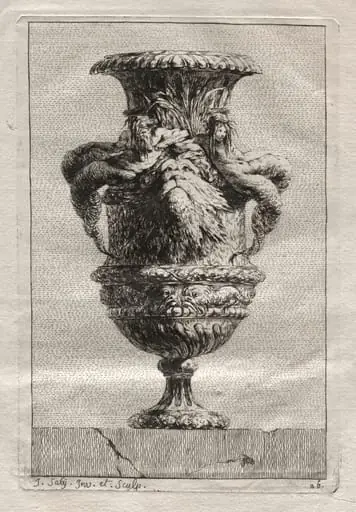 Suite of Vases: Plate 26
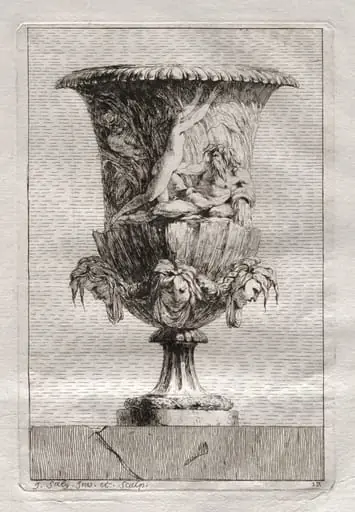 Suite of Vases: Plate 17
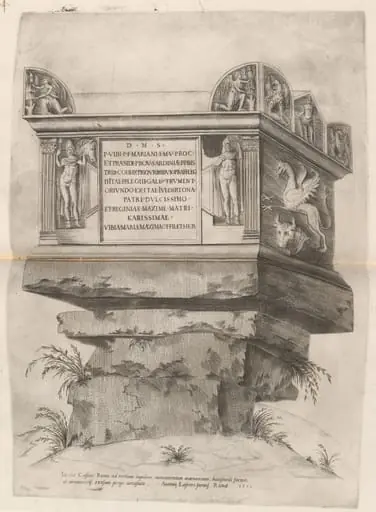 Tomb of Nero
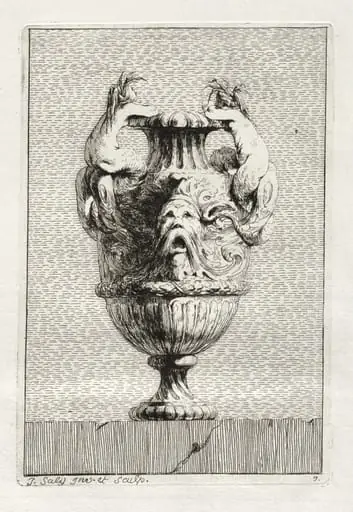 Suite of Vases: Plate 7
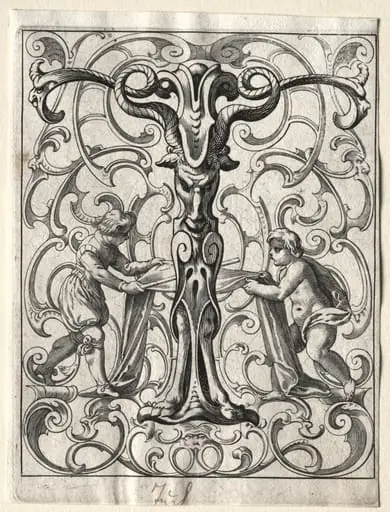 New ABC Booklet: T
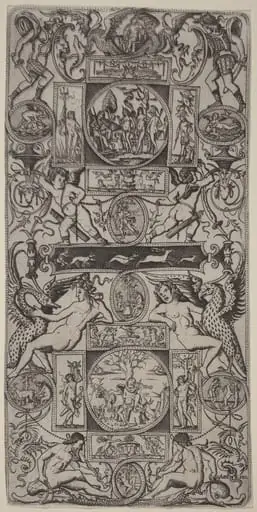 Ornament Panel with Orpheus and the Judgment of Paris
 Ornament Panel with Orpheus and the Judgment of Paris
 Collection of Various Caprices and New Designs of Cartouches and Ornaments: No 10
 The Throne of Neptune from San Vitale in Ravenna