Artwork
Tomb of Nero
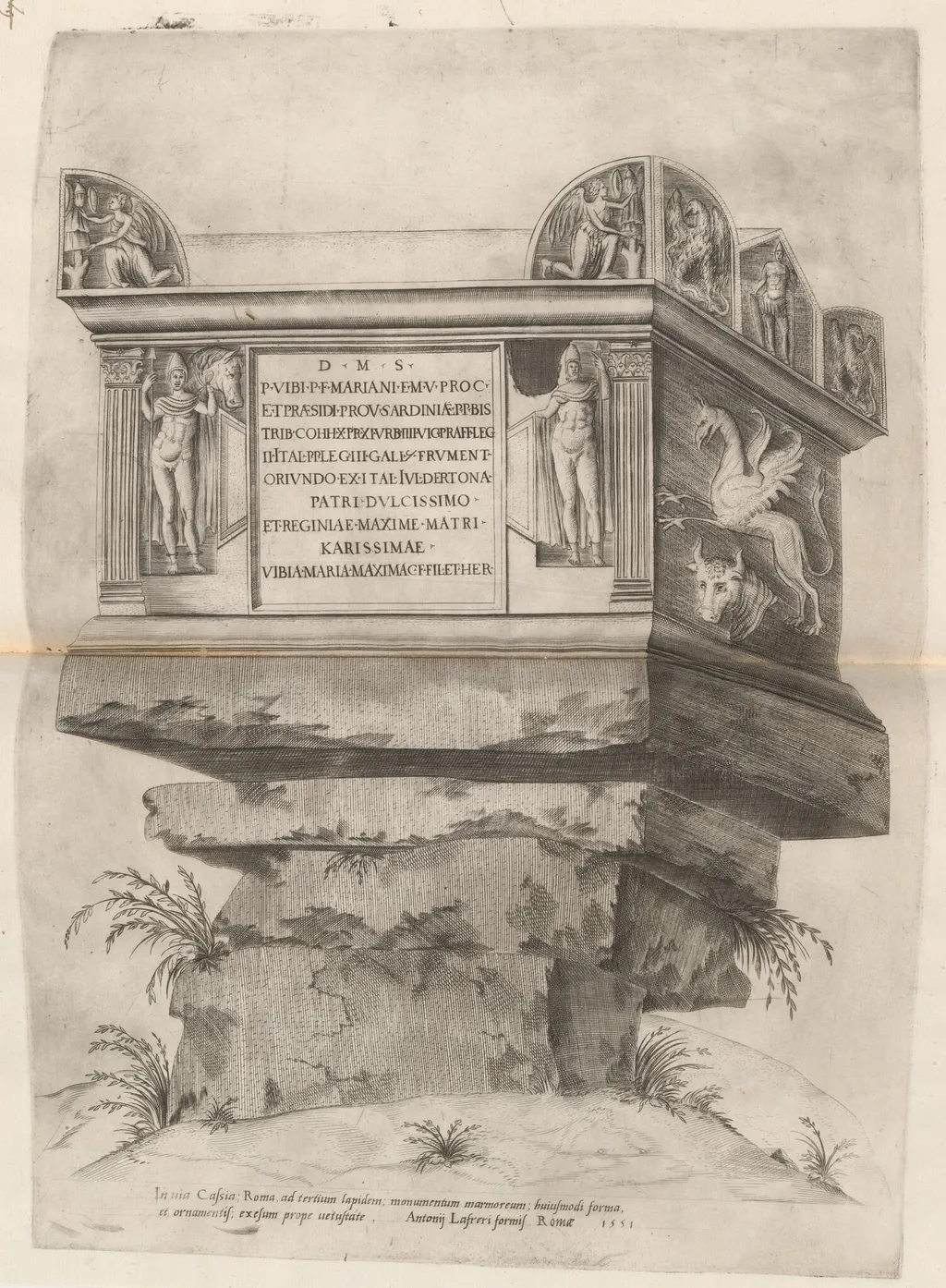
Tomb of Nero is an ink print by the Renaissance artist Italian 16th Century. It dates from 1551 and is held in the collection of the National Gallery of Art.
About this work
Overview
Vegetation fringes the base, adding a natural context to the architectural composition.
The print depicts an elaborate funerary monument set upon a rocky platform, flanked by two robust figures that appear to guard a central slab bearing Latin inscription. Above the slab a narrow ledge supports a series of diminutive statues, while a niche on the right contains a solitary figure alongside a fantastical creature with wings and a bovine head. Vegetation fringes the base, adding a natural context to the architectural composition.
Subject & Meaning
The central slab’s Latin text suggests a commemorative purpose, likely honoring a distinguished individual. The paired muscular guardians echo Roman funerary conventions that emphasize strength and protection. The niche’s hybrid creature—a winged, cow‑headed animal—may reference mythological symbolism or serve as a personalized emblem, reinforcing the deceased’s status or lineage within the Roman visual language.
Technique & Style
Executed as an engraving, the work relies on incised lines to render fine architectural detail and intricate figural anatomy. The artist adopts motifs drawn from classical Roman tombs, reproducing their formal vocabulary while emphasizing precise line work and contrast. This method allows for a high degree of surface texture, from the smooth slab to the rugged rock and foliage.
History & Provenance
The print belongs to the broader tradition of 18th‑century antiquarian publications that circulated reproductions of ancient monuments. While the original tomb’s location is not specified, the engraving reflects contemporary scholarly interest in documenting Roman funerary architecture for study and collection.
Artist & collection

Artist
A 16th-century Italian sculptor left us small bronze works in dark brown and gold.

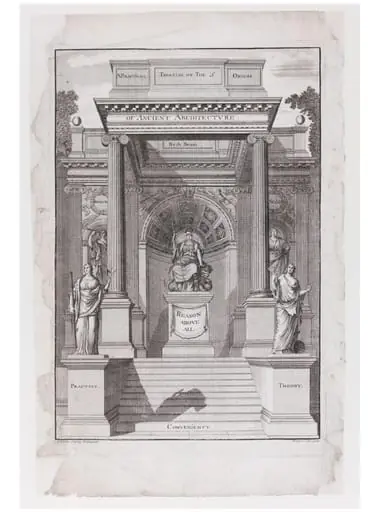 A Practical Treatise on the Five Orders of Ancient Architecture
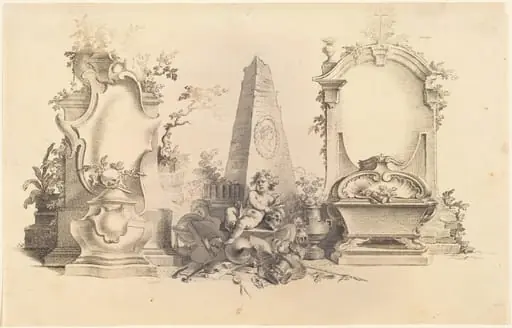 Cartouche Moderne with Emblems of Death
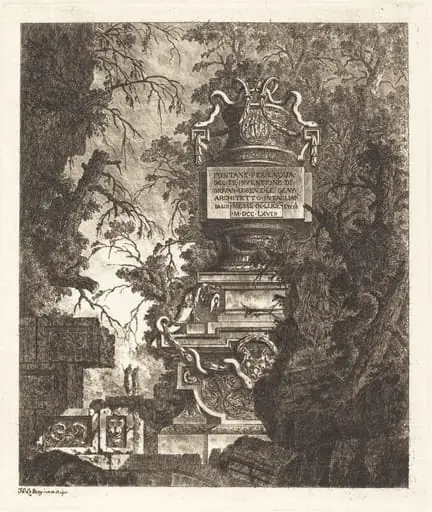 Frontispiece for "Fountains"
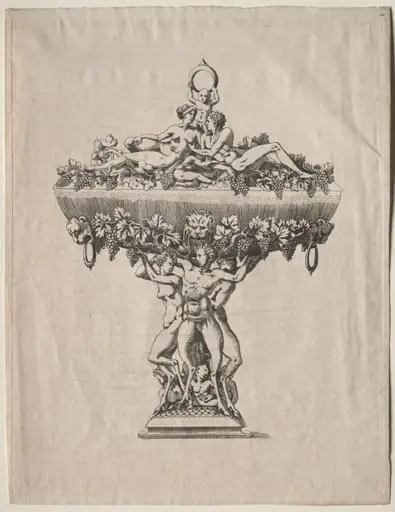 Covered Cup with Grape Festoon
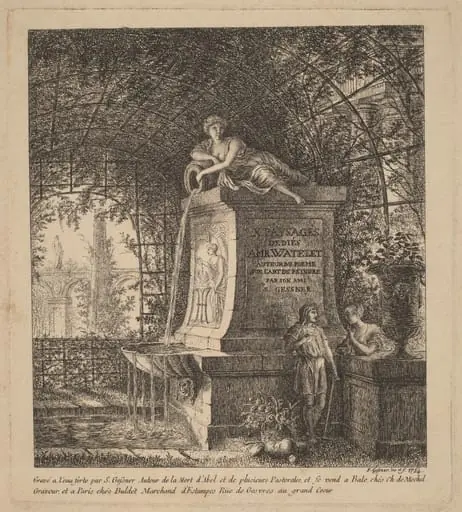 Fountain in a Summerhouse
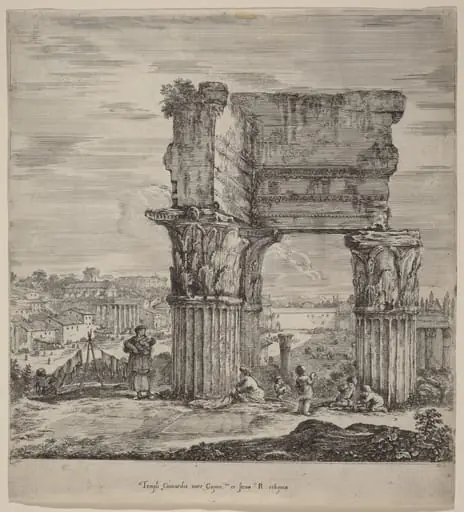 Temple of Concord and Roman Forum
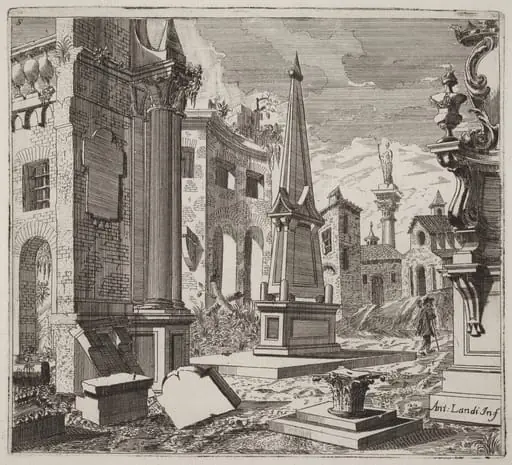 Fantastic Townscape with Ruins
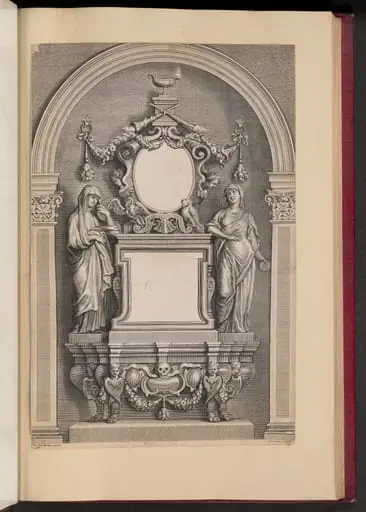 Epitaph of Rubens
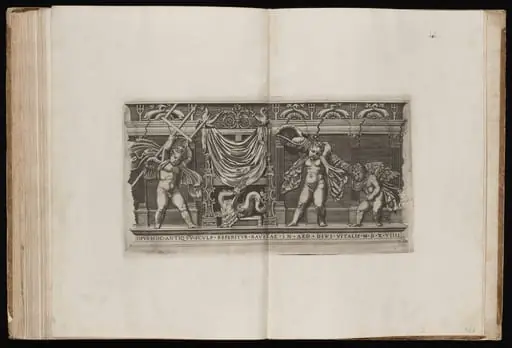 The Throne of Neptune from San Vitale in Ravenna
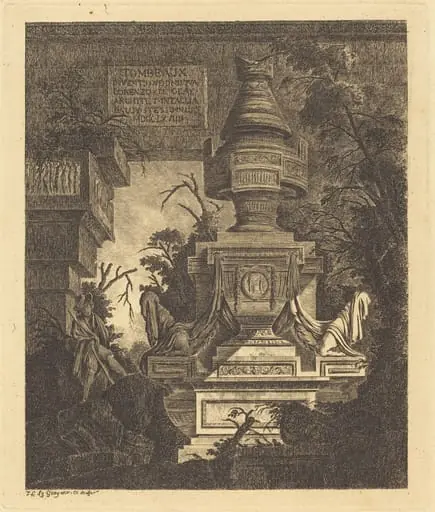 Frontispiece for "Views of Tombs"
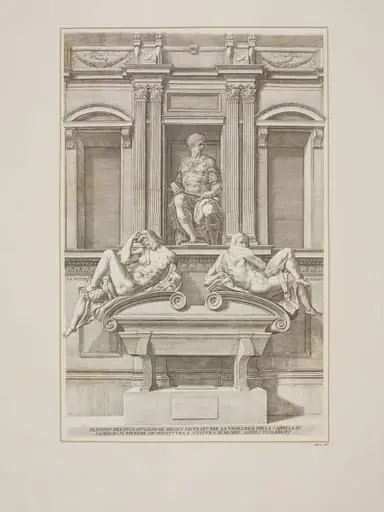 Tomb of Giuliano De' Medici
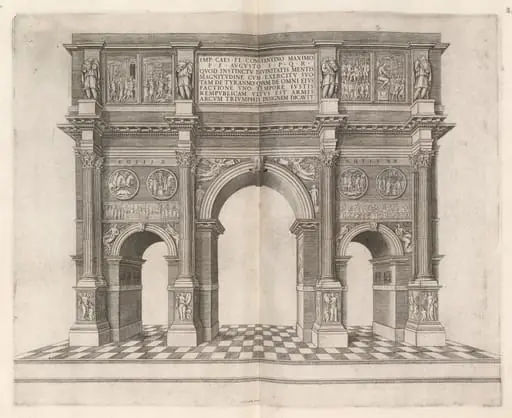 Arch of Constantine