Artwork
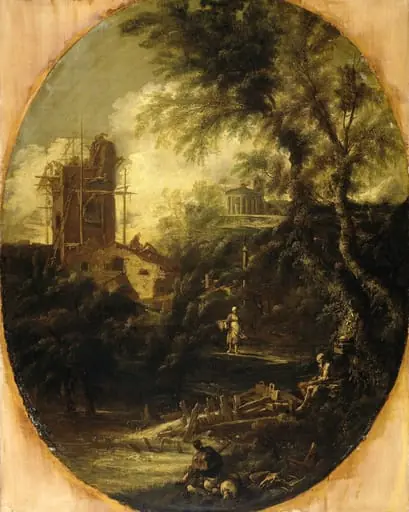
Landscape with Hermit, Pilgrim and Peasant Woman
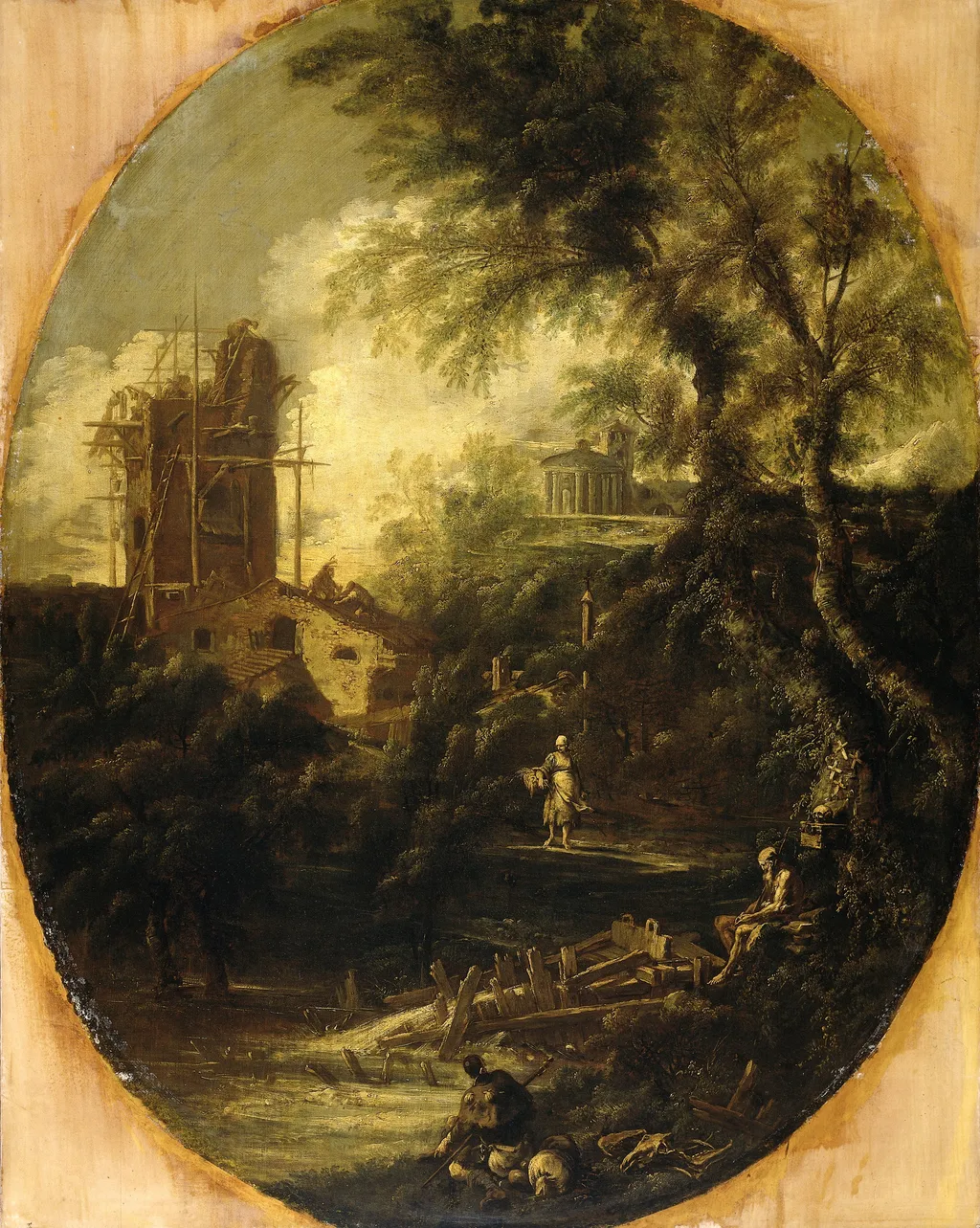
Landscape with Hermit, Pilgrim and Peasant Woman is an oil painting by the Barbizon school artist Antonio Francesco Peruzzini. It dates from 1710 and is held in the collection of the Rijksmuseum.
About this work
Overview
The composition unfolds across a gently rolling landscape, with dense foliage framing the figures and a distant structure suggesting human habitation.
Painted in 1710 by Antonio Francesco Peruzzini, this oil-on-canvas work presents a quiet rural scene populated by three figures: a hermit, a pilgrim, and a peasant woman. The composition unfolds across a gently rolling landscape, with dense foliage framing the figures and a distant structure suggesting human habitation. The painting’s mood is contemplative, emphasizing stillness over narrative action.
Subject & Meaning
The three figures—each associated with spiritual or humble existence—move through the landscape without direct interaction. The hermit, isolated in the foreground, embodies solitude; the pilgrim suggests journey and devotion; the peasant woman, grounded in labor, reflects earthly life. Together, they evoke themes of quiet faith, transience, and harmony with nature, without overt religious symbolism.
Technique & Style
Peruzzini employs subtle chiaroscuro to model forms and suggest depth, with soft transitions between light and shadow rather than stark contrasts. The brushwork is delicate, particularly in rendering foliage and atmospheric perspective. The palette favors muted greens and earth tones, reinforcing the painting’s calm tone. Figures are rendered with modest detail, prioritizing their integration into the landscape over individual characterization.
History & Provenance
The painting entered the Rijksmuseum’s collection in the 19th century, though its earlier ownership remains undocumented. It was likely acquired as part of a broader interest in 17th- and early 18th-century Italian landscape traditions. No significant alterations or restorations are recorded, and it has been consistently attributed to Peruzzini since its cataloging.
Context
Peruzzini worked during a period when Italian landscape painting was influenced by Dutch and Flemish traditions, favoring naturalism over idealized scenery. This work aligns with regional trends that emphasized everyday rural life and atmospheric effects. Unlike grand historical or mythological landscapes, this piece reflects a quieter, more intimate approach favored by lesser-known artists of the time.
Legacy
Though not widely exhibited or studied, the painting contributes to the understanding of minor Italian landscape painters who bridged Baroque conventions with emerging naturalism. Its presence in the Rijksmuseum underscores the museum’s commitment to preserving diverse European traditions beyond dominant artistic centers. It remains a quiet example of early 18th-century observational painting.
Artist & collection
Artist
Antonio Francesco Peruzzini (1643–1724) was an artist, born in Ancona.

 Landscape with Hermit, Pilgrim and Peasant Woman
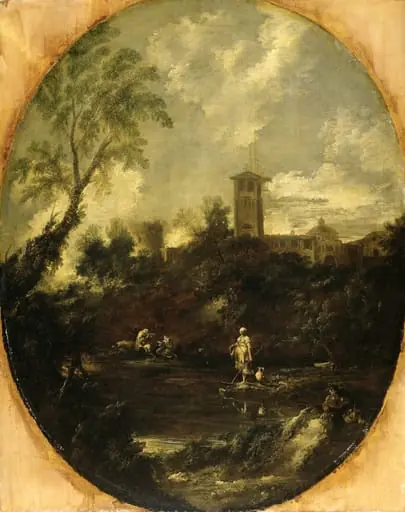 Landscape with Monks, Pilgrim and Peasant Woman
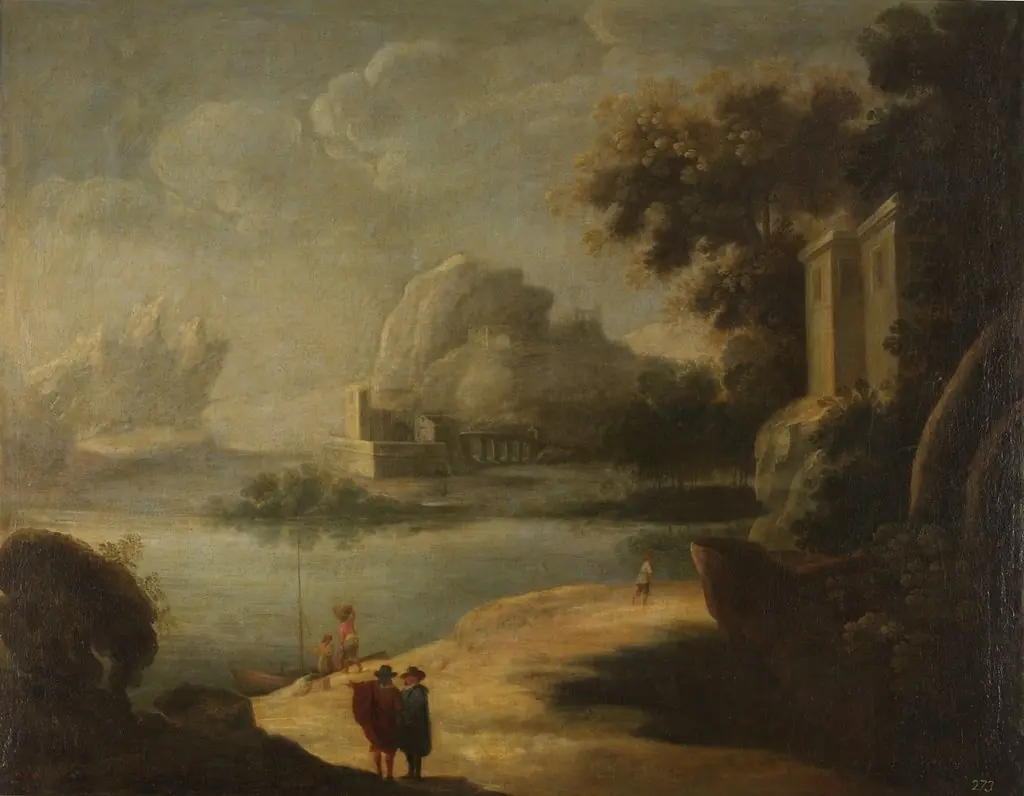 Paisaje
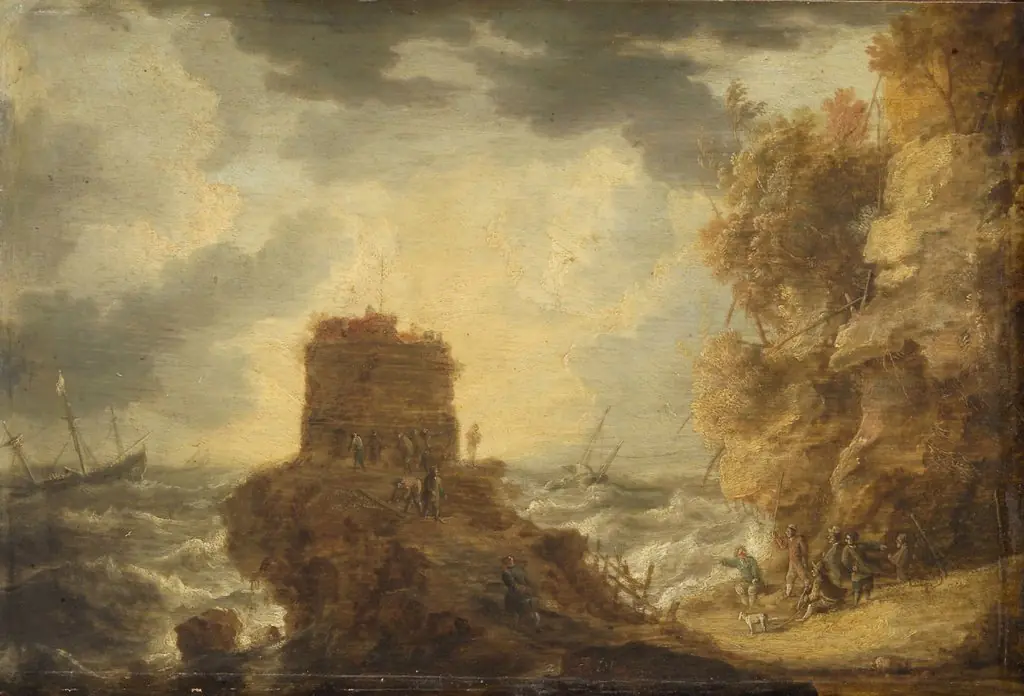 Felsküste mit Wachtturm
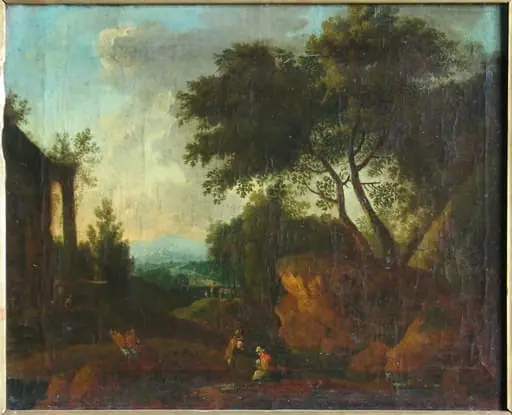 Peisaj cu copaci și ruine antice ; pandant: Peisaj cu copaci și pod
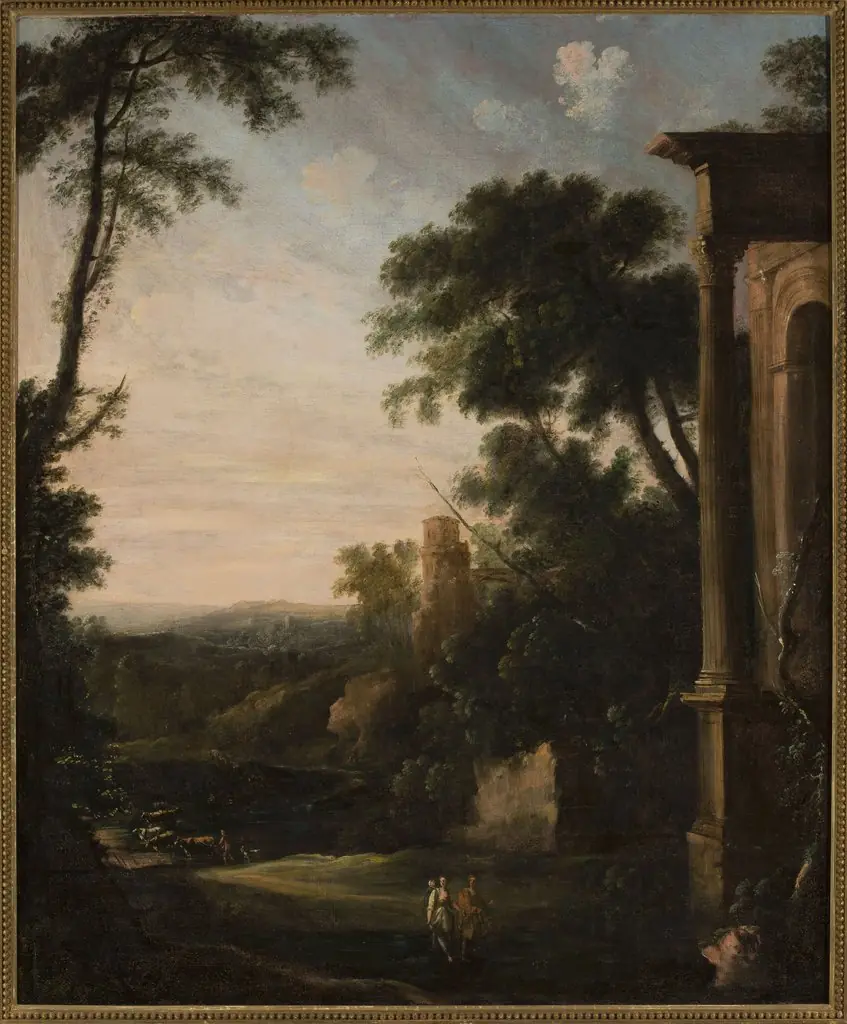 Landscape with architecture and staffage
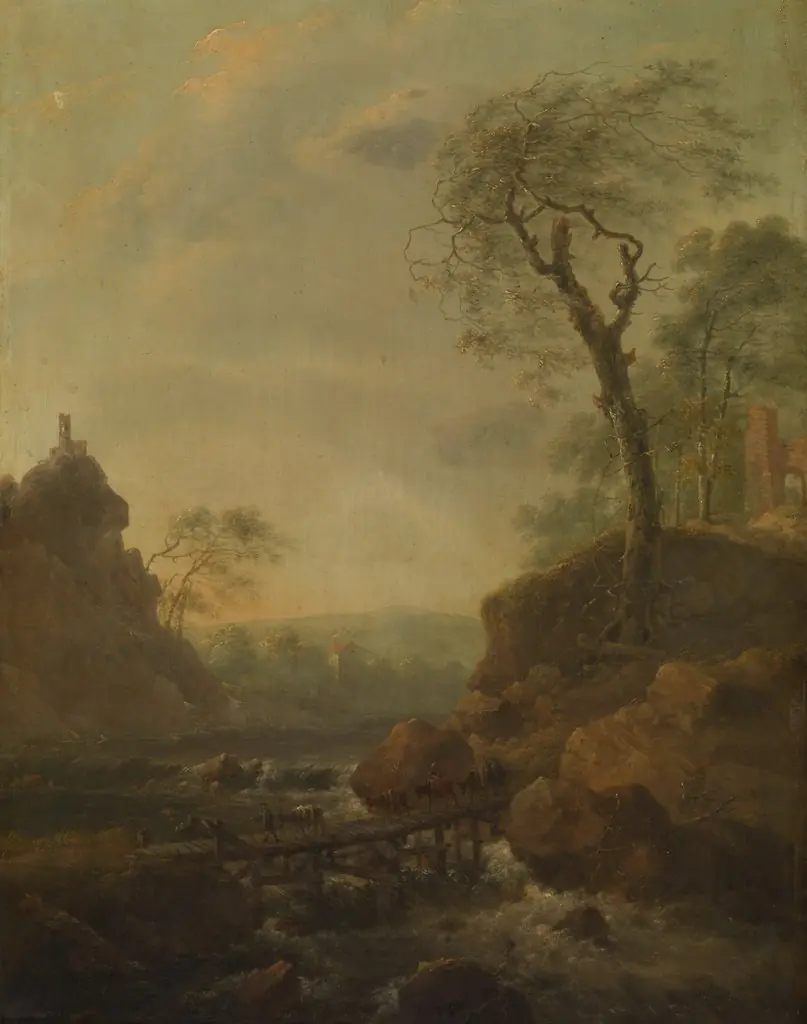 Landscape
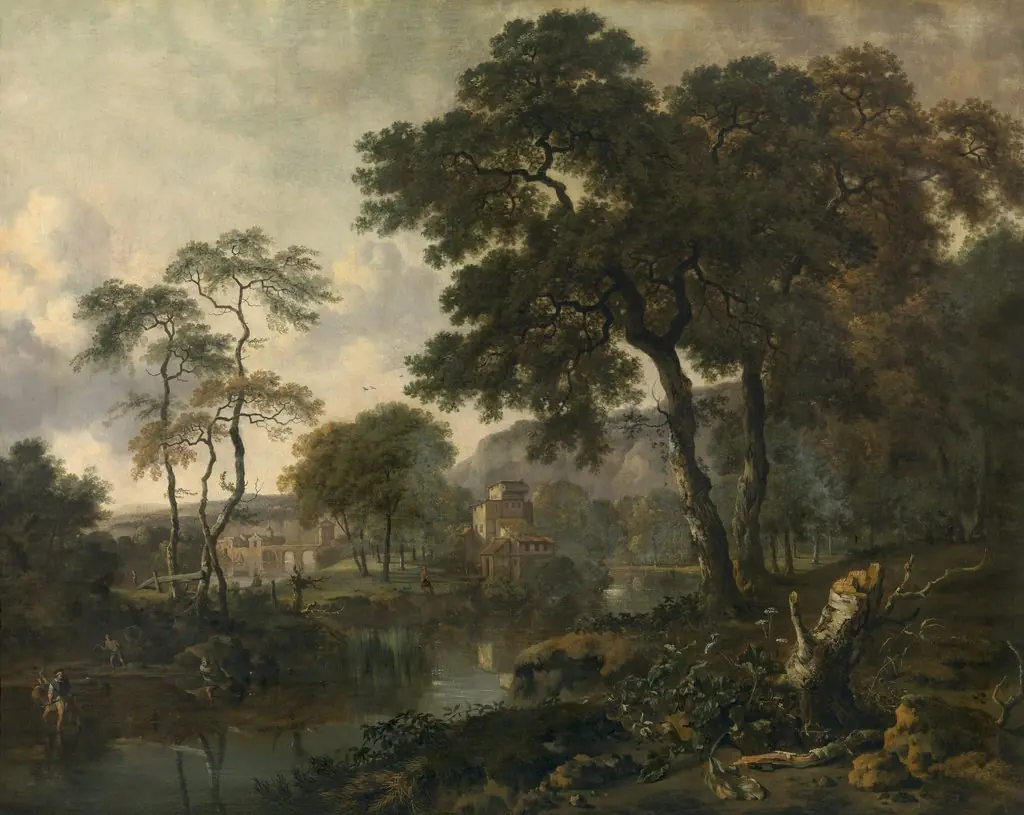 Landscape
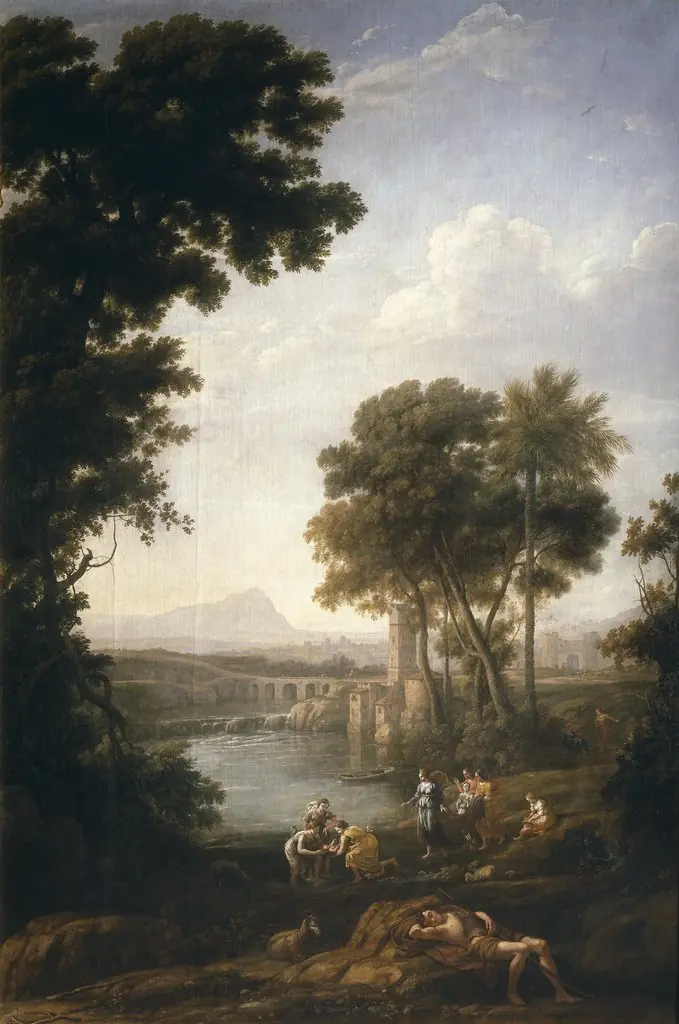 Landscape with the Finding of Moses
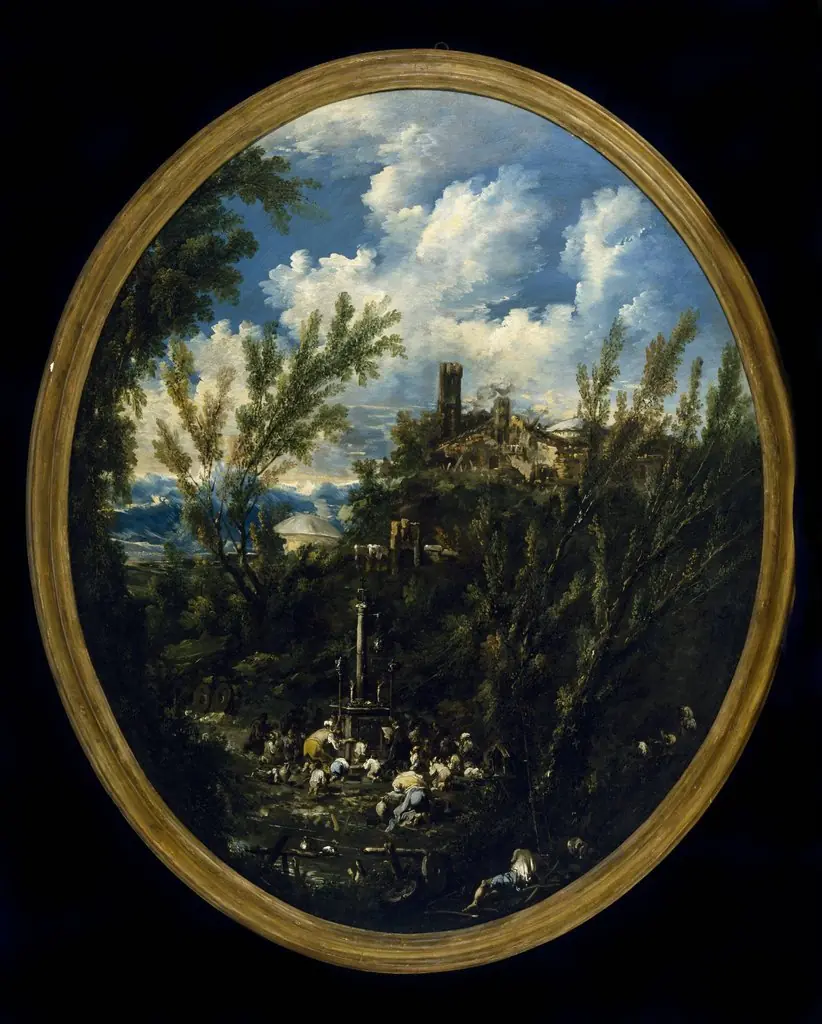 Worshippers at a Shrine in a Mountainous Landscape
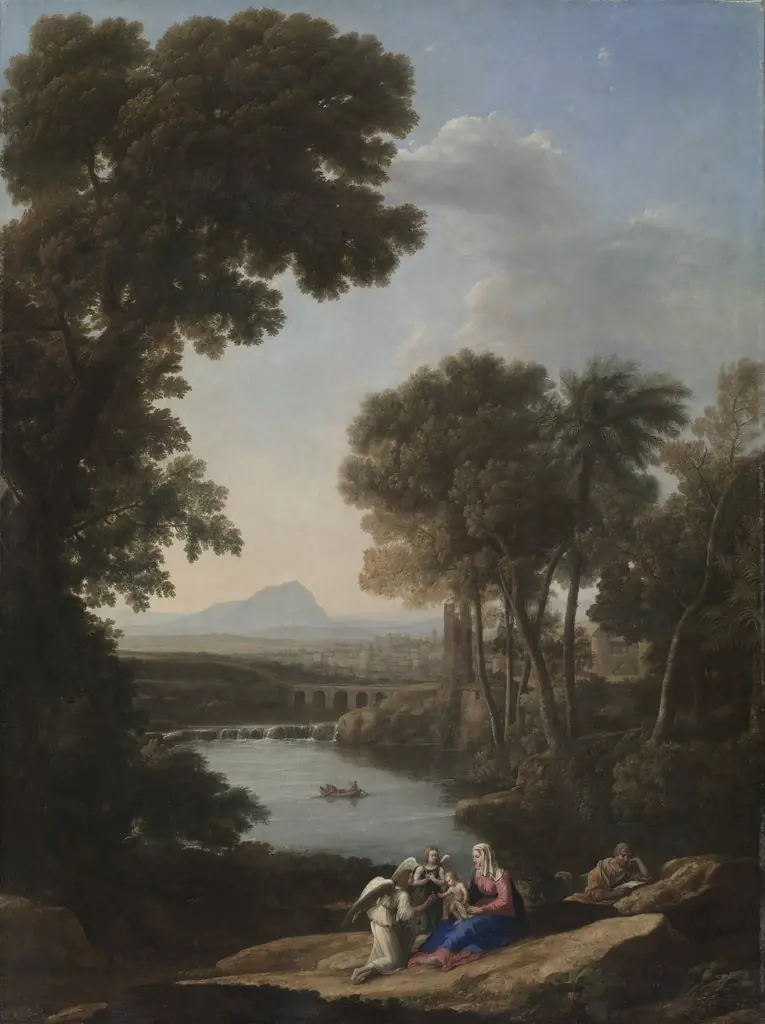 Rest on the Flight into Egypt