Artwork
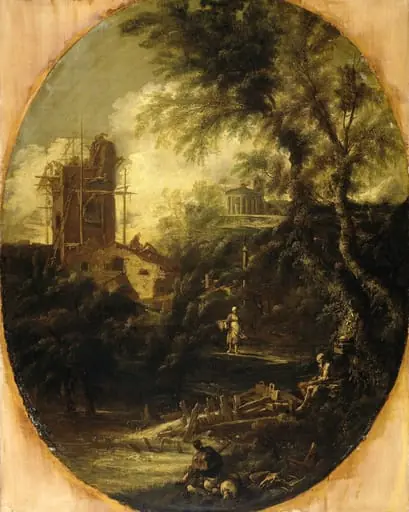
Landscape with Monks, Pilgrim and Peasant Woman
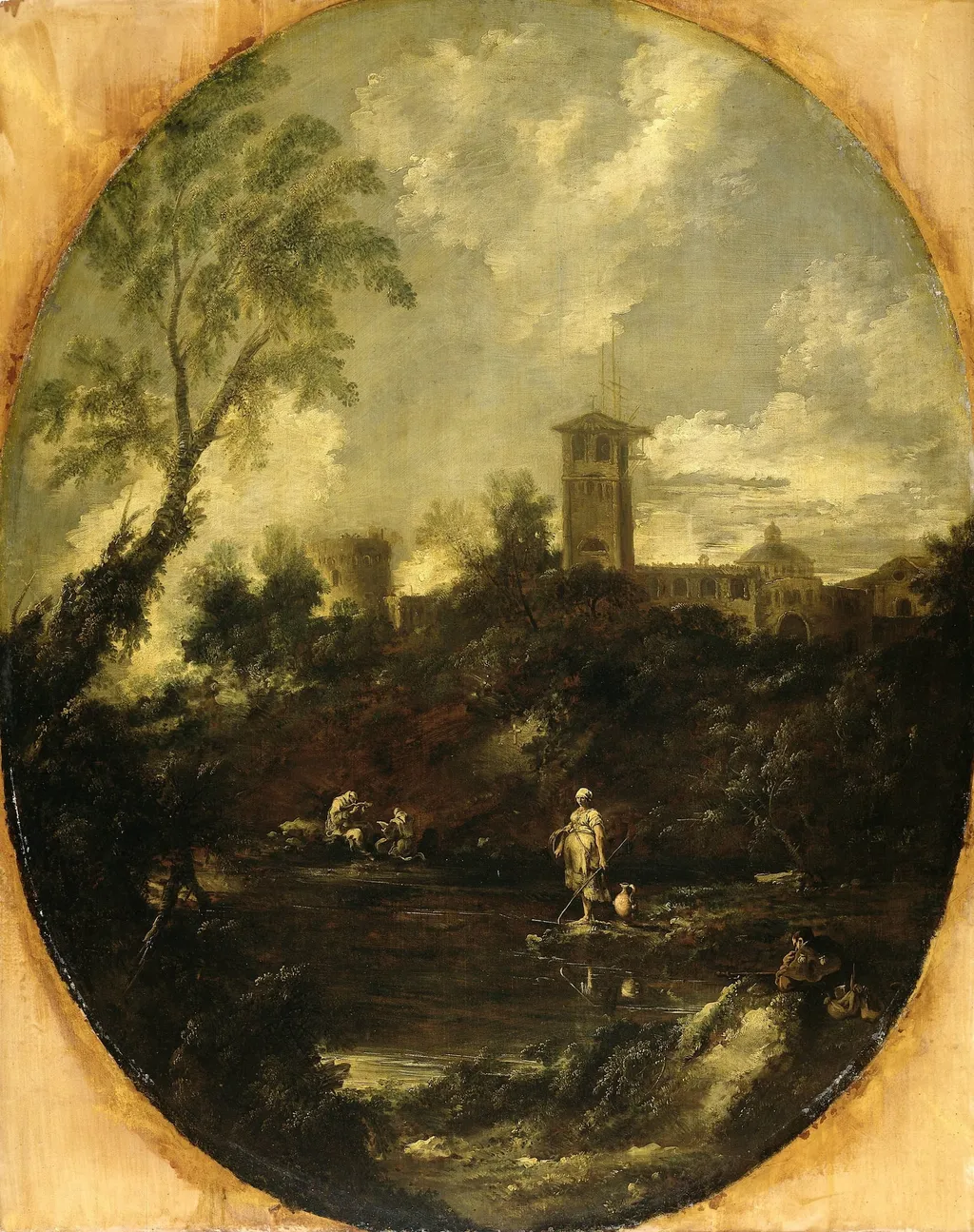
Landscape with Monks, Pilgrim and Peasant Woman is an unspecified painting by the Rococo painting artist Unknown. It dates from 1715 and is held in the collection of the Rijksmuseum.
About this work
Overview
The work depicts a tranquil riverside scene in which a woman bearing a staff and a jug stands at the water’s edge, while a weary pilgrim reclines nearby. Across the river, two monks are seated, absorbed in their books, with a monastery visible in the distance. The composition balances figures and architecture, offering a quiet glimpse of daily activity along the water.
Subject & Meaning
The painting presents a slice of ordinary life rather than a dramatic narrative. The juxtaposition of a traveling pilgrim, a domestic female figure, and scholarly monks suggests themes of movement, labor, and contemplation coexisting within the same landscape. The presence of the monastery anchors the scene within a religious setting, hinting at the spiritual backdrop of everyday routines.
Technique & Style
Rendered with a soft, naturalistic light, the artist employs careful detailing to convey texture in the water, foliage, and clothing. The palette is muted, emphasizing atmospheric calm. Linear perspective guides the eye toward the distant monastery, while the figures are placed in the foreground to create depth and a sense of immediacy.
History & Provenance
The painting is unsigned, leaving the artist’s identity unknown. It is catalogued as a pendant to the work identified as SK‑C‑1356, indicating it was likely intended as a complementary piece. The work is part of the Rijksmuseum collection, where it has been documented as an example of Dutch river landscape painting.
Context
Created within the tradition of 17th‑century Dutch genre landscapes, the scene reflects contemporary interest in depicting everyday life along waterways, a central element of Dutch geography and economy. The inclusion of religious figures alongside laypeople mirrors the integration of monastic institutions into the social fabric of the period.
Artist & collection

 Domestic Scene
 Giacomo and Cardinal Marco, investing Andrea, Abbot of San Zeno, with his Benefice
 The Nymph of Fontainebleau
 Portrait of a Woman
 Madonna and Child with Saints in the Enclosed Garden
 Venus and Minerva
 Family Group of Four on Sofa
 Wall painting from Room H of the Villa of P. Fannius Synistor at Boscoreale
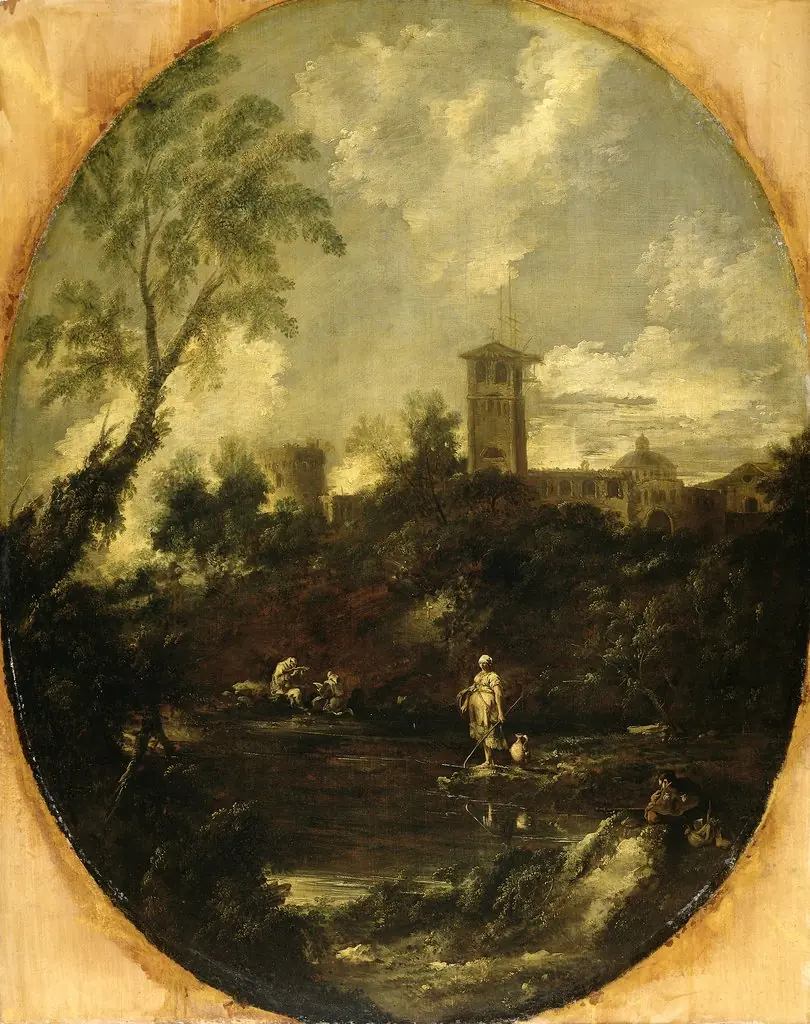 Landscape with Monks, Pilgrim and Peasant Woman
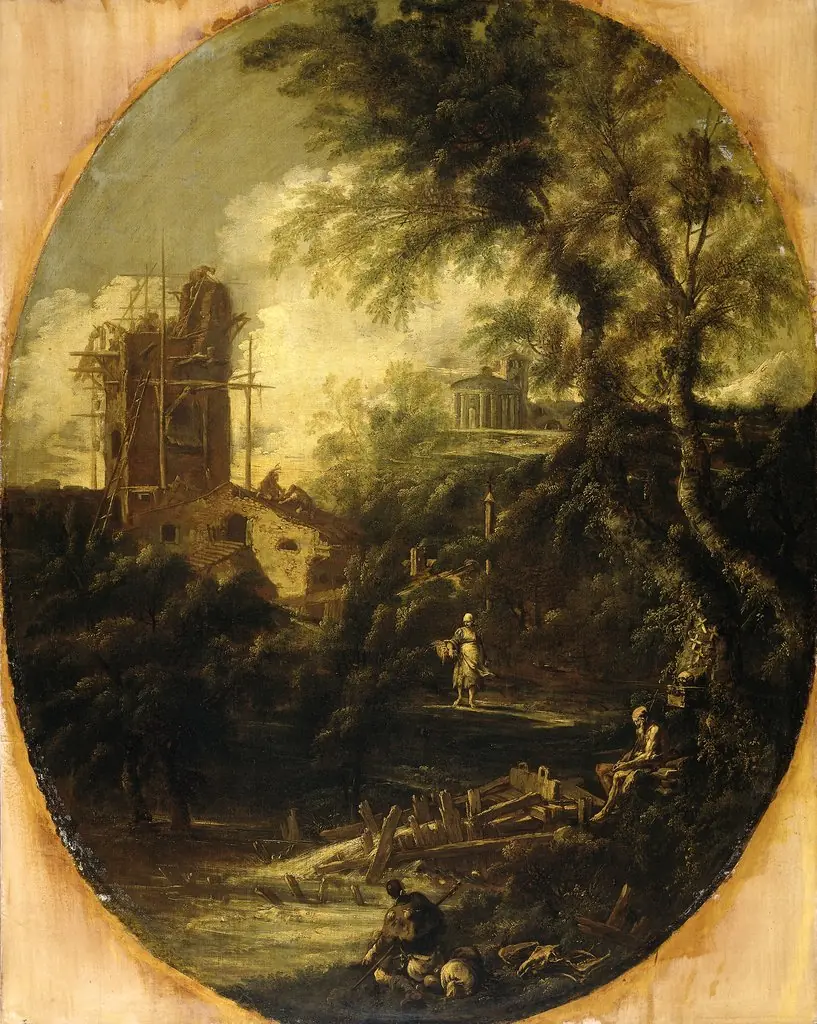 Landscape with Hermit, Pilgrim and Peasant Woman
 Landscape
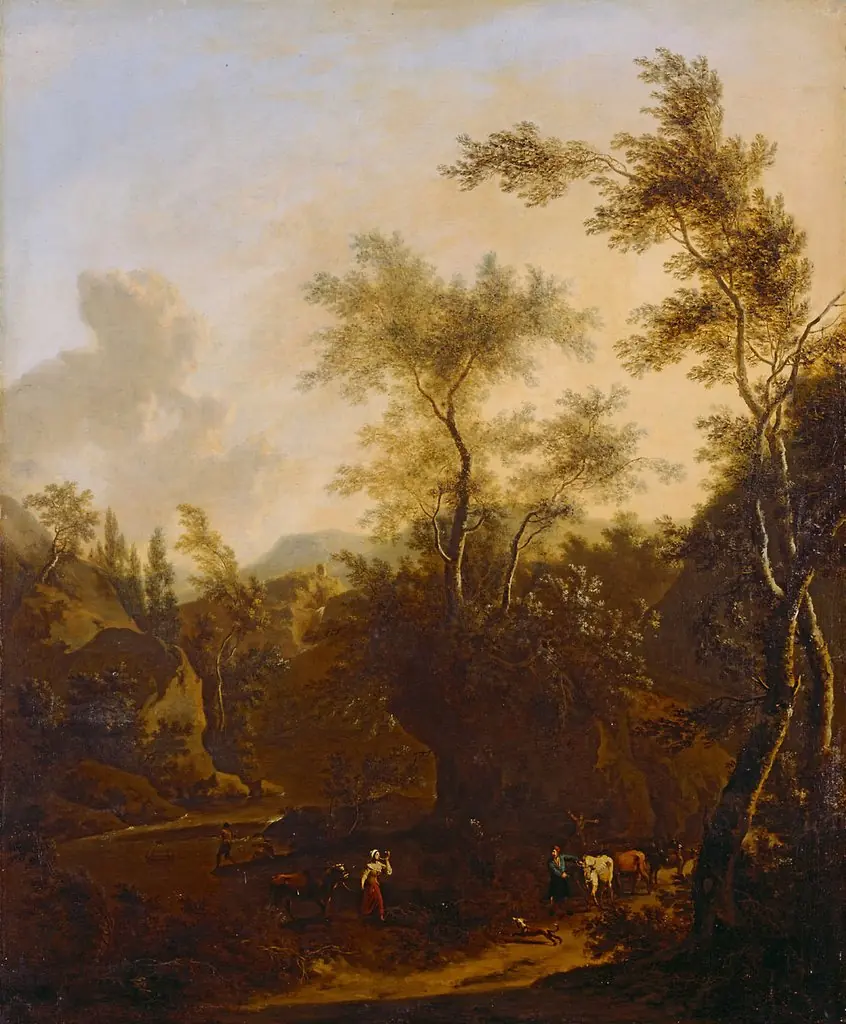 Landschaft mit Hirten und Herde
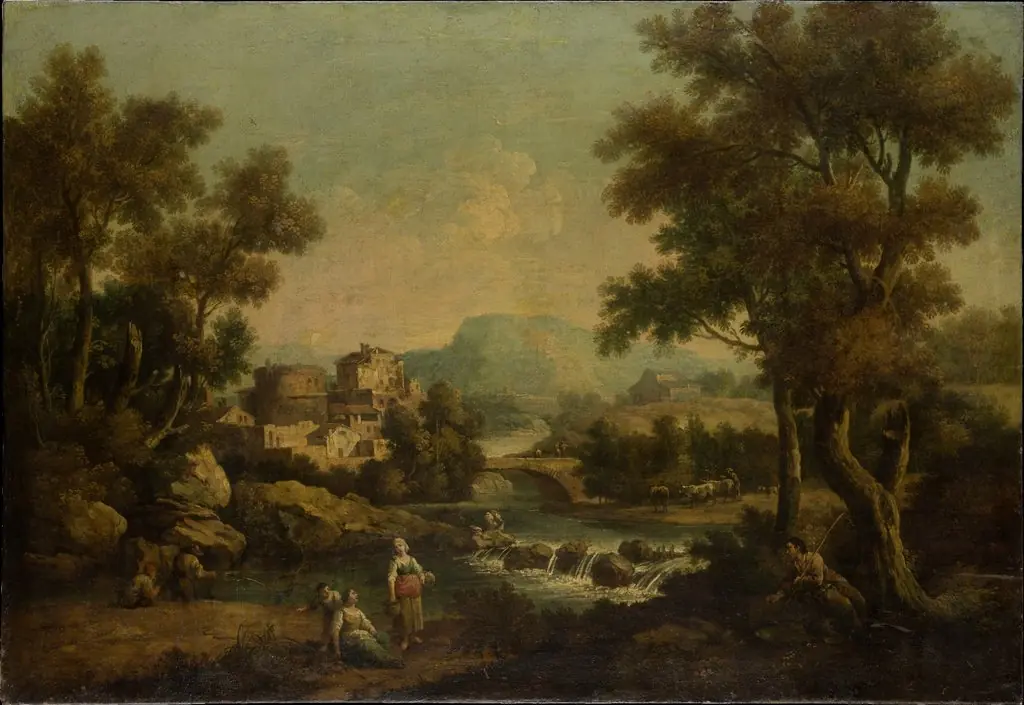 Italian Landscape with a Mountain Stream
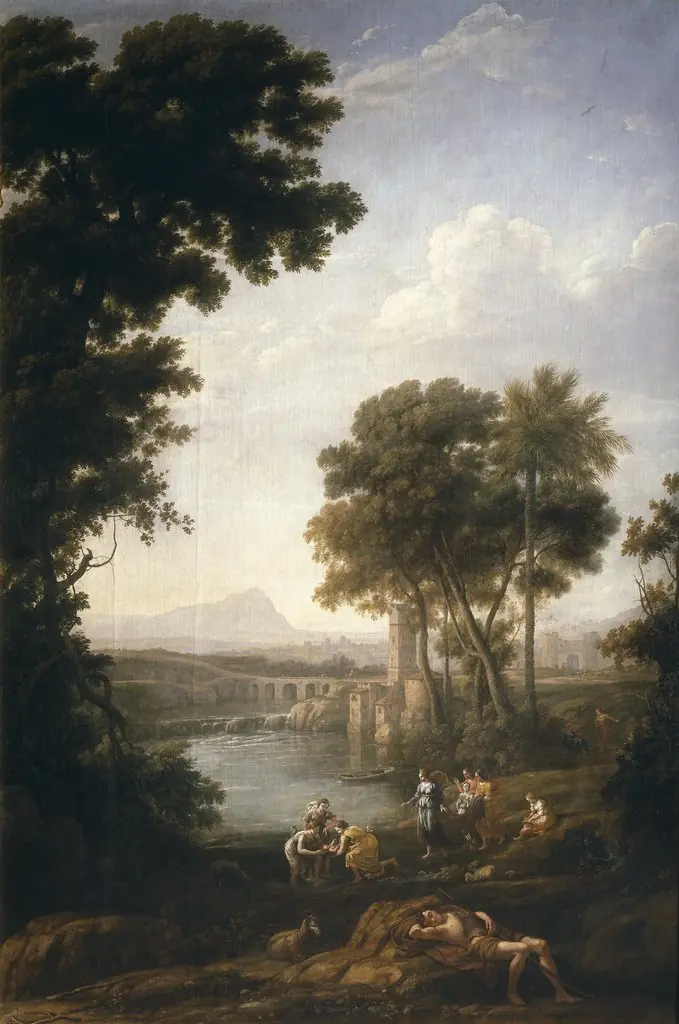 Landscape with the Finding of Moses
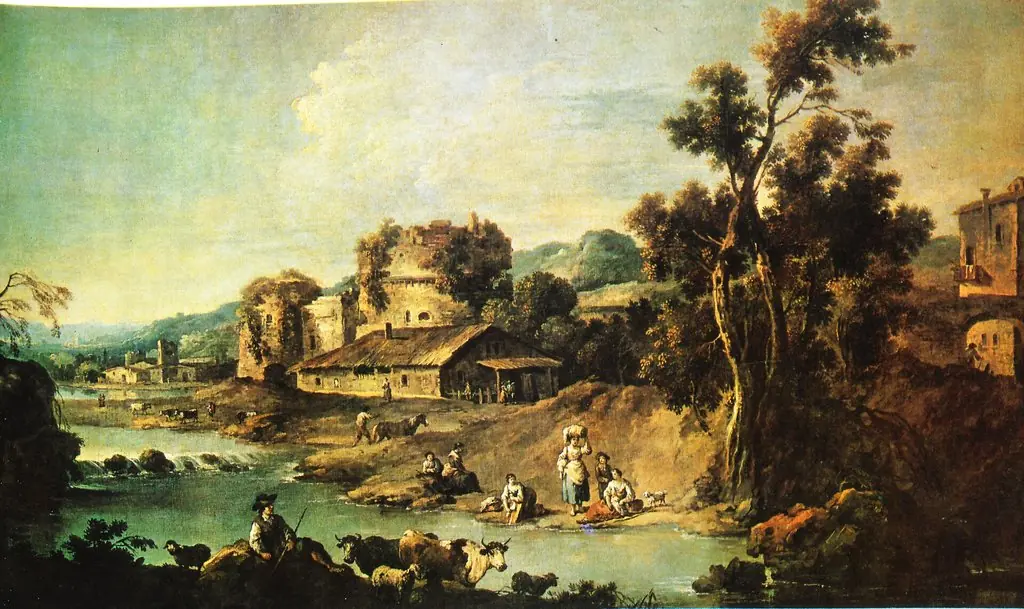 Landscape with a River
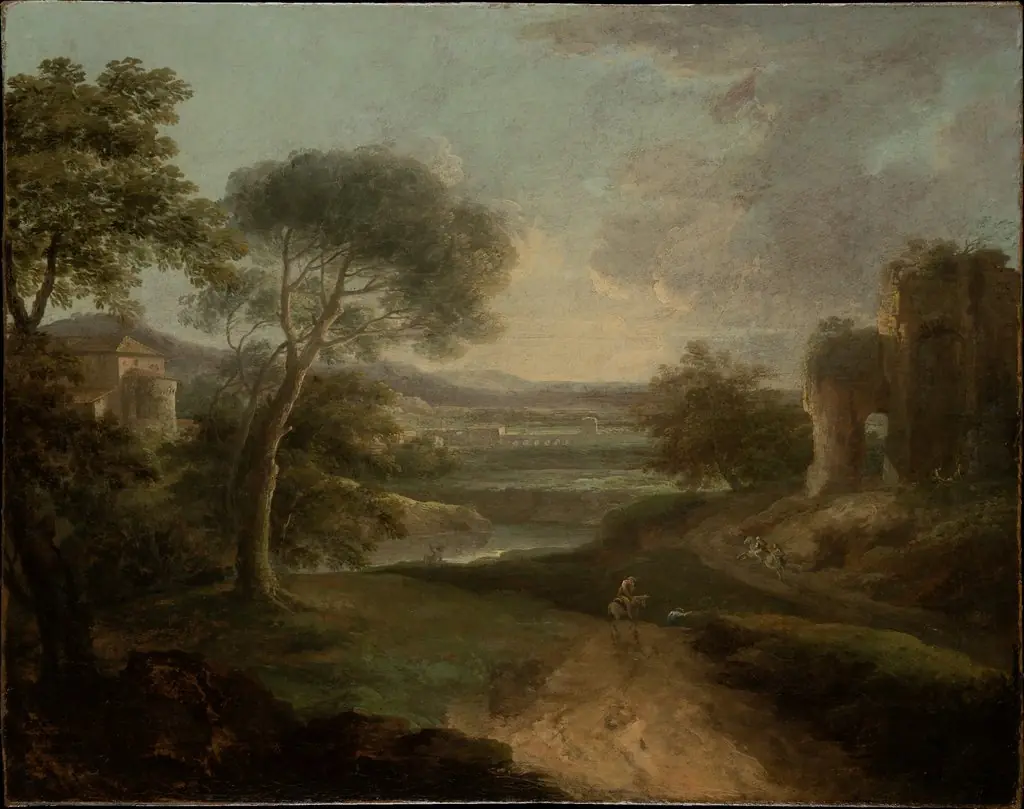 Landscape near Rome
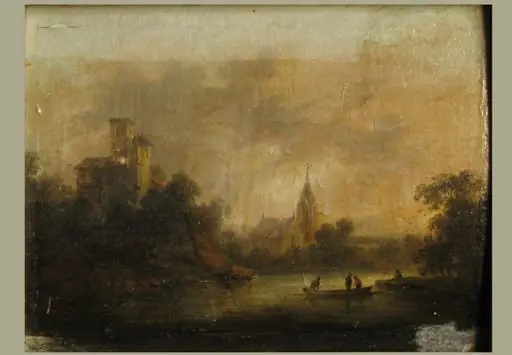 Peisaj cu râu și în stânga castel cu ruine. Pandant: Peisaj cu râu și în dreapta castel cu ruine
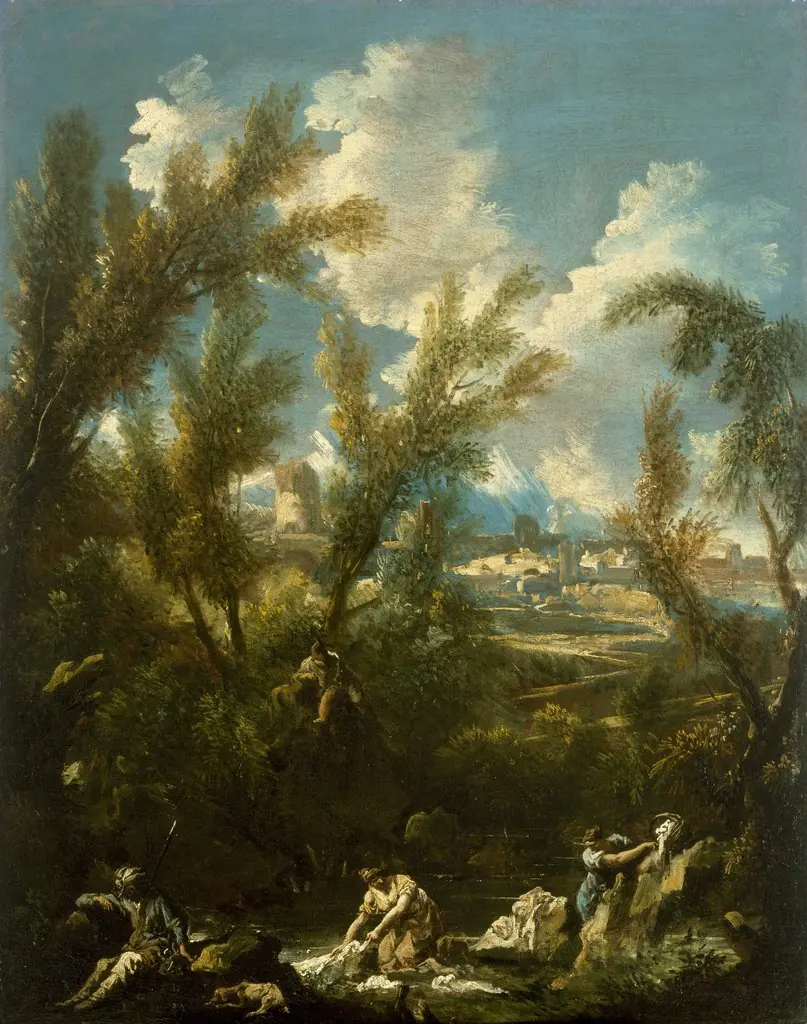 Landscape with Washerwoman
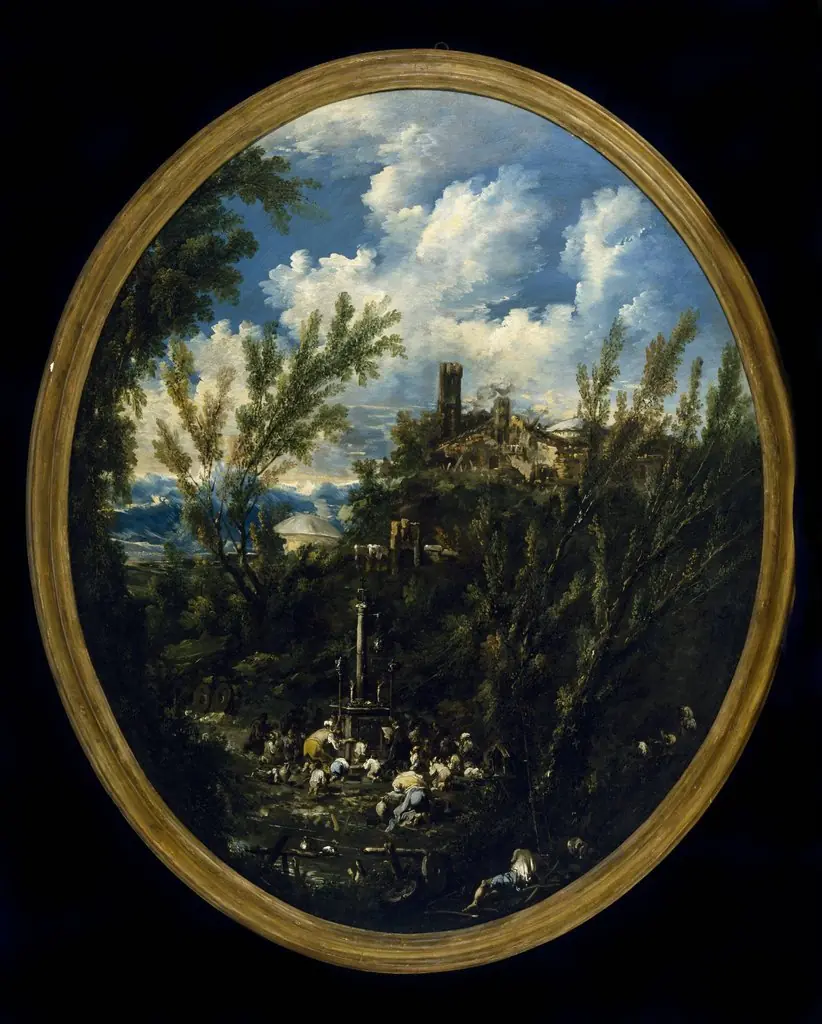 Worshippers at a Shrine in a Mountainous Landscape
 Landscape with Hermit, Pilgrim and Peasant Woman