Artwork
Liuva I
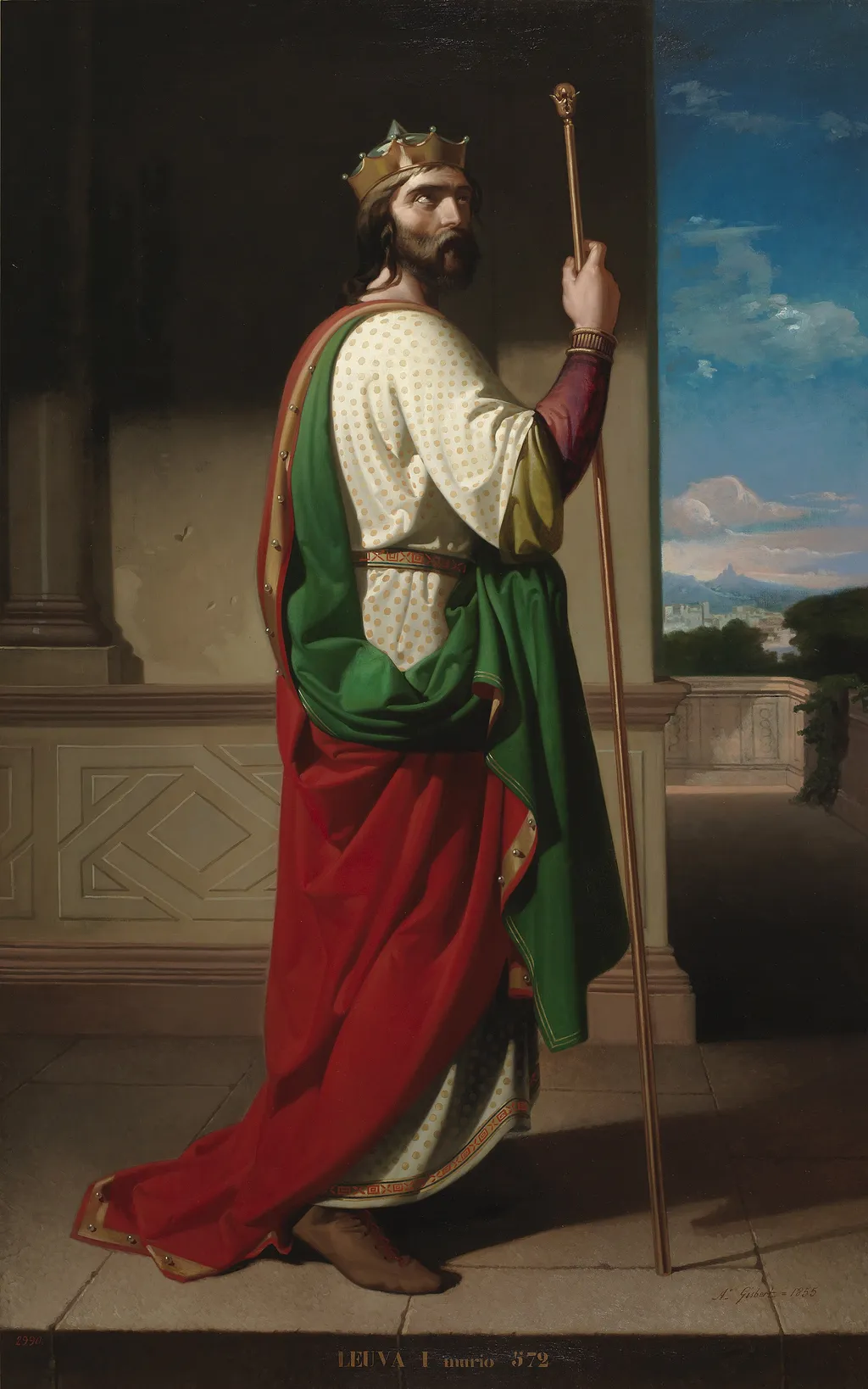
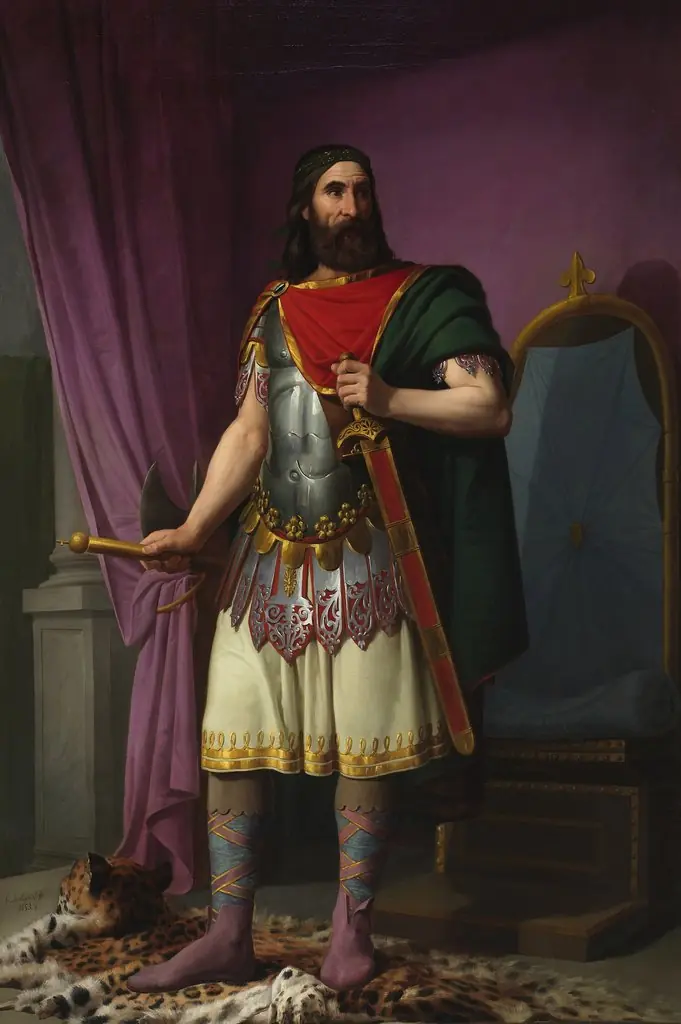
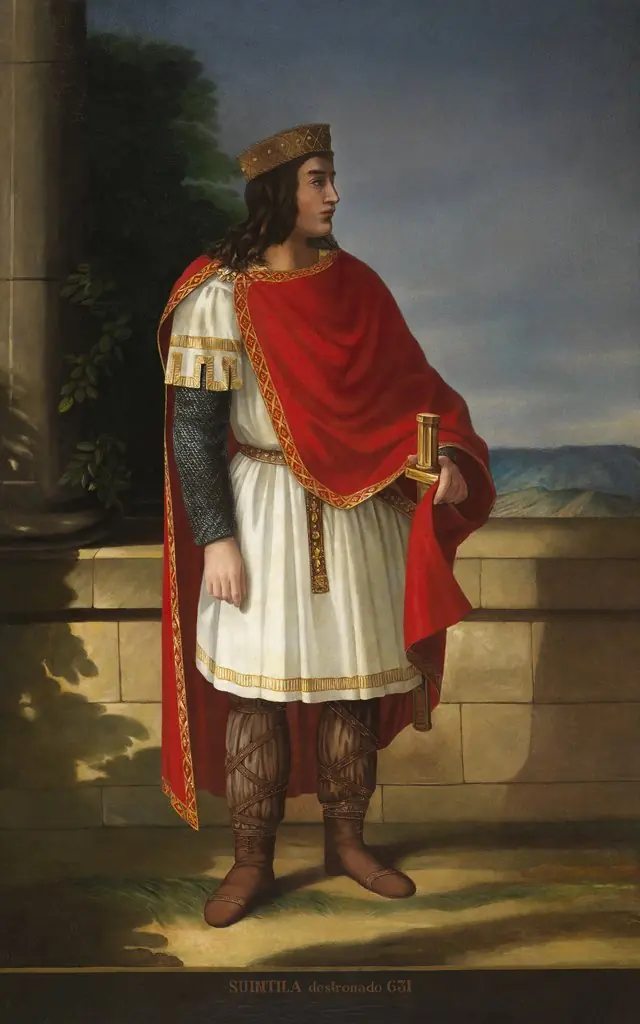
Liuva I is an oil painting by Antonio Gisbert. It dates from 1855 and is held in the collection of the Museo del Prado.
About this work
Overview
Liuva I, an 1855 oil painting by Antonio Gisbert Pérez, portrays the Visigothic king Liuva I in a symbolic pose, combining realistic and romantic elements to convey political themes.
Subject & Meaning
The subject, Liuva I, is depicted holding regal attributes—a crown, sceptre, and weapon—embodying power and authority. The composition aligns with Gisbert's practice of creating historically charged scenes that often supported liberal causes.
Technique & Style
Gisbert employed chiaroscuro to achieve a three-dimensional effect, with pronounced light and shadow accentuating the king's face and attire. The work exemplifies the Spanish eclectic school, blending realist techniques with romantic influences.
History & Provenance
Created in 1855, Liuva I is part of the Museo del Prado's collection, reflecting Gisbert's prominence in Spanish art and his tendency to produce works of national historical significance.
Context
Within the broader artistic landscape, Liuva I sits at the intersection of 19th-century realism and romanticism, characteristic of the Spanish eclectic movement. Its political undertones resonate with the liberal ideologies of the time.
Legacy
As one of Gisbert's historical pieces with a political edge, Liuva I contributes to the artist's legacy of blending art with progressive thought, influencing subsequent generations of Spanish artists exploring national identity and social commentary.
Own this work as a print
Artist & collection
Artist
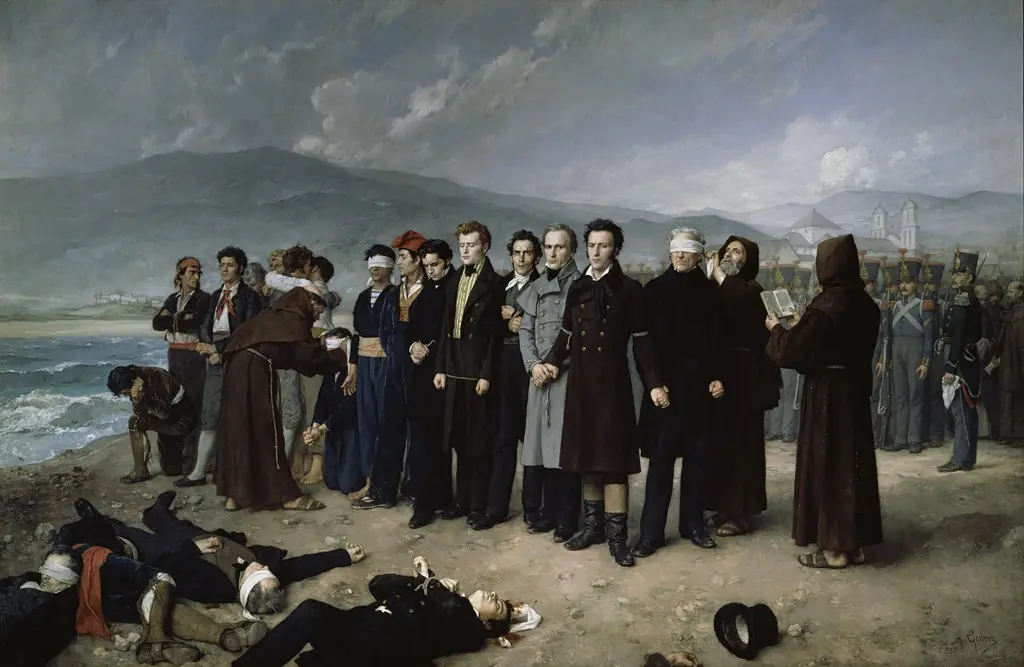
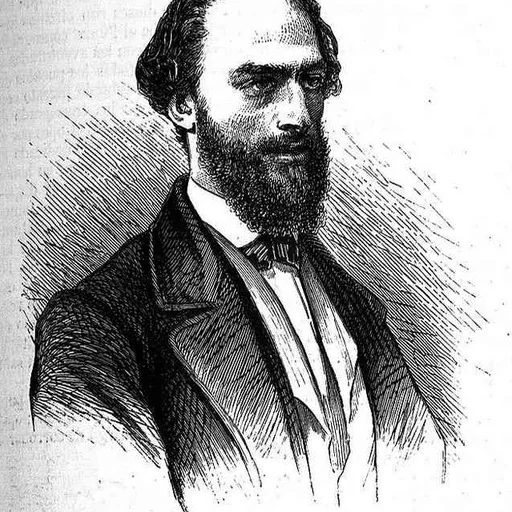
Antonio Gisbert Pérez (19 December 1834 – 27 November 1901) was a Spanish artist situated on the cusp between the realist and romantic movements in art.