Artwork
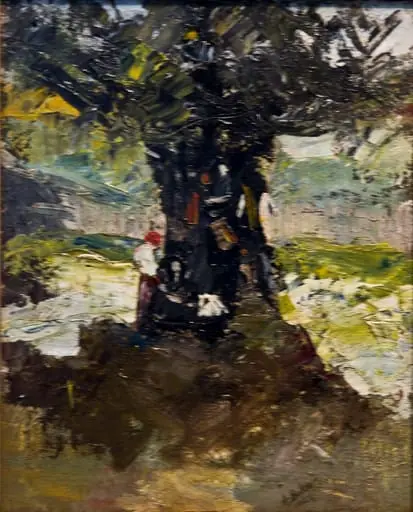
Femeie croșetând
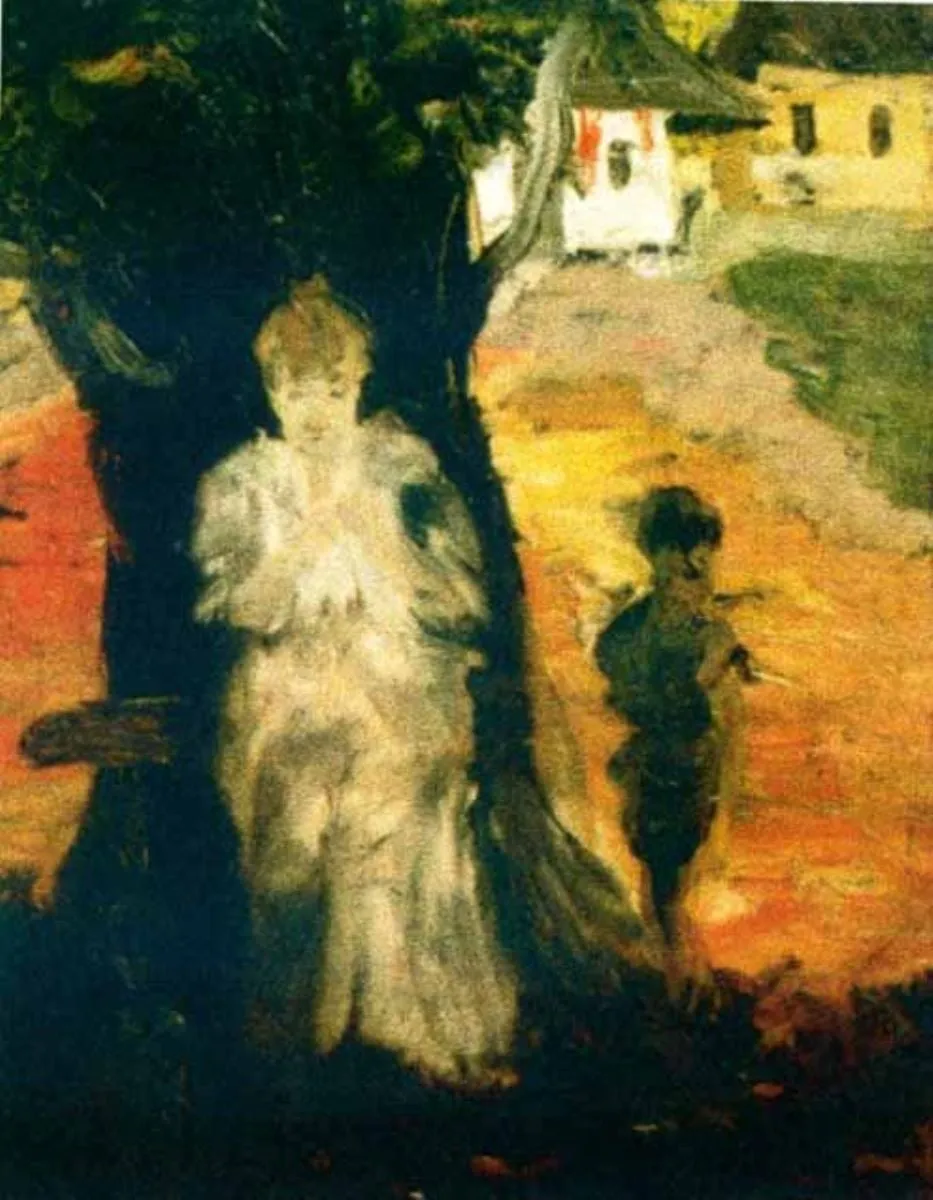
Femeie croșetând is an unspecified painting by Baltazar Apcar (Abgar). It is held in the collection of the Art Museum of Constanta.
About this work
Overview
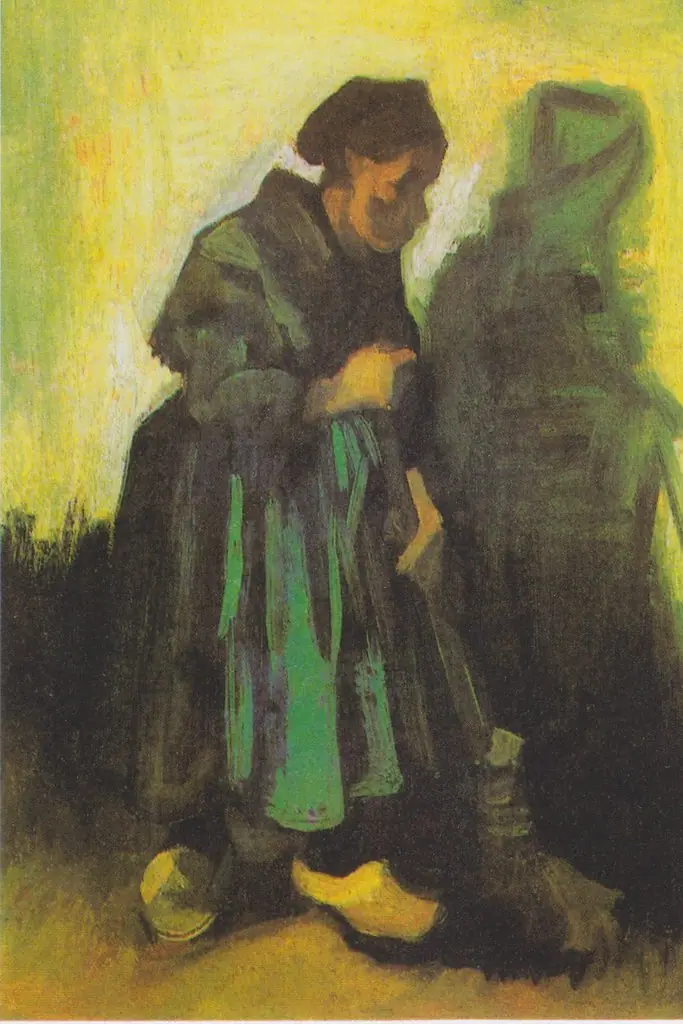
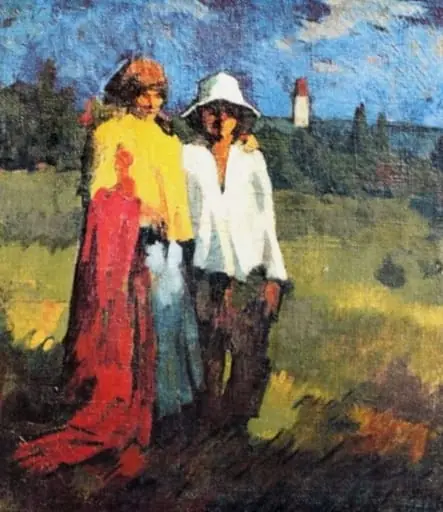
Femeie croșetând is a painting depicting a serene outdoor scene with two figures: a woman in a light-colored dress and dark shawl, and a child in darker attire, turned away. The setting includes a tree, a building with a faded red wall, and surrounding greenery, all rendered in muted, earthy tones with visible, thick brushstrokes.
Subject & Meaning
The subject centers on a woman, presumably crocheting (as implied by the title), accompanied by a child. The woman's soft, nondetailed face and the child's turned back suggest a focus on quiet, everyday life rather than individual portraiture or dramatic narrative.
Technique & Style
The painting features prominent, thick brushstrokes, characteristic of impasto technique, where paint is heavily applied. This, combined with muted colors, gives the work a textured, slightly faded appearance.
History & Provenance
No specific historical or provenance details are provided for Femeie croșetând, leaving its creation date, artist's intentions, and ownership history unspecified.
Context
While the exact context is unclear, the emphasis on everyday life and the use of earthy, muted colors might align with early 20th-century movements focusing on simplicity and the ordinary, though this is speculative without more information.
Legacy
The painting's impact or influence on art history, if any, is not detailed, suggesting it may not be widely recognized as a pivotal work or may require further research to assess its legacy.
Artist & collection
Artist
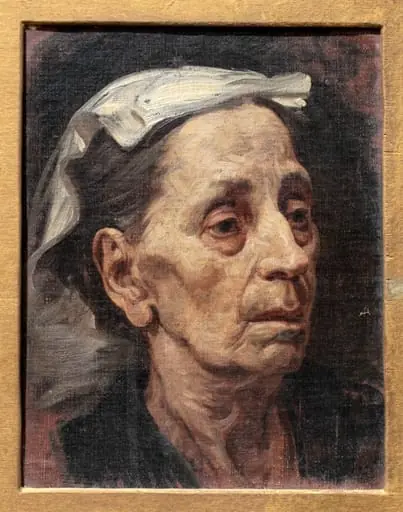
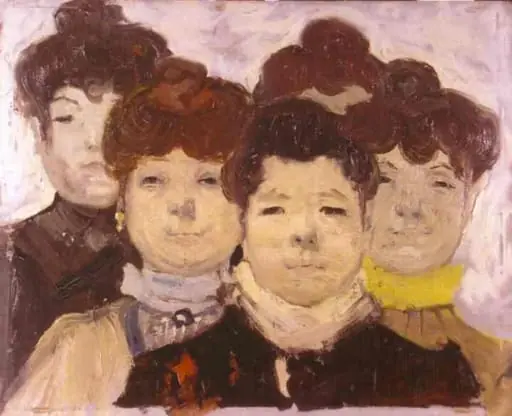
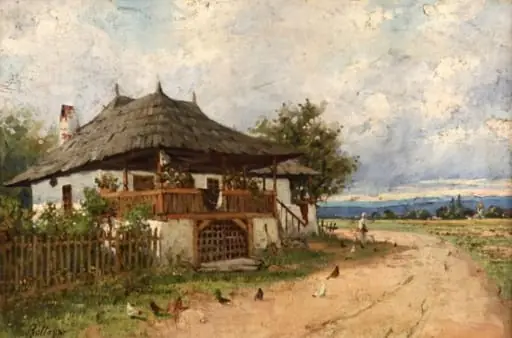
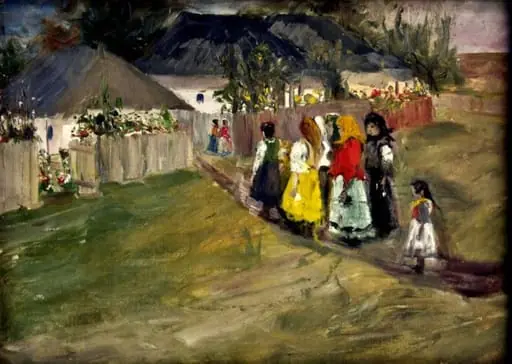
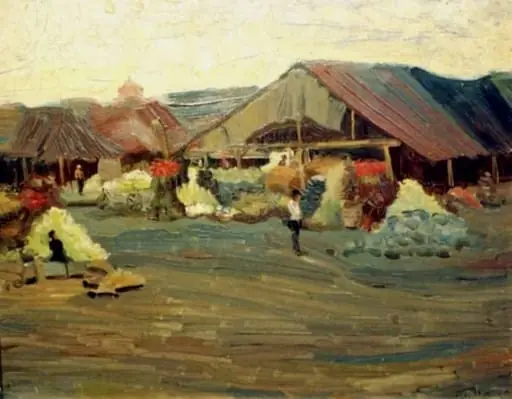
Apcar painted quiet, sunlit town scenes in early 1900s Romania: courtyards, riverbanks, and market squares where people pause for a holiday or chat at the well.