Artwork
Canal aux Martiques
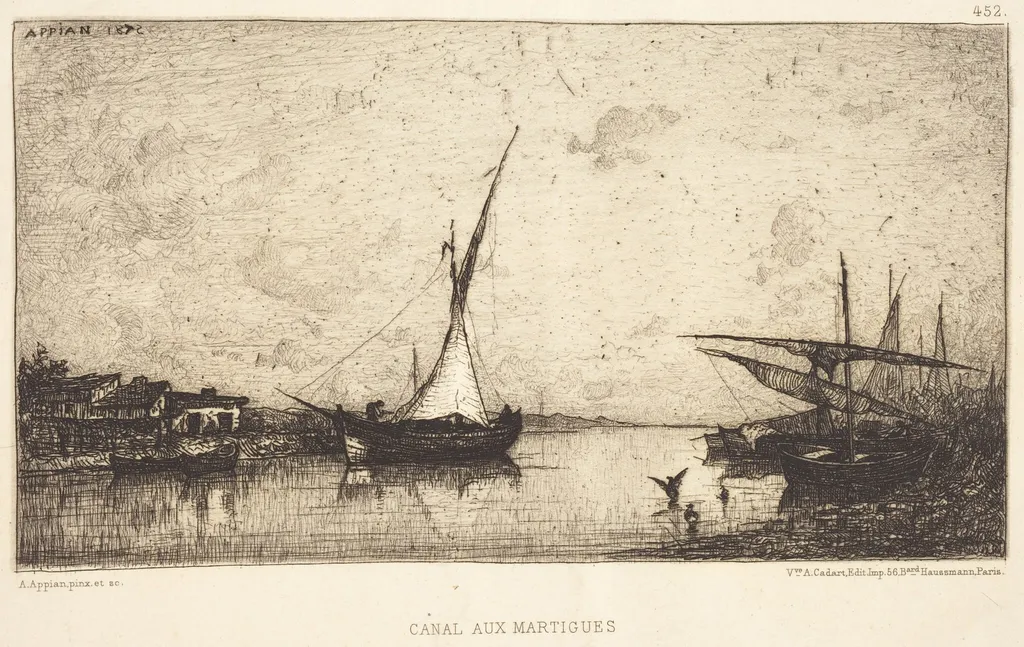
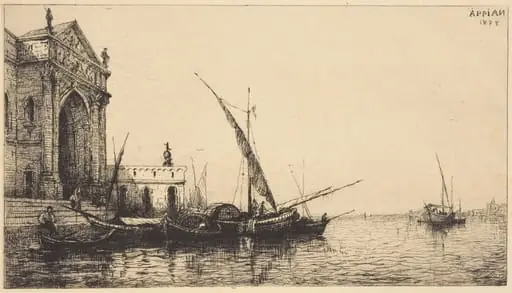
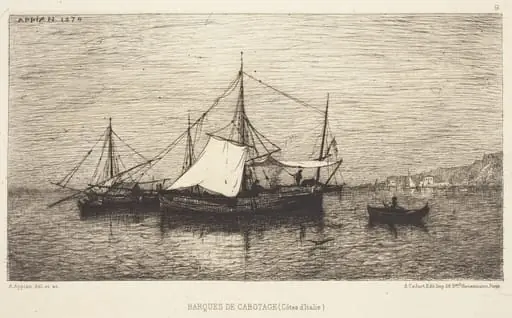
Canal aux Martiques is an ink print by the Romanticist artist Adolphe Appian. It dates from 1858 and is held in the collection of the National Gallery of Art.
About this work
Overview
Created in 1858, *Canal aux Martiques* is an etching by French artist Adolphe Appian, who specialized in landscape printmaking.
Created in 1858, *Canal aux Martiques* is an etching by French artist Adolphe Appian, who specialized in landscape printmaking. The work captures a quiet waterway in rural France, rendered with fine linear detail characteristic of etching. Appian’s interest in natural environments is evident in the composition’s stillness and attention to atmospheric conditions, distinguishing it as a quiet example of 19th-century French print culture.
Subject & Meaning
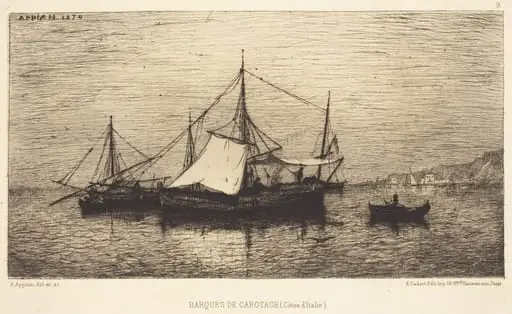
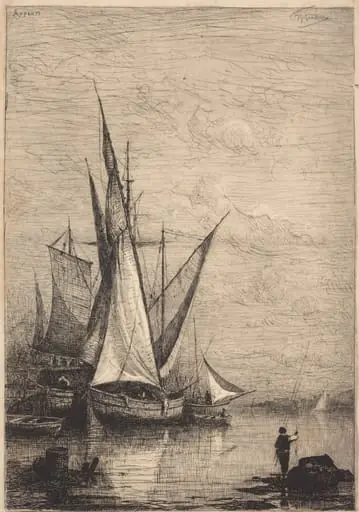
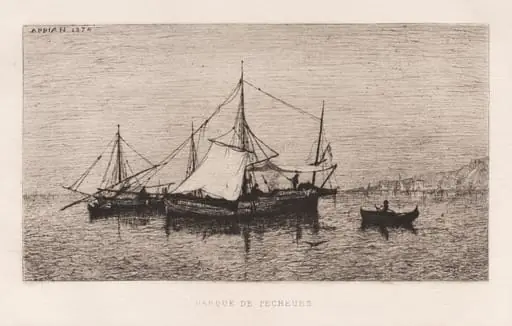
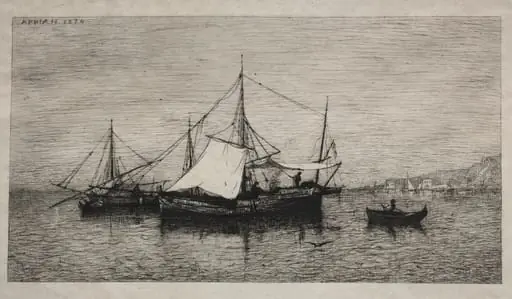
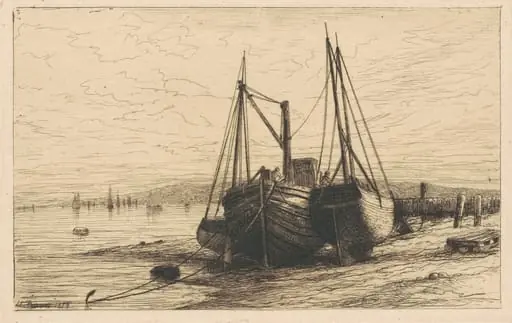
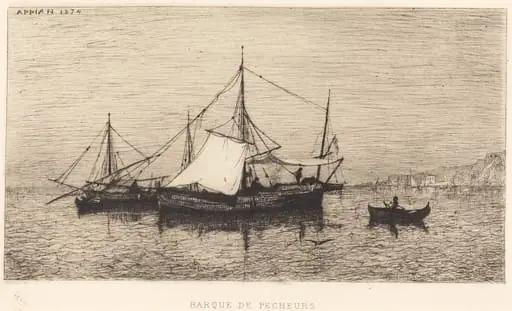
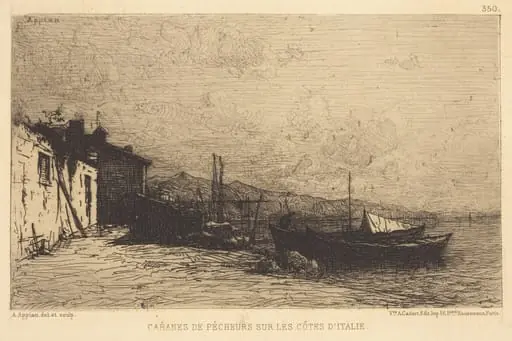
The scene portrays a narrow canal flanked by modest buildings, with two sail-equipped boats gently drifting. One occupies the center, the other lingers to the right, suggesting quiet movement rather than activity. The absence of figures and the muted sky reinforce a sense of solitude. The image conveys no narrative, instead offering a contemplative view of everyday rural waterways as spaces of stillness and reflection.
Technique & Style
Appian employed etching to achieve subtle tonal gradations and delicate line work. The water’s surface is rendered with fine horizontal strokes that mirror the boats and sky, enhancing spatial depth. Clouds in the upper register are suggested through soft, irregular plate tone, while architectural forms are simplified into clean contours. The technique prioritizes mood over detail, aligning with the quiet realism of his landscape approach.
History & Provenance
The print was made during Appian’s active period in the mid-19th century, when he focused on etching as a primary medium. While specific ownership records are not widely documented, the work aligns with his broader output of rural French scenes, many of which circulated among collectors of prints. It reflects his commitment to printmaking as a means of documenting the French countryside outside urban centers.
Context
In 1858, France saw growing interest in landscape printmaking as artists moved away from grand historical subjects. Appian’s work participated in this shift, emphasizing ordinary places over dramatic events. Etching allowed for intimate, reproducible images that appealed to middle-class collectors seeking accessible art rooted in nature and daily life, contrasting with the more monumental styles of academic painting.
Legacy
Appian’s etchings, including *Canal aux Martiques*, contributed to a quieter tradition of French landscape printmaking that valued observation over spectacle. Though less known than contemporaries like Daumier or Delacroix, his work remains a quiet reference in studies of 19th-century print culture, illustrating how technical precision could evoke atmosphere without theatricality.
Artist & collection
Artist
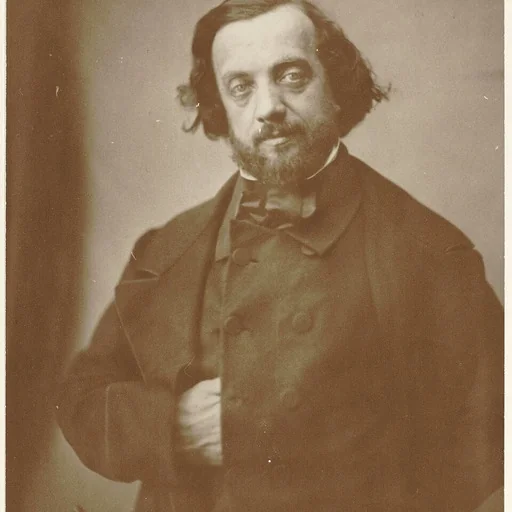
Adolphe Appian (born as Jacques Barthelemy Adolphe Appian; 28 August 1819 – 29 April 1898) was a French landscape painter and etcher.