Artwork
Imagines Veteris ac Novi Testamenti a Raphaele
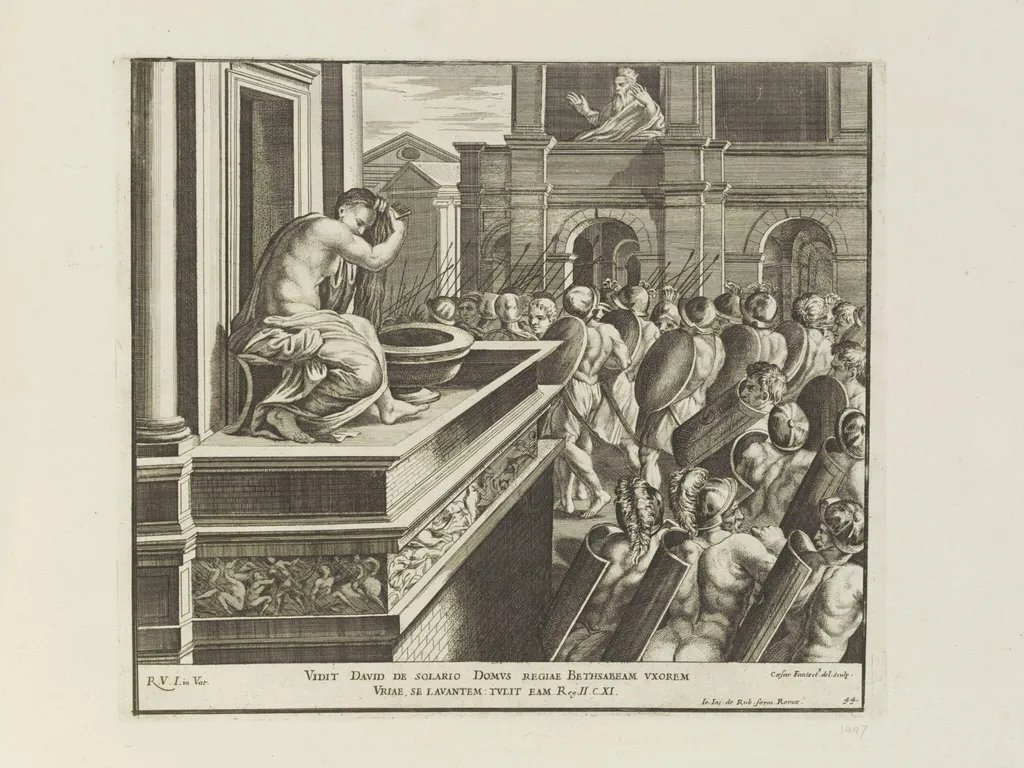
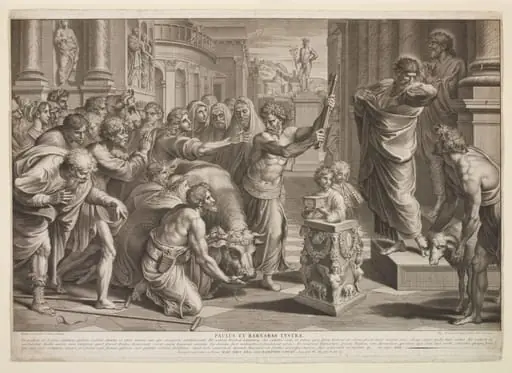
Imagines Veteris ac Novi Testamenti a Raphaele is a print by Pietro Aquila. It dates from 1650 and is held in the collection of the Victoria and Albert Museum.
About this work
Overview
The image draws from Raphael’s fresco cycle, though the specific biblical narrative depicted here is not immediately clear from the visual elements alone.
This print is part of a series titled “Imagines Veteris ac Novi Testamenti a Raphaele,” produced after designs by Raphael for the Vatican’s Loggie. It was engraved by Pietro Aquila and published in the early 18th century. The image draws from Raphael’s fresco cycle, though the specific biblical narrative depicted here is not immediately clear from the visual elements alone. The print was one of seventeen in the series held by the Victoria and Albert Museum, catalogued as DYCE.1490 to DYCE.1506.
Subject & Meaning
The scene shows a staircase crowded with armored figures ascending in disorder, while a woman calmly pours water from a balcony above. A figure on a distant rooftop gestures outward. Though the inscription references David and Goliath, the imagery does not clearly illustrate that moment. Instead, the composition suggests a moment of tension between divine order and human chaos, possibly alluding to a broader theme of intervention or divine presence amid conflict.
Technique & Style
Engraved by Pietro Aquila, the print employs fine, precise lines to render architectural depth and dynamic movement. The contrast between the stillness of the woman and the flurry of soldiers is heightened through controlled tonal variation and spatial layering. The composition follows Renaissance principles of perspective and figure grouping, adapted to the demands of printmaking, preserving Raphael’s original design while translating it into a reproducible format.
History & Provenance
The print was produced in the early 1700s as part of a commercial series reproducing Raphael’s Vatican frescoes for collectors and scholars. Pietro Aquila, an Italian engraver active in Rome, was known for his detailed reproductions of Renaissance works. The Victoria and Albert Museum holds seventeen prints from this series, acquired through the Dyce collection, indicating their significance in 19th-century art historical study.
Context
The series “Imagines Veteris ac Novi Testamenti” was conceived to disseminate Raphael’s biblical imagery beyond the Vatican walls, catering to a growing interest in classical and religious art among European elites. Though the prints were labeled with scriptural references, their visual narratives often diverged from literal interpretations, inviting viewers to engage with symbolic or allegorical readings rather than straightforward storytelling.
Legacy
These prints helped preserve and circulate Raphael’s compositions during a period when access to original frescoes was limited. Their inclusion in major collections like the V&A underscores their role in shaping 18th- and 19th-century understandings of Renaissance art. Though later scholarship questioned their fidelity to Raphael’s intent, they remain valuable records of how his work was interpreted and reproduced in the print culture of early modern Europe.
Artist & collection
Artist
Pietro Aquila made engravings that copied Raphael’s biblical scenes. In the 1600s he turned Raphael’s frescoes into prints, so people could hang Bible stories on their walls. Look for Imagines Veteris ac Novi Testamenti…

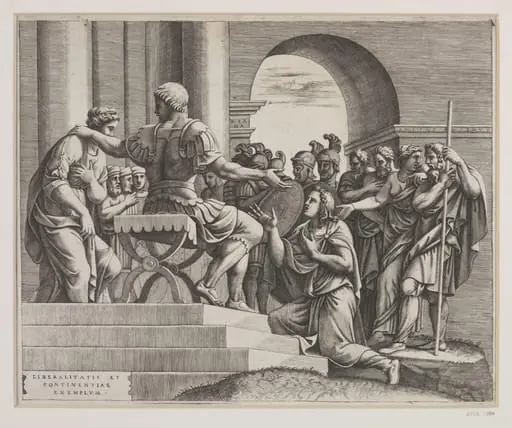 The Continence of Scipio
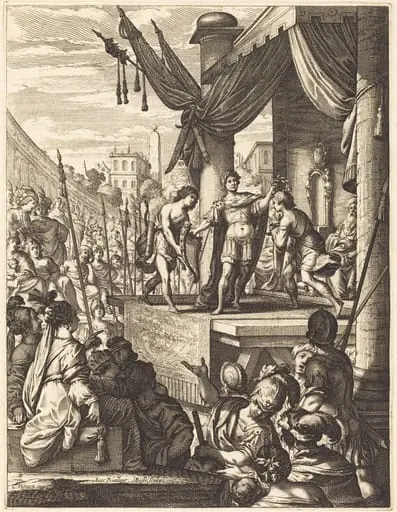 Illustration to Jean Desmarets' "L'Ariane"
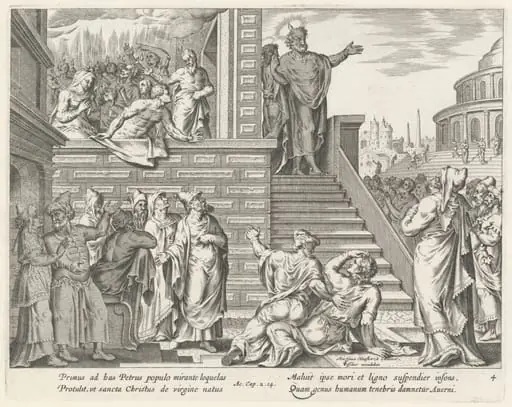 Saint Peter Speaks to the People about Christ
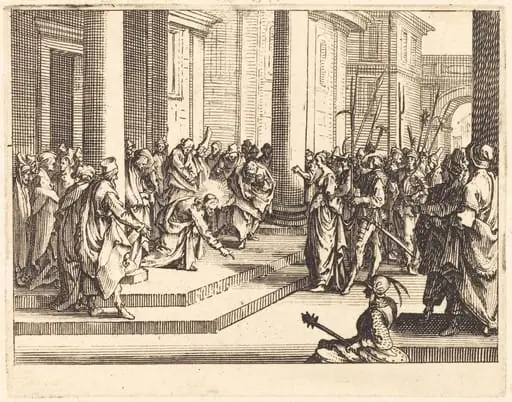 Christ and the Woman Taken in Adultery
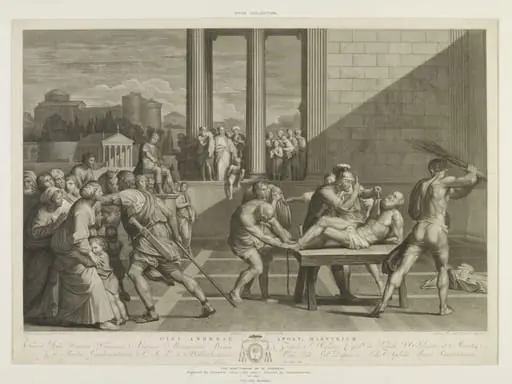 Martyrdom of St. Andrew
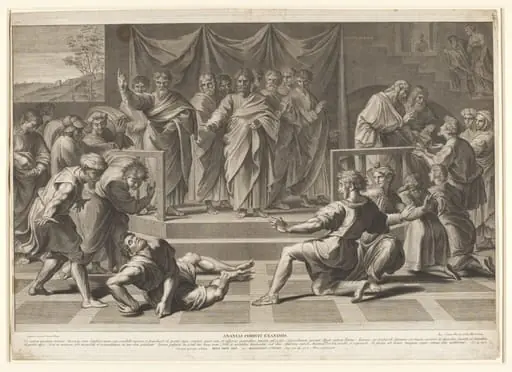 Pinacotheca Hamptoniana
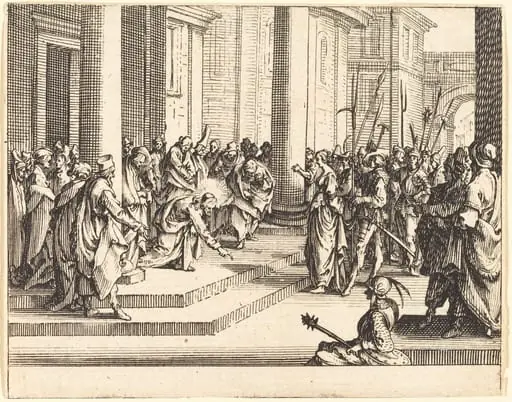 Stoning of Jesus
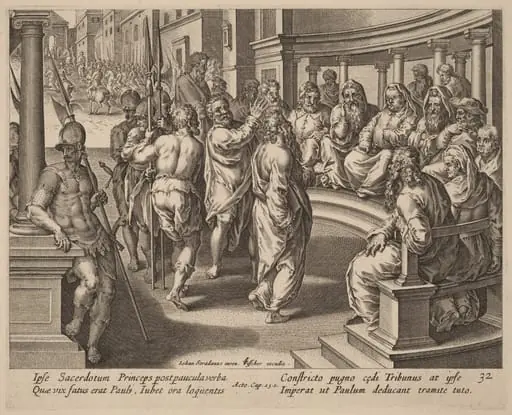 Saint Paul before the High Priest
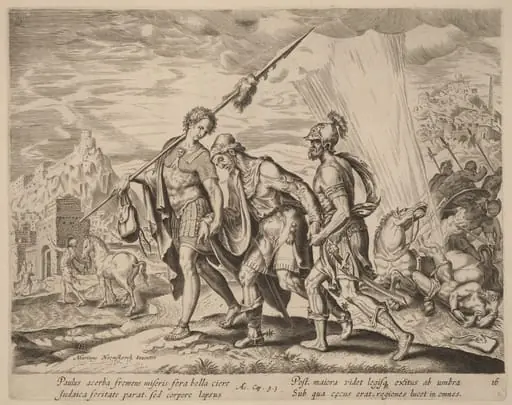 The Conversion of Saint Paul
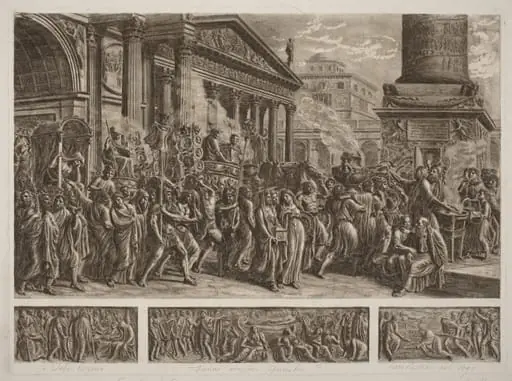 The Ashes of Trajan Carried in a Triumphal Procession
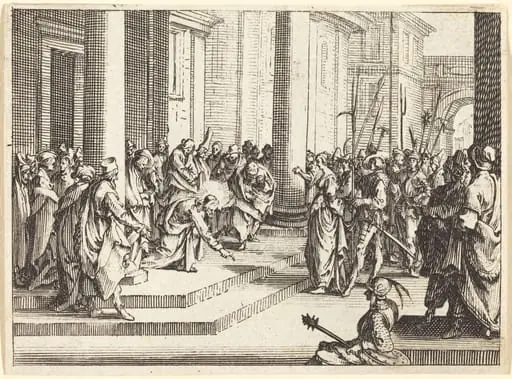 Christ and the Woman Taken in Adultery
 The Sacrifice at Lystra