Artwork
Pinacotheca Hamptoniana
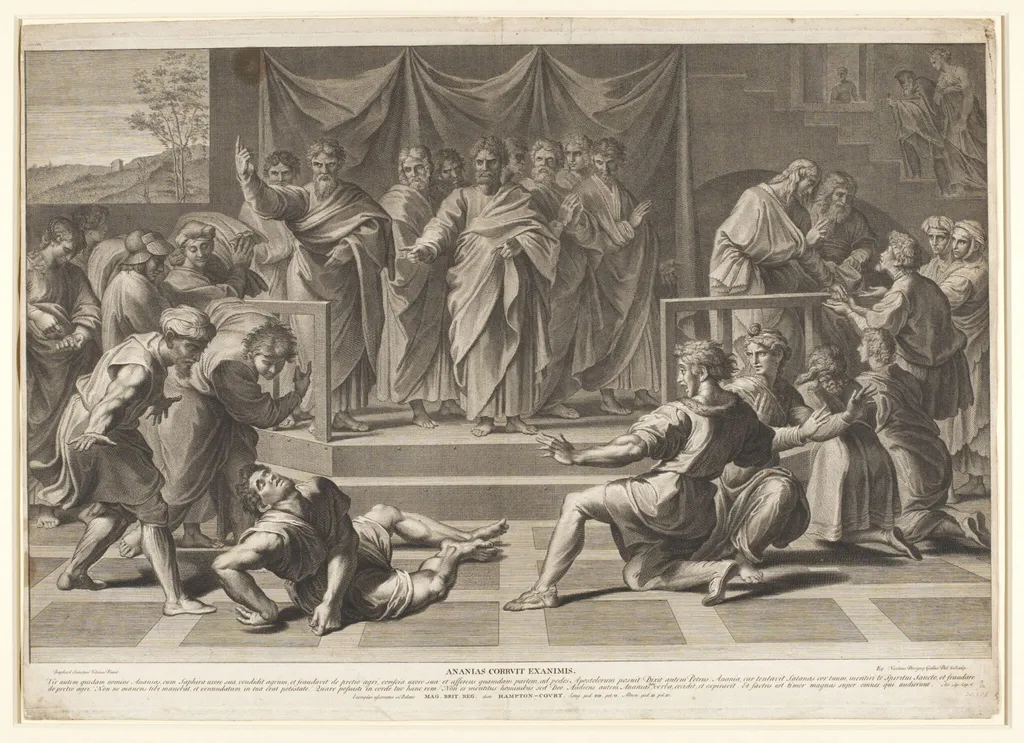
Pinacotheca Hamptoniana is a print by the Baroque artist Nicholas Dorigny. It dates from 1719 and is held in the collection of the Victoria and Albert Museum.
About this work
You can learn more about this style by looking at the movement: Baroque.
This print is called Pinacotheca Hamptoniana.
It was made by Dorigny, Nicholas, in 1719.
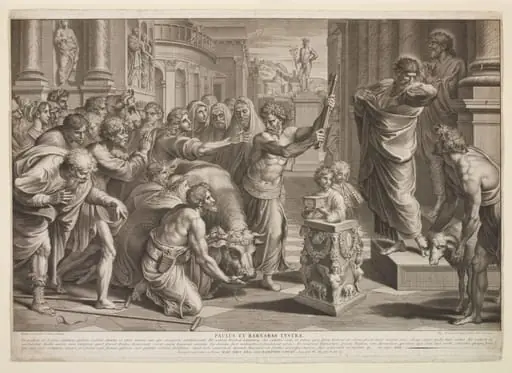
The print is related to the Raphael Cartoons, which are large designs for tapestries that tell stories from the Bible, and this specific image shows a scene where Ananias is struck down.
The scene is an allegory, representing a moment from the Bible.
You can learn more about this style by looking at the movement: Baroque.
Overview
Pinacotheca Hamptoniana is a print created by Nicholas Dorigny in 1719. It is one of a series of prints related to the Raphael Cartoons, large designs for tapestries by the Italian Renaissance artist Raphael.
Subject & Meaning
The print depicts the biblical scene of Ananias being struck down for lying to Saint Peter about his donation to the Church. This scene is part of a larger narrative illustrating the lives of Saint Peter and Saint Paul.
Technique & Style
The print is a reversal of the original cartoon, showcasing Dorigny's skill as an engraver. It exemplifies the Baroque style, characterized by dramatic and emotionally charged scenes.
History & Provenance
The Raphael Cartoons, from which the print is derived, have been on loan to the museum since 1865, belonging to the British monarch. The printmaking tradition surrounding these cartoons spans over 450 years, with Dorigny's work being a significant milestone in this history.
Artist & collection
Artist
This guy made prints that feel like travel souvenirs from another century. He carved religious scenes so crisp they look like photographs—except the robes are a little too dramatic. A friend once pointed out how he…

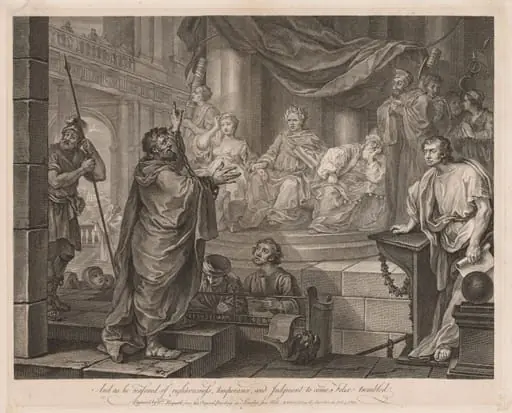 Paul before Félix (Large Plate)
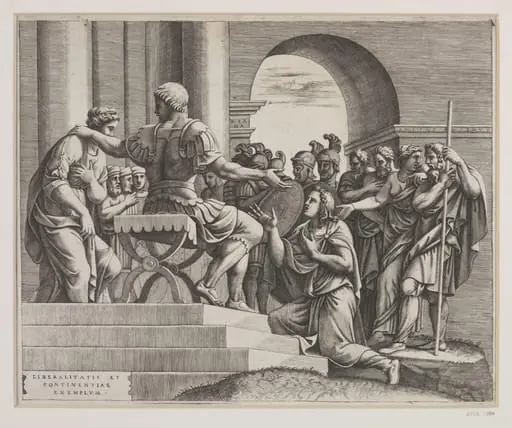 The Continence of Scipio
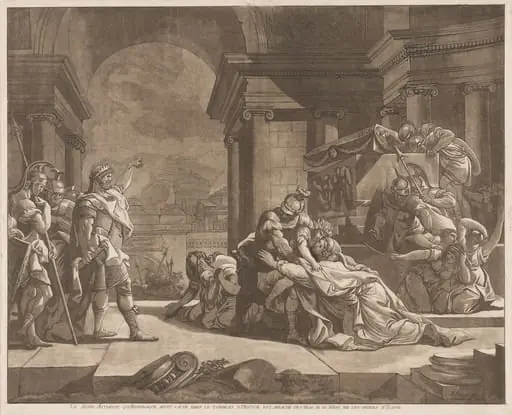 Le Jeune Astianax qu’Andromaque avoit caché dans le tombeau d’Hector est arraché des bras de sa Mere par les ordres d'Ulisse (Young Astianax, who Andromache Hid in Hector's Tomb, is Seized from his Mother's Arms by Ulysses' Orders)
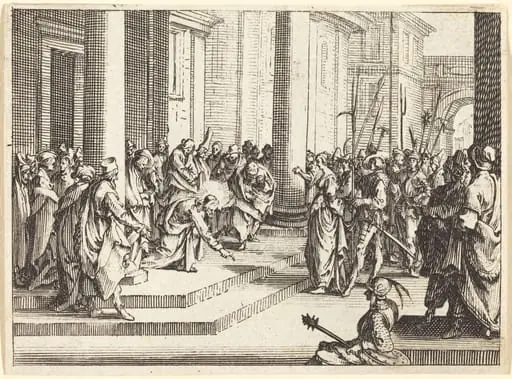 Christ and the Woman Taken in Adultery
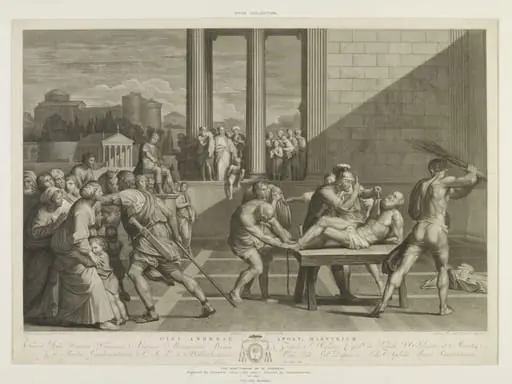 Martyrdom of St. Andrew
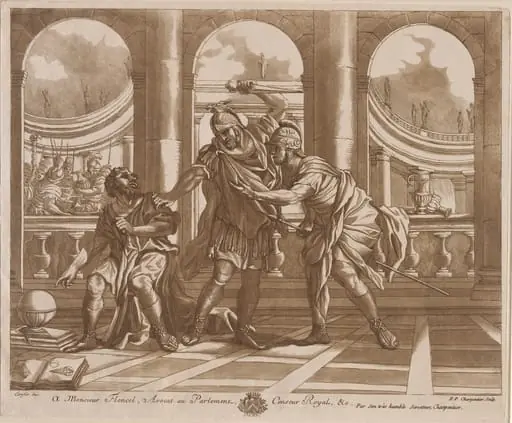 Death of Archimedes
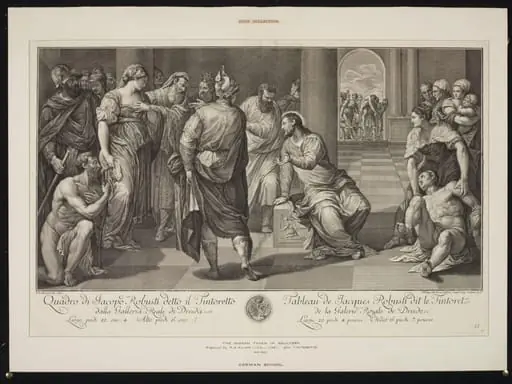 The Woman taken in Adultery
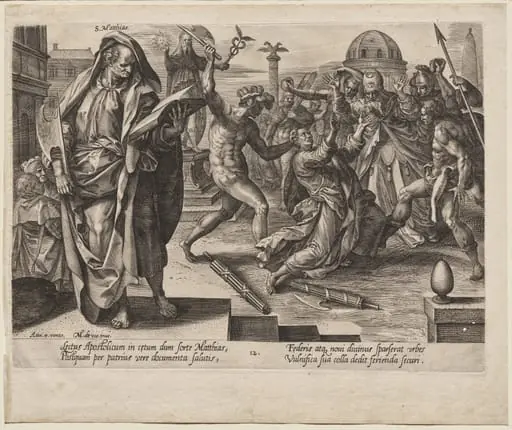 St. Matthias
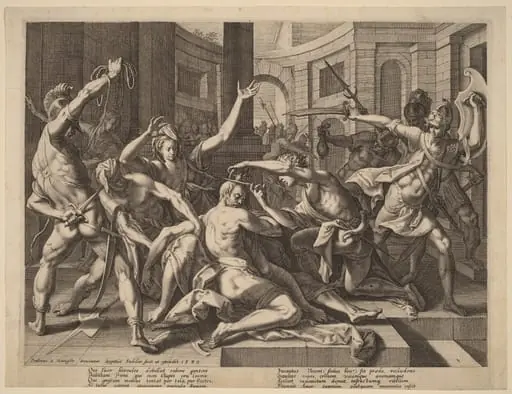 Delilah Cutting Samson's Hair
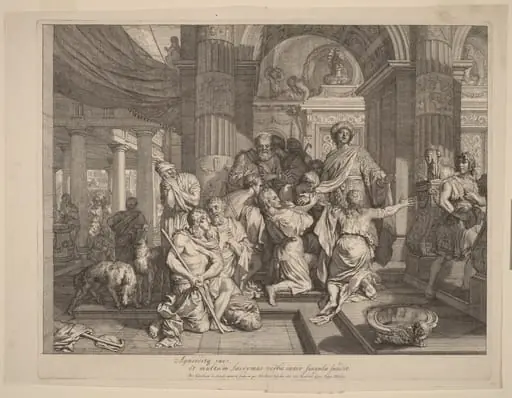 Joseph Reveals Himself to His Brothers