Artwork
The Ashes of Trajan Carried in a Triumphal Procession
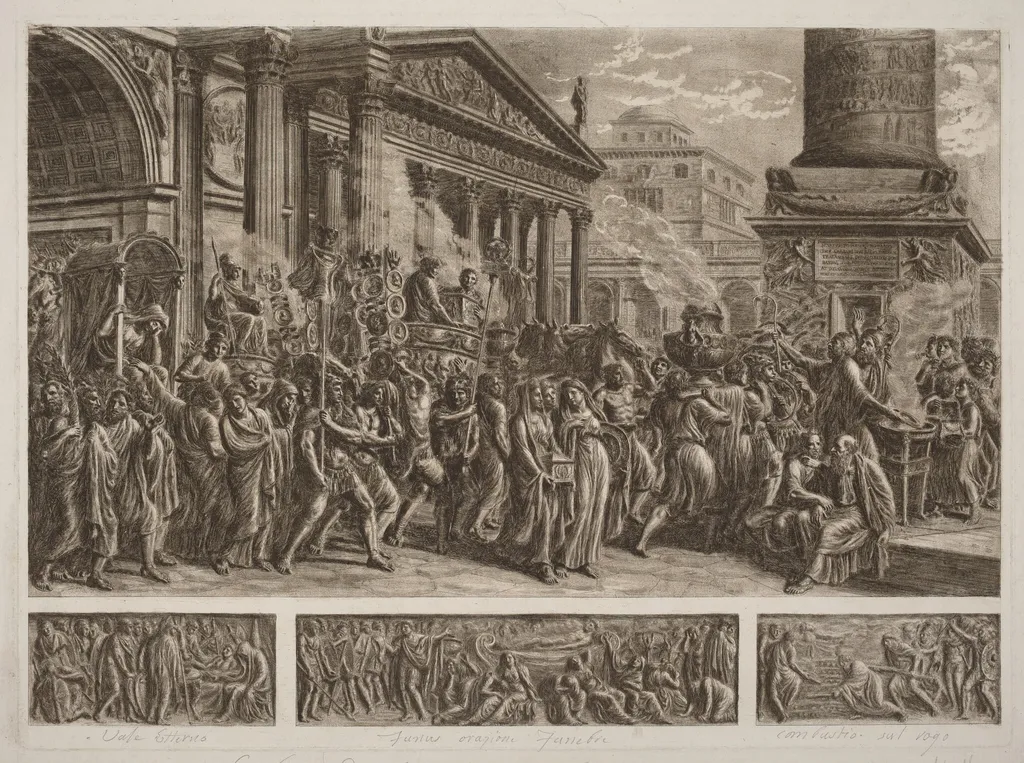
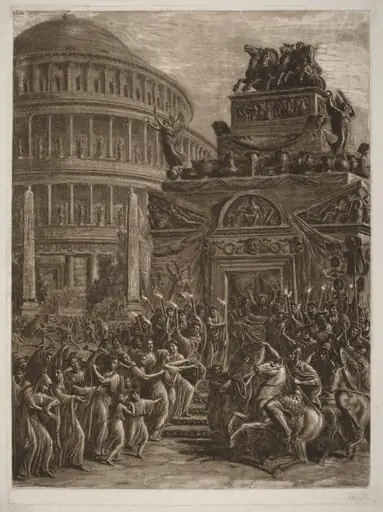
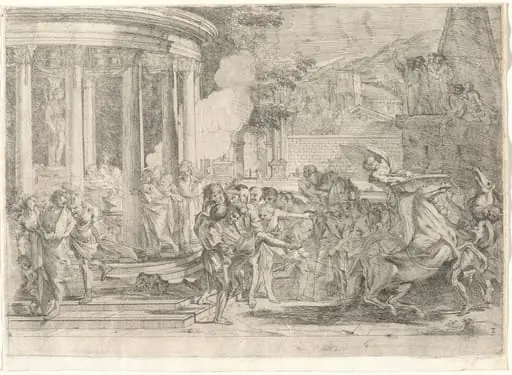
The Ashes of Trajan Carried in a Triumphal Procession is an ink print by the Romanticist artist Luigi Ademollo. It dates from 1806 and is held in the collection of the National Gallery of Art.
About this work
Overview
Luigi Ademollo’s 1806 print, titled *The Ashes of Trajan Carried in a Triumphal Procession*, is an etching and aquatint executed on laid paper.
Luigi Ademollo’s 1806 print, titled *The Ashes of Trajan Carried in a Triumphal Procession*, is an etching and aquatint executed on laid paper. The composition depicts a ceremonial convoy moving through an expansive, classically inspired interior, its participants arrayed in antiquated robes and bearing banners. A richly ornamented chest, presumed to contain the emperor’s ashes, dominates the foreground, while the surrounding architecture is framed by towering columns and sculptural elements.
Subject & Meaning
The work portrays a staged funeral procession that evokes Roman imperial rites, suggesting reverence for the deceased ruler Trajan. The crowd’s varied gestures—some advancing, others supporting the chest—convey a collective solemnity and order, while the dramatic sky visible through the high arches adds a sense of gravitas. The scene functions as a visual narrative of honor and civic duty within a mythicized historical context.
Technique & Style
Ademollo combines traditional line etching with aquatint washes to achieve both precise detailing and atmospheric tonal depth. The laid paper surface enhances the texture of the print, allowing the delicate gradations of cloud and shadow to contrast with the crisp rendering of figures and architectural motifs. The style reflects neoclassical sensibilities, emphasizing symmetry, idealized drapery, and a controlled yet lively composition.
History & Provenance
Created in the early nineteenth century, the print aligns with a period of renewed interest in Roman antiquity across Europe. While specific ownership records are sparse, the work has been catalogued among Ademollo’s prints that were circulated among collectors of neoclassical art. Its survival in museum collections attests to its continued relevance as a document of period printmaking practices.
Artist & collection