Artwork
Gunnersbury House, Brentford
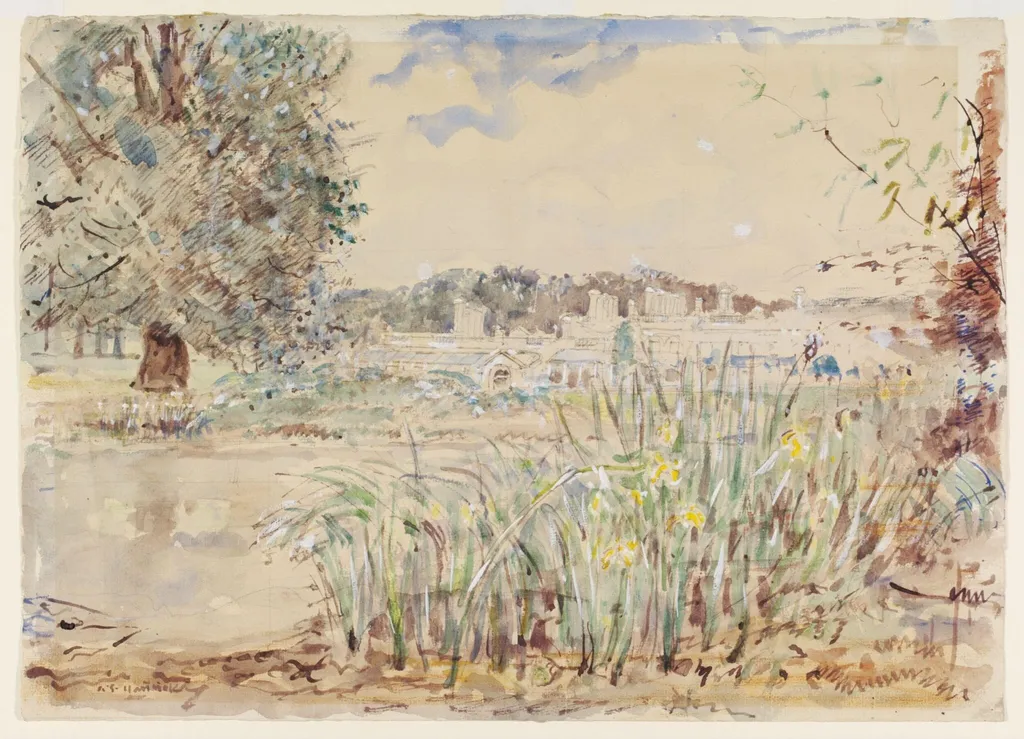
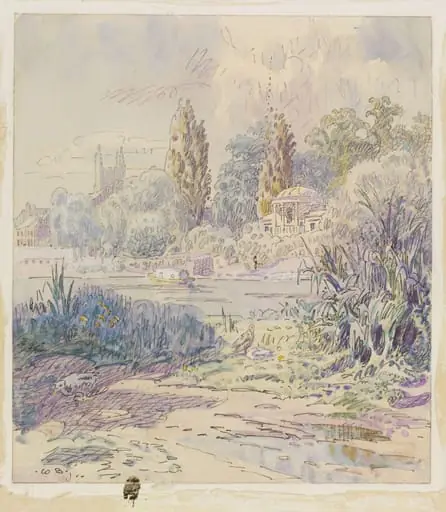
Gunnersbury House, Brentford is a watercolor work on paper by the Impressionist artist Archibald Standish Hartrick. It dates from 1940 and is held in the collection of the Victoria and Albert Museum.
About this work
Overview
Gunnersbury House, Brentford is a 1940 watercolour by Archibald Standish Hartrick, created under the Recording Britain project to document Britain’s landscape and cultural identity during World War II.
Subject & Meaning
The painting captures a serene scene of Gunnersbury House set amidst a natural landscape, subtly conveying concerns over the potential loss of traditional British settings due to wartime threats and societal change.
Technique & Style
Hartrick employed watercolour to achieve a dreamy, ethereal effect, characterized by a soft hazy background, muted colours for the house, and prominent natural elements in the foreground.
History & Provenance
Commissioned by the Committee for the Employment of Artists in Wartime under Sir Kenneth Clark’s leadership, this work is part of a collection of over 1,500 pieces by 97 artists aiming to preserve traditional art and document vanishing landscapes.
Context
Created during WWII, the piece reflects wartime anxieties about bomb damage, invasion, and the erosion of Britain’s visual heritage, while also promoting the preservation of watercolour as a traditional art form.
Artist & collection
Artist
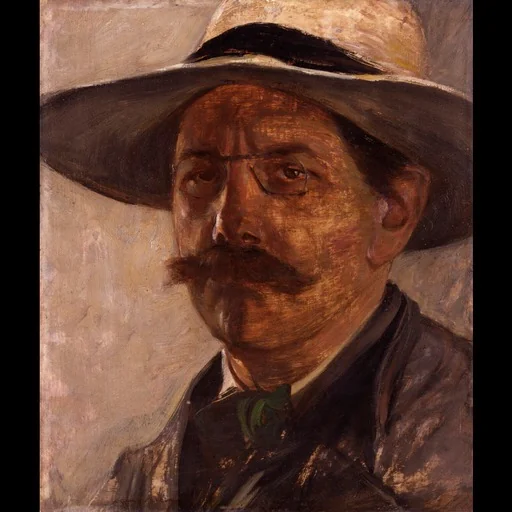
Archibald Standish Hartrick (7 August 1864 – 1 February 1950) was a Scottish painter known for the quality of his lithographic work.

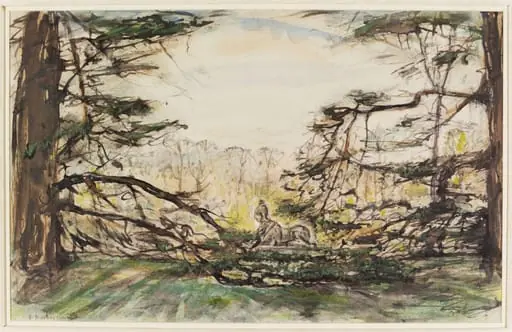 The Cedars, the Sphinx and the spring in the Grounds of Chiswick House
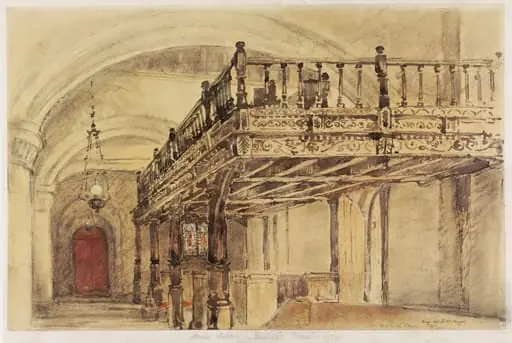 Music Gallery, St. Michael's Church, Bishop's Cleeve
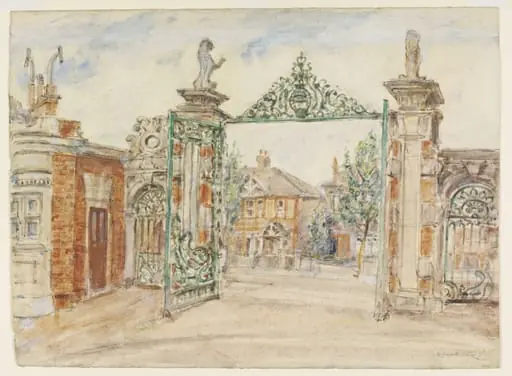 The Gateway, Boston Manor Park, Brentford.
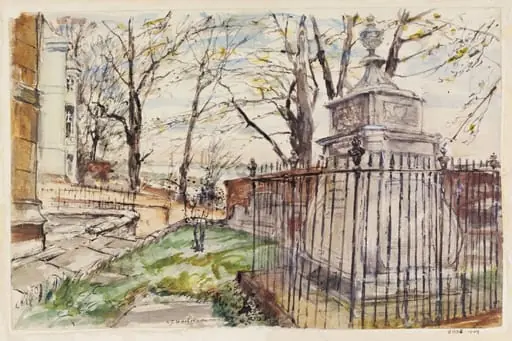 Hogarth's Tomb and Chiswick Reach
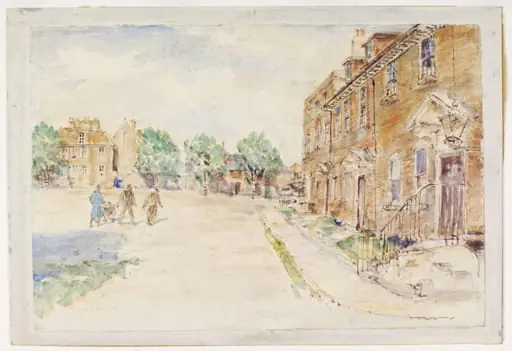 18th century houses at The Butts, Brentford
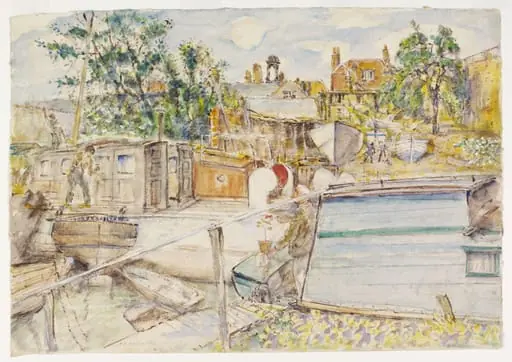 Dock of the Grand Union Canal Co., Brentford
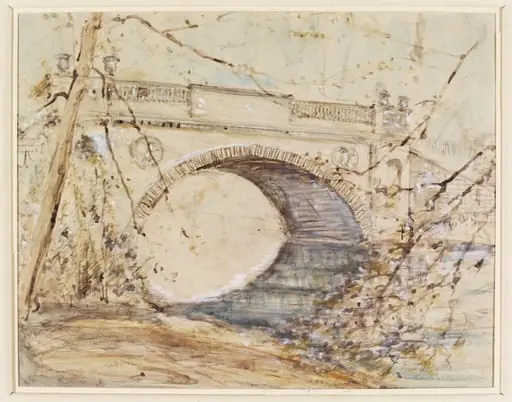 The Bridge in Chiswick House Grounds
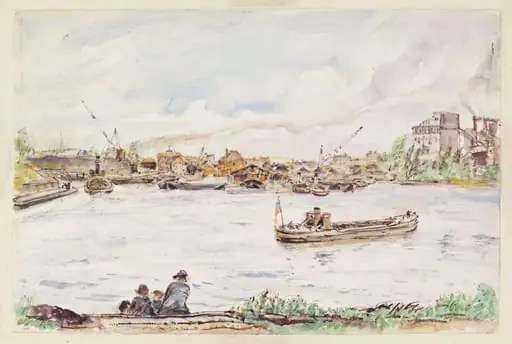 The Thames at Brentford