Artwork
Isleworth
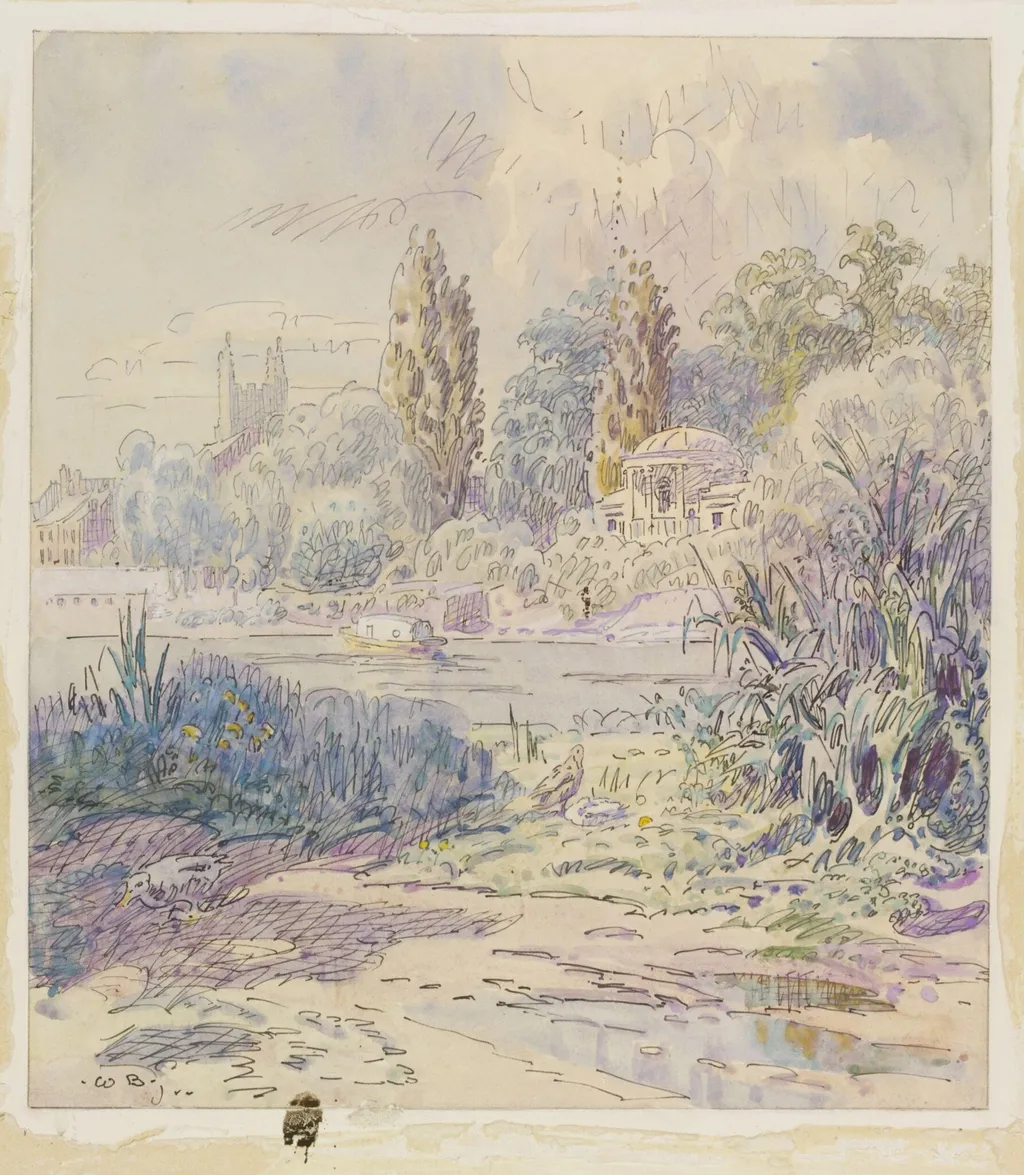
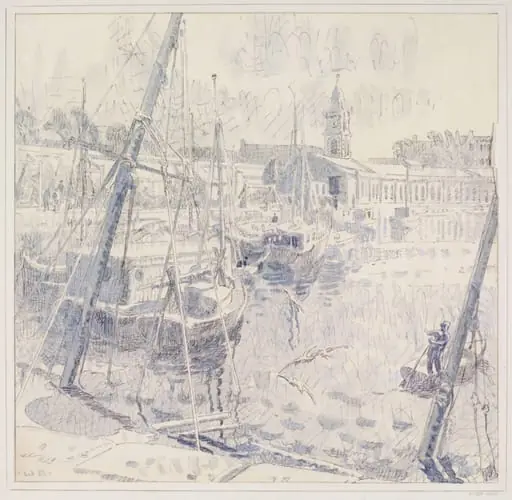
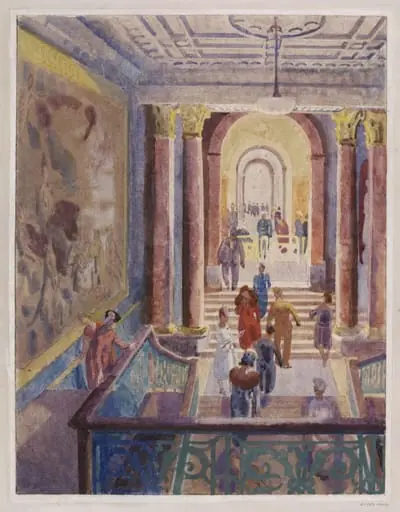
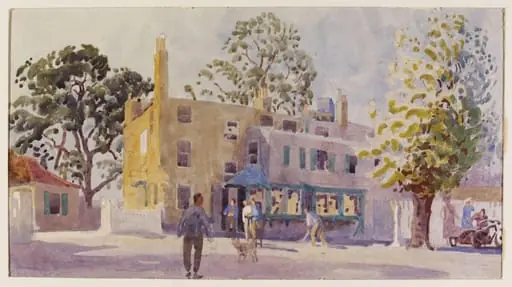
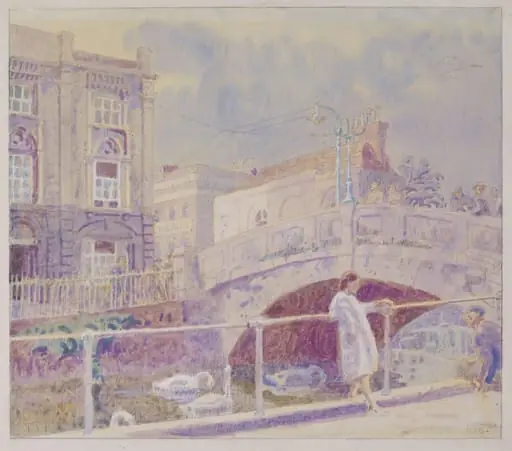
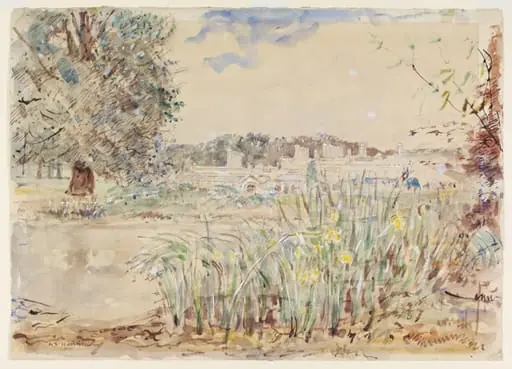
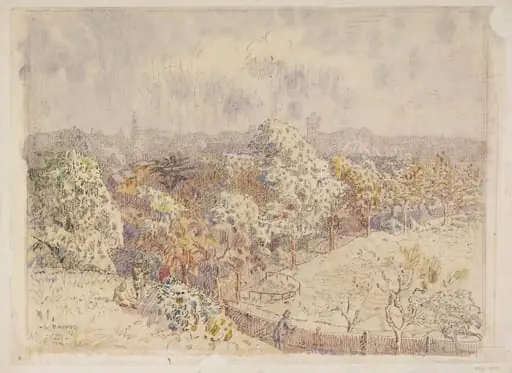
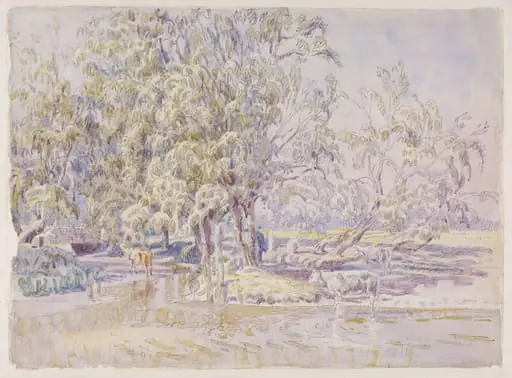
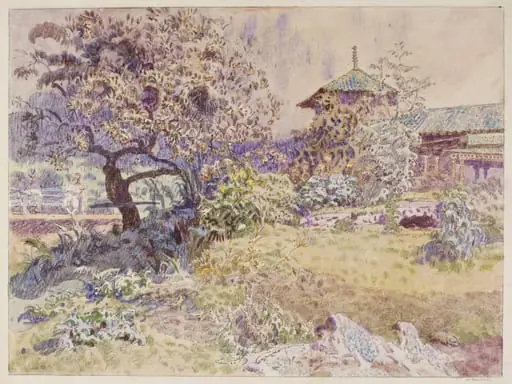
Isleworth is a watercolor work on paper by Bayes. It dates from 1940 and is held in the collection of the Victoria and Albert Museum.
About this work
Overview
Bayes’s work contributes to a broader archive of topographical studies, preserving quiet, unassuming places through intimate, on-site sketches.
Thomas Bayes created this watercolour in 1940 as part of the Recording Britain project, a wartime initiative to visually document landscapes at risk from conflict and modernization. Funded by the Pilgrim Trust and directed by Sir Kenneth Clark, the project enlisted artists to capture scenes of everyday English life. Bayes’s work contributes to a broader archive of topographical studies, preserving quiet, unassuming places through intimate, on-site sketches.
Subject & Meaning
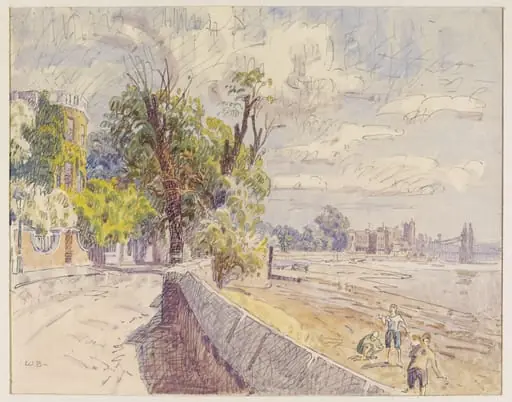
The scene depicts a tranquil riverside in Isleworth, with a small boat nestled among tall reeds and wild vegetation. Distant trees and a faint building suggest the presence of human habitation without dominating the composition. The focus on modest, unremarkable surroundings reflects the project’s aim to honor ordinary places, emphasizing their quiet dignity amid national upheaval and the threat of loss.
Technique & Style
Bayes employed loose, rapid watercolour strokes with diluted pigments to convey immediacy and atmosphere. The foreground—reeds, water, and the boat—is rendered with slightly more definition, guiding the viewer’s gaze inward, while the background dissolves into hazy, minimal forms. The technique prioritizes observation over polish, capturing fleeting light and natural texture with economy and sensitivity.
History & Provenance
Created under the auspices of the Committee for the Employment of Artists in Wartime, this work entered the Recording Britain collection, now held by the Victoria and Albert Museum. It was one of thousands of watercolours and drawings produced between 1939 and 1943, intended as a visual archive. Bayes’s contribution, like others in the series, was acquired directly from the artist during the project’s active phase.
Context
The Recording Britain project emerged as a cultural response to wartime uncertainty, seeking to preserve the visual character of England before it could be altered by bombing or development. Artists were commissioned to travel locally, often working in rural or suburban areas overlooked by grander historical narratives. Bayes’s sketch aligns with this ethos, valuing quiet observation over dramatic spectacle.
Legacy
The Recording Britain collection remains a vital historical resource, offering insight into the English landscape as it existed on the cusp of profound change. Bayes’s watercolour, though modest in scale, contributes to a collective portrait of place and memory. Its preservation ensures that unassuming sites like Isleworth retain a documented presence in the nation’s visual heritage.
Artist & collection
Artist
This artist painted watercolours around London in the 1940s. They captured quiet spots like The Gateway at Royal Naval College, Greenwich, The Garden at York House in Twickenham, and London Dock, Wapping. Each sheet…