Artwork
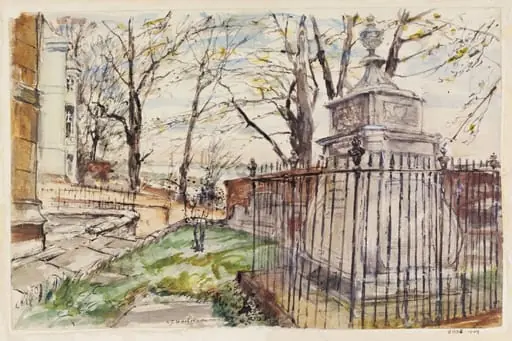
The Cedars, the Sphinx and the spring in the Grounds of Chiswick House
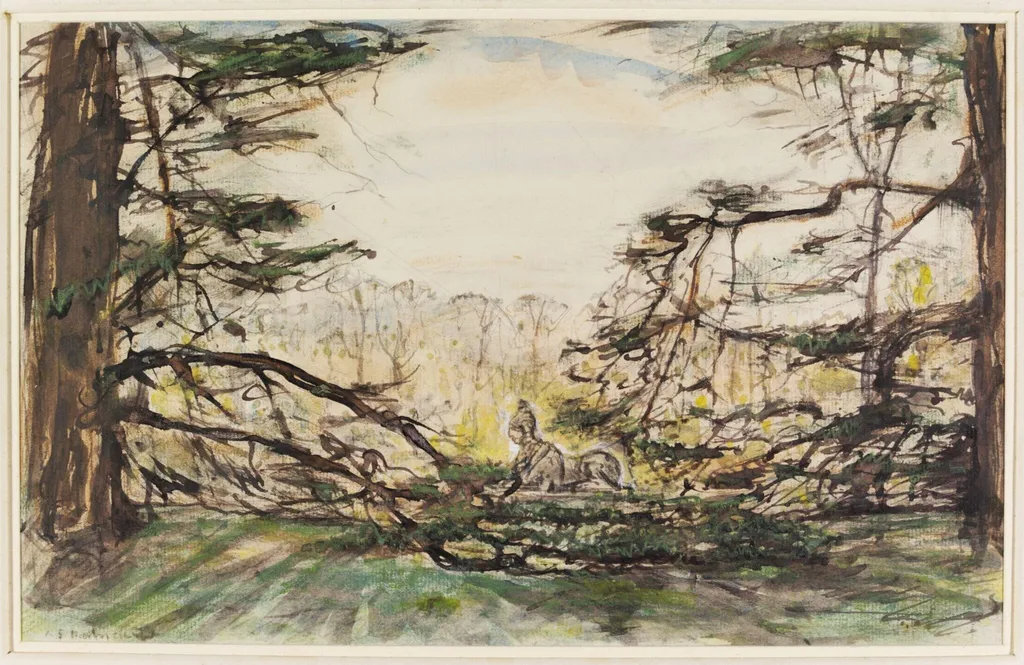
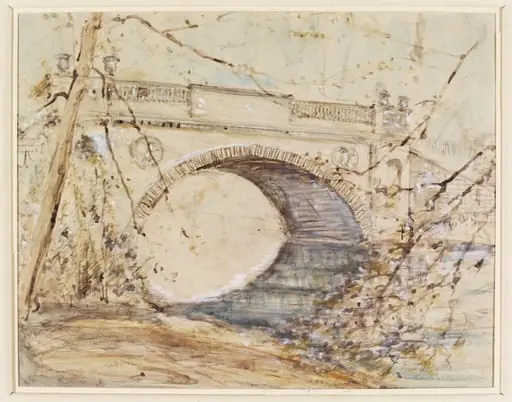
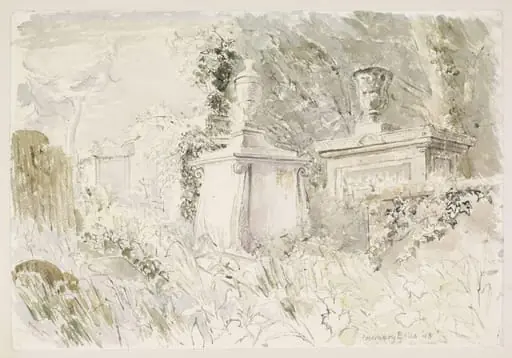
The Cedars, the Sphinx and the spring in the Grounds of Chiswick House is a watercolor work on paper by the Impressionist artist Archibald Standish Hartrick. It dates from 1940 and is held in the collection of the Victoria and Albert Museum.
About this work
Overview
It was produced as part of the Recording Britain project, a government-backed initiative to document the nation’s landscapes amid wartime disruption.
Created in 1940, this watercolour by Archibald Standish Hartrick captures a quiet corner of Chiswick House’s grounds during the Second World War. It was produced as part of the Recording Britain project, a government-backed initiative to document the nation’s landscapes amid wartime disruption. The work belongs to a larger collection of over 1,500 pieces commissioned to preserve visual records of places at risk of change or loss.
Subject & Meaning
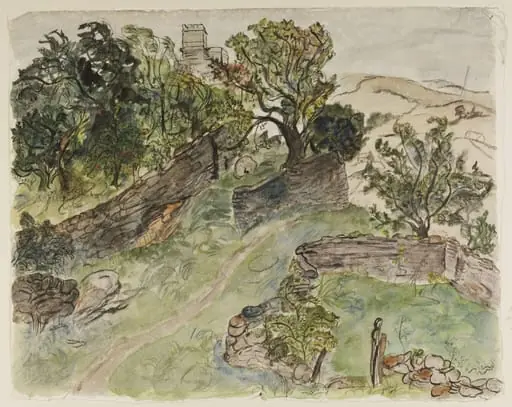
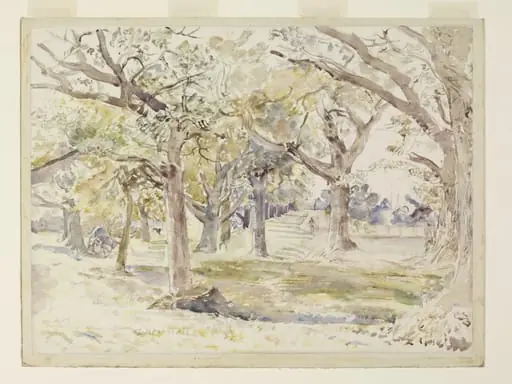
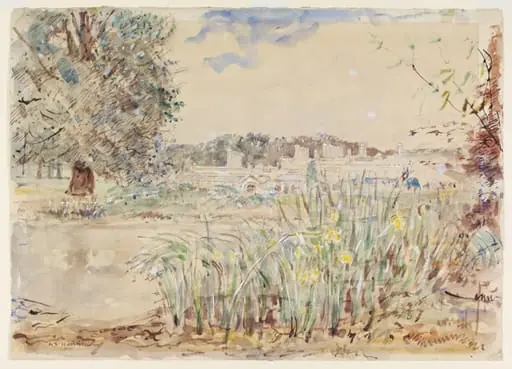
The scene centers on ancient cedars, a weathered stone sphinx, and a modest spring emerging near a low wall. These elements evoke a sense of enduring quietude, contrasting with the turmoil of the war years. The sphinx, a relic of classical antiquity, and the natural spring suggest timeless continuity, while the bare, twisted branches and patchy ground hint at seasonal decay and resilience.
Technique & Style
Hartrick employed loose, transparent watercolour washes to convey texture and atmosphere. The trees are rendered with minimal detail, their gnarled forms suggested through fluid lines and subtle tonal shifts. The stone of the sphinx and wall is indicated by rough, dry brushwork, while the spring is hinted at with faint blue and white flecks. The overall effect is sketchlike, emphasizing mood over precision.
History & Provenance
The work was commissioned by the Recording Britain project, administered by the Pilgrim Trust under the direction of Sir Kenneth Clark. It was created to support artists during wartime and to safeguard visual records of Britain’s heritage. The painting entered the Victoria and Albert Museum’s collection as part of this initiative, where it remains accessible as a historical document of the era.
Context
During the Second World War, Britain faced widespread destruction and rapid urban change. The Recording Britain project emerged as a cultural response, valuing rural and historic sites as symbols of national identity. Artists like Hartrick were sent across the country to record landscapes before they vanished—whether through bombing, development, or neglect—turning art into an act of preservation.
Legacy
The Recording Britain collection endures as a vital archive of mid-20th-century British topography. Hartrick’s watercolour contributes to a broader understanding of how artists responded to wartime anxiety through quiet observation. Its restrained aesthetic and focus on overlooked details continue to inform how heritage and landscape are visually documented in times of crisis.
Own this work as a print
Artist & collection
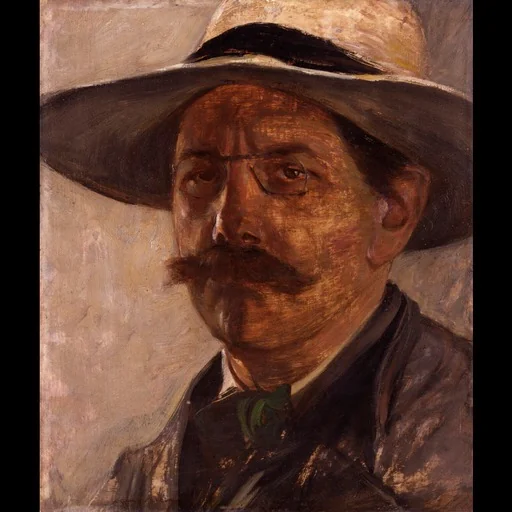
Artist
Archibald Standish Hartrick (7 August 1864 – 1 February 1950) was a Scottish painter known for the quality of his lithographic work.