Artwork
Pomegranate Fruit
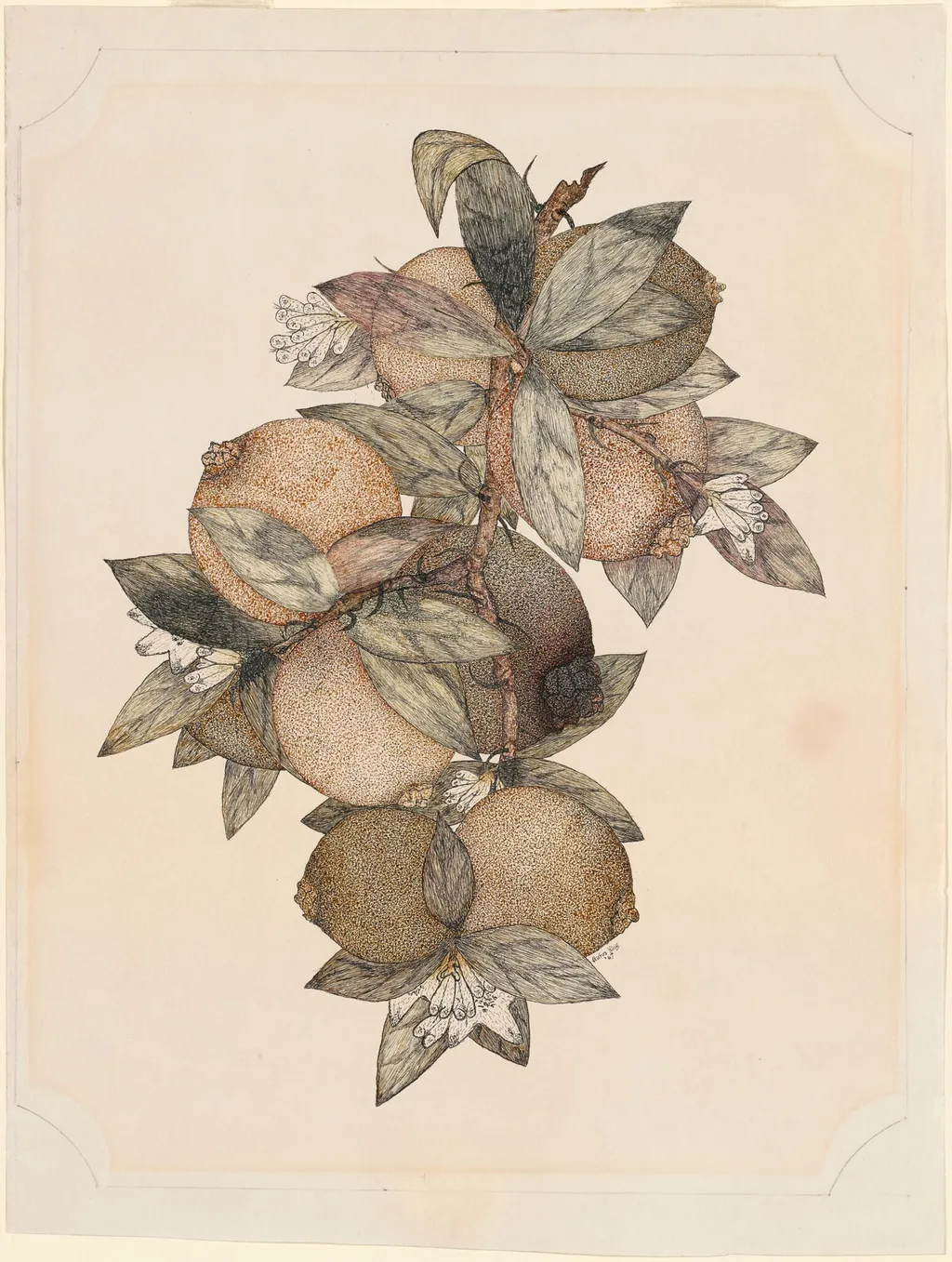
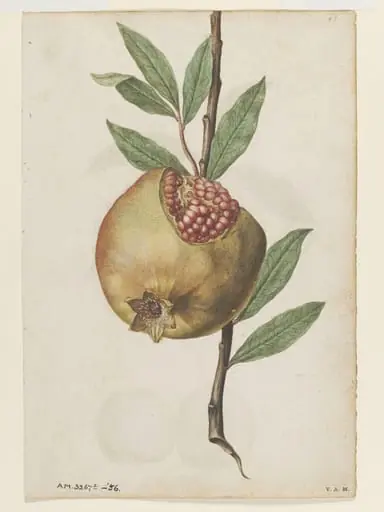
Pomegranate Fruit is an ink drawing by the Impressionist artist Rufus King. It dates from 1867 and is held in the collection of the National Gallery of Art.
About this work
Overview
Created in 1867, this drawing by Rufus King depicts a single pomegranate split open, rendered in pen and black ink with watercolor over graphite on smooth wove paper. The work belongs to the category of botanical illustration, emphasizing precision and quiet observation. Its modest scale and restrained palette reflect a focus on natural form rather than dramatic effect.
Subject & Meaning
The pomegranate, halved to reveal its dense cluster of seeds, is presented without symbolic embellishment. The arrangement—seeds spilling slightly, leaves fanning at the edges—suggests a moment of natural decay or harvest. There is no narrative or allegory; the subject is treated as a specimen, inviting attention to its internal structure and organic texture.
Technique & Style
King employed fine pen lines to define the fruit’s rind and leaf veins, then layered translucent watercolor to suggest subtle shifts in hue and light.
King employed fine pen lines to define the fruit’s rind and leaf veins, then layered translucent watercolor to suggest subtle shifts in hue and light. The graphite underdrawing guided the composition, while the watercolor’s softness mimics the fruit’s moist interior. The smooth wove paper allowed for even washes and delicate detail, typical of 19th-century artistic materials designed for precision.
History & Provenance
The work was completed in 1867, during a period when American artists increasingly turned to natural subjects for study. Its survival suggests it was kept within the artist’s circle or collected by a private patron interested in botanical accuracy. No public exhibition history is documented, and its current location remains tied to institutional archives rather than public display.
Context
In mid-19th-century America, detailed botanical drawings served scientific and educational purposes, often accompanying horticultural texts or private collections. King’s work aligns with this tradition, reflecting a broader cultural interest in classifying and observing nature. Unlike European still lifes, it avoids ornamentation, prioritizing observation over aesthetic flourish.
Legacy
Though not widely exhibited or reproduced, the drawing exemplifies the quiet discipline of American botanical art in the post-Civil War era. It stands as a record of an artist’s close engagement with natural forms, contributing to a lesser-known but persistent strand of 19th-century American drawing practice focused on accuracy and restraint.
Artist & collection


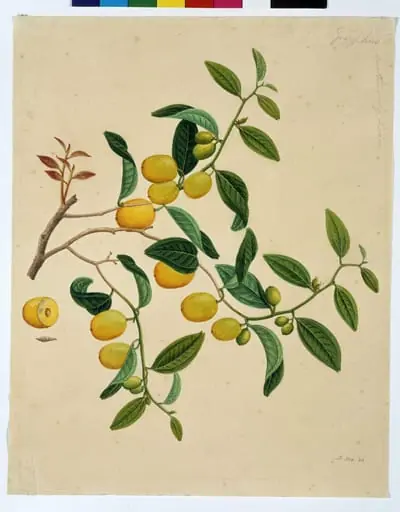 Chinese dates
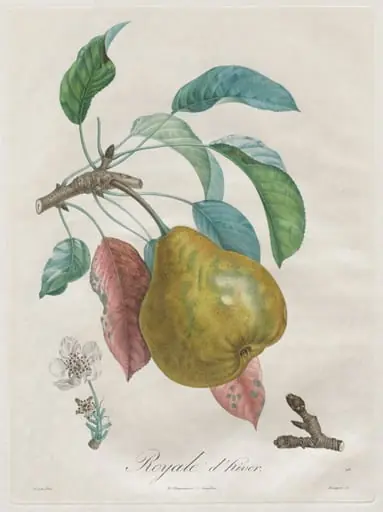 Traité des arbres fruitiers: Royal d'hiver
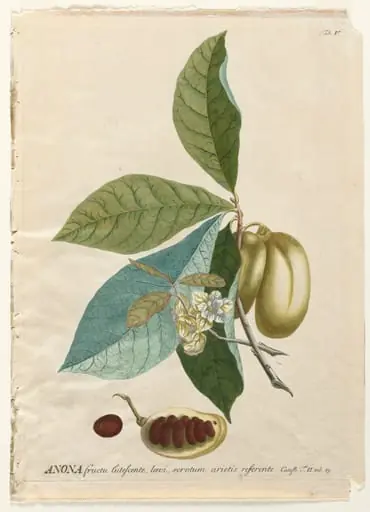 Plantae Selectae: No. 5 - Anona
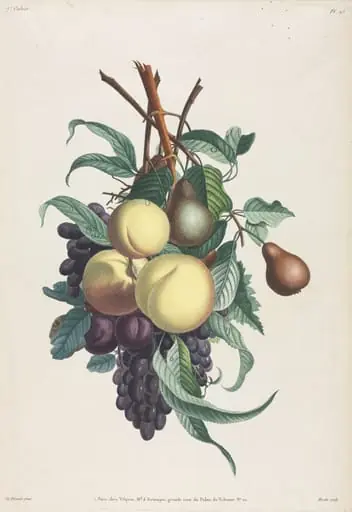 Collection des fleurs et des fruits: Branches de rousselet, pêche, prune et raisin
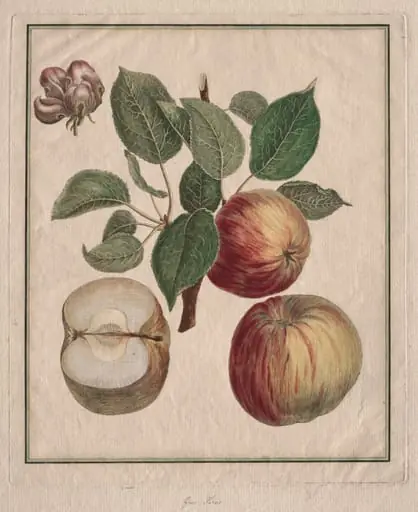 Apple with Leaf and Fruit Blossom
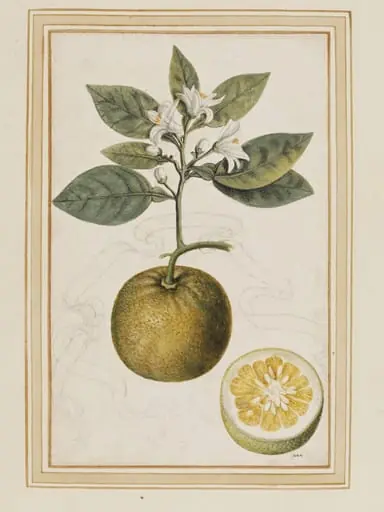 Sour orange
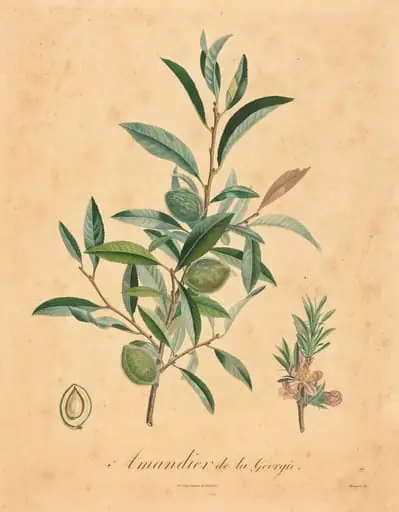 Amandier de la Georgie
 Untitled
 Mock lime (aglaia odorata), zhen zhu lan or mi zi lan
 Pomegranate; Peach
 Three Peaches
 The Pilchard (Argentina carolina)