Artwork
Paris Almanac, 1897: Tail-piece, Autumn
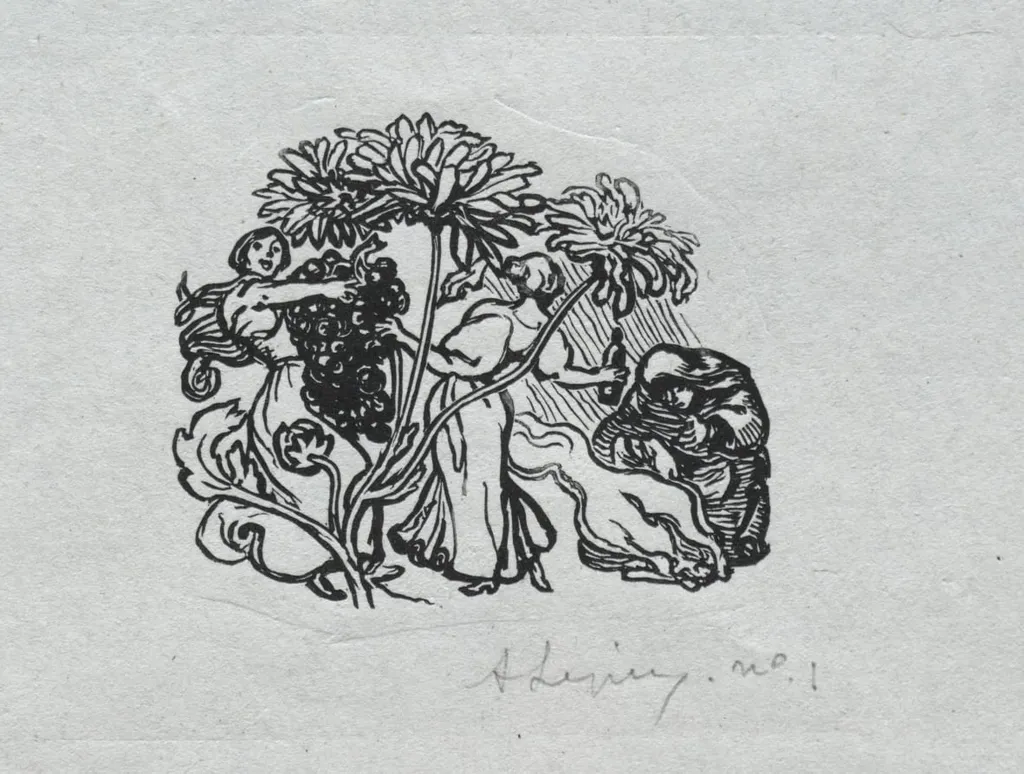
Paris Almanac, 1897: Tail-piece, Autumn is a print by the Impressionist artist Auguste Lepère. It dates from 1897 and is held in the collection of the Cleveland Museum of Art.
About this work
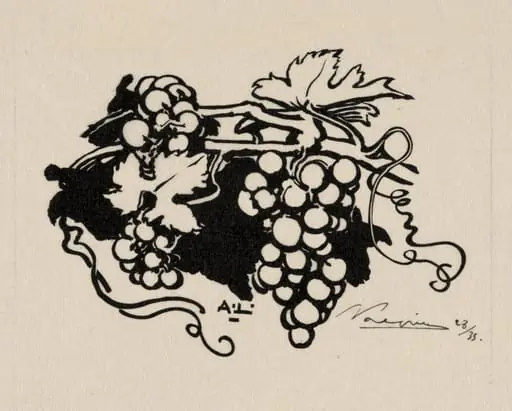
One figure holds a branch with a cluster of grapes, another leans on a staff, and the third sits on the ground, wrapped in a cloak.
This drawing shows three small, simple figures standing around a plant with big leaves and flowers. One figure holds a branch with a cluster of grapes, another leans on a staff, and the third sits on the ground, wrapped in a cloak. The background is mostly empty, with just a few wavy lines at the top.
The figures look like they’re from an old story, but the style is loose and sketchy. This was made as a decorative end-piece for a calendar in 1897.
Next, look up Realism to see how artists used everyday scenes in their work.
Overview
Paris Almanac, 1897: Tail-piece, Autumn is a wood engraving created by Auguste Louis Lepère in 1897. It is a decorative print that appears in the Paris Almanac for that year.
Subject & Meaning
The print depicts three figures gathered around a flowering plant, with one holding grapes, another leaning on a staff, and the third seated and cloaked. The scene evokes a rustic, pastoral atmosphere, possibly referencing a traditional or mythological narrative.
Technique & Style
The work is characterized by a loose, sketchy style, with simple forms and a sparse background featuring wavy lines. Lepère's use of wood engraving, a medium he helped revive, contributes to the print's distinctive aesthetic.
History & Provenance
The print was created for the Paris Almanac for 1897, serving as a tailpiece for the autumn section. Lepère was a French artist who worked in multiple mediums, including painting and etching, and was instrumental in the late 19th-century revival of wood engraving as a creative art form.
Artist & collection
Artist
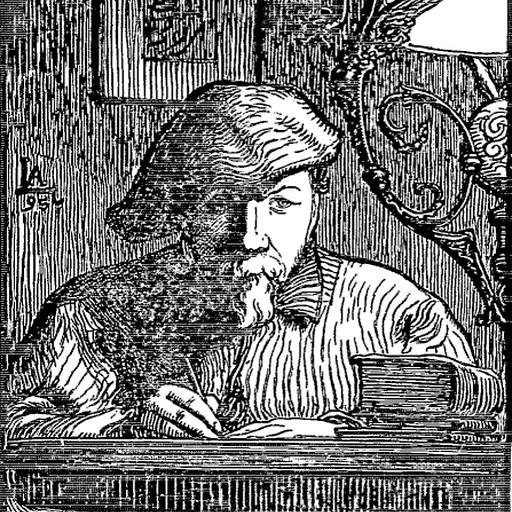
Louis-Auguste Lepère (30 November 1849 – 20 November 1918) was a French painter and etcher. Lepère is also considered a leader in the creative revival of wood engraving in Europe.