Artwork
The Port aux Pierres on the Quai d'Orsay
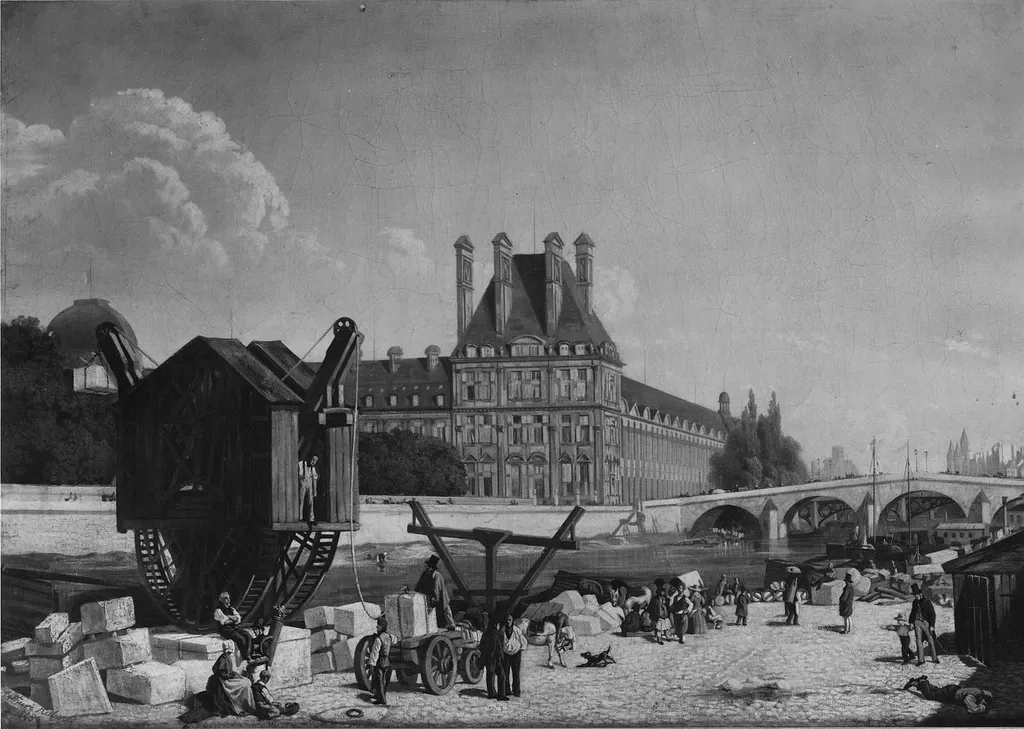
The Port aux Pierres on the Quai d'Orsay is an oil painting by Arthur Henry Roberts. It dates from 1848 and is held in the collection of the Museum of Fine Arts Boston.
About this work
Overview
Painted in 1848 by Arthur Henry Roberts, The Port aux Pierres on the Quai d'Orsay is an oil-on-canvas work depicting a working waterfront in Paris.
Painted in 1848 by Arthur Henry Roberts, The Port aux Pierres on the Quai d'Orsay is an oil-on-canvas work depicting a working waterfront in Paris. The scene captures the quiet rhythm of daily labor along the Seine, with figures engaged in the unloading of stone. The painting resides in the collection of the Museum of Fine Arts, Boston, where it serves as a quiet record of mid-19th-century urban activity.
Subject & Meaning
The painting portrays a stone yard at the Quai d'Orsay, a real location along the Seine used for transporting building materials. Figures are shown hauling, stacking, and resting amid the cargo, emphasizing the physicality of labor. There is no overt narrative or symbolism—instead, the work presents an unembellished view of ordinary work, reflecting a growing interest in everyday life during the period.
Technique & Style
Roberts employs a restrained palette of grays, browns, and muted earth tones to convey the weight and texture of stone and weathered surfaces. Light falls unevenly across the scene, defining forms through subtle gradations rather than dramatic contrast. The brushwork is deliberate but unshowy, favoring observation over theatricality, with attention to the way light interacts with rough materials and human figures.
History & Provenance
The painting was completed in 1848, a year of political upheaval in France, yet the scene remains focused on routine labor rather than social commentary. It entered the Museum of Fine Arts, Boston, in the late 19th century, likely through a private acquisition or bequest. Its presence in the museum reflects early American interest in European genre scenes depicting working-class life.
Context
In mid-19th-century Paris, industrialization was reshaping the city’s infrastructure, and the Quai d'Orsay was a hub for material transport. Artists increasingly turned to such sites as subjects, moving away from idealized landscapes. Roberts’ work aligns with this trend, offering a grounded view of urban commerce that parallels the realist tendencies emerging in French painting at the time.
Legacy
Though not widely known today, the painting contributes to a broader body of 19th-century works that documented labor and urban change without sentimentality. Its quiet realism offers insight into how artists outside the French academic mainstream observed and recorded the rhythms of everyday life, preserving a moment of transition in Paris’s physical and social landscape.
Artist & collection

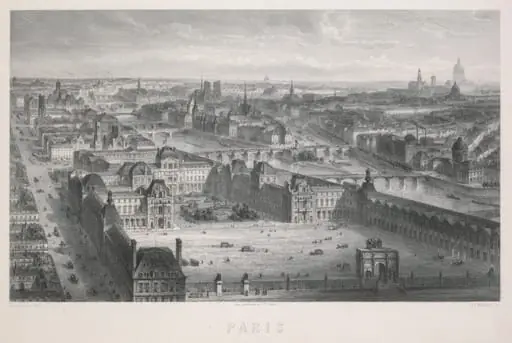 Paris
Paris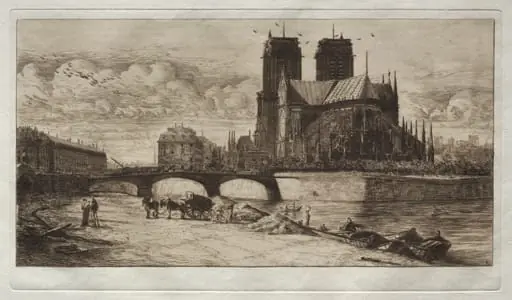 L'Abside de Notre Dame de Paris
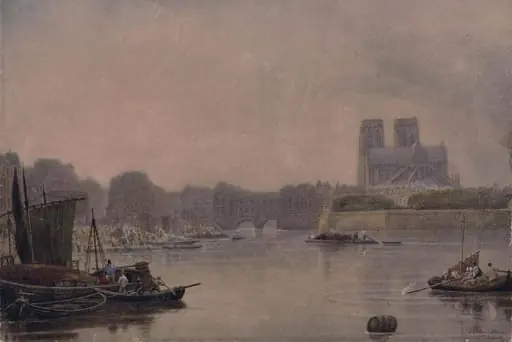 Notre Dame, Paris
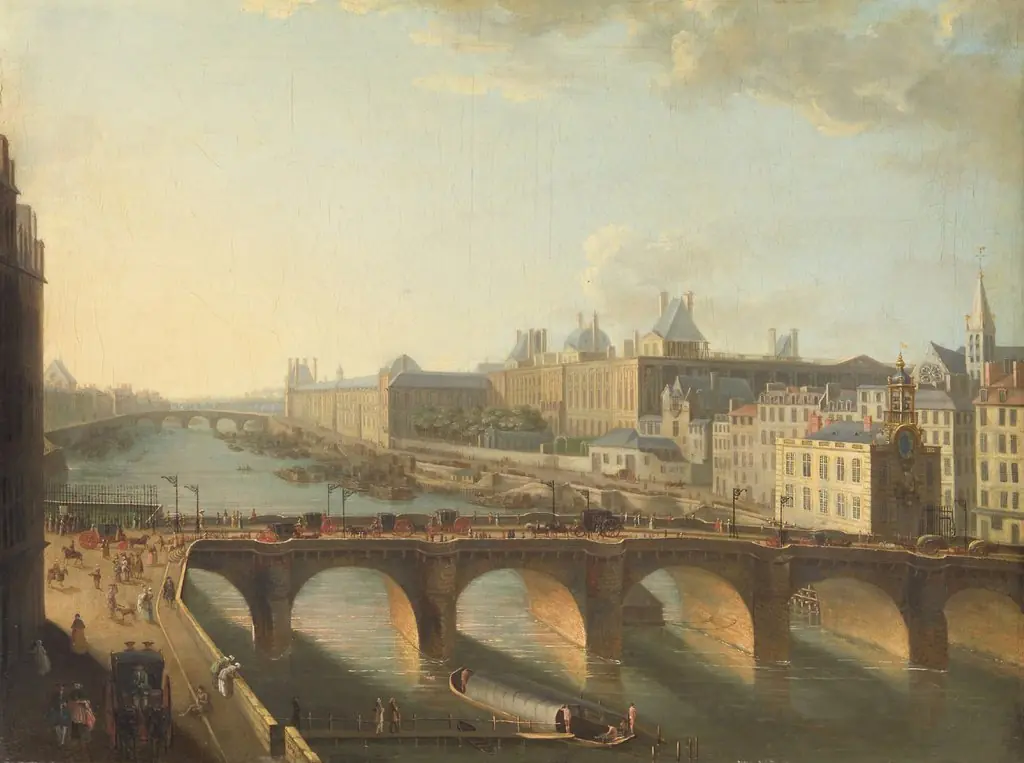 View of the Pont-Neuf in Paris from the Quai de la l’Horloge
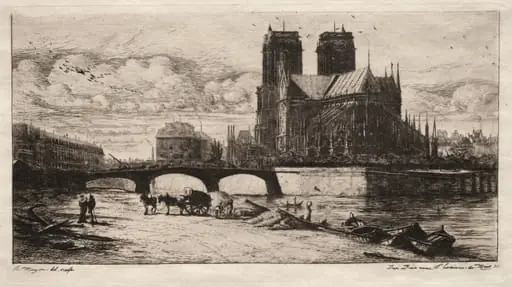 Etchings of Paris: The Apsis of the Cathedral of Notre Dame
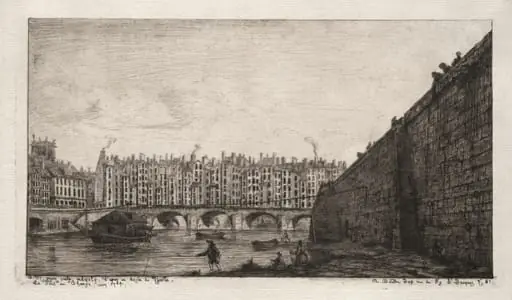 The Exchange Bridge, Paris, about 1784
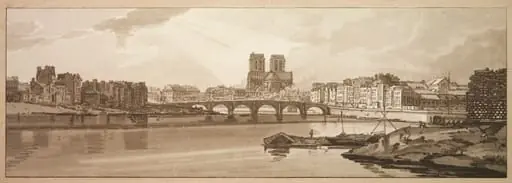 A Selection of Twenty of the Most Picturesque Views in Paris: View of Pont de la Tournelle & Notre Dame taken from the Arsenal
 View from the Pont de la Concorde
 Le Pont-au-Change
 The Pont de l'Hotel Dieu and the South Tower of Notre Dame, Paris
 Quai de la Greve, Paris
 View from the Louvre