Artwork
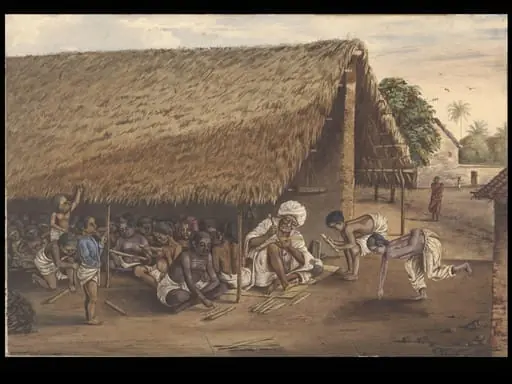
A Blacksmith's Shop beside Village Dwellings in Bengal
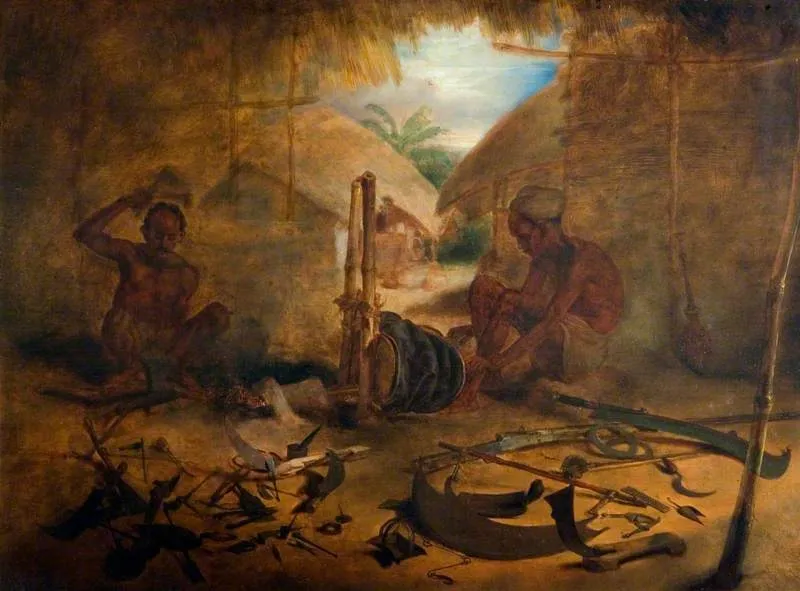
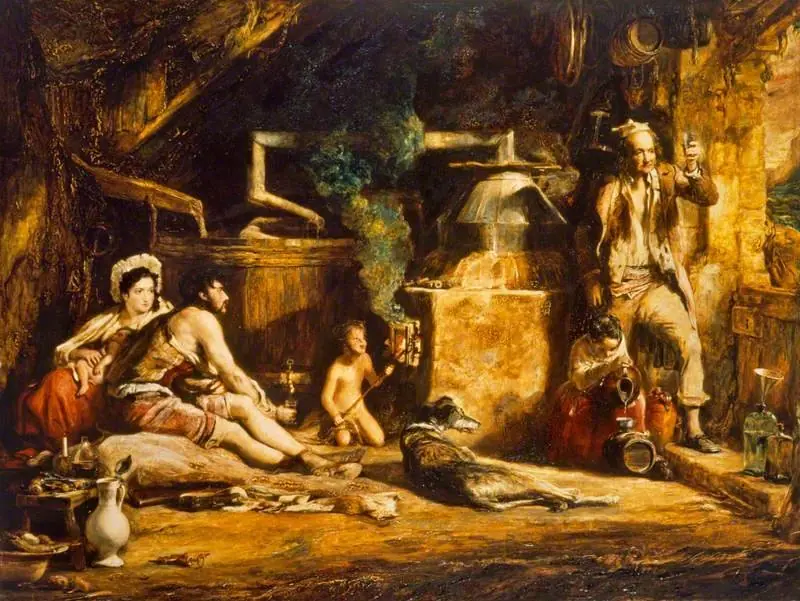
A Blacksmith's Shop beside Village Dwellings in Bengal is an oil painting by the British Romanticist artist Arthur William Devis. It dates from 1797 and is held in the collection of the Victoria and Albert Museum.
About this work
Overview
Though Devis was primarily known in Britain for historical and portrait subjects, this piece reflects his engagement with colonial landscapes.
Painted in 1797 by Arthur William Devis, this oil-on-canvas work captures a rural scene in Bengal during the late 18th century. Though Devis was primarily known in Britain for historical and portrait subjects, this piece reflects his engagement with colonial landscapes. It is part of the Victoria and Albert Museum’s collection and stands as one of the few documented British artistic responses to everyday life in Bengal during the East India Company’s presence.
Subject & Meaning
The painting centers on a blacksmith at work, his forge glowing amid a cluster of thatched dwellings and palm trees. Villagers gather in the foreground, observing the labor with quiet attention. Rather than idealizing or exoticizing, the scene presents industry as embedded in daily village life. The blacksmith’s role as a vital artisan is emphasized, suggesting a quiet reverence for skilled labor within a non-European context.
Technique & Style
Devis employed fine brushwork to render textures—woven fabrics, weathered wood, and the metallic sheen of tools—with precision. Warm ochres and earth tones dominate, contrasting with the cool blue sky to heighten the sense of heat and activity. The composition directs the eye toward the forge, using light and gesture to anchor the scene without theatricality. The style aligns with British Romanticism’s interest in authentic observation, though it avoids overt sentiment.
History & Provenance
Created during Devis’s active years at the Royal Academy, where he exhibited over sixty works between 1779 and 1821, the painting likely stemmed from his exposure to colonial reports or travel accounts. It entered the Victoria and Albert Museum’s collection in the 19th century, possibly through acquisition by a British official or collector with ties to Bengal. Its survival as a record of rural Indian life is rare among British artists of the period.
Context
In the late 1790s, British artists rarely depicted Indian village life with such directness. Most colonial imagery focused on elites, military scenes, or ruins. Devis’s choice to portray a blacksmith’s shop reflects a growing, albeit limited, interest in documenting indigenous labor and material culture. The painting emerges amid expanding British administrative control, offering a glimpse of local economy untouched by colonial intervention.
Legacy
Though not widely exhibited or studied, the painting remains a significant artifact of early British engagement with Indian daily life. It contributes to a small but important corpus of works that avoid romanticized stereotypes, instead presenting a grounded, observational record. Its preservation in a major British museum underscores its role as a historical document of cross-cultural encounter.
Artist & collection
Artist
Arthur William Devis (10 August 1762 – 11 February 1822) was an English painter of history paintings and portraits.

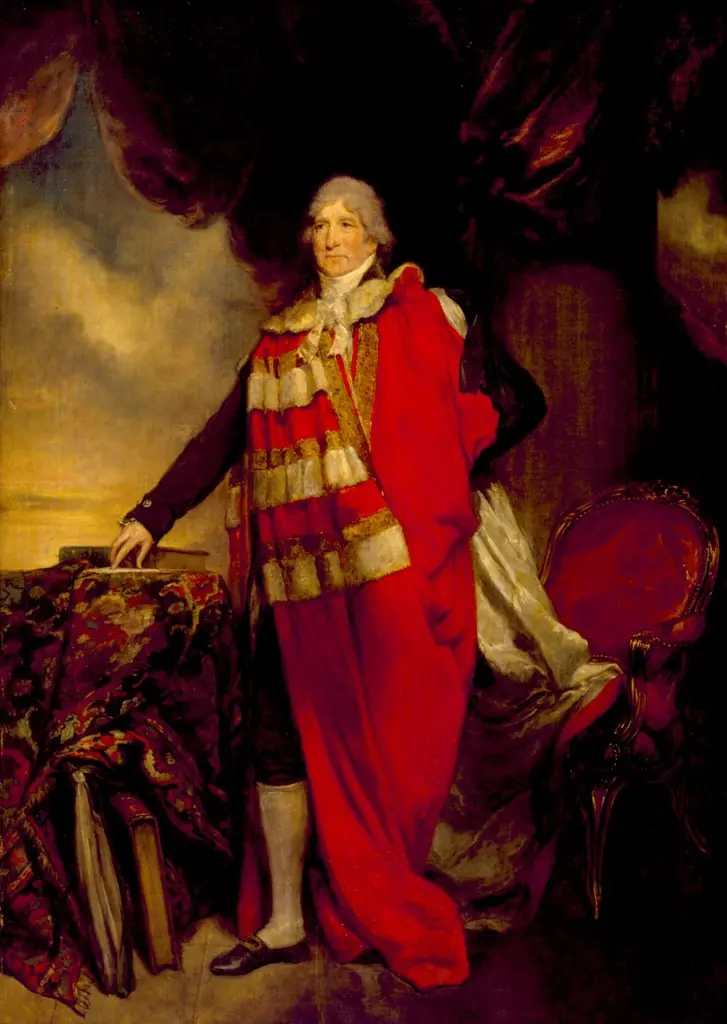 James Duff, 2nd Earl Fife
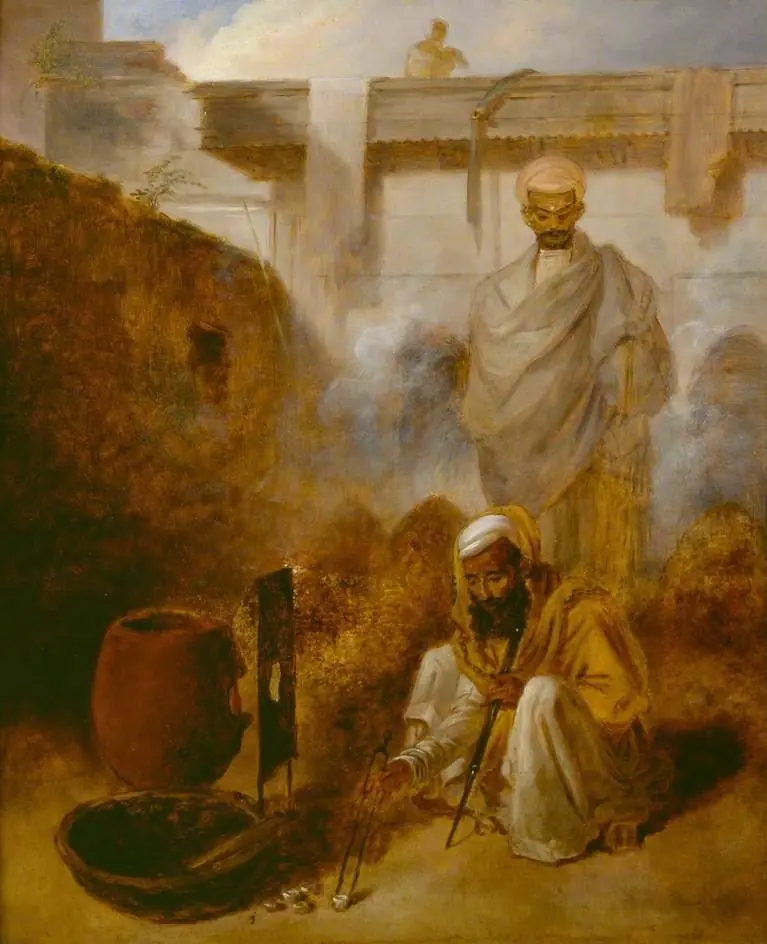 Assayer at Work in the Mint, Calcutta
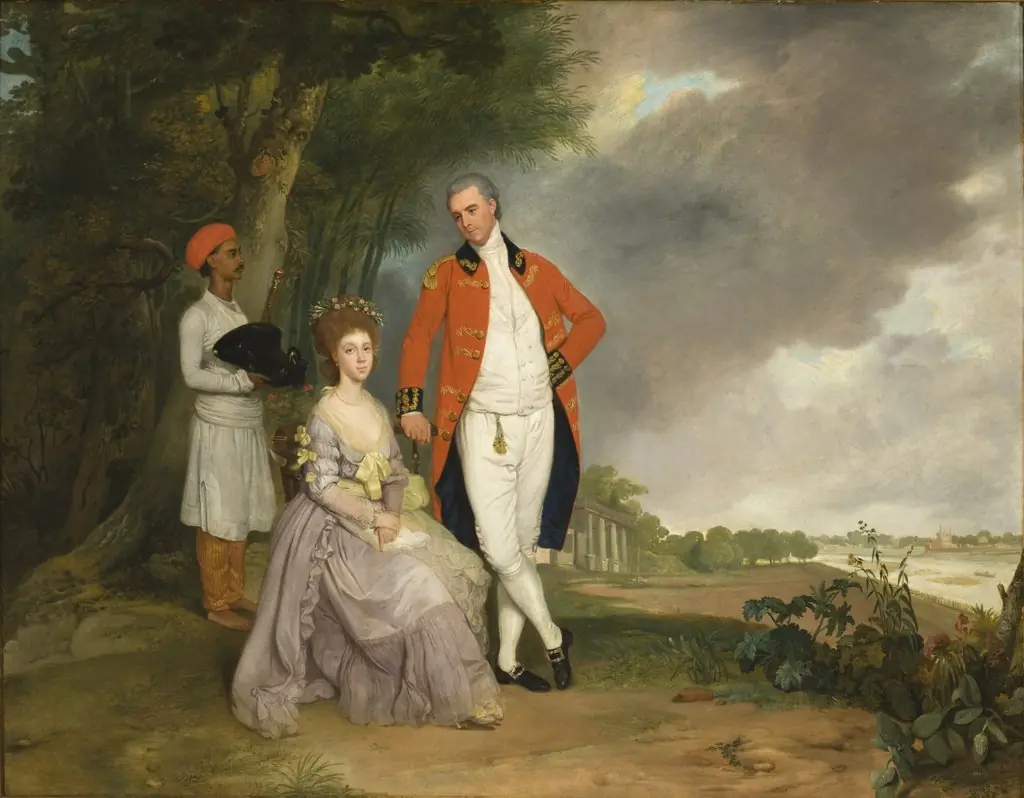 The Hon. William Monson and His Wife, Ann Debonnaire
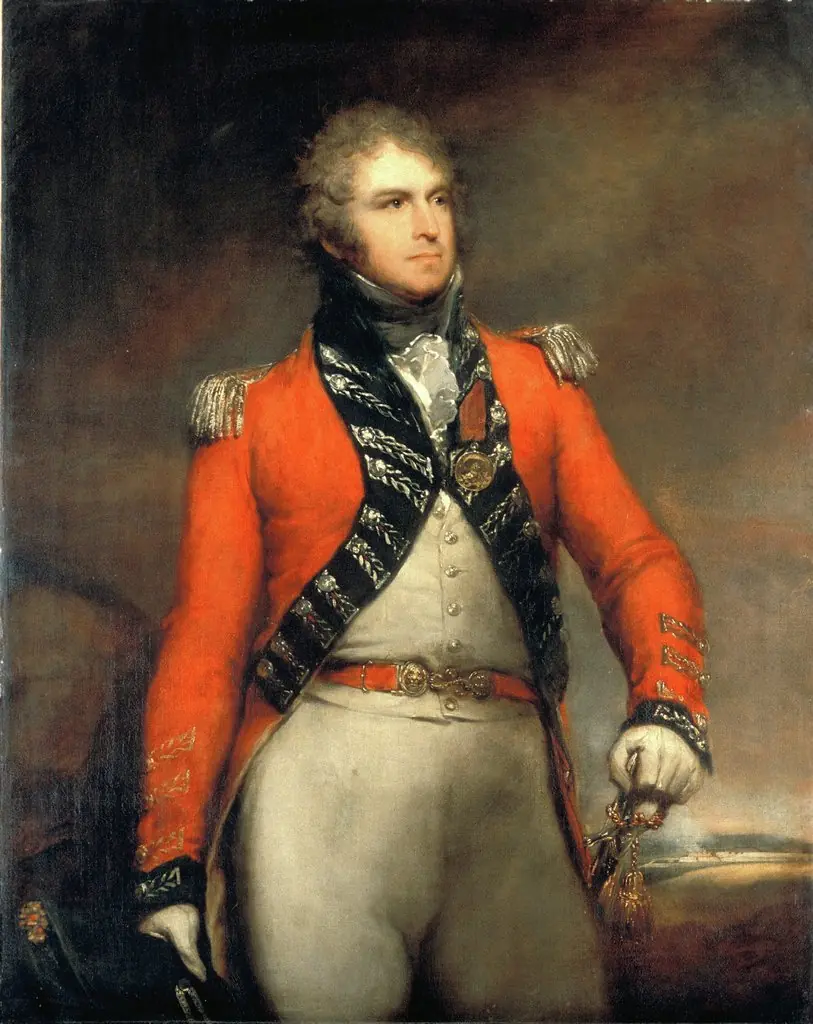 Sir Alexander Allan
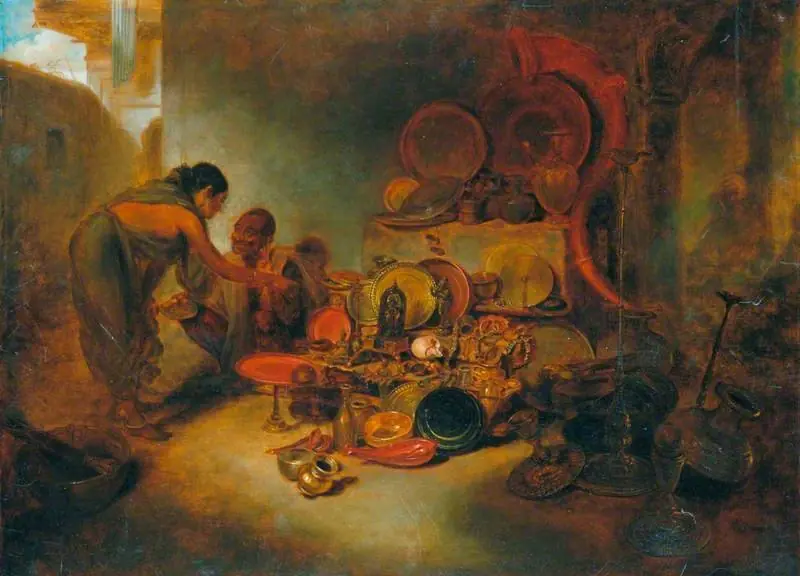 Scene in a Brazier's Shop in Bengal
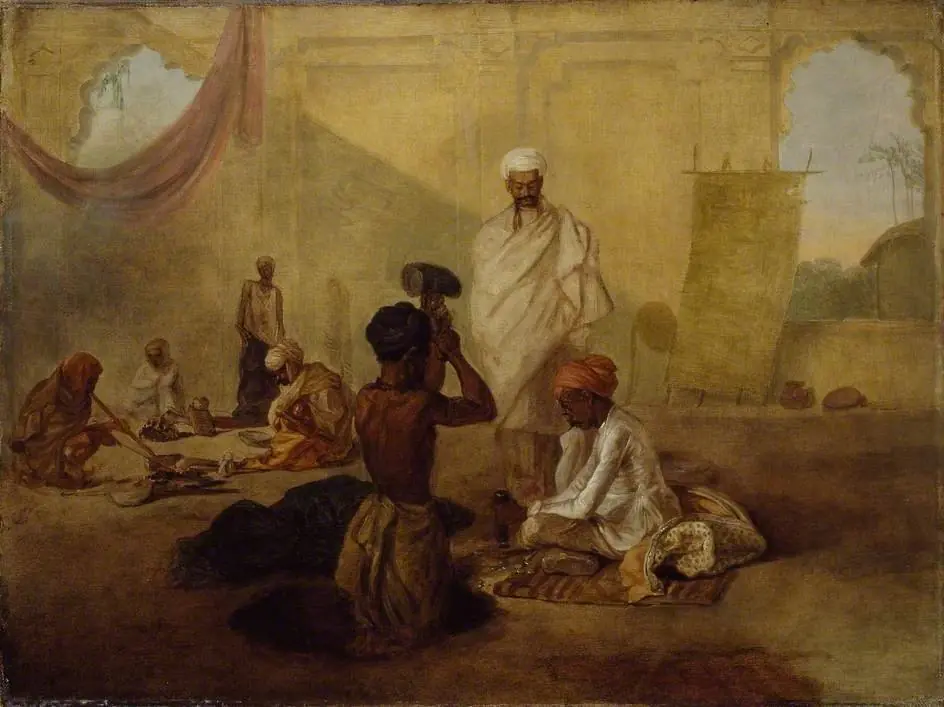 Stamping Coinage in the Mint, Calcutta
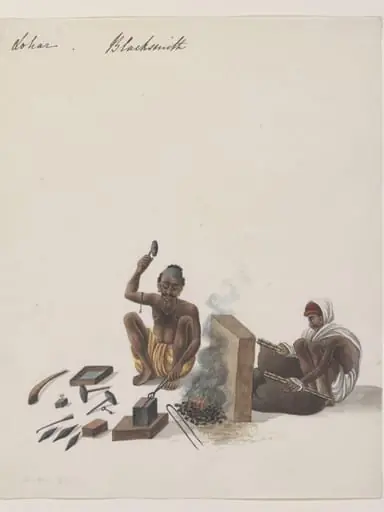
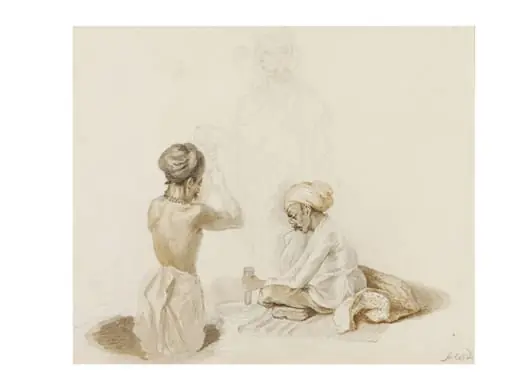 An Indian metal-worker seated cross-legged with his assistant, who raises and hammer, and another figure standing behind
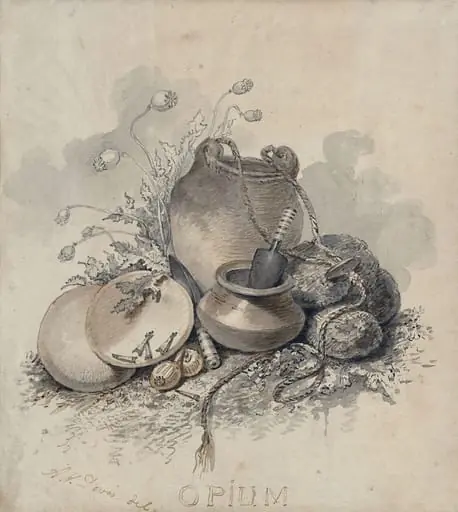 A group of objects associated with the cultivation of opium