Artwork
Old Brass
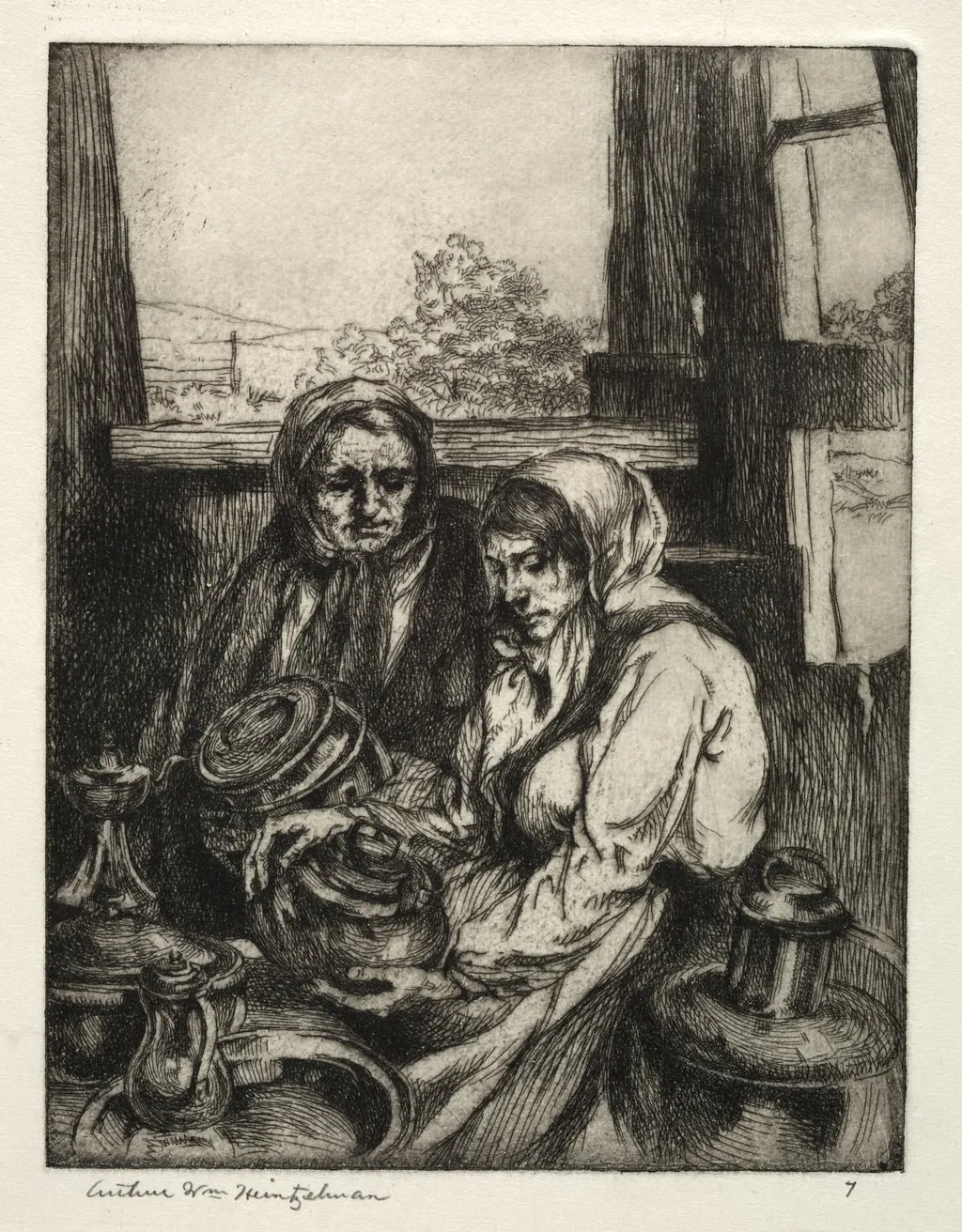
Old Brass is a print by Arthur William Heintzelman. It dates from 1919 and is held in the collection of the Cleveland Museum of Art.
About this work
Overview
It depicts two women engaged in a domestic task involving heavy brass vessels, rendered with a strong emphasis on texture and atmosphere.
Created in 1919 by Arthur William Heintzelman, Old Brass is an etching that captures a quiet moment of labor. The work is part of the collection at The Cleveland Museum of Art. It depicts two women engaged in a domestic task involving heavy brass vessels, rendered with a strong emphasis on texture and atmosphere. The composition avoids ornamentation, focusing instead on the physicality of the figures and their environment.
Subject & Meaning
The two women, seated side by side, are absorbed in handling large brass pots, their expressions solemn and hands firmly gripping the metal. Their posture suggests endurance rather than leisure. The absence of narrative detail or facial individuality shifts focus to the weight of their labor and the quiet dignity of routine work. The plain interior and distant window frame reinforce a sense of isolation and repetition in daily life.
Technique & Style
Heintzelman employed etching to achieve sharp contrasts between light and shadow, using deep blacks and bright highlights to model form. The brass pots, illuminated by an unseen source, glow against the dim, textured walls and floors. The roughness of surfaces—wood, metal, fabric—is rendered with fine, deliberate lines. This use of chiaroscuro gives volume and gravity to the figures, anchoring them in a tangible, tactile space.
History & Provenance
The work was completed in 1919 and entered the collection of The Cleveland Museum of Art at a later date. No public record details its early ownership or exhibition history, but its inclusion in the museum’s print collection suggests it was recognized for its technical precision and emotional restraint. It remains one of Heintzelman’s few documented prints in a public institution.
Context
Created in the aftermath of World War I, the image reflects a broader cultural interest in everyday labor and the lives of working women. While not overtly political, its unembellished portrayal aligns with early 20th-century realist movements that valued authenticity over idealization. The quiet intensity of the scene resonates with contemporaneous works by American printmakers exploring domestic and industrial subjects.
Legacy
Old Brass endures as a quiet example of American etching from the early 1900s, notable for its restrained emotion and technical control. Though Heintzelman is not widely known today, this work contributes to the historical record of printmakers who elevated ordinary moments through careful observation and masterful use of light and shadow. It remains a reference for studies in tonal composition and social realism in print media.
Artist & collection
Artist
Arthur William Heintzelman (1891–1965) was an American artist, born in Newark.

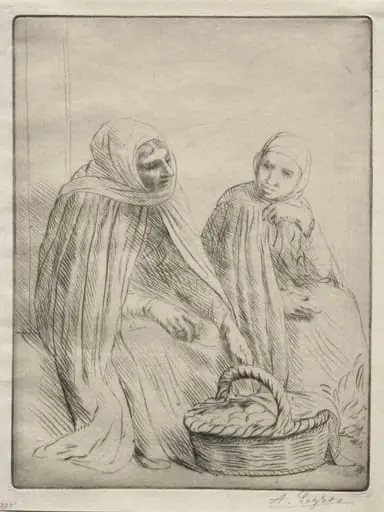 The Egg Merchants (1st Plate)
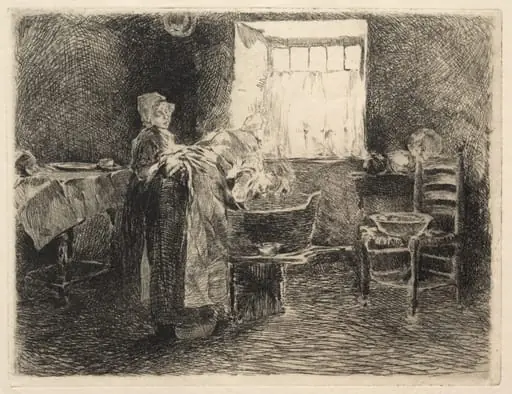 Monday Morning, Holland
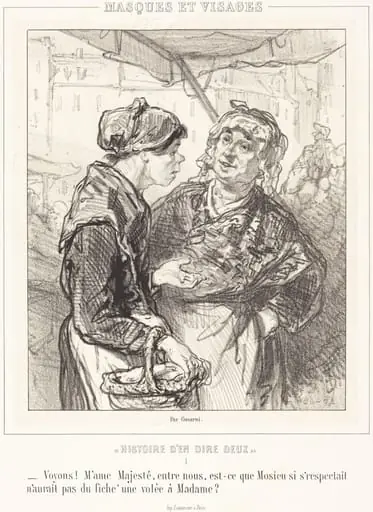 "Voyons! Mme Majeste..."
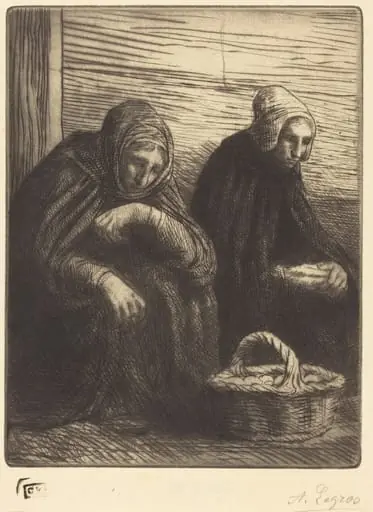 Egg-sellers, 2nd plate (Les marchandes d'oeufs)
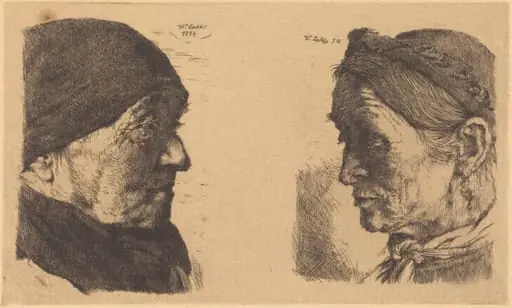 Portrait of an Old Peasant Woman, in Profile to the Right, and Peasant Woman with Closed Eyes
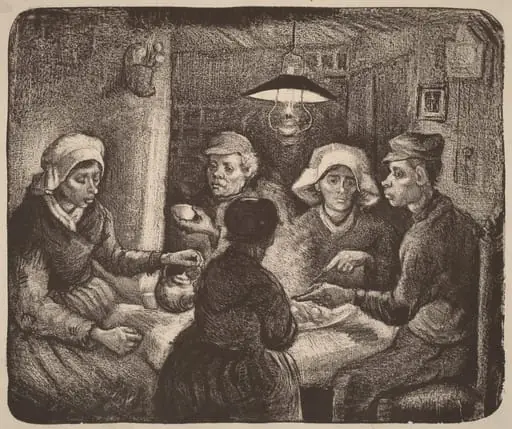 Potato Eaters
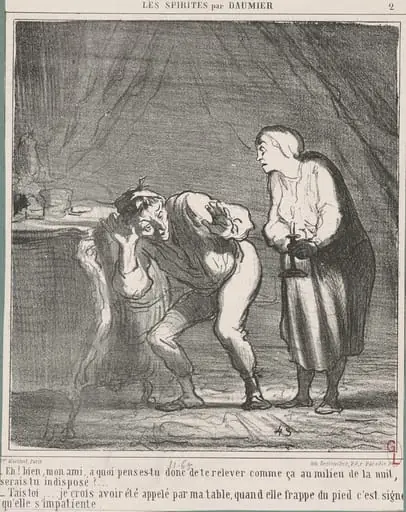 Eh! Bien ... mon ami, a quoi penses-tu? ...
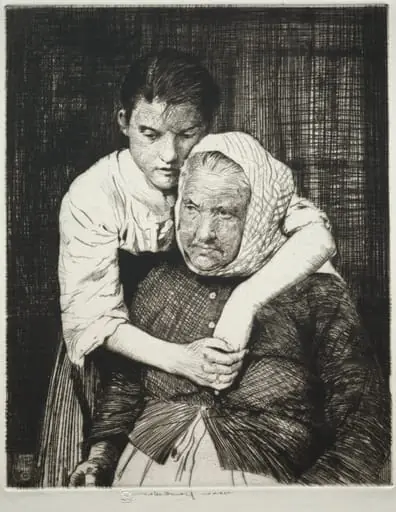 Etaples Fisher Folk
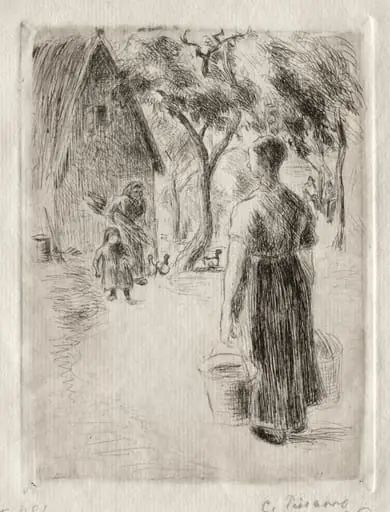 Peasant Woman Carrying Buckets
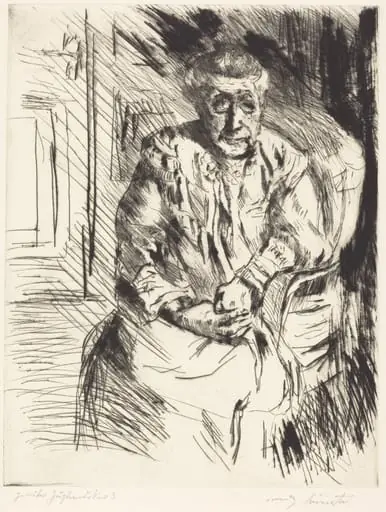 Ma Belle Mere (Mother-in-Law)
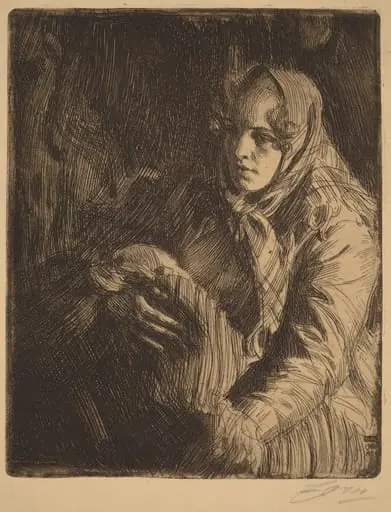 Madonna
![Oui, madame Chaboulard... vingt-quatre épiciers... [recto], by Honoré Daumier](https://artifactworldgallery.com/img/honore-daumier--oui-madame-chaboulard-vingt-quatre-epiciers-recto--e54ef32ef25a1625-w320.webp) Oui, madame Chaboulard... vingt-quatre épiciers... [recto]
Oui, madame Chaboulard... vingt-quatre épiciers... [recto]