Artwork
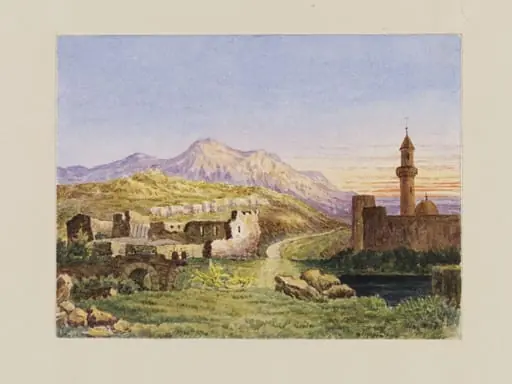
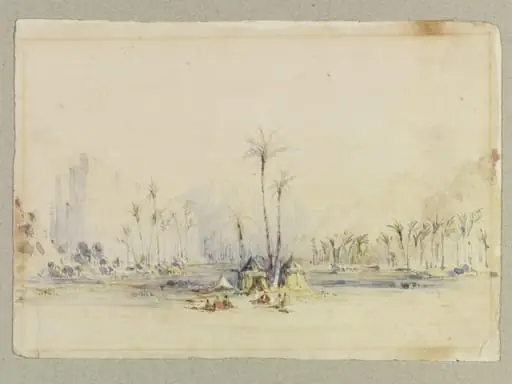
Gothic ruins at Famagusta
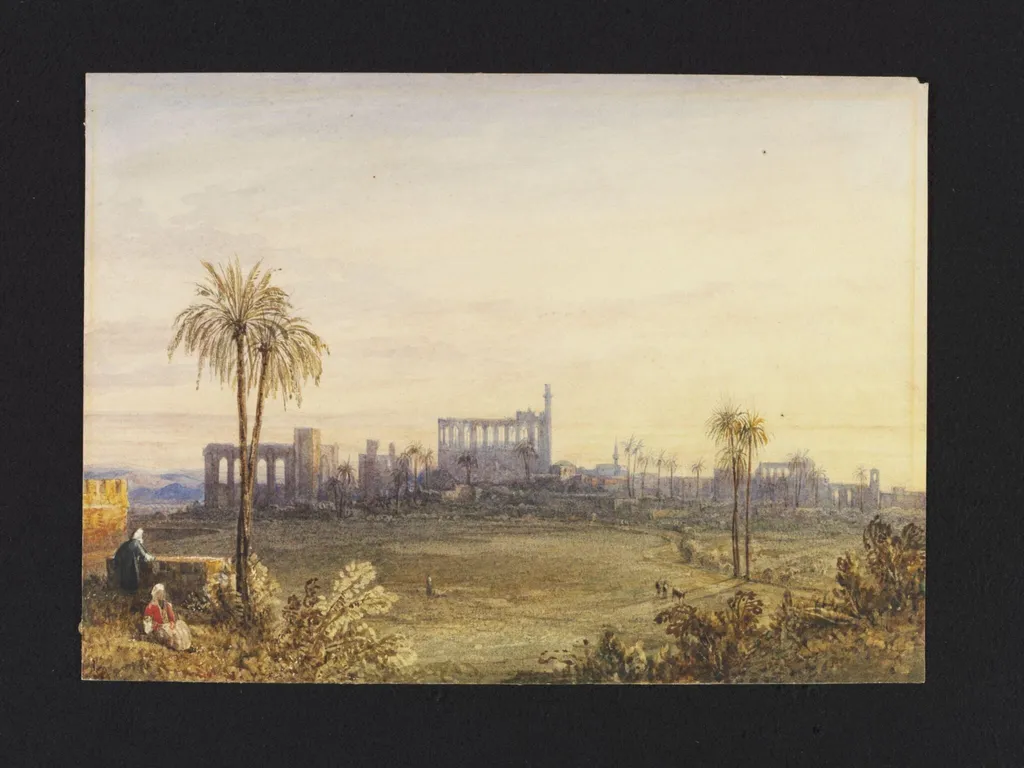
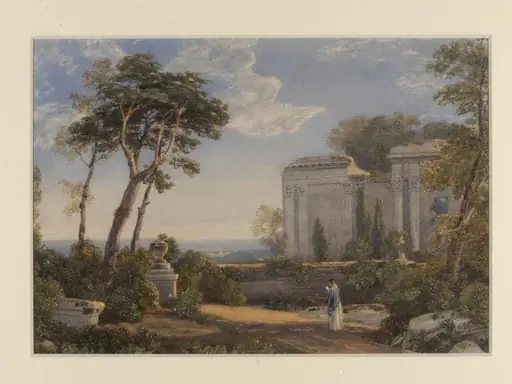
Gothic ruins at Famagusta is a watercolor work on paper by the British Romanticist artist Francis Arundale. It dates from 1834 and is held in the collection of the Victoria and Albert Museum.
About this work
Overview
Its delicate washes and subdued palette reflect a quiet observation of decay and endurance, avoiding dramatic embellishment in favor of atmospheric precision.
This watercolour by Francis Arundale captures the remnants of medieval architecture in Famagusta, Cyprus. Executed likely during his 1834 visit, the work belongs to a tradition of topographical art that documented historical sites in the Eastern Mediterranean. Its delicate washes and subdued palette reflect a quiet observation of decay and endurance, avoiding dramatic embellishment in favor of atmospheric precision.
Subject & Meaning
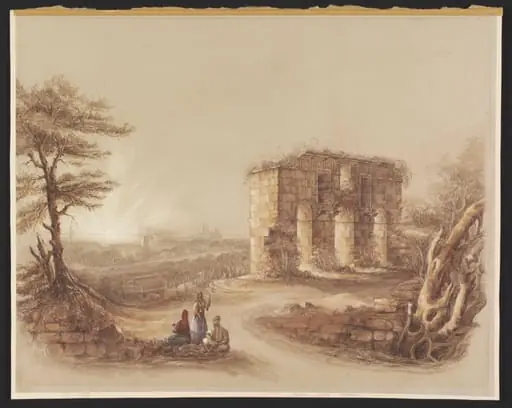
The scene centers on crumbling Gothic stonework, partially reclaimed by vegetation, suggesting the passage of time and the fading of human presence. Two figures in the foreground, one seated and the other bent forward, imply quiet contemplation rather than activity. Their small scale emphasizes the ruins’ dominance, evoking a sense of solitude and the quiet weight of history without narrative explanation.
Technique & Style
Arundale employed transparent watercolour washes to build subtle tonal gradations, using soft yellows and muted greens to unify the landscape. Light falls evenly across the scene, casting no sharp shadows, which enhances the stillness. The brushwork is restrained, with minimal detail in the ruins and figures, allowing the overall mood to emerge through tone and composition rather than precision.
History & Provenance
The work was acquired at Christie’s in 1966 for £11.10, indicating its status as a modestly valued piece at the time. Its earlier history prior to this sale is undocumented, though Arundale’s travels in Cyprus are known through other sketches. It entered institutional circulation after this purchase, eventually becoming part of a public collection, though its current location is not specified here.
Context
Arundale’s depiction aligns with early 19th-century European interest in the ruins of the Crusader states. Travelers and artists often recorded such sites as relics of a romanticized medieval past. Cyprus, under Ottoman rule then, offered accessible ruins that appealed to antiquarian curiosity. This watercolour reflects that trend, not as a topographical record but as a meditative response to decay.
Legacy
While not widely exhibited, the work contributes to a broader corpus of British watercolours documenting the Eastern Mediterranean. Its quiet tone distinguishes it from more theatrical Orientalist works of the period. It remains a quiet example of how artists engaged with historical ruins—not as monuments to be glorified, but as quiet witnesses to time’s erosion.
Artist & collection

![Egyptological studies [6], by Francis Arundale](https://artifactworldgallery.com/img/francis-arundale--egyptological-studies-6--7bac01af5e28ea58-w320.webp)