Artwork
Pyramid of Abu Roash from the Village of Kerdassy
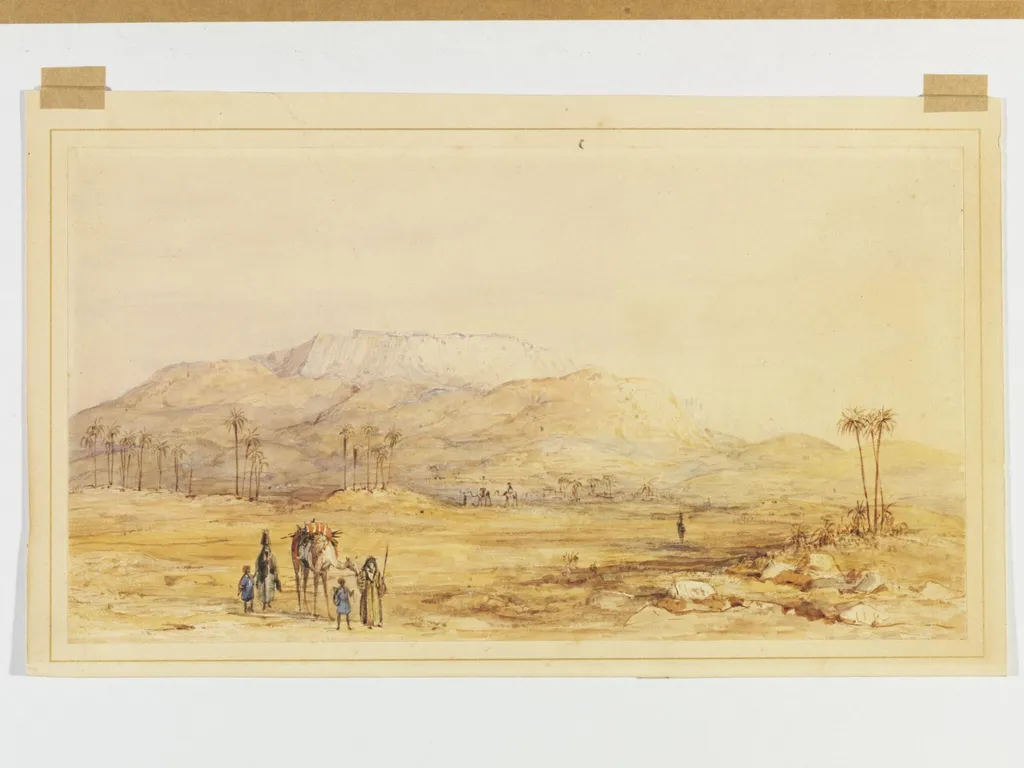
Pyramid of Abu Roash from the Village of Kerdassy is a watercolor work on paper by the British Romanticist artist Francis Arundale. It dates from 1838 and is held in the collection of the Victoria and Albert Museum.
About this work
Overview
Francis Arundale’s 1838 watercolour, titled *Pyramid of Abu Roash from the Village of Kerdassy*, depicts a modest desert scene with a distant rocky rise, scattered palms, and a small group of figures near a shallow watercourse. The palette is dominated by muted browns and gentle greens, under a softly lit sky.
Subject & Meaning
The composition captures a tranquil moment on the Egyptian frontier, emphasizing the interplay of human presence and arid landscape. The figures—walkers and a rider—anchor the scene, while the reflective water and sparse vegetation suggest a fleeting oasis within an otherwise barren environment.
Technique & Style
Arundale renders the terrain with delicate washes, allowing the sand and rock to recede into atmospheric perspective. Fine brushwork conveys the texture of palm fronds and the subtle glint of water, while the limited colour range reinforces the work’s serene, observational tone.
History & Provenance
The drawing derives from sketches made by E.J. Andrews during the 1837 Egyptian expedition of Richard Vyse and John S. Perring. It appeared as a lithographic illustration in Vyse’s *Operations* (1842) and Perring’s *Pyramids* (1842), though the printed version was credited to Perring. The original watercolour entered the museum’s collection after being acquired from Frank T. Sabin in July 1963.
Artist & collection

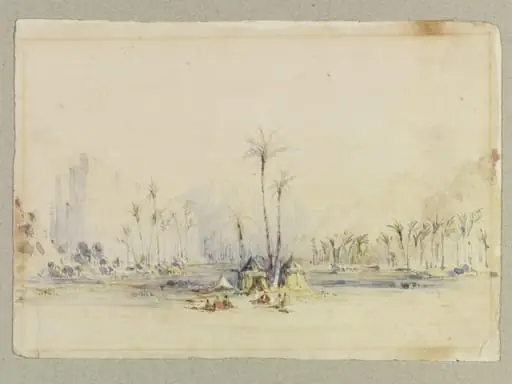
![Egyptological studies [6], by Francis Arundale](https://artifactworldgallery.com/img/francis-arundale--egyptological-studies-6--7bac01af5e28ea58-w320.webp)
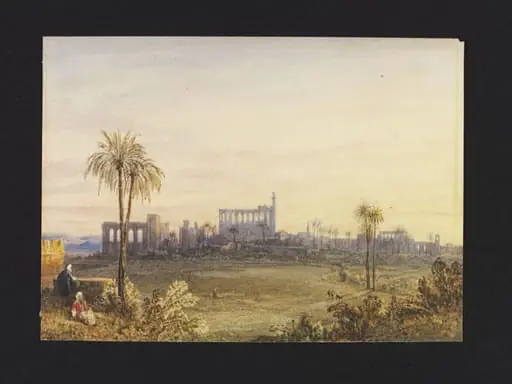
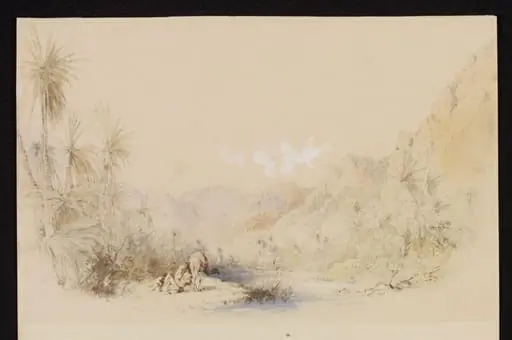 Wady Feiran
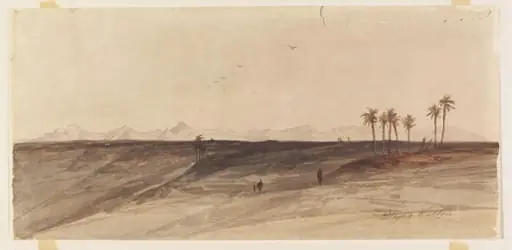 Gebel El Marga 10 miles from Thebes
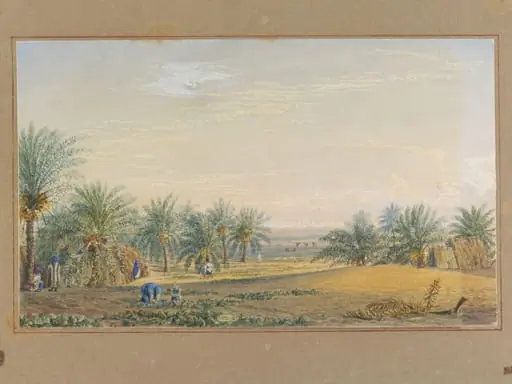 Distant View of Bushire in the Persian Gulf
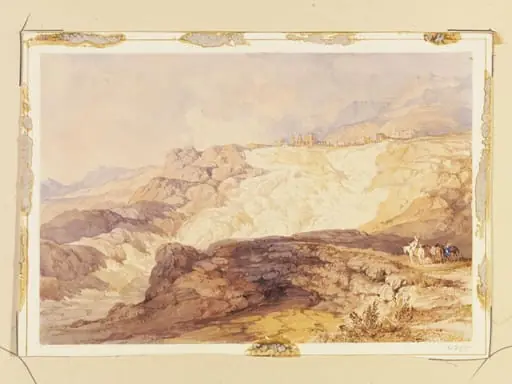 The Ruins of Hierapolis
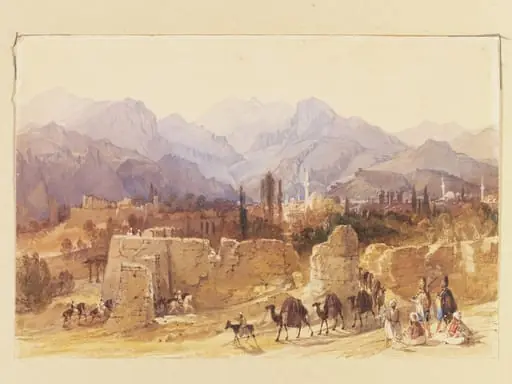 Philadelphia
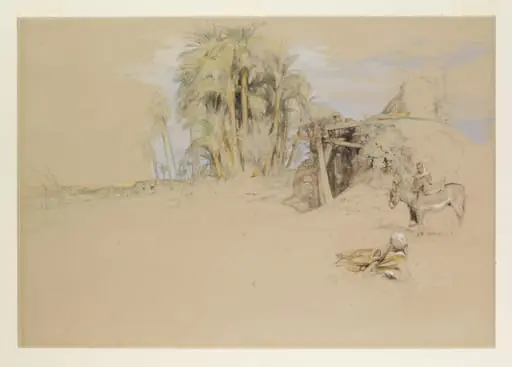 Rural Scene in Upper Egypt, on the banks of the Nile
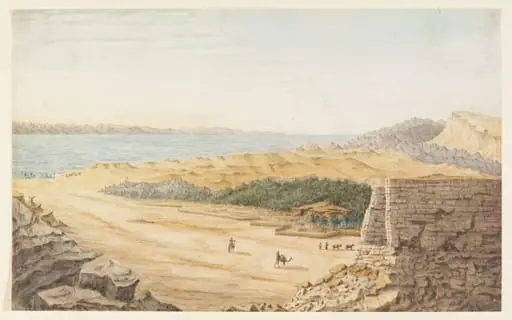 Ancient Ruins in the land of Edom above the bed of a valley and Arab Date gardens
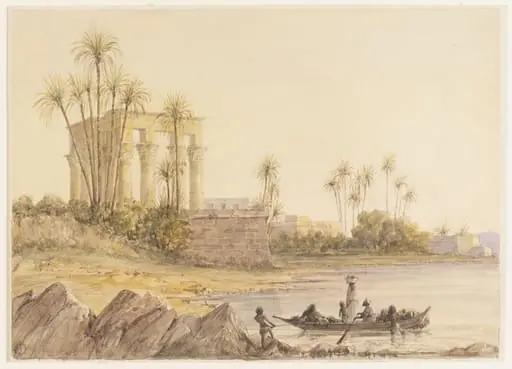 Landing Place. Philoe
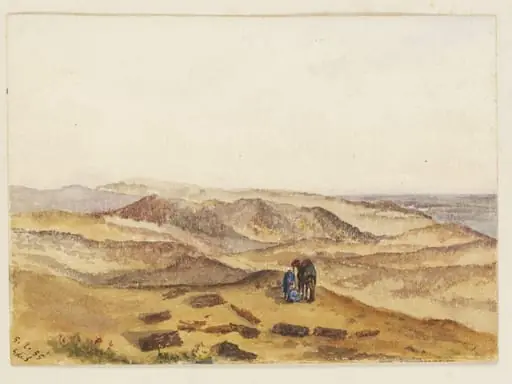 `Petrified Forest Desert near Cairo'