Artwork
Monumental Gateway, Patara, Turkey
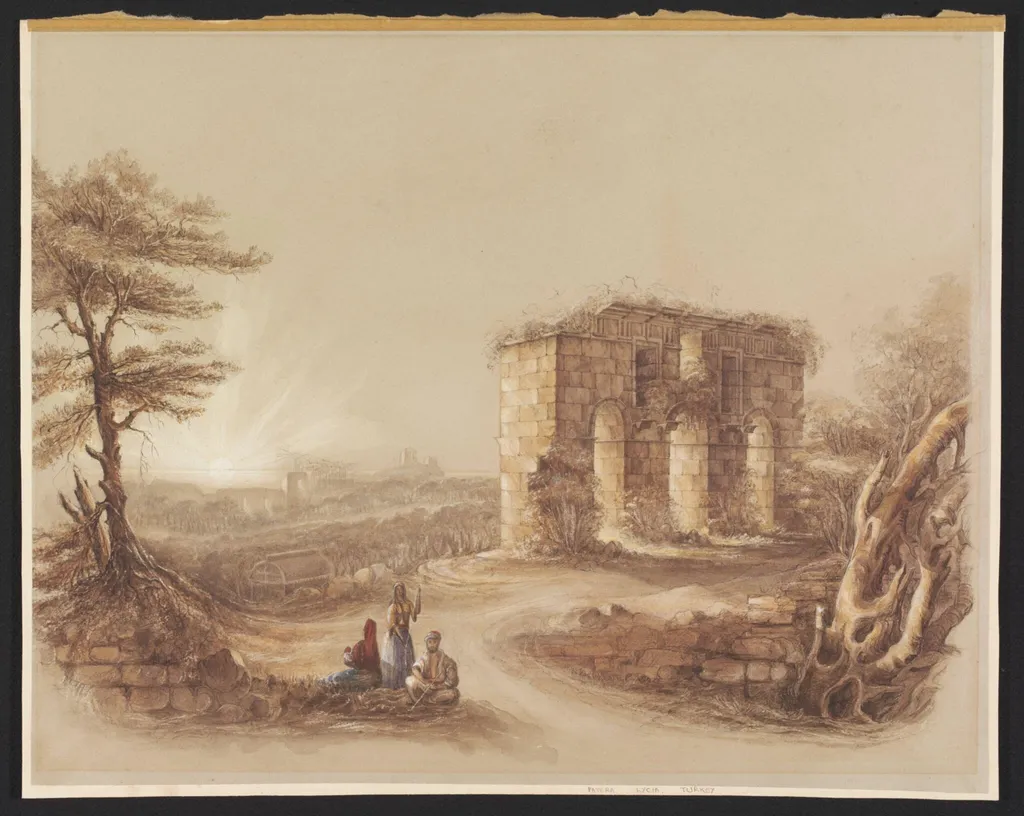
Monumental Gateway, Patara, Turkey is a watercolor work on paper by the British Romanticist artist Charles Joseph Frederick Ewart. It dates from 1842 and is held in the collection of the Victoria and Albert Museum.
About this work
Overview
The piece reflects 19th-century British interest in classical ruins, combining topographical accuracy with atmospheric detail.
This watercolour, created in 1842 by Vice Admiral Charles Joseph Frederick Ewart, captures the ancient Monumental Gateway at Patara, a former Lycian port city near the Xanthus River. Rendered in muted earth tones, the work documents the structure’s weathered stone archway amid a barren landscape. The piece reflects 19th-century British interest in classical ruins, combining topographical accuracy with atmospheric detail. It was acquired by Appleby in June 1971 for £45, as recorded by Rodney Searight.
Subject & Meaning
The gateway, once part of Patara’s urban fabric, stands as a silent relic of Lycian civic architecture. Its overgrown stonework and isolated setting suggest abandonment and the passage of time. Figures seated before it imply human presence, yet their small scale emphasizes the ruin’s enduring dominance over its environment. The composition evokes contemplation of impermanence, aligning with Romantic-era sensibilities toward antiquity and decay.
Technique & Style
Ewart employed fine brushwork to render the texture of weathered stone and the gnarled bark of a bare tree. Layered washes of brown and beige establish a dusty, sun-bleached atmosphere, while subtle variations in tone define architectural depth. The inclusion of vines and human figures adds narrative scale, grounding the monument in a lived-in landscape. The watercolour technique prioritizes observational precision over dramatic effect.
History & Provenance
Created during Ewart’s naval service in the eastern Mediterranean, the watercolour likely served as a personal record of his travels. It remained in private hands until 1971, when it was purchased by Appleby for £45. Documentation by Rodney Searight confirms this transaction, though earlier ownership remains unrecorded. The work’s survival reflects its value as a documentary artifact rather than a commercially sought-after piece.
Context
In the early 1840s, British naval officers and travelers frequently documented classical sites across Anatolia, driven by scholarly curiosity and imperial interest. Patara, once a major port and birthplace of Saint Nicholas, was among the lesser-known ruins attracting attention. Ewart’s work contributes to a broader visual archive of Lycian antiquities, predating systematic archaeological surveys by decades.
Legacy
Though not widely exhibited, the watercolour remains a modest but valuable record of Patara’s condition in the mid-19th century. It offers insight into how ruins were perceived before modern conservation efforts. Its survival in private collections underscores the role of amateur observers in preserving visual histories of archaeological sites now heavily altered or excavated.
Artist & collection
Artist
Charles Joseph Frederick Ewart
Charles Joseph Frederick Ewart painted quiet watercolours of ancient ruins and landscapes.

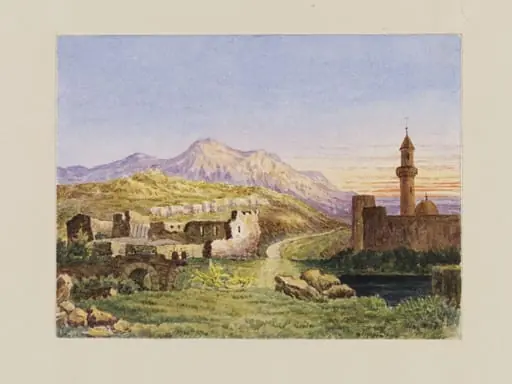 Emmaus
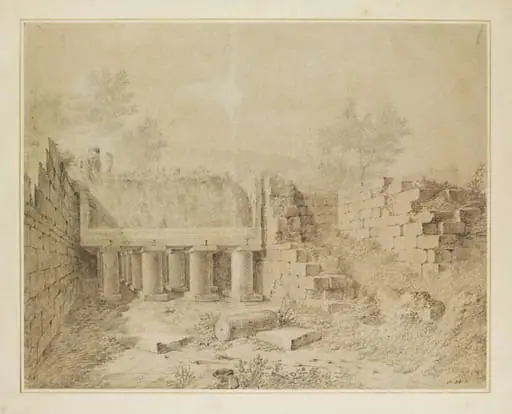 Figures among Classical Ruins, probably in Sicily
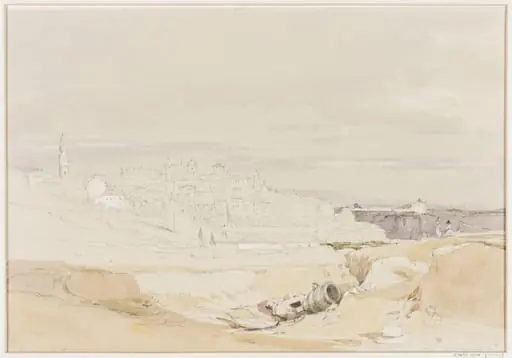 Sketch in Portugal
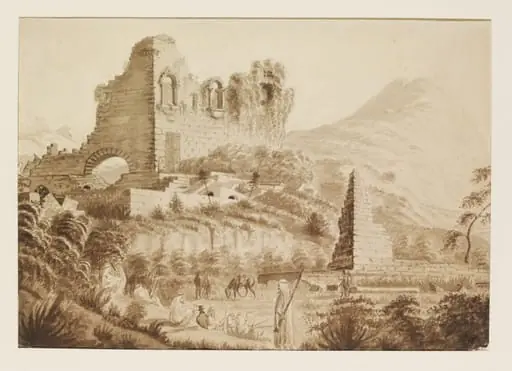 Villa Sevillana on the Road from Bona to Constantine
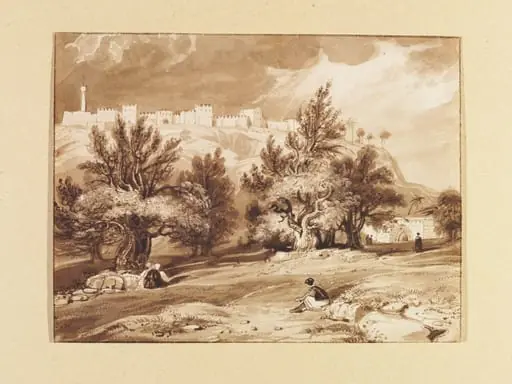 In the Garden of Gethsemane
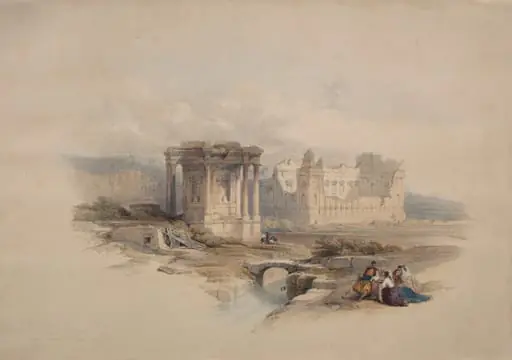 Circular Temple at Baalbec
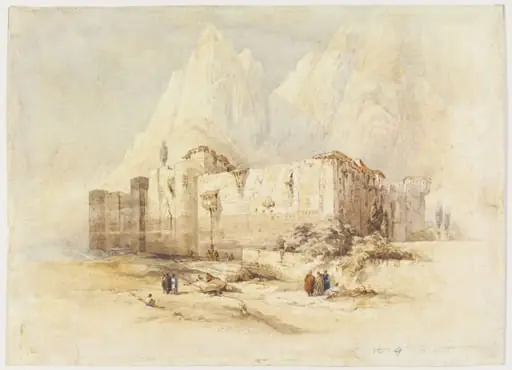 Convent of St Catherine, Mount Sinai
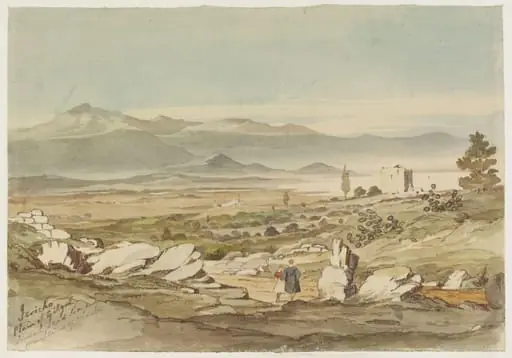 Jericho Plain of Gilgal, Jordan, Dead Sea, and Mountains of Moab
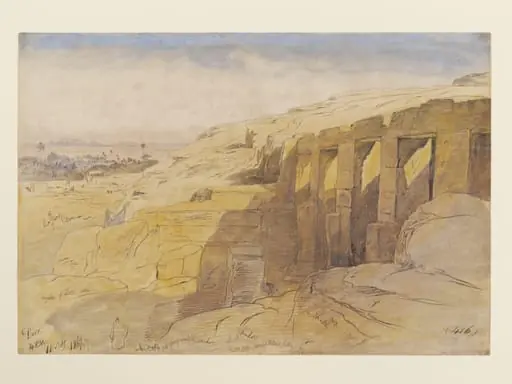 Temple at Derr, Nubia, Egypt
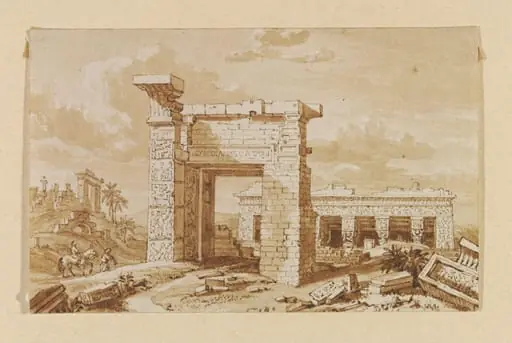 View of the Northern Gate of Dendera or Tentyra
![Yediküle with a Muslim Cemetery, Constantinople, by Michel-François Préaulx [Préaux]](https://artifactworldgallery.com/img/michel-francois-preaulx-preaux--yedikule-with-a-muslim-cemetery-constantinople--c422bdec8e9c6ba8-w320.webp) Yediküle with a Muslim Cemetery, Constantinople
Yediküle with a Muslim Cemetery, Constantinople